Choosing the right Circular Saw Blade in 2026 means matching teeth, kerf, and construction to the material. A blade that glides through pine may burn laminate, chip melamine, or struggle against aluminum. The difference appears at the cut edge.
Industry data supports this growing need for precise selection. Grand View Research’s power tools market analysis identifies construction, renovation, and manufacturing as major demand drivers through the decade. Research and Markets also reports continued growth in saw blade consumption, supported by housing repairs, infrastructure projects, and industrial fabrication. These reports discuss broader tool and blade markets, not every individual blade type. That limitation matters.
Experience at the workbench still reveals details that market forecasts cannot. A 24-tooth framing blade removes timber quickly, while a 60-tooth carbide blade leaves cleaner plywood edges. For aluminum, manufacturers commonly recommend non-ferrous metal blades with controlled tooth geometry and suitable lubrication. Masonry requires a diamond blade, not a standard toothed design. Choosing incorrectly can create vibration, scorching, chipped surfaces, or premature tooth loss.
Small details matter.
Safety data from the U.S. Consumer Product Safety Commission and OSHA continues to emphasize guarding, stable workpieces, and proper personal protection around saw operations. Blade selection supports safety, but it cannot replace training or inspection. Check arbor size, maximum RPM, tooth condition, and material compatibility before cutting. Even expert recommendations need testing. Different saws, feed rates, and stock conditions can change results.
This guide compares the best Circular Saw Blade types for wood, plywood, laminate, metal, masonry, plastic, and composite materials. It focuses on measurable performance, practical experience, and honest trade-offs. There is no universal winner.
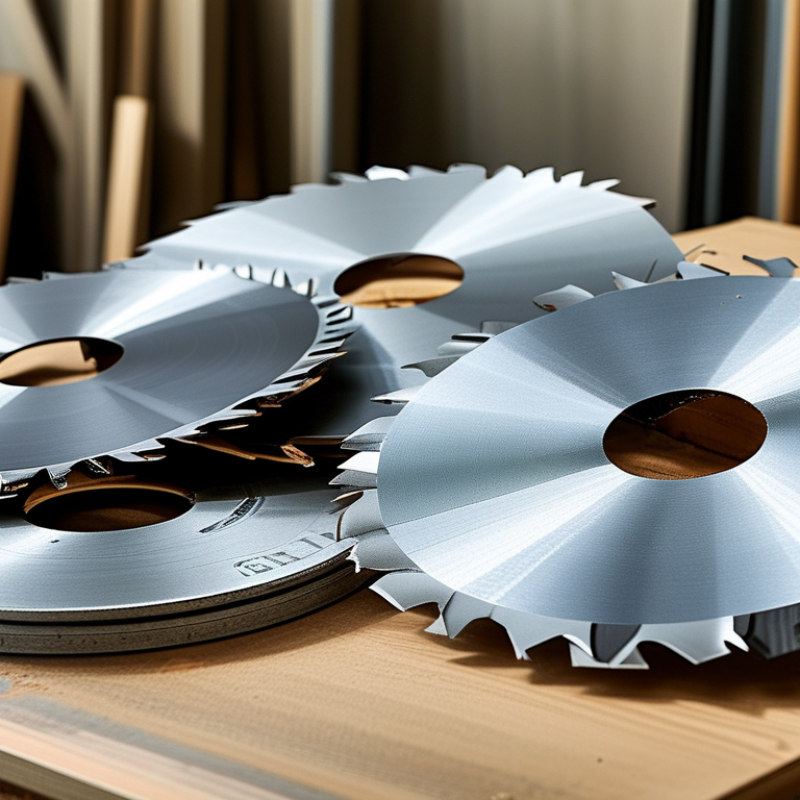
A circular saw blade is a small engineering system, not just a disc with teeth. Its steel body must remain flat while spinning at high speed. The arbor hole centers the blade, while the kerf determines how much material is removed. Gullets carry chips away from the cut. Tooth count changes the cutting rhythm: fewer teeth remove material quickly, while more teeth create a smoother edge. That rule is useful, but not absolute.
Tooth geometry controls how the blade meets each material. A positive rake angle helps teeth enter wood aggressively. A smaller rake angle offers more control in plywood and laminate. Bevelled teeth reduce surface chipping. Carbide-tipped teeth hold an edge longer against wood, plastic, and some non-ferrous metals. Masonry work requires diamond segments or an abrasive design, because ordinary teeth can fracture or overheat. Cutting aluminum also needs a blade designed for non-ferrous metal, suitable speed, and proper clamping.
In practical use, blade choice begins with the material, then considers thickness and finish. I once blamed a dull blade for burning wood, but excessive feed pressure was the real cause. That mistake was instructive. A clean cut depends on sharp teeth, correct rotation direction, stable support, and steady movement. Inspect the plate for warping and check teeth for missing tips before cutting. A blade may look suitable yet perform poorly when its kerf, tooth profile, or speed rating does not match the saw. Small differences matter.
| Blade Type | Primary Materials | Typical Tooth Design | Common Tooth Count Range* | Blade Construction | Cutting Principle | Main Advantages | Important Limitations | Best Use Case |
|---|---|---|---|---|---|---|---|---|
| Framing / Ripping Blade | Softwood Dimensional lumber Construction plywood OSB | Large, deep gullets with flat-top or alternating-top-bevel teeth; often includes anti-kickback shoulders. | 16–30 teeth on common 7¼–8¼ in. blades | Hardened steel plate with carbide-tipped teeth; usually a full-kerf design for fast stock removal. | Few teeth engage the workpiece at one time, allowing deep gullets to clear chips quickly during a fast feed rate. | Fast cuts, efficient chip clearance, good performance in rough construction work. | Leaves a rougher surface; may chip veneered panels and can burn hardwood when fed too slowly. | Wall framing, roof sheathing, cutting studs, and rough crosscuts where finish quality is secondary. |
| Fine-Finish Crosscut Blade | Hardwood Softwood Trim boards Solid wood panels | Alternating-top-bevel (ATB) teeth with smaller gullets and a higher tooth density. | 40–80 teeth on common 7¼–12 in. blades | Precision-ground or carbide-tipped teeth mounted on a steel plate; kerf may be full or thin. | Angled tooth tips score and sever wood fibers progressively, reducing breakout on crosscuts. | Cleaner edges, reduced splintering, and improved finish quality. | Slower than framing blades; inadequate chip clearance can cause heat buildup during long rips. | Furniture components, door trim, flooring boards, and visible crosscuts in solid wood. |
| Plywood / Veneer Blade | Plywood MDF Melamine panels Laminated sheet goods | High tooth count with ATB geometry; some designs use a modified triple-chip pattern for coated panels. | 60–100 teeth on common 7¼–12 in. blades | Thin, accurately tensioned steel plate with carbide tips; often available in thin-kerf form. | Many small cutting actions distribute the load and score both the surface layer and the core material. | Clean panel edges, reduced tear-out, and lower cutting resistance with thin-kerf versions. | Slow chip evacuation; resin, adhesive, and abrasive cores can dull teeth relatively quickly. | Cabinet panels, shelving, decorative plywood, and cuts where surface appearance matters. |
| General-Purpose Combination Blade | Softwood Hardwood Plywood Composite boards | Alternating groups of ATB teeth and flat-top teeth separated by gullets; balances ripping and crosscutting. | 40–60 teeth on common 7¼–10¼ in. blades | Steel plate with carbide tips and expansion slots to help control heat-related movement and noise. | Alternating tooth groups provide moderate fiber shearing while the gullets provide acceptable chip clearance. | Versatile, convenient, and suitable for varied workshop tasks. | Not as fast as a dedicated ripping blade or as clean as a dedicated finish blade. | General home improvement, small workshops, and projects involving several wood products. |
| Triple-Chip Grind Blade | MDF HDF Laminated panels Plastic laminate Non-ferrous metal | Alternating trapezoidal and flat-top teeth; the trapezoidal tooth scores while the flat-top tooth cleans the kerf. | 40–80 teeth, depending on diameter and material | Rigid steel body with carbide tips; may use a negative or low hook angle for stable cutting. | The scoring tooth makes a controlled initial cut, and the following flat tooth removes the remaining material with less edge impact. | Durable edge quality on abrasive boards and laminates; reduces surface chipping. | Usually slower in solid wood; requires correct speed, feed, and tooth geometry for metal applications. | High-pressure laminate, melamine-coated boards, compact panels, and selected aluminum or brass cuts. |
| Plastic and PVC Blade | PVC pipe Acrylic sheet Polycarbonate Plastic trim | Fine-pitch ATB or modified triple-chip teeth with a low hook angle; gullets are designed to limit grabbing and melting. | 60–100 teeth on common 7¼–12 in. blades | Rigid carbide-tipped plate, frequently with a thin or narrow kerf to reduce heat generation. | Controlled shearing at a moderate feed rate helps prevent cracking, melting, and tooth snagging. | Cleaner plastic edges and reduced risk of aggressive grabbing when properly selected. | Excessive speed, a dull blade, or slow feeding can melt plastic and fuse chips to the teeth. | Cutting plastic sheets, PVC trim, pipe sections, and non-structural plastic components. |
| Non-Ferrous Metal Blade | Aluminum Brass Copper Soft alloys | Many carbide teeth with a triple-chip or modified triple-chip grind; typically a low or negative hook angle. | 60–100 teeth, matched to blade diameter and metal thickness | Heavy-duty plate with carbide teeth, reinforced shoulders, and expansion slots; intended for non-ferrous metals only. | Low-angle teeth shear softer metal while limiting tooth bite, impact, and the tendency of the workpiece to climb the blade. | Produces relatively clean, square cuts in suitable non-ferrous stock. | Not suitable for steel or other ferrous metals unless specifically engineered for them; requires secure clamping and proper guarding. | Aluminum channels, sheet, profiles, gutters, and thin non-ferrous stock. |
| Ferrous-Metal Abrasive or Specialized Metal Blade | Mild steel Stainless steel Metal studs Steel tubing | Either bonded abrasive construction or purpose-designed carbide teeth with a low hook angle and reinforced shoulders. | Varies substantially; follow the blade manufacturer’s specification for diameter, thickness, and tooth count. | Abrasive discs use bonded mineral grains; carbide metal-cutting blades use heat-resistant tips and a rigid plate. | Abrasive grains wear through metal, while specialized carbide teeth make controlled shearing cuts at a lower heat input. | Designed specifically for ferrous materials and can provide fast, repeatable cuts when correctly matched. | Generates sparks, heat, and metal dust; never substitute a wood or non-ferrous blade. Inspect for damage frequently. | Metal fabrication, steel framing, tubing, and maintenance work using a saw approved for ferrous metal cutting. |
| Masonry / Diamond-Rim Blade | Concrete Brick Block Stone Tile | Continuous rim, segmented rim, or turbo rim; cutting edge is diamond-impregnated rather than formed by projecting teeth. | Not rated by conventional tooth count; rim segment geometry and diamond concentration are the key variables. | Steel core with a sintered or bonded diamond cutting rim; wet-cut and dry-cut designs must be used as specified. | Diamond particles abrade mineral material instead of shearing wood fibers; segments provide debris clearance and cooling space. | Handles highly abrasive mineral materials; continuous rims can produce smooth tile edges, while segmented rims cut faster in masonry. | Creates silica-containing dust when dry cutting; not intended for wood or metal. Wet cutting requires compatible equipment and electrical protection. | Masonry openings, concrete pavers, brickwork, tile, and stone cutting with appropriate dust control. |
| Fiber-Cement and Abrasive Composite Blade | Fiber-cement siding Cement board Abrasive composites | Specialized polycrystalline diamond-tipped teeth or a diamond-rim configuration; tooth count is usually higher than for framing blades. | 4–12 diamond-tipped teeth on some large-diameter specialty blades; follow the specified design. | Rigid steel body with wear-resistant diamond cutting elements. | Diamond particles abrade cement and reinforcing fibers while limiting rapid carbide wear. | Longer service life and cleaner performance than ordinary wood blades in abrasive sheet materials. | Produces fine dust; cutting speed is generally lower, and respiratory and dust-control measures are essential. | Fiber-cement siding, cement backer board, and other abrasive building panels. |
Low tooth counts clear chips quickly in framing lumber. Higher counts create cleaner edges in plywood and laminate. The choice depends on the material.
Triple-chip-grind teeth help resist chipping on coated panels. They also run cooler during cutting. Results still vary.
Thin-kerf blades remove about 1.5 to 2.0 millimeters of material. Full-kerf blades remove roughly 2.4 to 3.2 millimeters. Thin kerfs reduce waste but may deflect during deep cuts.
No. A narrower kerf can help a smaller saw maintain speed. However, the blade may bend during a deep cut. I once trusted one impressive cut too quickly.
Diamond segments matter more than tooth count for masonry. Use the design intended for that material. Do not improvise.
Metal-cutting blades often use closely spaced carbide teeth. Negative rake angles can improve control. Check the saw manual before installation.
Disconnect the power source completely. Remove the battery or unplug the saw. Engage the spindle lock, then inspect the blade under bright light. Look for cracks, missing teeth, warping, or resin buildup.
Replace it when cuts become slow, rough, smoky, or difficult to control. Do not continue forcing a dull blade. That was poor judgment on my part.
Choosing the right Circular Saw Blade starts with understanding how its body, teeth, kerf, and cutting geometry affect performance. Different materials require different blade designs: wood often benefits from tooth patterns suited to fast cuts or clean finishes, while metal needs heat-resistant construction and controlled tooth spacing. Masonry, plastic, and composite materials also demand specialized blades to reduce chipping, melting, dust, or premature wear. Tooth count, tooth shape, and kerf width influence cutting speed, smoothness, power consumption, and material removal.
The best blade should match the material thickness, saw type, motor capacity, and project requirements. Before cutting, inspect the blade, confirm it is properly installed, and use suitable eye, hearing, and dust protection. Maintain performance by keeping the blade clean, avoiding excessive force, and checking for damaged or dull teeth. Replacing a worn blade at the right time improves accuracy, safety, and efficiency, helping every cut remain controlled and consistent.