Choosing a China Cold Saw Blade supplier requires more than comparing catalog prices. The right supplier must match blade design with your material, machine, and production rhythm. A stainless-steel tube line needs different tooth geometry from a carbon-steel bar operation. HSS, M42, carbide-tipped, and coated blades also behave differently under heat and vibration.
Industry demand gives this decision wider context. The World Steel Association’s World Steel in Figures 2025 reported global crude steel production at approximately 1.89 billion tonnes in 2024. That volume supports continuing demand for dependable metal-cutting tools. Meanwhile, the Association for Manufacturing Technology’s USMTO reports show changing manufacturing-equipment orders, reminding buyers that purchasing conditions can shift quickly. A low quotation may look attractive today. It may cost more after premature tooth failure, excessive burrs, or unplanned downtime.
Look for evidence, not polished promises. Ask for material certificates, hardness data, coating specifications, runout limits, and batch traceability. Request cutting trials using your actual steel grade, wall thickness, and machine speed. Measure blade life, cut squareness, burr height, and average cost per cut. ISO 9001 certification can indicate structured quality control, but certification alone cannot prove cutting performance. That is an important weakness in many supplier evaluations.
Experience matters here. A reliable supplier should explain tooth pitch, rake angle, kerf, and tensioning without hiding behind technical language. Check factory inspection records, export experience, sample consistency, and after-sales response times. Visit the production site when practical. One overlooked detail can matter. The best China Cold Saw Blade partner is not always the cheapest manufacturer; it is the supplier that can repeatedly deliver verified performance, clear documentation, and practical technical support.
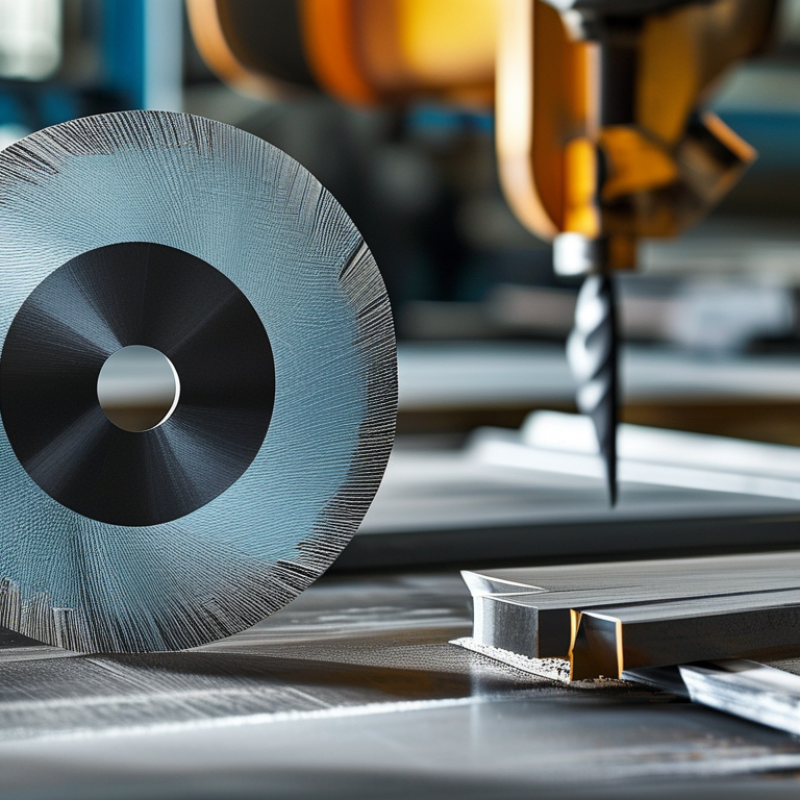
Define Your Cold Saw Blade Requirements
Before asking a China cold saw blade supplier for a quotation, define the cutting job precisely. Record the machine model, arbor diameter, maximum blade diameter, spindle speed, coolant method, and available power. Then specify the workpiece grade, outer diameter, wall thickness, bundle size, and required cut length. A stainless tube needs a different tooth geometry from a solid carbon-steel bar. Small details matter.
The 2024 World Steel Association Short Range Outlook forecast global steel demand at about 1.79 billion tonnes. That scale reflects diverse grades, thicknesses, and production conditions. Your blade specification should therefore include tooth pitch, rake angle, blade body material, carbide or high-speed-steel construction, and any required coating. Also state the target: cutting speed, burr limit, blade life, or surface finish. “General steel cutting” is not a usable requirement.
A practical test plan improves supplier evaluation. Request trial blades based on your actual material, not a sample bar chosen by the seller. Track cuts per blade, cycle time, burr height, noise, and tooth damage. The U.S. Manufacturing Technology Orders report from AMT continues to show strong demand for productive, automated metalworking equipment, but productivity is not only machine speed. My own checklist would still miss operator technique and coolant concentration. Measure both. Leave room for correction.
Assess Supplier Expertise and Manufacturing Capabilities
How to Choose a China Cold Saw Blade Supplier?
Assess Supplier Expertise and Manufacturing Capabilities
A capable supplier should understand steel grades, cutting speeds, tooth geometry, and coolant behavior. Ask how engineers select blade diameter, tooth pitch, and rake angle for your material. The answer should include measurable parameters, not vague promises. Numbers need context.
World Steel Association data shows that global crude steel production reached about 1.89 billion tonnes in 2023. This scale creates demanding conditions for consistent cutting performance. A serious manufacturer should control carbide selection, laser welding, heat treatment, CNC grinding, and blade balancing. Request inspection records for runout, tooth height, hardness, and weld strength.
ISO’s 2022 Survey recorded 1,265,216 ISO 9001 certificates worldwide. Certification can support process discipline, but it does not prove cutting performance. Treat it as evidence, not a final decision. Visit the factory, if possible. Observe material storage, machine maintenance, calibration labels, and lot traceability. Test the blade.
Ask for a sample trial using your actual tube or section steel. Record cutting time, burr size, blade life, noise, and tooth damage. Experienced suppliers should explain failures without hiding them. I would be cautious when every trial looks perfect. Real production includes vibration, operator variation, and occasional premature wear. Their corrective-action report matters more than polished marketing language.
Compare Pricing, Minimum Orders, and Delivery Terms
How to Choose a China Cold Saw Blade Supplier?
Compare Pricing, Minimum Orders, and Delivery Terms
A low unit price does not always mean a lower purchasing cost. Ask suppliers to separate blade price, coating cost, packaging, tooling, and freight. A quote should also state the blade diameter, tooth geometry, material grade, and tolerance. Otherwise, two prices may describe different products. Request a sample or small trial order before committing to production quantities. Ask for details.
Minimum order quantity can change your cash flow quickly. A supplier may quote 100 blades, while your actual demand is only 30. Negotiate a smaller first order, especially when testing cutting performance. Some suppliers charge more for low quantities, but this may still reduce inventory risk. Check whether the MOQ applies per size, tooth pitch, or total order. My early comparisons focused too much on unit price. That mistake created unused stock and delayed testing.
Delivery terms need equal attention. Confirm production lead time, inspection timing, packing standards, and the agreed shipping term. Under an agreed Incoterm, clarify who handles export procedures, freight, insurance, and import responsibilities. Request a realistic schedule with a dispatch date, not only “fast delivery.” A supplier with a slightly higher price may offer stable production and clearer communication. Ask how delays are reported and what happens when specifications are missed. Written records matter. Suppliers should provide consistent invoices, technical documents, and shipment updates. Avoid paying for speed that has not been clearly defined.
How to Choose a China Cold Saw Blade Supplier? - Compare Pricing, Minimum Orders, and Delivery Terms
| Supplier Profile |
Typical Blade Specification |
Blade Type |
Indicative Unit Price |
Standard MOQ |
Sample Availability |
Production Lead Time |
Shipping Terms |
Payment Terms |
Profile A
Stock-Oriented Exporter |
Diameter: 280–315 mm
Bore: 32 mm
Thickness: 2.0–2.5 mm
60–80 teeth |
TCT cold saw blade for mild steel and structural tubing |
US$18–38 per blade |
20 pieces per size |
1 piece available from stock; sample charged at regular price |
7–12 working days |
FOB or FCA; courier shipment for samples |
30% deposit, 70% before shipment |
Profile B
Custom-Diameter Manufacturer |
Diameter: 350–450 mm
Bore: 40–50 mm
Thickness: 2.5–3.2 mm
72–120 teeth |
TCT blade with customized tooth geometry and cutting width |
US$42–95 per blade |
50 pieces per specification |
1–2 pieces in 10–15 working days |
20–30 working days after drawing approval |
FOB, CIF, or DAP subject to destination |
30% deposit, balance against inspection or shipping documents |
Profile C
High-Volume Factory |
Diameter: 250–315 mm
Bore: 25.4–32 mm
Thickness: 1.8–2.5 mm
60–100 teeth |
Standard TCT blade for carbon steel, stainless steel, and tube cutting |
US$15–32 per blade |
100 pieces per size |
Paid sample within 5–8 working days |
15–22 working days |
FOB main China port; LCL and FCL available |
30% deposit, 70% before loading |
Profile D
Small-Batch Specialist |
Diameter: 200–280 mm
Bore: 25.4–30 mm
Thickness: 1.6–2.2 mm
48–80 teeth |
Thin-kerf TCT blade for precision tube and profile cutting |
US$22–48 per blade |
10 pieces per size |
1 piece available or produced in 7 working days |
8–15 working days |
EXW, FCA, or courier delivery |
100% payment for orders below US$3,000 |
Profile E
Industrial Project Supplier |
Diameter: 400–600 mm
Bore: 50–80 mm
Thickness: 3.2–5.0 mm
80–160 teeth |
Heavy-duty TCT blade for solid steel, stainless steel, and alloy sections |
US$85–190 per blade |
20 pieces per specification |
1 blade made to order; sample lead time 15–20 working days |
30–45 working days |
FOB, CIF, or DDP for project quantities |
30% deposit, 70% after final inspection |
Profile F
Private-Label Capable Supplier |
Diameter: 300–500 mm
Bore: 32–50 mm
Thickness: 2.0–4.0 mm
72–144 teeth |
TCT blade with laser marking, neutral packaging, or buyer packaging |
US$35–125 per blade |
50 pieces per size; 200 pieces for custom packaging |
1–2 pieces; packaging samples may require an extra charge |
20–35 working days |
FOB or CIF; consolidated shipment available |
30% deposit, 70% before shipment; L/C negotiable for larger orders |
Price ranges are indicative export-market benchmarks for standard TCT cold saw blades and may vary with carbide grade, tooth geometry, coating, blade diameter, order volume, packaging, inspection requirements, and destination. Confirm the final quotation, MOQ, production schedule, and Incoterm through a written RFQ.
Evaluate Communication, Support, and Long-Term Reliability
How to Choose a China Cold Saw Blade Supplier?
A reliable supplier communicates with specific answers, not polished promises. Ask about steel grade, tooth geometry, blade runout, and suitable cutting speeds. Their sales team should understand your machine, material, and daily cutting volume. Vague replies often create expensive trial-and-error later. Request drawings, inspection records, and a sample before placing a large order. Clear communication matters most when your production schedule is tight.
Support should continue after shipment. A capable supplier can review cutting marks, noise, burrs, and unusual tooth wear from photos or test data. Ask whether they provide setup guidance, storage advice, and replacement recommendations. Keep communication practical. For example, discuss a 300-millimeter blade cutting stainless steel tubes on a fixed-speed saw. Generic advice is rarely enough. I once accepted a promising quotation without checking response times. The low price did not compensate for delayed technical answers.
Long-term reliability appears through consistent records. Compare sample performance with later batches, and monitor blade life, cutting accuracy, and delivery times. Ask how they control raw materials, heat treatment, tooth welding, and final inspection. A dependable supplier should explain problems openly, including failed tests or delayed production. That honesty is valuable. No supplier performs perfectly every time. Review their corrective actions, not only their sales claims. Small details, such as stable packaging and readable batch labels, can reveal whether their process is genuinely controlled.
How to Choose a China Cold Saw Blade Supplier?
Suggested evaluation weighting for communication, support, and long-term reliability
Communication and technical support should receive strong consideration because clear specifications, fast responses, and practical troubleshooting directly affect blade selection and production continuity. Quality consistency, delivery reliability, and long-term service help reduce downtime and purchasing risk.
Conclusion
Choosing the right China Cold Saw Blade supplier requires a clear understanding of your cutting needs, including blade diameter, tooth design, material compatibility, cutting speed, and expected production volume. Once your requirements are defined, evaluate each supplier’s technical expertise, manufacturing equipment, production capacity, and experience serving similar applications. A capable supplier should be able to provide practical recommendations and maintain consistent production standards.
It is also important to verify blade materials, heat treatment processes, quality inspection procedures, and relevant certifications. Compare pricing carefully by considering minimum order quantities, customization costs, packaging, lead times, and delivery terms rather than focusing only on the lowest quotation. Finally, assess communication quality, response speed, after-sales support, and willingness to solve problems. A reliable China Cold Saw Blade supplier should offer stable quality, transparent cooperation, dependable delivery, and long-term support that helps maintain efficient and consistent cutting operations.