Choosing a diamond shape is more complex than admiring its sparkle. Each cut controls how light enters, reflects, and leaves the stone. This guide explores the top 10 China Diamond Cutting types, from the classic round brilliant to the structured Asscher cut.
The discussion focuses on practical gemological details, including facet arrangement, symmetry, polish, proportions, and visible light return. Round brilliant diamonds often create intense fire through carefully aligned triangular and kite-shaped facets. Emerald cuts show broad flashes instead. Their larger open facets can reveal inclusions more easily. Cushion, oval, pear, marquise, radiant, princess, and heart cuts each create different visual effects on the hand.
Names can be confusing.
“China Diamond Cutting” may describe a manufacturing or sourcing context, not one official cutting style. That distinction matters when comparing suppliers, certificates, and finished stones. A well-cut diamond should be judged by measurable quality, not location alone. Independent grading reports from recognized laboratories can help verify color, clarity, carat weight, and cut-related observations.
Some online descriptions oversimplify these differences. They may praise brilliance without discussing durability, girdle thickness, or symmetry. That is a weakness worth noticing. A pointed marquise tip needs protection, while sharp princess corners may require secure settings. Experienced buyers inspect the diamond under balanced lighting and review its report before deciding. The best choice depends on personal taste, budget, setting design, and long-term wear. No single cut suits everyone.
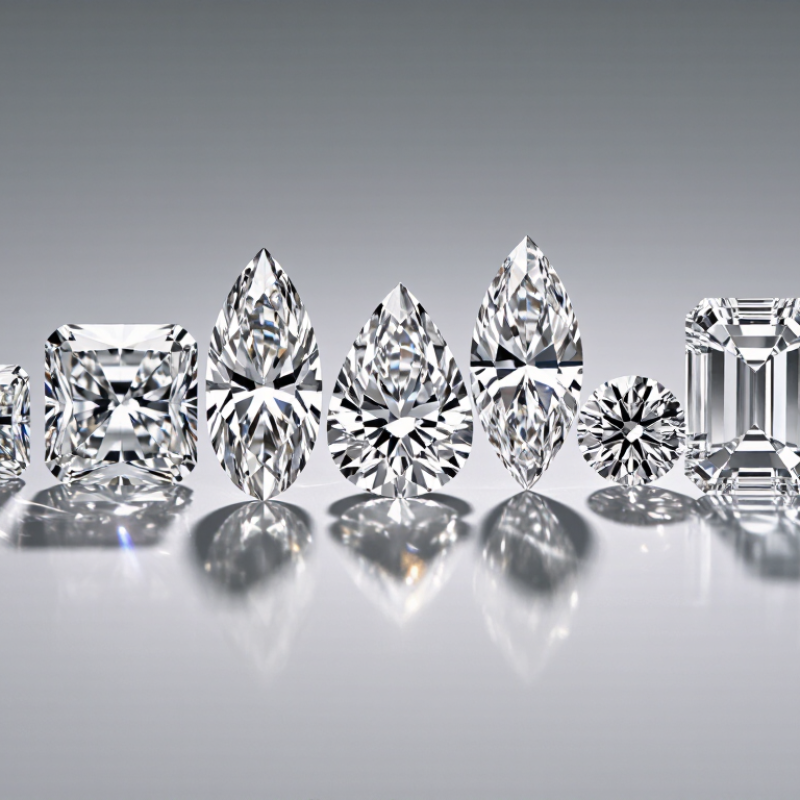
A China diamond cutting type describes how a diamond is shaped, faceted, and finished by cutters in China. It does not automatically identify the diamond’s origin, quality, or value. The term may refer to a cutting style, a manufacturing location, or a supplier’s internal classification.
Professional evaluation begins with geometry. A grader examines the outline, facet arrangement, crown height, pavilion depth, girdle thickness, culet, symmetry, and polish. Round brilliant cuts commonly use 57 or 58 facets. Step cuts display long, clean reflections, while mixed cuts combine broad flashes with sharper sparkle. These details define performance more clearly than a simple “China cut” label.
Light behavior matters most. A well-aligned stone can return bright white light across its table. A poorly proportioned stone may show a dark center or weak edges. Look closely. Rotating the diamond under neutral lighting can reveal uneven facets, a thick girdle, or visible polishing marks. Cutting technology has improved considerably, but consistency still varies between workshops. That point deserves honesty.
A reliable description should separate shape, cut quality, and production location. Laboratory documentation can support measurements, yet it cannot replace careful visual inspection. The phrase “top ten” can also mislead readers, because popularity and optical performance are not identical. A distinctive Chinese cutting type may look attractive, but its proportions should decide its practical quality.
China’s ten leading diamond cuts are best classified by outline and facet design, not by popularity alone. The common group includes round brilliant, princess, emerald, oval, pear, marquise, cushion, radiant, Asscher, and heart cuts. GIA education materials describe the round brilliant as having 57 or 58 facets, creating strong light return. Emerald and Asscher cuts use step facets, showing clearer reflections and inclusions. Princess and radiant cuts combine sharper geometry with brilliant-style faceting. Shape matters.
China’s cutting sector also reflects changing consumer preferences. Bain-Altagamma’s Global Diamond Industry Report has repeatedly identified China as a major diamond-consuming market, although demand has fluctuated in recent years. This makes classification useful for retailers, graders, and buyers. A round stone is measured mainly through symmetry, table, depth, and brilliance. A pear or marquise needs careful tip protection. An emerald cut demands cleaner material because its broad, open facets reveal internal features. These are practical differences, not decorative labels.
Tips: Compare cut quality within the same shape. GIA grading reports can verify polish, symmetry, proportions, and clarity. Check the outline from several angles under neutral lighting. A small mismatch can make a fancy shape look visibly uneven. Personal observation still matters; published classifications cannot predict every eye’s response. One weakness remains: “top ten” is a market phrase, not a universal technical ranking.
How China’s Ten Leading Diamond Cuts Are Classified
| Rank | Cut Type | Geometric Classification | Typical Facet Configuration | Optical Character | Common Applications | Key Identification Feature |
|---|---|---|---|---|---|---|
| 1 | Round Brilliant Cut | Round brilliant | Usually 57 facets, or 58 when the culet is counted | Strong overall brilliance and balanced fire | Engagement rings, stud earrings, solitaire jewelry | Circular outline with a standard brilliant-style facet pattern |
| 2 | Princess Cut | Square or rectangular brilliant | Facet counts vary by design; commonly about 50–57 facets | Bright face-up appearance with strong scintillation | Modern rings, earrings, channel-set jewelry | Square outline, sharp corners, and a pyramidal pavilion |
| 3 | Emerald Cut | Rectangular step cut | Typically 57 facets, with broad step facets | Hall-of-mirrors reflections and lower scintillation than brilliant cuts | Statement rings, pendants, and elongated designs | Beveled corners and parallel, linear facets |
| 4 | Oval Cut | Oval brilliant | Commonly 58 facets, although patterns can vary | Brilliant appearance with an elongated visual spread | Engagement rings, pendants, and fashion jewelry | Elliptical outline with rounded ends and no pointed corners |
| 5 | Pear Cut | Modified brilliant | Commonly 58 facets, depending on the design | Brilliance combined with a distinctive directional shape | Pendants, drop earrings, and asymmetric ring settings | Teardrop outline with one rounded end and one pointed end |
| 6 | Marquise Cut | Modified brilliant | Commonly 58 facets, with variations by cutter | Bright appearance and strong length-to-width visual effect | Elongated rings, halo settings, and pendants | Long, narrow outline with two pointed ends |
| 7 | Cushion Cut | Square or rectangular modified brilliant | Often 57 or 58 facets, but facet arrangements vary widely | Soft scintillation with a rounded, vintage-inspired appearance | Vintage-style rings, halo jewelry, and pendants | Rounded corners and a pillow-like square or rectangular outline |
| 8 | Radiant Cut | Rectangular or square brilliant | Often around 70 facets, although the pattern is not fixed | High brilliance with the clipped-corner look of a step-cut outline | Engagement rings, three-stone rings, and bold jewelry | Beveled corners combined with brilliant-style faceting |
| 9 | Asscher Cut | Square step cut | Usually 58 facets, arranged in a concentric step pattern | Distinctive geometric reflections and a hall-of-mirrors effect | Art Deco-inspired rings and geometric jewelry | Square outline, deeply clipped corners, and concentric facets |
| 10 | Heart Cut | Modified brilliant | Commonly 59 facets, with possible design variations | Brilliant light return with a symbolic silhouette | Pendants, romantic rings, and personalized jewelry | Heart-shaped outline with a cleft at the top and a pointed base |
Classification is based on outline geometry and facet arrangement commonly used in diamond manufacturing and jewelry grading. Exact facet counts, proportions, symmetry, and optical performance may vary according to the individual cutting design and grading standard.
Round and brilliant cuts remain the most familiar choices in China’s diamond jewelry market. Industry reporting from the Natural Diamond Council places China near 10% of global natural diamond jewelry demand in recent years. That scale makes local cutting preferences commercially important. The round brilliant cut is especially visible in engagement rings and pendant designs.
GIA technical references describe the standard brilliant structure as having 57 or 58 facets. These facets act like small windows, returning white light across the crown. A well-cut stone should show balanced brightness, sharp contrast, and limited dark areas when viewed under normal indoor lighting.
Practical buying experience shows that proportions matter more than shape alone. A shallow pavilion can leak light through the bottom. An overly deep stone may look smaller from above. Consumers should check the laboratory report, table percentage, symmetry, polish, and fluorescence before comparing prices. Round stones often command higher cutting costs because more rough material is removed.
Bain & Company’s Global Diamond Report 2023–2024 also identifies China as a major, though changing, consumer market. That change deserves attention. Some buyers now compare oval, cushion, princess, and emerald cuts for a larger face-up appearance.
Still, round brilliant remains the safer visual reference. It is not always the most personal choice. A diamond can be technically excellent yet feel too ordinary for one wearer.
China’s diamond-cutting market includes ten widely recognized outlines: round brilliant, princess, emerald, Asscher, radiant, oval, pear, marquise, cushion, and baguette. Their visual character changes dramatically with facet arrangement. The Gemological Institute of America records 57 or 58 facets for the standard round brilliant, creating strong brightness and scintillation. It remains a technical benchmark, but not every buyer wants maximum sparkle.
Step cuts use long, parallel facets. Emerald, Asscher, and baguette diamonds show this style clearly, with glass-like flashes and visible inclusions. Rose cuts are flatter, with triangular facets and a soft, candlelit glow. They feel quieter. Mixed cuts combine brilliant and step facets, as seen in many radiant and cushion designs. They offer both flash and orderly reflections, although the balance can be difficult to judge under retail lighting.
Fancy cuts include oval, pear, marquise, and other non-round outlines. Chinese cutting workshops often prioritize calibrated sizes, clean symmetry, and efficient material use for these shapes. That approach supports consistent jewelry production, yet it can produce stones that look slightly narrow or overly deep. This is where inspection matters. Bain’s 2023 Global Diamond Industry Report estimated lab-grown diamonds at about 10% of global diamond jewelry value, increasing pressure to deliver visible value. GIA guidance also stresses proportions, symmetry, polish, and light performance—not shape alone. A perfect outline can still look lifeless. That is an inconvenient truth.
Reference facet counts for 10 diamond cuts commonly discussed in Chinese jewelry manufacturing and retail.
Round, oval, pear, marquise, cushion, and radiant cuts use brilliant or mixed facet arrangements, while emerald and Asscher cuts use step facets. Rose cuts generally have fewer facets, often up to 24. Facet counts are conventional reference values and may vary by cutter, design, and stone size; they do not represent company sales rankings or market share.
Comparing China diamond cuts starts with purpose, not appearance. Common options include round, princess, cushion, emerald, oval, pear, marquise, radiant, Asscher, and heart cuts. Round cuts usually prioritize brilliance and resale recognition. Emerald and Asscher cuts emphasize clarity, because their broad, open facets reveal inclusions quickly. Oval, pear, and marquise shapes can create a longer-looking finger line. Cushion and radiant cuts offer softer corners with strong visual brightness. Small point: shape is not cut quality.
For reliable comparison, use a grading report and inspect polish, symmetry, proportions, and light return. The Gemological Institute of America evaluates round-brilliant cut quality through brightness, fire, scintillation, weight ratio, durability, symmetry, and polish. Its system grades round diamonds from Excellent to Poor, while many fancy shapes do not receive an overall GIA cut grade. That difference matters. A visually impressive oval may still show a dark bow-tie area. According to the 2023 Bain-Alrosa Global Diamond Industry Report, diamond demand remained sensitive to consumer confidence and price pressure, making value control important. Compare millimeter spread, not carat weight alone. For earrings, matched pairs need similar size and color. For rings, check corner protection on princess and pear cuts. Factory precision can vary. Even a polished certificate cannot replace viewing the stone under daylight, warm indoor light, and movement.
My practical preference is simple: reject strong windowing, uneven symmetry, and distracting darkness, even when the report looks acceptable.
They include round brilliant, princess, emerald, Asscher, radiant, oval, pear, marquise, cushion, and baguette cuts. Each creates a different visual effect.
Its 57 or 58 facets return strong white light. It often suits engagement rings and pendants.A bright choice.
Review the laboratory report, table percentage, symmetry, polish, fluorescence, and overall light performance. Shape alone cannot show quality.
Yes. An overly deep pavilion can reduce its face-up size. A shallow pavilion may leak light through the bottom.
Step cuts use long, parallel facets. Emerald, Asscher, and baguette stones create glass-like flashes and may reveal inclusions more clearly.
Rose cuts are flatter and use triangular facets. They produce a soft, candlelit glow rather than intense sparkle.
Mixed cuts combine brilliant and step facets. Radiant and cushion designs may show both sharp flashes and orderly reflections.
Oval, pear, marquise, cushion, and some elongated designs may appear larger from above. However, narrow or overly deep proportions can weaken the effect.
No. It is a useful visual reference, but it may feel too ordinary for some wearers. Technical excellence is not the same as personal meaning.
China Diamond Cutting refers to the range of diamond shapes and facet arrangements developed, produced, or commonly used within China’s jewelry industry. This overview explains what defines a cutting type, including outline, facet structure, proportions, symmetry, polish, and the way light interacts with the finished stone. It also introduces how China’s ten leading diamond cuts can be classified according to visual design, cutting technique, and practical application.
The discussion covers round and brilliant cuts valued for brightness, as well as step, rose, mixed, and fancy cuts selected for distinctive patterns and shapes. It compares these options by evaluating brilliance, fire, clarity presentation, durability, carat-weight retention, craftsmanship, and intended jewelry use. By understanding these differences, readers can make more informed choices when selecting a diamond cut for appearance, performance, style, and budget while recognizing that quality depends on both design and execution.