Choosing the right Diamond Cutting Blade is a technical decision, not a simple price comparison. Global buyers must assess material hardness, cutting depth, machine speed, cooling method, and expected service life. A blade that performs smoothly on granite may burn, chip, or wear quickly on reinforced concrete. Small details matter. Segment height matters. Core tension matters.
Industry reports support this practical view. Grand View Research identifies construction, stone processing, and infrastructure renewal as major demand areas within the diamond tools market. MarketsandMarkets also links market growth to urban development, road expansion, and precision cutting requirements. These trends suggest stronger demand for blades that reduce downtime and improve cutting consistency. However, market forecasts are not purchase guarantees. Actual performance depends on operator skill, machine condition, material density, and local working environments.
This guide reviews the top 10 types of Diamond Cutting Blade used by global buyers, including segmented, turbo, continuous-rim, laser-welded, electroplated, and specialized blades. Each type has a different balance between speed, finish quality, durability, and cost. EN 13236 and related safety guidance also remind buyers to verify product suitability, markings, and operating limits before use. A cheaper blade can become expensive after repeated replacements. That point is easy to miss.
The ranking is not universal. It should be questioned. A contractor cutting dry brick needs different priorities from a fabricator polishing porcelain slabs. Buyers should compare verified specifications, supplier testing records, and field experience before making a final decision. Reliable selection begins with the material, not the advertisement.
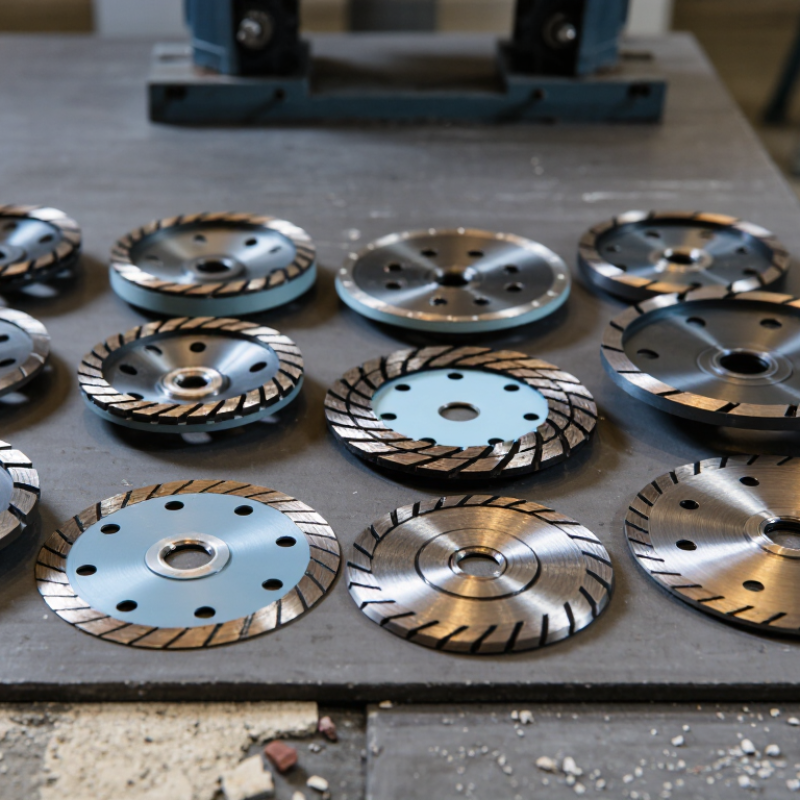
Diamond cutting blades are classified by construction, abrasive grade, and intended material. The ten common types include segmented, continuous-rim, turbo-rim, electroplated, laser-welded, sintered, vacuum-brazed, thin-rim, core-drill, and multi-purpose blades. This list is practical, but not perfectly uniform. Manufacturers may use different names for similar designs.
The main classification begins with the cutting edge. Segmented blades leave small gaps between diamond sections, helping remove concrete dust and heat. Continuous rims produce cleaner cuts in tile, glass, and other brittle materials. Turbo rims balance speed and finish. Buyers should also check diamond concentration, grit size, bond hardness, blade diameter, arbor size, and wet or dry operation. ISO 6106 provides terminology for superabrasive grain sizes, while EN 13236 addresses safety requirements for superabrasive tools. These standards support comparison, but they do not replace application testing.
Market data shows why classification matters. The U.S. Geological Survey reported roughly 16 billion carats of synthetic industrial diamond production in 2023, confirming the scale of engineered abrasive supply. A 2024 Grand View Research assessment also described diamond tools as a multi-billion-dollar global market, driven by construction, stone processing, and infrastructure work. In field use, a hard bond can cut abrasive concrete poorly, while a soft bond may wear quickly on dense porcelain. That mistake is common. Cutting speed alone is not enough; kerf quality, cooling, dust control, and service life must be recorded before selecting a blade.
Diamond cutting blades are commonly classified by rim geometry, diamond-bond system, joining method, cutting method, and target material. The categories below may overlap; for example, a segmented blade can also be laser-welded and metal-bonded.
| No. | Blade Type | Primary Classification Basis | Typical Cutting Edge or Bond | Best-Suited Materials | Typical Cutting Method | Main Advantages | Common Limitations | Typical Equipment and Buyer Checks |
|---|---|---|---|---|---|---|---|---|
| 1 | Continuous-Rim Tile Blade | Rim geometry; uninterrupted diamond rim | Continuous metal or metal-resin rim with evenly distributed diamond abrasive | Ceramic tile, porcelain tile, glass tile, marble, and other brittle finishes | Wet cutting | Clean, controlled cuts with low edge chipping when properly cooled and aligned | Usually slower than segmented designs; dry use may overheat the rim and damage the material | Tile saws and compact wet saws; verify arbor diameter, blade runout, maximum RPM, and water-flow requirements |
| 2 | Turbo-Rim Blade | Rim geometry; serrated or corrugated continuous rim | Continuous turbo rim with angled or raised diamond segments | Concrete, brick, block, stone, masonry, roof tile, and some ceramics | WetDry | Faster stock removal than a smooth continuous rim while retaining relatively good cutting control | May leave a rougher edge than a continuous-rim tile blade; aggressive designs can chip fragile tile | Angle grinders, masonry saws, and tile saws; check the application rating before using on porcelain or glass |
| 3 | Segmented-Rim Blade | Rim geometry; separate diamond segments divided by gullets | Individual metal-bond segments separated by cooling and debris-clearance gullets | Concrete, reinforced concrete, asphalt, brick, block, stone, and general masonry | WetDry | High cutting speed, efficient debris removal, and good cooling through the segment gaps | Typically produces a rougher edge and more vibration than a continuous rim; unsuitable for precision finish cuts | Cut-off saws, concrete saws, masonry saws, and angle grinders; confirm reinforcement rating, blade direction, and RPM |
| 4 | Laser-Welded Segmented Blade | Segment-joining method combined with segmented geometry | Diamond segments attached to the steel core by laser welding rather than conventional brazing | Reinforced concrete, cured concrete, hard masonry, stone, and asphalt | WetDry | Strong segment attachment and reliable performance in demanding professional cutting applications | Often costs more than standard brazed blades; performance still depends on correct bond hardness and machine setup | Floor saws, wall saws, road saws, and heavy-duty cut-off saws; verify permitted dry-use duration and machine power |
| 5 | Electroplated Diamond Blade | Diamond-retention method; single-layer electroplated coating | Exposed diamond particles fixed to the rim or core by an electroformed nickel layer | Glass, fiberglass, carbon-fiber-reinforced plastic, plastics, rubber, composites, and some soft stone | WetDry | High initial diamond exposure, fast cutting, and the ability to produce thin or intricate profiles | Usually has a shorter usable life than multi-layer bonds because the blade is normally not redressable after diamond loss | Precision saws, small power tools, and specialty cutting systems; check chemical compatibility and avoid excessive side loading |
| 6 | Vacuum-Brazed Diamond Blade | Diamond-retention and joining method; brazed diamond layer | Diamond particles are bonded to the cutting edge by a high-temperature brazing process | Stone, concrete, brick, fiberglass, composites, plastics, and selected construction materials | WetDry | High diamond protrusion, aggressive cutting, and good debris clearance in many dry applications | Cutting life can be shorter than a properly matched sintered blade on highly abrasive materials; heat can reduce bond life | Angle grinders, drills, routers, and specialty tools; verify allowable RPM, cooling method, and side-cutting limitations |
| 7 | Sintered Metal-Bond Blade | Bond system; diamond and metal powder consolidated by sintering | Multi-layer metal-bond segments or rims containing diamond abrasive throughout the working layer | Concrete, stone, masonry, ceramics, asphalt, and other abrasive or high-load materials | WetDry | Long working life, strong segment structure, and the ability to expose new diamond as the bond wears | May cut less aggressively if the bond is too hard for the material; requires correct bond selection and dressing behavior | Construction saws, tile saws, floor saws, and CNC systems; compare bond hardness with material abrasiveness and machine power |
| 8 | Resin-Bond Diamond Blade | Bond system; resin-based abrasive matrix | Diamond held in a resin or resin-metal composite layer, generally designed for controlled finishing | Glass, ceramics, carbide, engineered stone, semiconductor materials, and other precision-work materials | WetPrecision use | Low cutting force, good surface finish, and suitability for applications requiring dimensional control | Generally wears faster than metal bonds in heavy masonry cutting and is sensitive to heat and unsuitable pressure | Precision saws, CNC equipment, and laboratory or fabrication systems; check coolant, feed rate, and workpiece fixturing |
| 9 | Thin-Kerf Diamond Blade | Blade geometry; reduced core and cutting width | Thin continuous, turbo, or segmented rim mounted on a narrow steel core | Tile, glass, stone veneer, engineered stone, thin masonry, and materials where kerf loss matters | WetDry | Reduced material waste, lower cutting resistance, and efficient use of smaller or lower-power equipment | More vulnerable to bending, overheating, and side pressure; not generally intended for heavy reinforced concrete | Tile saws, compact saws, and small grinders; confirm minimum machine power, maximum RPM, and arbor fit |
| 10 | Core-Drill or Ring-Segment Diamond Blade | Tool form; annular cutting rim rather than a flat disc | Diamond segments or continuous diamond matrix around a cylindrical core barrel | Concrete, reinforced concrete, masonry, stone, and installation openings for pipes or anchors | WetDry | Produces circular holes with accurate diameter control and can cut through dense construction materials | Requires stable alignment and suitable drilling equipment; dry drilling creates dust and can increase heat and wear | Core drills and rig-mounted systems; verify segment height, connection type, drilling diameter, RPM, water supply, and reinforcement capability |
Buyer note: A suitable blade should be selected by matching the material hardness and abrasiveness, required edge quality, wet or dry cutting method, machine power, blade diameter, arbor or connection type, maximum operating speed, and applicable safety instructions. Product specifications should be checked against the relevant regional requirements, including machinery, personal-protection, and abrasive-tool safety provisions.
Common types include segmented, continuous-rim, turbo-rim, electroplated, vacuum-brazed, sintered, thin-rim, laser-welded, dry-cut, and wet-cut blades. Names may overlap.
Segmented blades suit concrete, masonry, and deep dry cuts. Their gaps help remove dust and heat. They may leave rougher edges.
Continuous-rim blades usually produce cleaner edges on ceramic, glass, and porcelain. Use steady movement and suitable cooling. Fragile edges still may chip.
A turbo rim balances cutting speed and surface finish. It fits jobs needing faster cutting without completely sacrificing edge quality.
Softer bonds often suit hard materials, such as granite or engineered stone. Harder bonds can last longer in abrasive concrete or sandstone.
Wet cutting reduces heat and dust, but the water must stay clean. Dry cutting is convenient, yet overheating can damage the blade.
Check material type, blade diameter, arbor size, rated speed, rim height, diamond grit, concentration, bond hardness, and machine power.
Test one blade on the actual material first. Record cutting time, edge damage, noise, dust, kerf width, and visible wear.
No. Classification helps comparison, but field conditions differ. A perfect chart does not exist. I would test before making a large purchase.
High speed may increase chipping, heat, dust, or blade wear. Cutting quality and service life matter too. Speed alone can mislead.
This guide explains the fundamentals and classification standards of the Diamond Cutting Blade, helping global buyers understand how blade design affects cutting performance. It introduces ten major types, including segmented, continuous-rim, turbo, electroplated, sintered, vacuum-brazed, thin-kerf, dry-cutting, wet-cutting, and specialty blades. Each type is discussed in relation to suitable materials, equipment, and applications, from concrete and stone to ceramics, glass, and other demanding surfaces.
The guide also examines key performance factors such as diamond concentration, bond composition, grit size, cutting speed, heat control, and service life. For international purchasing, buyers should evaluate dimensional accuracy, material compatibility, balance, packaging, documentation, and quality inspection procedures. Proper operating methods, protective equipment, and compliance with applicable safety requirements are equally important. By comparing these factors systematically, purchasers can select a reliable Diamond Cutting Blade that delivers efficient, precise, and durable results across different working environments.