Engineered for extreme performance across porcelain, sintered stone, hard granite, marble, and industrial ceramics.
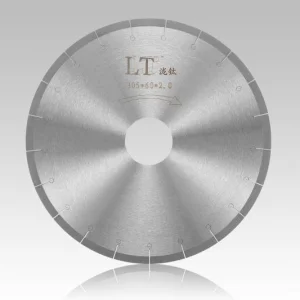
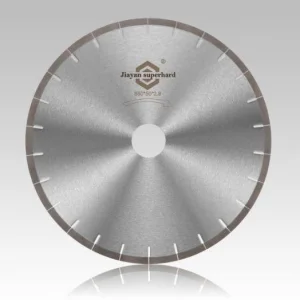
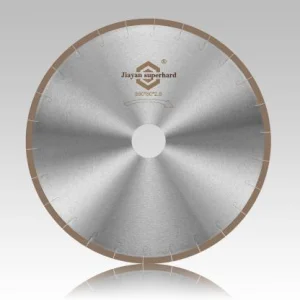
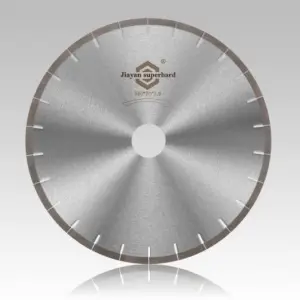
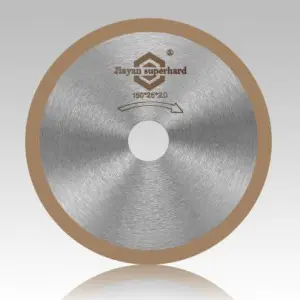
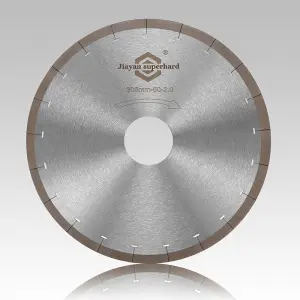
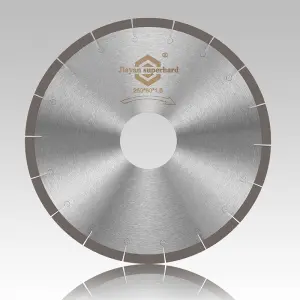
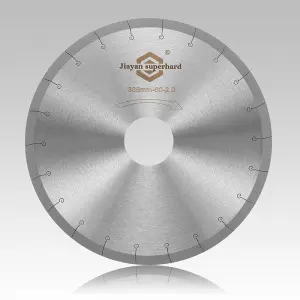
Analyzing global demand, material evolution, and supply chain shifts in the 254mm industrial saw blade sector.
The global industrial tooling sector is experiencing a paradigm shift driven by the rapid growth of high-density engineered substrates, porcelain ultra-slabs, sintered stone, and reinforced architectural alloys. Within the industrial cutting tool domain, the 10-inch (254mm) circular saw blade represents the single most versatile and critical dimensional standard across construction, stone processing, and woodworking industries worldwide. Achieving the optimal balance between rotational peripheral speed (linear meters per second), torque transfer efficiency, and blade tension stability, 10-inch blades serve as the core tooling choice for high-speed table saws, stationary bridge saws, CNC cutting centers, and heavy-duty jobsite equipment.
For international procurement directors, OEM brand managers, and regional distributors, navigating the global manufacturing ecosystem requires a granular understanding of metallurgical formulations, core steel heat-treatment standards, diamond matrix sintering technologies, and dynamic runout balance. China's superhard material hub—led by certified leaders such as JIAYAN Superhard Tools—has consolidated global supply chains by combining advanced hot-pressed sintering technology with rigorous ISO9001 and EN13236 compliance. This technical guide serves as an authoritative whitepaper evaluating top manufacturers, manufacturing methodologies, technical specifications, and macro-economic trends shaping the global 10-inch circular saw blade market.
Modern architectural surfaces have evolved from traditional Mohs 3 marble and Mohs 6 granite to Mohs 7+ sintered stones (such as Dekton, Neolith, and Lapitec). Cutting these ultra-compact materials requires advanced cobalt-nickel bronze bonds combined with microscopic synthetic diamond crystals to prevent edge chipping while maintaining high linear feed speeds.
A blade’s performance relies heavily on its alloy steel core. Leading exporters utilize high-tensile 75Cr1 or 65Mn spring steel, subjected to computerized laser cutting, stress relief tempering, and precision tensioning to maintain flatness under intense thermal stress and high RPM friction.
Transitioning from manual high-frequency brazing to fully automated vacuum hot-press sintering and high-energy laser welding eliminates joint porosity, dramatically increasing segment shear strength to withstand rigorous industrial cutting applications without tooth loss.
Deconstructing the diamond matrix chemistry, tooth geometries, and core stabilization mechanisms behind high-performance 254mm saw blades.
The active cutting segment of a 10-inch diamond circular saw blade is a metal-matrix composite (MMC) consisting of synthetic diamond grit uniformly dispersed within a sintered metal alloy matrix. Key variables engineered by top manufacturers include:
Operational stability at peripheral speeds exceeding 50 m/s demands sophisticated dynamic core balancing and acoustics management:
Under-sintering leads to premature diamond loss due to weak mechanical retention, whereas over-sintering causes thermal degradation (graphitization) of the synthetic diamond crystals at temperatures exceeding 900°C. Tier-1 manufacturers utilize controlled-atmosphere hot-press sintering furnaces with precise vacuum controls to sinter segment matrices at exact temperature-pressure curves (e.g., 820°C at 25 MPa), optimizing both mechanical hold and thermal stability.
Comprehensive engineering matrix matching tooth geometry, bond hardness, and operational parameters with specific substrate density.
| Target Substrate Material | Blade Rim Design | Bond Formulation | Diamond Mesh Size | Optimum Operating RPM | Cooling Mode | Linear Cutting Speed |
|---|---|---|---|---|---|---|
| Sintered Stone / Dekton | Continuous J-Slot Rim | Soft Bronze-Cobalt Bond | 60/70 Mesh Fine Grit | 3,800 – 4,500 RPM | Wet Cutting Required | 1.2 – 2.0 m/min |
| Hard Granite (Class 4/5) | Keyhole Segmented Rim | Medium-Soft Cobalt Bond | 40/50 Mesh Medium Grit | 4,000 – 5,200 RPM | Wet / Flash Cool | 2.5 – 3.8 m/min |
| Vitreous Porcelain Tile | Continuous Thin Kerf (1.2mm) | Soft Nickel-Bronze Matrix | 70/80 Mesh Ultra Fine | 4,500 – 6,000 RPM | Wet / Dry Compatible | 1.8 – 3.0 m/min |
| Calacatta / Carrara Marble | Narrow Keyhole / Electroplated | Hard Iron-Copper Matrix | 50/60 Mesh Standard Grit | 3,500 – 4,800 RPM | Wet Cutting Preferred | 2.0 – 3.5 m/min |
| Reinforced Concrete / Masonry | Laser-Welded Segmented | Hard Tungsten-Reinforced | 30/40 Mesh Coarse Grit | 4,000 – 5,800 RPM | Dry / Wet Universal | 3.0 – 5.0 m/min |
| Hardwood / Engineered Timber | Tungsten Carbide Tipped (TCG) | C4 Micro-Grain Carbide | N/A (Carbide Tooth) | 4,800 – 6,100 RPM | Dry Operation | 5.0 – 12.0 m/min |
A rigorous audit framework based on Google E-E-A-T principles for global B2B buyers, distributors, and private-label brand managers.
Verify that the manufacturer holds active EN13236 certification (Safety requirements for superabrasive products) and ISO9001:2015 quality management verification. Compliance ensures every blade withstands centrifugal bursting stresses up to 1.5x maximum operating speed without structural failure.
Examine whether the supplier operates dedicated testing facilities equipped with dynamic balancing rigs, automated optical runout measuring devices, segment shear strength testing apparatus, and computerized hardness testers. Reputable manufacturers provide batch-specific inspection certificates.
A true Tier-1 manufacturer offers comprehensive OEM/ODM capabilities, including custom metal matrix bond engineering based on regional stone MOHS hardness, laser logo marking, custom color coating, custom bore dimensions (50mm, 60mm, 25.4mm), and retail package design.
Understanding how jobsite requirements, stone geology, and regional machinery shape 10-inch saw blade specifications across global markets.
In the United States and Canada, 10-inch circular saw blades dominate both residential construction framing (mounted on worm-drive and dual-bevel miter saws) and commercial countertop fabrication shops. The rapid rise of engineered quartz and hard Brazilian quartzites has driven demand for ultra-durable 10" bridge saw blades equipped with high-concentration cobalt-nickel segments that prevent core heat warpage during intense dry and wet processing sessions.
European markets—particularly Italy, Spain, and Germany—enforce stringent acoustic environmental regulations alongside high finishing standards for ultra-thin 6mm and 12mm porcelain slabs. High-end exporters supply 10-inch sandwich-type "Silent Cores" featuring viscoelastic acoustic damping layers embedded within the steel core, combined with fine-mesh continuous J-slots to ensure chip-free edges required by European master stonemasons.
The Middle East construction sector requires robust diamond tooling capable of continuous heavy-duty slab trimming under extreme ambient temperatures. Exporters catering to Saudi Arabia, the UAE, and Qatar utilize special heat-tolerant silver-alloy brazing and high-diamond concentration segments specifically engineered to maintain structural bond strength during continuous high-friction wet cutting of thick granite slabs.
Across manufacturing hubs in China, Vietnam, and India, high-speed automated CNC bridge saws operate continuously at high linear feed rates. 10-inch blades optimized for this region focus on ultra-consistent core geometry, strict radial runout control (< 0.015mm), and self-sharpening segment bonds designed to maximize daily square-meter cutting throughput with zero operator intervention.
Strategic procurement approaches to reduce cost-per-square-meter cut while increasing operational lifespan.
In high-volume stone fabrication factories and industrial construction projects, evaluating circular saw blades purely on initial purchase price is a flawed strategy. Smart procurement directors calculate performance based on **Total Cost of Ownership (TCO)** and **Cost Per Linear Meter Cut (CPLM)**. A low-cost blade with poor bond engineering may fail prematurely, cause edge chipping on expensive slabs, or force frequent tool changeover downtime—costing exponentially more in lost productivity.
Matching bond hardness inversely to material hardness ensures self-sharpening matrix wear. Using a hard-bond blade on hard granite causes blade glazing and core overheating, whereas using a soft-bond blade on abrasive sandstone results in rapid segment destruction.
For industrial 10-inch bridge saw blades utilizing premium 75Cr1 steel cores, leading manufacturers engineer core tensioning to withstand 3 to 5 segment retipping cycles. Replacing worn segments via high-frequency silver soldering reduces long-term tooling expenditures by up to 40%.
Operating 10-inch blades at exact manufacturer-recommended peripheral speeds (35-45 m/s for stone, 50-60 m/s for wood) combined with continuous, dual-directed water jet cooling extends blade lifespan by up to 65% while preventing thermal micro-cracking.
Emerging innovations in CVD diamond coatings, automated AI manufacturing, and sustainable metallurgical recycling.
Chemical Vapor Deposition (CVD) technology is allowing manufacturers to deposit ultra-hard nano-crystalline diamond films directly onto matrix segments and core bodies, dramatically lowering friction coefficients, reducing heat generation, and expanding tool longevity by over 200%.
Next-generation production lines integrate real-time computer vision and artificial intelligence algorithms to inspect thermal distribution during hot-press sintering. Instantaneous closed-loop feedback guarantees zero internal segment porosity and precise diamond grain alignment.
Environmental standards are accelerating the development of cobalt-free metal matrix bonds. Modern metallurgical formulations utilize eco-friendly iron-nickel-copper alloys that match traditional cobalt toughness while complying with international sustainable sourcing guidelines.
Direct technical answers to common queries raised by international buyers, machinery operators, and distributors.
The 10-inch (254mm) diameter strikes an optimal balance between structural core rigidity, depth of cut (up to 3.5 to 4 inches), and manageable motor torque requirements. It fits seamlessly onto standard jobsite table saws, dual-bevel miter saws, and stationary bridge saws without requiring specialized high-horsepower motors.
Hot-Pressed Sintering forms the segment and bonds it to the core under heat and pressure simultaneously—ideal for continuous rim ceramic and tile blades. Laser Welding uses high-energy beams to fuse pre-sintered segments directly to the steel core, achieving maximum joint shear strength for heavy-duty dry masonry and concrete cutting.
Edge chipping is minimized by selecting a 10-inch blade with a continuous J-Slot or Turbo rim, fine diamond mesh grit (60/80 mesh), soft bronze bond formulation, and ensuring continuous wet cooling with an operational spindle speed calibrated between 3,800 and 4,500 RPM.
Blade wobble is caused by core overheating, improper mounting flange torque, exceeding maximum RPM ratings, or bent steel cores. Leading manufacturers tension cores to < 0.02mm runout tolerances. Operators should check flange alignment and clean arbor surfaces regularly.
Laser-welded segmented blades with expansion slots are specifically engineered for dry cutting applications on masonry and concrete. However, for glass tile, marble, and sintered stone slabs, continuous wet cutting is mandatory to prevent thermal stress fractures and extend segment life.
Professional exporters such as JIAYAN Superhard offer flexible MOQ options starting from 50 to 100 units for standard sizes, with comprehensive OEM private-label branding, customized arbor holes, personalized laser etching, and tailored metal matrix bond formulations.
Direct access to our certified manufacturing series for high-speed cutting, slab trimming, and heavy industrial processing.