Engineered for low-vibration, zero-chipping, and high-speed execution across ceramic, porcelain, marble, and sintered stone substrates.
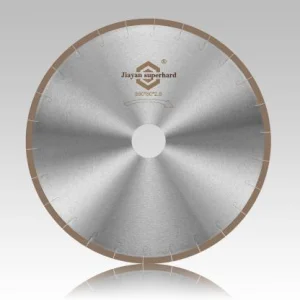
Thermal dissipation slots engineered for ultra-fast wet cutting of vitrified ceramic tiles and marble with zero micro-fracturing.
View Product Specs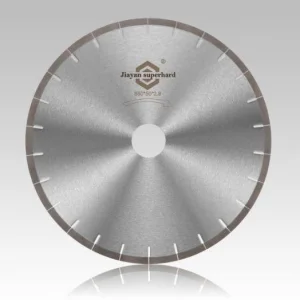
Heavy-duty diamond circular disc featuring reinforced steel core for extreme structural stability during deep granite slab processing.
View Product Specs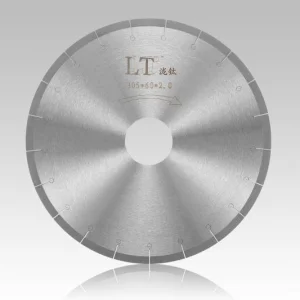
Tailored matrix formulation specifically engineered to conquer hard, ultra-compact sintered stone slabs without stress cracking.
View Product Specs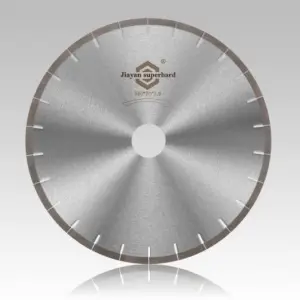
High diamond concentration segment design providing maximum wear resistance under continuous industrial bridge saw operation.
View Product Specs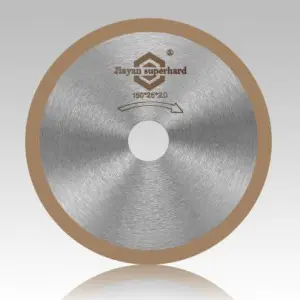
Optimal tool for manual power grinders and table saws. Designed for intricate corner shaping and detail tile cutting.
View Product Specs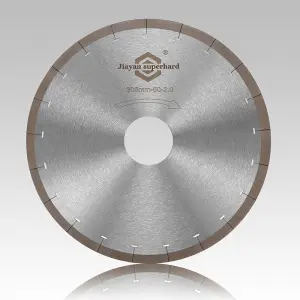
Hot-isostatic sintered bond ensuring smooth rim cutting faces for fine porcelain and polished wall tiles.
View Product Specs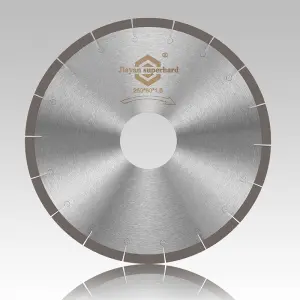
High-strength laser-welded joint connection between diamond segment and steel core for maximum operator safety.
View Product Specs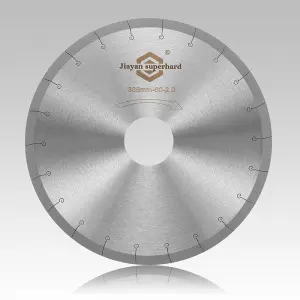
Ultra-narrow cut width minimizes material waste, reduces kerf resistance, and delivers clean splinter-free edges.
View Product SpecsUnderstanding market shifts toward high-density ceramic, large-format porcelain, and sintered stone materials.
The global construction and architectural surfacing industry has undergone a monumental shift over the past decade. Modern architectural trends increasingly favor large-format porcelain slabs (often measuring up to 3200mm × 1600mm) and ultra-compact sintered stone materials like Dekton, Neolith, and Lapitec. While these modern materials offer exceptional flexural strength, scratch resistance, and zero porosity, they present severe mechanical challenges to cutting tools. With Mohs hardness ratings fluctuating between 7 and 8 and extreme internal tension distributions, cutting these surfaces without micro-cracking or edge chipping requires diamond tools engineered with surgical precision.
In this evolving eco-system, searching for the best blade tiles cutting factories & company is no longer just a purchasing routine—it is a critical technical procurement decision. International distributors, OEM tool brands, and industrial stone processing hubs must partner with manufacturers that possess deep domain expertise in synthetic diamond powder grading, cobalt-bronze matrix sintering, and laser-stress-relieved steel core dynamics.
Technical Insight: Traditional abrasive cutting discs or poorly formulated diamond segments cause localized thermal stress spikes. When cutting high-density porcelain (water absorption < 0.5%), unevaporated cutting heat causes micro-fracturing along the cut line. High-grade J-slot and ultra-thin continuous rim blades prevent this by maintaining uniform chip loads and continuous coolant dispersion.
Global demand for high-performance diamond saw blades is heavily driven by rapid urban infrastructure development in North America, Western Europe, the Middle East, and Southeast Asia. Procurement officers require reliable suppliers who can offer consistency across massive order volumes, ensuring that a blade manufactured in Batch A exhibits identical wear rates, dynamic balance, and cut speed as a blade manufactured in Batch Z.
Deconstructing the three core elements of industrial-grade diamond saw blades: Diamond Grit, Bond Matrix, and Core Steel.
A high-performance diamond cutting disc is a sophisticated composite material system. The operational efficiency and lifespan of the blade depend entirely on the synergy between three engineered components:
Not all synthetic diamonds are created equal. High-tier manufacturers like JIAYAN Superhard utilize premium MBD-grade (Metal Bond Diamond) synthetic diamond monocrystals synthesized under ultra-high pressure and temperature (HPHT). For tile cutting applications:
The metal bond acts as a mechanical anchor for the diamond grit. It must wear away at a rate proportional to diamond breakdown, continually exposing fresh, sharp diamond cutting edges (self-sharpening mechanism). Key matrix metals include:
The steel core (typically 75Cr1 or 65Mn spring steel) serves as the structural foundation. Premium factories utilize laser cutting for precision arbor holes, followed by stress-relieving heat treatment and automated double-sided surface grinding. Dynamic balancing guarantees that radial and axial run-out stay strictly below 0.03mm, preventing blade wobble, chatter marks, and fatigue failure at operating speeds up to 80 m/s.
| Blade Specification | Standard Ceramic Blade | Porcelain & Vitrified Tile Blade | Sintered Stone Industrial Blade |
|---|---|---|---|
| Diamond Grit Size | 50/60 Mesh | 60/80 Mesh | 70/100 Micro-Mesh |
| Matrix Bond Type | Bronze-Iron Base | Cobalt-Bronze Soft Base | Pre-alloyed High-Tenacity Matrix |
| Segment Rim Geometry | Continuous Rim / Turbo | J-Slot / Ultra-Thin Continuous | Narrow Keyhole J-Slot Rim |
| Max Peripheral Speed | 35 - 45 m/s | 40 - 50 m/s | 28 - 38 m/s (Precision Wet) |
| Kerf Thickness Range | 1.6mm - 2.2mm | 1.0mm - 1.4mm | 1.2mm - 2.0mm |
Why leading global brands choose Chinese superhard material clusters for high-volume OEM/ODM partnerships.
China produces over 85% of the world’s synthetic diamond raw materials and superhard cutting tools. This market dominance is not merely a product of labor availability; it stems from unmatched industrial cluster integration, automated powder metallurgy technology, and massive capital investments in R&D.
Factories located in key manufacturing hubs—such as JIAYAN Superhard in Wuhu, Anhui—benefit from direct access to raw synthetic diamond supply chains, localized metal powder atomization facilities, and precision steel disc press shops. This complete vertical integration yields distinct commercial advantages for global enterprise buyers:
Computer-controlled multi-cavity vacuum hot-pressing machines ensure uniform pressure distribution and micro-density across every single segment batch.
Automated 3D laser-welding work cells guarantee 100% joint integrity, exceeding EN13236 torque and shear strength requirements by over 40%.
Streamlined supply chain logistics and massive scale lower unit production costs, enabling global buyers to achieve 30%–45% higher gross margins.
Furthermore, Chinese superhard material enterprises have transitioned from basic manufacturing to high-end custom engineering. Advanced OEM/ODM services allow global brands to request precise matrix tweaks, custom paint coatings, laser-etched branding, anti-vibration slot patterns, and bespoke packaging solutions ready for immediate retail or industrial distribution.
Deploying specialized diamond blades across diverse architectural, industrial, and civil construction environments.
Different installation environments demand unique physical configurations of diamond saw blades. Selecting the wrong blade geometry leads to premature wear, blade glazing, thermal distortion, or destroyed tile workpieces. Below are four primary field application scenarios:
Field Conditions: Industrial stone fabrication yards utilizing 5-axis CNC bridge saws or automated gantry cutting tables. High water pressure, continuous operation.
Tool Recommendation: 300mm–350mm J-Slot continuous rim diamond saw blade featuring ultra-fine grit and soft cobalt-bronze matrix. The J-slot laser cuts absorb thermal expansion while channeling high-volume water directly to the cut interface, preventing micro-chipping on delicate polished slab edges.
Field Conditions: Factory inline cutting units slitting ceramic and vitrified floor tiles at feed speeds exceeding 3–5 meters per minute.
Tool Recommendation: Hot-pressed continuous rim saw blades with high diamond concentration and wear-resistant iron-cobalt matrix. These blades maintain steady kerf dimensions over thousands of meters of continuous cutting.
Field Conditions: Job-site tile installers working with angle grinders, small wet tile saws, or portable electric cutters under both wet and dry conditions.
Tool Recommendation: 105mm–125mm 1.0mm/1.2mm ultra-thin mesh turbo disc or continuous rim blade. The ultra-narrow kerf requires lower motor power, reduces dust emissions, and delivers quick, smooth hand-guided cuts on porcelain wall tiles and mosaic pieces.
Field Conditions: Exterior stone cladding, curbstone production, and commercial building facade installation.
Tool Recommendation: 350mm–600mm laser-welded segmented diamond blades featuring alternating keyhole slots and hard matrix bonds designed to withstand intermittent shock loads in abrasive stone materials.
Inside JIAYAN Superhard's specialized production base in Wuhu, China.

Computerized atmosphere control prevents oxidation during matrix hot-pressing, maximizing diamond retention strength.
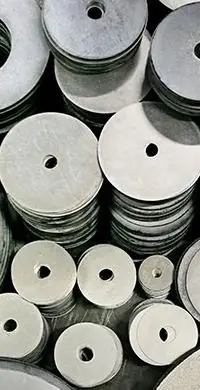
Every production batch undergoes destructive torque and shear testing to verify weld joints meet international safety criteria.

Robotic edge grinders guarantee consistent rim geometry, lateral alignment, and razor-sharp cutting readiness out of the box.

High-speed spin balancing eliminates dynamic vibration, extending spindle motor life on client bridge saws.
Key technological breakthroughs driving the next era of superhard tool performance.
The diamond tool industry is evolving rapidly to match breakthroughs in architectural materials science. Manufacturers who remain at the forefront of R&D are implementing four major technical innovations:
Traditional blades feature core thicknesses between 1.8mm and 2.2mm. Modern micro-kerf blades reduce core thickness to 1.0mm or 1.2mm. This design drastically reduces friction resistance, cuts material loss by up to 50%, yields cleaner chip-free cuts, and enables cordless power tools to double their battery run-time per charge.
Industrial stone processing shops face strict occupational noise regulations. Silent core saw blades feature a laminated "sandwich" core consisting of two hardened steel plates separated by a thin copper dampening foil. This structural vibration damper reduces operational noise levels by 10 to 15 decibels while suppressing resonant chatter.
Environmental standards restrict heavy metal dust during dry-cutting operations. Modern matrix formulations replace volatile elements with environmentally stable bronze-iron alloys and low-volatility synthetic bonding agents, delivering exceptional cutting speed while minimizing hazardous airborne particulate release.
Leading factories are integrating vision-guided AI inspection systems directly onto assembly lines. Automated optical sensors inspect 100% of finished blades for segment run-out, micro-cracks, rim thickness uniformity, and laser weld integrity at line speed, establishing absolute batch reliability.
A structured checklist for procurement directors, distributors, and tool brand managers auditing diamond tool suppliers.
Selecting an OEM supplier for diamond saw blades requires careful evaluation of technical capabilities, safety standards, and batch consistency. Below is the 5-point evaluation framework recommended for global enterprise sourcing:
1. Safety Standard & Compliance: Ensure the factory holds ISO9001 quality management system certification and strictly complies with European Safety Standard EN13236 (Safety requirements for superhard abrasive products). Blades failing shear stress tests present severe physical safety risks in field environments.
2. Core Steel Grade & Heat Treatment: Audit the factory's raw steel sources. High-grade spring steel cores (such as 75Cr1) subjected to stress-relieving tempering resist dishing, bowing, and thermal warping under high feed rates.
3. Matrix Recipe Customization: Confirm whether the supplier offers tailored matrix bonding based on target market tile characteristics. For instance, European vitrified tiles require softer bond matrices compared to American concrete-backed tile substrates.
4. Run-Out Tolerances & Dynamic Balancing: Request certified test reports verifying that axial run-out remains under 0.03mm and radial run-out stays under 0.05mm. Excessive run-out causes rapid edge chipping and premature blade fatigue.
5. OEM / ODM Branding Capabilities: Verify that the factory can execute customized laser engraving, specialized rim color powder coating, custom retail box packaging, and barcode integration with low minimum order quantities (MOQs).
Tracking JIAYAN Superhard's global technical footprint across international stone and ceramic exhibitions.
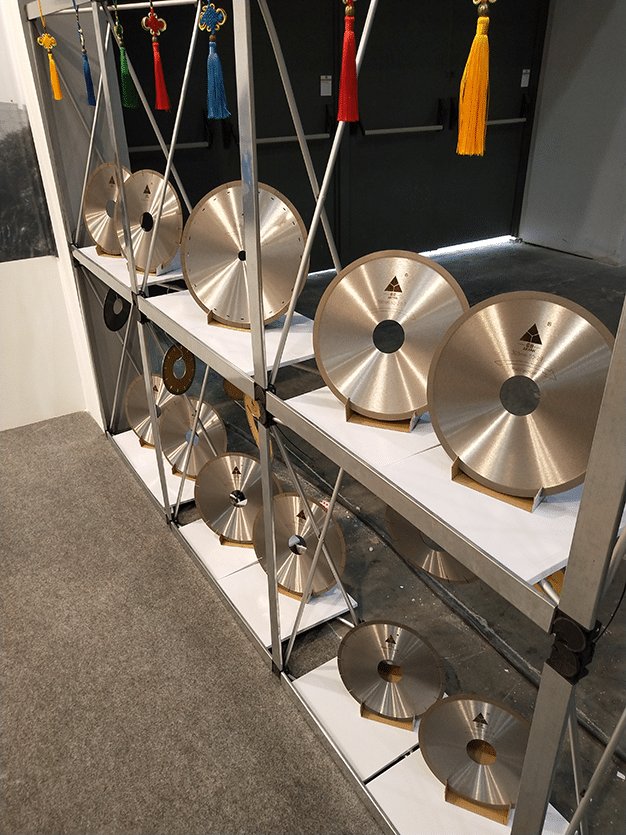
Comprehensive analysis of microstructure testing, dynamic torque evaluation, and non-destructive inspection for laser-welded diamond segments.
Read ArticleJIAYAN presented next-generation ultra-thin J-slot blades at the Canton Fair Complex, demonstrating zero-chipping performance on 12mm sintered stone slabs.
Read Event ReportExhibiting superhard tool advances alongside Italian ceramic machinery leaders, strengthening export partnerships across the European Union.
Read Event ReportExpert solutions to common cutting failures encountered by stone fabricators and tile contractors.
Explore our export-grade catalog ready for global B2B wholesale, distributor supply, and OEM branding.
Optimized for high-speed precision cutting of vitrified ceramic and marble without edge spalling.
View Product Specs
Industrial bridge saw disc formulated with ultra-tough cobalt matrix for dense natural granite stone.
View Product Specs
State-of-the-art matrix engineering specifically designed to cut high-density Dekton & Neolith slabs.
View Product Specs
High-tensile steel core ensures minimum deflection and high directional stability on large block saws.
View Product Specs
Compact size continuous rim blade designed for clean dry or wet hand-tool ceramic cutting.
View Product Specs
Vacuum hot-sintered continuous edge delivers chip-free mirror finishes on porcelain tile borders.
View Product Specs
Maximum safety segment connection designed for demanding commercial construction sites.
View Product Specs
Extreme low kerf friction for effortless, fast cutting on ultra-dense glazed porcelain tiles.
View Product SpecsChina's authoritative manufacturer of superhard cutting tools for stone, ceramic, and granite industries.
Founded in Wuhu, China, JIAYAN Superhard is an active member of the China Superhard Material Association. Combining advanced powder metallurgy sintering technology with strict ISO-certified quality assurance, JIAYAN produces high-performance diamond saw blades, diamond cutting discs, and specialized stone tooling exported to over 50 countries across Europe, North America, the Middle East, and Southeast Asia.
Whether you are looking to source high-volume continuous rim blades for a regional retail tool brand or require customized J-slot segment formulations for large-format sintered stone processing, our engineering team provides complete OEM/ODM technical support, fast prototyping, and reliable container-load delivery schedules.