Precision-engineered superhard tools directly from OEM China manufacturing lines, custom-built for high-speed cutting of granite, marble, porcelain, and sintered stone.
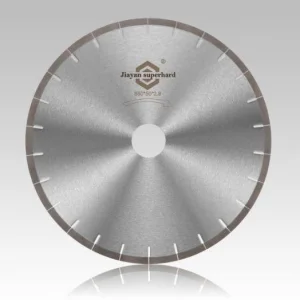
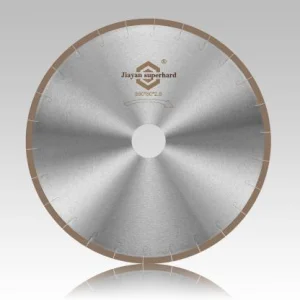
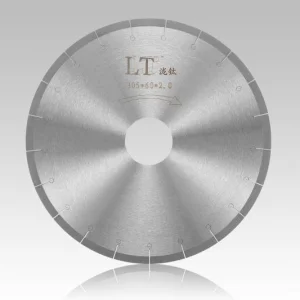
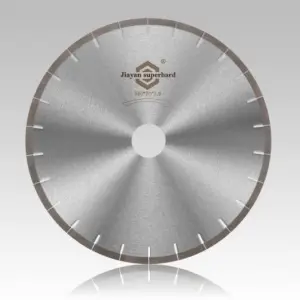
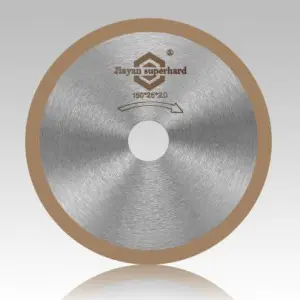
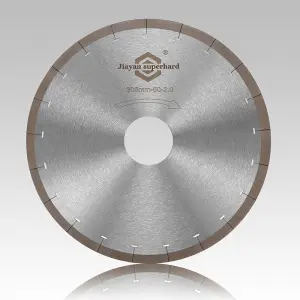
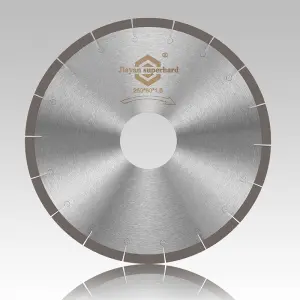
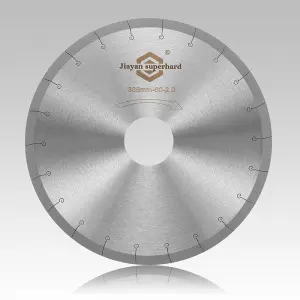
Understanding macro procurement shifts, diamond matrix evolution, and competitive dynamics across key international manufacturing sectors.
The global market for grinder cutting discs and diamond saw blades has seen unprecedented growth, projected to surpass $4.8 billion by 2030. This demand is spearheaded by massive infrastructural investments in North America, Western Europe, and the Middle East, coupled with rapid urbanization in the Asia-Pacific region. Industrial buyers are shifting away from traditional resin-bonded aluminum oxide discs toward high-density synthetic diamond and cubic boron nitride (cBN) cutting discs, seeking longer tool life, reduced operator fatigue, and minimal material loss (kerf width optimization).
Industrial applications now demand material-specific segment bonding. Cutting dense granites, hard engineered quartzites, and ultra-compact sintered stone surfaces (such as Dekton and Neolith) requires micro-engineered metal powder matrices combined with high-grade synthetic diamond grains. Modern procurement teams evaluate angle grinder blades not merely on initial unit price, but on Total Cost of Ownership (TCO) and Cost-Per-Cut (CPC) metrics, favoring automated hot-pressed continuous rim and laser-welded J-slot configurations over legacy cold-pressed options.
Strict workplace safety enforcement by organizations such as OSHA in North America and CE / oSa (Organization for the Safety of Abrasives) compliance in Europe has restructured manufacturing benchmarks. Grinder cutting discs must withstand extreme centrifugal forces exceeding 80 m/s peripheral speed without micro-fracturing or segment detachment. Consequently, premier factories employ automated laser welding systems capable of achieving shear strength values above 25 MPa, establishing a new global safety baseline for heavy industrial operations.
A deep technical analysis into metal powder matrix metallurgy, diamond synthesis grit sizing, sintering dynamics, and segment geometry.
The manufacturing of premium diamond grinder cutting discs involves a complex metallurgical process where synthetic diamond crystals are suspended within a matrix of metallic powders including Cobalt (Co), Nickel (Ni), Copper (Cu), Tin (Sn), and Tungsten Carbide (WC). The precise ratio of these elements determines the hardness and erosion rate of the segment matrix, which must perfectly match the abrasiveness of the target substrate.
Diamond grit selection relies on synthetic monocrystalline diamond grown under High-Pressure High-Temperature (HPHT) conditions. Grit sizes are categorized using mesh numbers (e.g., 30/40, 40/50, 50/60, 60/80):
| Diamond Mesh Size | Particle Size (Microns) | Primary Application Substrate | Cutting Dynamic Characteristics |
|---|---|---|---|
| 30/40 Mesh | 425 – 600 µm | Hard Granite, Reinforced Concrete | High impact resistance, fast stock removal rate. |
| 40/50 Mesh | 300 – 425 µm | General Building Stone, Medium Marble | Balanced speed and edge smoothness. |
| 50/60 Mesh | 250 – 300 µm | Porcelain Tiles, Ceramics, Glass | Chipping-free ultra-clean edge finish. |
| 60/80 Mesh | 180 – 250 µm | Ultra-thin Sintered Stone (Dekton) | Micro-cutting precision, minimal surface friction. |
The physical structural integrity of a cutting disc segment is defined by its thermal sintering cycle:
Hot-pressing applies simultaneous hydraulic pressure (20-35 MPa) and elevated temperature (800°C - 1050°C) inside a controlled vacuum or protective inert gas atmosphere. This guarantees near-zero internal porosity, maximum diamond retention strength, and superior wear durability suitable for heavy-duty industrial angle grinder usage.
For dry cutting applications where water cooling is unavailable, high-power Nd:YAG or Fiber Laser systems weld the diamond segment directly to the 65Mn spring steel core. The laser beam melts the segment base alloy and the steel core together, forming a solid metallurgical bond capable of resisting extreme operational thermal shock up to 600°C.
Analyzing the industrial clusters, scale economies, and automation technologies that make China the hub for high-precision diamond tool manufacturing.
China accounts for over 70% of global synthetic diamond crystal production. Domestic clusters in Henan, Anhui, and Zhejiang allow factories to directly source premium HPHT mesh diamond powders, high-purity ultra-fine cobalt powders, and cold-rolled 65Mn steel discs without international freight markups or tariff delays. This vertical integration guarantees raw material consistency and immediate cost advantages.
Leading Chinese factories like JIAYAN Superhard Tools have transitioned from manual press lines to fully automated multi-cavity sintering presses and robotic laser welding cells. Optical camera sensors inspect 100% of finished cutting discs for concentricity, tension stability, dynamic balance, and kerf thickness tolerance (within ±0.01mm), eliminating batch-to-batch variation.
Whether an importer requires custom segment slots (J-Slot, Keyhole, Turbo Rim), specific arbor sizes (22.23mm, 25.4mm, 50mm, 60mm), localized color coating, or private label laser etching, Chinese manufacturers offer unparalleled speed-to-market. Prototype tooling cycles that take months in Europe are executed within 7 to 10 days in China.
Customizing grinder cutting disc parameters to achieve optimal cutting speeds and tool life across specific industrial environments.
Granite contains high percentages of quartz (Mohs hardness 7), rendering it highly abrasive. Standard cutting discs glaze quickly due to matrix hardening. For granite processing plants, our factories engineered a soft bronze-cobalt matrix combined with coarse 30/40 mesh diamond grit. The fast matrix wear rate continuously exposes fresh, sharp diamond edges, preventing blade glazing and ensuring cutting speeds over 1200 cm²/min.
Modern architectural tiles are extremely dense and brittle, making them prone to edge chipping and micro-cracking during cutting. For high-end interior fitting, JIAYAN utilizes a continuous 1.0mm - 1.2mm ultra-thin Turbo rim with J-slot laser stress relief channels. The thin kerf reduces material resistance, generating clean 45-degree miter joints without surface chipping.
Curing concrete with high rebar (steel reinforcement) content causes severe stress on grinder discs. In roadway expansion joint cutting and bridge repair, laser-welded segmented blades featuring drop-segment undercut protection are deployed. The specialized segments prevent abrasive slurry from wearing down the steel core connection point, eliminating segment loss hazards.
While diamond saw blades dominate stone and masonry, specialized resinoid reinforced abrasive cutting wheels are essential for shipyards and structural steel fabrication. Made from semi-friable aluminum oxide and zirconia alumina, these discs deliver fast cool cutting through heavy stainless steel angle irons and pipes without thermal discoloration or burr formation.
How AI, advanced materials science, and eco-friendly manufacturing are shaping the next generation of cutting tools.
Traditional segment production distributes diamond particles randomly within the metal bond. Next-gen factories are introducing 3D Controlled Patterning (Arix technology), where AI robotic positioners align individual diamond crystals in precise geometric grids. This ensures every diamond grain carries an equal cutting load, increasing tool life by up to 50% and boosting speed by 30%.
Noise pollution and high-frequency hand-arm vibration (HAV) are key safety concerns for handheld angle grinder operators. Modern premium blades feature sandwich steel cores (steel-copper-steel) with laser-etched resin-filled sound damping slots, reducing operational decibel levels by up to 15 dB and dampening vibration frequencies.
Due to environmental regulations and health concerns around cobalt dust inhalation during grinding, leading research centers are replacing cobalt with non-toxic Fe-Ni-Cu-based alloy powders. These eco-binders maintain identical mechanical holding power while complying with European REACH environmental standards.
Key evaluation criteria for purchasing agents, importers, and industrial distributors seeking to audit cutting disc manufacturers.
Selecting the right supplier from thousands of listings online requires a systematic audit framework. Price per piece is often a misleading metric; procurement managers must compute the Cost-Per-Cut (CPC) index using the following formula:
Cost Per Cut ($/m²) = [ Disc Purchase Price ($) + (Operator Labor Cost ($/hr) × Total Cutting Time (hrs)) ] ÷ Total Square Meters Cut (m²)
A blade that costs $15 but cuts 80 square meters of granite yields a significantly lower CPC than a $10 blade that glazes or dulls after only 30 square meters.
Verify whether the manufacturer holds ISO 9001:2015 quality management system certification, ISO 14001 environmental compliance, and EN 13236 / oSa safety standard validation. Ask for burst-test certification verifying dynamic RPM tolerances up to 1.5x maximum operating speed.
Inquire about the factory's dynamic balancing equipment. High-speed angle grinder discs operating at 11,000 to 13,300 RPM will wobble and chatter if tensioning is off by even 0.05mm, leading to jagged cuts and rapid bearing wear on the angle grinder itself.
Expert answers to common operational, technical, and procurement queries regarding grinder cutting discs and diamond blades.
Dry cutting discs feature laser-welded segments or specialized slot geometry (J-slots, keyhole slots) designed to dissipate heat into the air without requiring continuous water cooling. Wet cutting blades typically rely on silver-brazed segments; if run dry, heat can melt the braze solder, causing segment detachment and dangerous failure. Always check the blade marking before operation.
Glazing occurs when the metal bond matrix is too hard for the substrate being cut. The metal matrix does not erode fast enough to release worn, dull diamond crystals and expose new sharp ones. To fix a glazed blade, make a few shallow cuts into an abrasive material like soft sandstone or a dressing stone to strip back the metal matrix and expose fresh diamond grains.
Standard angle grinder discs come with 22.23mm (7/8 inch) arbor holes for 4.5" (115mm), 5" (125mm), 7" (180mm), and 9" (230mm) grinders. Larger bridge saw and walk-behind saw blades range from 25.4mm (1 inch) to 50mm or 60mm arbors with drive pin holes. Factories can supply brass reducing rings to adapt sizes across machinery.
J-Slots expand slightly during high-speed rotation, absorbing thermal expansion stresses and preventing disc warping. Turbo rims feature serrated edge channels that push debris and slurry away from the cut zone while drawing ambient air in to cool the blade core, allowing continuous fast cutting in dense materials.
For handheld angle grinders, maximum safe operating speeds generally scale with diameter: 4.5" (115mm) discs run up to 13,300 RPM; 5" (125mm) up to 12,200 RPM; 7" (180mm) up to 8,500 RPM; and 9" (230mm) up to 6,650 RPM. Never exceed the Max RPM stamped on the disc core, as centrifugal force could cause structural breakdown.
Buyers can submit material samples or technical rock specifications (Mohs hardness, silica content, density) to JIAYAN Superhard Tools. Our R&D lab formulates custom powder bond blends and diamond grit mixtures, producing sample batches for on-site field testing within 10 business days.
Select your desired product range below to inspect detailed technical specifications, request factory direct quotes, or order OEM trial batches.