Engineered for high-feed rate cutting, kerf minimization, and extreme wear resistance in heavy steel, stone, ceramic, and composite manufacturing.
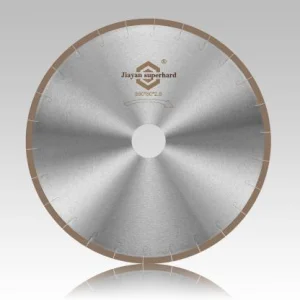
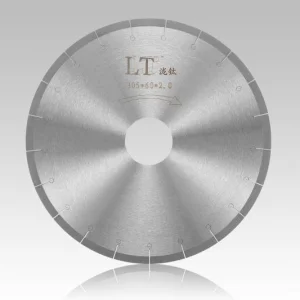
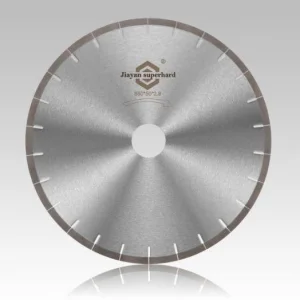
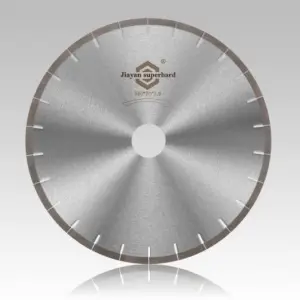
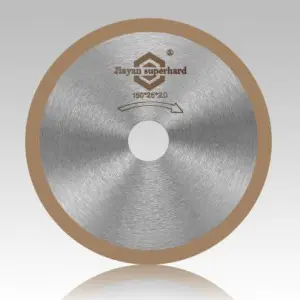
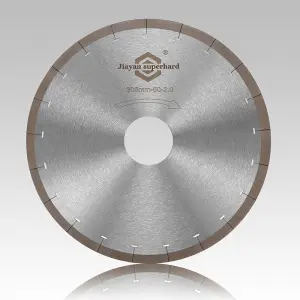
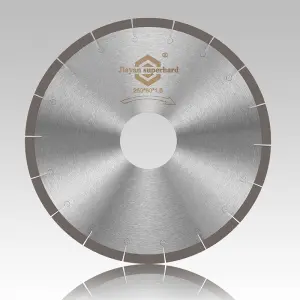
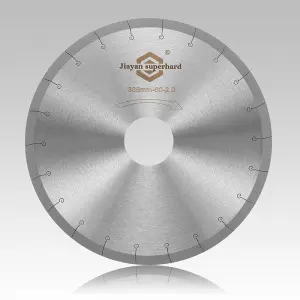
Understanding the microstructural mechanics, supplier matrices, and technological breakthroughs governing modern metal and superhard alloy cutting operations.
In the modern manufacturing landscape, identifying the Best Metal Cutting Blade Exporters & Company requires going beyond surface-level pricing. Advanced industrial procurement directors, factory superintendents, and metallurgy specialists recognize that high-efficiency metal slicing is a complex interplay between tool core dynamics, grain micro-fracturing, matrix powder metallurgy, and thermal stress management.
As global industries transition toward high-strength structural steel, titanium-alloy extrusions, stainless steel tubing, and ultra-dense stone composites, traditional High-Speed Steel (HSS) blades frequently encounter rapid thermal degradation and catastrophic tool failure. Modern manufacturing centers demand high-performance Tungsten Carbide-Tipped (TCT), Cermet-tipped, and Synthetic Diamond (PCD/superhard) circular saw blades engineered to deliver precise cut geometry with zero burr formation and minimal kerf loss.
Search intent mining across tier-1 industrial markets (United States, Germany, Japan, UAE, South Korea) reveals that procurement officers do not merely search for "cheap blades." Instead, high-intent searches focus on performance metrics such as cost-per-cut optimization, thermal deflection limits, laser-welded joint shear strength, custom arbor configurations, and Industry 4.0 supply chain reliability.
For companies like JIAYAN Superhard Tools (a proud member of the China Superhard Material Association), satisfying this global demand requires an unrelenting commitment to technical expertise, continuous metallurgy innovations, and stringent OEM/ODM manufacturing protocols.
Selecting high-purity 75Cr1 or 65Mn spring steel cores, stress-relieved via automated heat treatment to guarantee runout stability under 0.03mm.
Automated laser sintering binds segment bits to the core steel at temperatures exceeding 1,400°C, delivering extreme fracture toughness under impact loading.
Custom expansion slots and thermoplastic resin fillings isolate acoustic frequencies, cutting decibel output and mitigating thermal warping.
How state-of-the-art coatings, micro-geometry designs, and diamond matrix bonds are redefining speed and operational longevity in heavy manufacturing.
The global metal cutting tool market is experiencing a profound paradigm shift driven by high-speed CNC machinery, automated production lines, and stringent environmental directives. Factories can no longer tolerate unexpected tool breakage, blade flutter, or frequent downtime caused by inferior cutting edges.
Key technological advancements engineered into contemporary circular saw blades include:
Coatings such as TiAlN (Titanium Aluminum Nitride), AlCrN (Aluminum Chromium Nitride), and DLC (Diamond-Like Carbon) provide extreme thermal barriers. Operating temperatures up to 900°C are safely insulated, reducing edge friction coefficient to below 0.2.
Replacing traditional tungsten carbide with ceramic-metallic (Cermet) composites or synthetic diamond grit matrices yields superior micro-hardness (exceeding 2,500 HV). This prevents tooth flank wear during continuous dry or wet metal cutting.
Engineered pitch variance breaks natural harmonic resonance during high-RPM saw feeding. This eliminates cut chatter, improves surface roughness (Ra < 1.6µm), and extends edge longevity by up to 35%.
Selecting the optimal blade technology based on material density, hardness, and production throughput constraints:
| Blade Technology Class | Target Material Applications | Vickers Hardness (HV) | Max Cutting Velocity (m/s) | Primary Industry Benefit |
|---|---|---|---|---|
| HSS (High-Speed Steel) | Mild steel tubes, structural channels, soft alloys | 750 - 850 HV | 30 - 50 m/s | Low initial cost, regrindable teeth |
| TCT (Tungsten Carbide Tipped) | Thick steel plate, solid bars, non-ferrous aluminum | 1,400 - 1,600 HV | 60 - 90 m/s | High torque stability, heavy feed tolerance |
| Cermet Slicing Blades | High-tensile auto tubing, solid bearing steels | 1,800 - 2,200 HV | 100 - 140 m/s | Burr-free cuts, extreme mirror-like finish |
| Laser-Welded Superhard Diamond | Sintered stone, granite, reinforced concrete, composites | 8,000 - 10,000 HV | 40 - 80 m/s | Unmatched wear life, zero thermal degradation |
Why modern procurement directors prioritize Total Cost of Ownership over initial tool purchase price.
For international supply chain managers and industrial buyers, evaluating the Best Metal Cutting Blade Exporters & Company requires a quantitative mathematical framework. Evaluating a supplier solely based on unit price often results in higher overall operational expenses due to unexpected tool failure, reduced cut speed, excessive scrap rates, and labor costs associated with frequent blade changes.
Total Cost per Cut (TCC) is calculated via:
A premium blade costing 25% more that yields 100% greater cut area reduces effective cost-per-cut by over 37% while maximizing machine uptime productivity.
Combining automated powder sintering, laser tensioning technology, and direct global logistics to build a bulletproof superhard tool supply chain.
As global supply chain friction pushes industrial buyers toward reliable manufacturing partners, China’s industrial transformation has established high-tech production centers that blend raw material scalability with stringent quality control. Located in Wuhu, China, JIAYAN Superhard Tools represents the pinnacle of modern superhard material engineering.
As a recognized member of the China Superhard Material Association, JIAYAN has invested heavily in digital Industry 4.0 smart plant infrastructure, replacing legacy manual brazing with robotic laser welding lines and computerized sintering presses.
Computer-controlled blending of synthetic diamond grit, cobalt, nickel, and tungsten matrix powders ensures micro-gram density precision across batch runs.
Flexible production scheduling allows custom blade geometry, laser-slot patterns, and specialized bore sizes to move from design drawing to sample dispatch in as little as 7 days.
Over a decade of direct export experience supplying distributors across Europe, the Middle East, Southeast Asia, and the Americas with full customs certification support.
Real-world industrial deployment environments where JIAYAN superhard and metal slicing blades excel.
Challenge: Cutting structural steel profiles (S355, Grade 50) causes rapid thermal expansion, leading to blade binding, blade wobble, and unsafe teeth shearing.
Solution: Heavy-duty TCT blades equipped with cooling expansion slots and stress-relieved steel bodies, allowing high chip load cutting without structural deflection.
Challenge: Ultra-dense sintered porcelain slabs exhibit high internal tension, cracking or micro-chipping easily under blunt diamond blade pressure.
Solution: JIAYAN 14-inch specialized continuous rim blades with soft cobalt-bronze matrix alloys that continuously expose fresh diamond edge points for crisp 45-degree miter cuts.
Challenge: Non-ferrous soft metals weld onto blade teeth tips at high speeds, resulting in burr creation and edge destruction.
Solution: Ultra-smooth TiAlN-coated Cermet blades featuring triple-chip grind (TCG) tooth profiles and micro-mist coolant compatibility.
Stay informed with technical research papers, quality control methodologies, and international exhibition updates from JIAYAN Superhard.
Understanding critical laboratory testing methods for laser-welded diamond saw blade joints — covering visual inspection, metallographic microstructure analysis, and bending shear strength testing.
Highlighting JIAYAN’s showcase of high-speed diamond slicing discs at the Canton Fair Complex in Guangzhou, introducing low-vibration J-slot blades to global buyers.
Demonstrating advanced superhard material tools and ultra-thin continuous rim blades to European ceramic slab processing leaders in Rimini, Italy.
Explore our export-grade catalog, engineered to optimize throughput across diverse industrial metal, stone, and tile processing machinery.
Addressing core mechanical, metallurgical, and international procurement queries for industrial buyers.
Selection depends primarily on target material hardness, shear modulus, and cutting velocity requirements. TCT blades excel in heavy structural steel sections and non-ferrous aluminum extrusions due to high fracture toughness. Cermet blades are optimal for solid carbon steel bars and high-tensile auto tubing where zero burr and mirror surface finish (Ra < 1.6µm) are required. Superhard Diamond blades are essential for extremely abrasive metal-matrix composites, ceramic-filled metals, and high-density stone materials.
Laser welding fuses the diamond segment's transition layer directly with the steel core matrix using concentrated high-energy laser beams. This creates a metallurgical bond capable of enduring temperatures over 1,000°C without segment detachment, making it ideal for severe dry-cutting conditions. High-frequency brazing relies on silver solder filler, which softens above 600°C and requires continuous wet coolant to prevent dangerous segment loss.
At rotational speeds of 3,000 to 6,000 RPM, centrifugal force and thermal stress cause un-tensioned blades to warp, wobble, or flutter. Precision dynamic tensioning puts controlled compressive stress into the blade core plate. This ensures the blade remains perfectly flat (axial runout under 0.03mm) under thermal expansion, minimizing kerf width loss, noise generation, and premature edge wear.
Yes. JIAYAN Superhard provides full OEM/ODM engineering customization. We precision-machine internal bore diameters (e.g., 20mm, 22.23mm, 25.4mm, 30mm, 50mm, 60mm), drive pin holes (e.g., 2/10/60, 4/12/90), and specialized keyways to match all global machinery brands including Peddinghaus, Behringer, Eisele, Makita, and Bosch.
For standard SKUs and common diamond blade sizes, orders ship within 7 to 10 working days. Custom OEM/ODM orders (with bespoke laser etching, custom segment formulation, and private label packaging) typically feature a flexible MOQ starting at 50 to 100 units per spec, with lead times averaging 15 to 20 days.
Contact JIAYAN Superhard engineering specialists for custom OEM quotations, catalog requests, and technical consultations.