Explore our precision-engineered diamond segments and continuous cutting discs designed for gang saws, block cutters, and CNC bridge machinery.
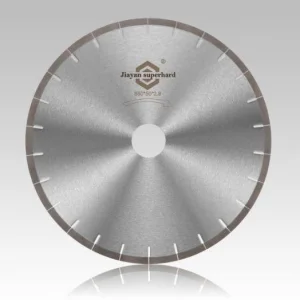
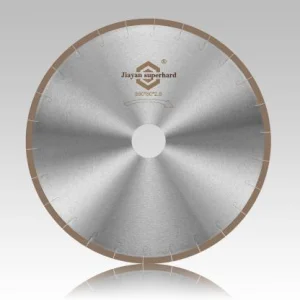
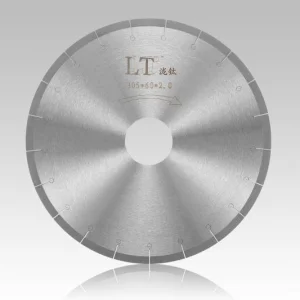
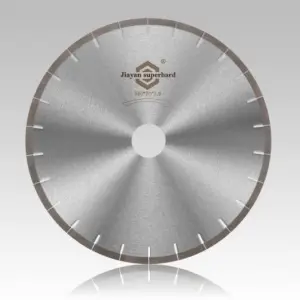
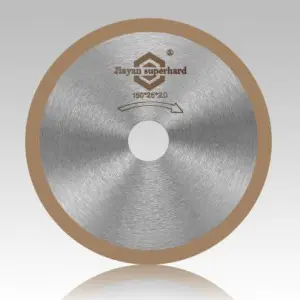
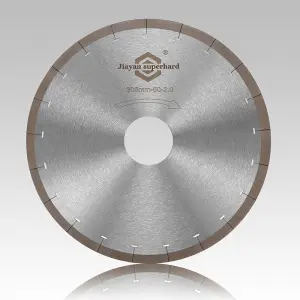
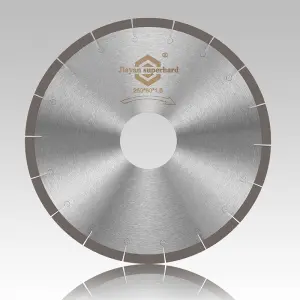
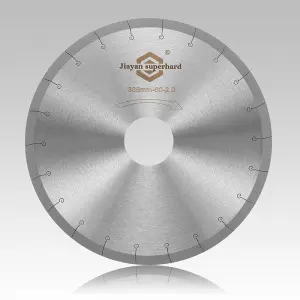
The global stone extraction and fabrication industry is experiencing a paradigm shift driven by high-speed CNC automated processing, extreme slab dimensions, and the proliferation of ultra-compact sintered materials. At the heart of this mechanical revolution is the diamond segment—the critical metallic matrix element bonded with synthetic diamond grit that dictates cutting velocity, tool longevity, edge chipping limits, and overall kWh energy consumption per square meter of stone sliced.
Choosing the best stone cutting diamond segment factory is no longer merely a purchasing decision based on unit cost; it is a complex engineering evaluation of powder metallurgy, hot vacuum sintering technology, diamond crystal coating integrity, and matrix tailing dynamics. Modern diamond segment manufacturers must balance severe abrasive wear against micro-fracturing self-sharpening rates to achieve optimal cost-per-square-meter performance across diverse mineral compositions.
Technical Insight: Superior diamond segment performance relies on maintaining a precise balance between matrix erosion and diamond breakdown. If the metal matrix bond is too soft, diamonds dislodge prematurely, inflating tool consumption; if too hard, diamonds glaze over, generating excessive friction, thermal stress, and slab cracking.
The demand for heavy-duty stone cutting segments varies dramatically across major industrial regions. Industrial buyers, quarry operators, and gang saw operators require tailormade segment formulations based on local geological characteristics and cutting infrastructure.
Focuses heavily on precision cutting of engineered sintered stone (Dekton, Neolith) and high-density quartz. Demand centers on ultra-thin, J-slot, continuous rim, and noise-reducing silent core segment configurations with zero-chipping margins.
High demand for large-diameter gang saw segments (2000mm to 3500mm blades) and wire saw segments for massive beige marble block extraction and primary granite trimming in quarrying operations.
Driven by massive infrastructure build-out requiring robust, multi-layered sandwich diamond segments for Class IV & V hard granite varieties (e.g., Indian Black Granite, Brazilian Quartzite).
China produces over 70% of the world’s synthetic industrial diamonds and superhard materials. Advanced manufacturers like JIAYAN Superhard Tools have transformed traditional powder metallurgy through Industry 4.0 smart factory integration.
Eliminates human error in metal powder blending. Fine Co, Cu, Fe, Sn, and WC (Tungsten Carbide) powders are homogenously distributed with synthetic diamond particles to precise micro-gram tolerances.
Modern sintering presses apply multi-stage heating profiles (750°C - 980°C) alongside hydraulic pressures up to 35 MPa under inert gas environments, preventing diamond graphitization while maximizing alloy matrix density.
Strategic 3D controlled positioning of individual diamond grains inside the segment ensures uniform spacing. This guarantees predictable wearing patterns, consistent linear cutting speeds, and up to 50% longer life compared to random dispersion segments.
The choice of segment design directly determines cut efficiency. Below is an engineering comparison matrix detailing segment bond formulations according to rock Mohs hardness and abrasiveness indices.
| Rock Material Category | Mohs Hardness | Matrix Bond Composition | Diamond Grit Size & Grade | Optimum Segment Geometry |
|---|---|---|---|---|
| Hard Granite & Quartzite (Black Galaxy, Ruby Red) |
6.5 - 7.5 | Cobalt-Rich / Tungsten Carbide Reinforced (Co-Fe-WC) | 30/40 to 40/50 Mesh High-Strength Ti-Coated Synthetic |
M-Shape / K-Shape / Grooved Multi-Layer |
| Medium-Hard Granite & Sandstone (G603, G654, Sandstone) |
5.5 - 6.5 | Iron-Bronze-Cobalt Alloy (Fe-Cu-Co-Sn) | 40/50 to 50/60 Mesh Standard Premium Monocrystalline |
Standard Rectangular / Box Segment |
| Marble & Calcite Stones (Carrara, Crema Marfil) |
3.0 - 4.5 | Bronze-Based Soft Matrix (Cu-Sn-Ni) | 50/60 to 70/80 Mesh Friable Self-Sharpening Grit |
Continuous Rim / J-Slot / Sandwich Segment |
| Ultra-Compact Sintered Stone (Dekton, Neolith, Ceramic) |
7.0 - 8.0 | Special Electroplated or Ultra-Fine Copper Bond | 60/70 to 100/120 Mesh Micro-Grain Superhard Diamond |
V-Slot / Ultra-Thin Continuous Segment Rim |
Whether installed on a 50-blade multi-blade block cutter in Xiamen or a CNC bridge saw in Verona, diamond segments must operate flawlessly under varied cooling dynamics and mechanical stress.
Utilizing high-frequency laser-welded diamond segments mounted on 2200mm to 3000mm giant circular saw blades. High impact resistance is crucial to withstand dynamic shocks when entering uneven raw quarry blocks.
Gang saw diamond segments must maintain low lateral friction to ensure absolute parallelism across 20mm marble and granite slabs, reducing downstream grinding and polishing expenses.
Requires quiet-cutting sandwich segments brazed onto silent steel cores. Engineered for zero edge blowout on 45-degree miter cuts in high-end residential kitchen countertops.
Enterprise buyers and regional distributors must assess potential OEM/ODM manufacturing partners against rigorous technical and operational criteria:
Does the factory possess in-house ICP-OES spectroscopy to analyze elemental metal powder purity? Advanced labs ensure batch-to-batch consistency in segment hardness (Rockwell HRB/HRC).
Ensure the segment features a high-purity copper or nickel backing layer (0.5mm - 1.0mm) to maximize laser welding or high-frequency silver brazing bond strength, preventing segment detachment during operation.
Top factories provide custom matrix development matching the exact RPM, motor horsepower (kW), feed rate (m/min), and water flow parameters of your operational machinery.
Technical answers from our Senior Superhard Tooling Engineers to assist plant managers, procurement directors, and blade fabricators.
Direct access to our certified factory product portfolio for stone processing plants, distributors, and OEMs worldwide.