Explore certified diamond saw blades and segments engineered for extreme granite density, fast cutting feed rates, and extended tool life.
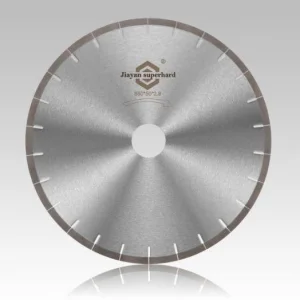
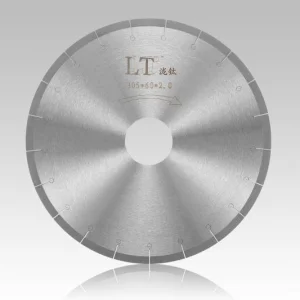
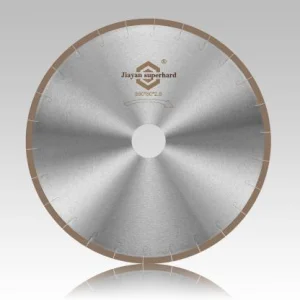
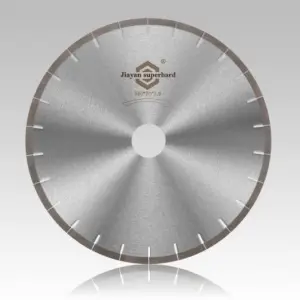
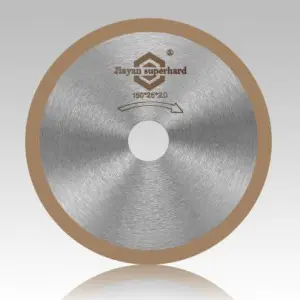
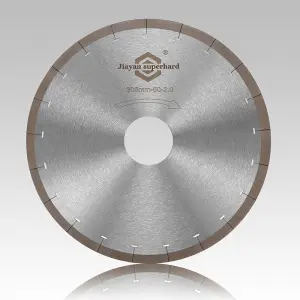
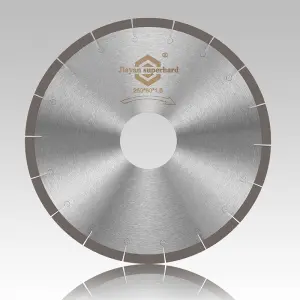
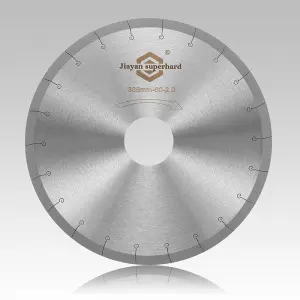
Analyzing global quarry extraction shifts, automated slab production lines, and the structural demand for CE-certified superhard tools.
The global natural stone processing market demands diamond segments capable of handling diverse granite densities—ranging from soft Class I varieties to extremely quartz-rich, abrasive Class V granites (such as Indian Black Galaxy, Brazilian Imperial Red, and Baltic Brown).
Modern stone processing factories utilize automated CNC bridge saws, multi-blade block cutters (up to 30-70 blades mounted in parallel), and high-RPM gang saws. These machines require diamond segments engineered to withstand high linear speeds without segment loss or thermal cracking.
Importers and stone manufacturers operating across the European Union, North America, and Australia prioritize CE compliance under EN 13236 standards. Tools lacking documented shear stress thresholds pose severe workplace liability and operation hazards.
Industrial B2B procurement is no longer driven purely by initial blade unit price. Strategic buyers evaluate tools on a Cost-per-Square-Meter cut basis ($/m²), factoring in power consumption, blade downtime for segment replacements, and edge sharpness maintenance.
Understanding the strict metallurgical, mechanical, and safety testing required for international compliance in superhard material fabrication.
CE Certification for diamond cutting tools is governed by European Standard EN 13236 ("Safety requirements for superabrasive products"). This standard dictates the mechanical structural integrity, dynamic balance tolerances, dynamic stress resistance, and shear failure thresholds for diamond segments bonded to steel cores (such as 65Mn or 30CrMo alloy steel bodies).
Unlike traditional high-frequency silver-brazed segments that rely on physical solder flow, industrial diamond segments for hard granite wet cutting are predominantly joined using high-energy automated laser welding. Under EN 13236 guidelines, the metallurgical fusion zone between the bronze/cobalt bond segment base and the steel core must withstand shear stress testing exceeding 350 MPa. This ensures that even under extreme side-loads, accidental blade binding, or high peripheral speeds (up to 80 m/s), the segment will not detach from the steel core.
CE-compliant diamond segments engineered by JIAYAN utilize high-purity synthetic diamond grits (typically SDB 1000/1100 industrial grade series with high thermal stability). During hot pressing sintering, liquid phase metallography ensures that titanium-coated diamond crystals form strong carbide bonds with the metal matrix (Cobalt-Copper-Nickel-Iron powder blends). This prevents premature grit pull-out, guaranteeing that diamond crystals micro-fracture controlledly to expose sharp cutting edges rather than dislodging unused.
Radial runout and axial deflection are controlled within ±0.02mm during stress-relieving and tensioning steps. Excess runout causes violent blade vibration during multi-blade block cutting, causing premature segment chipping, excessive noise (>95 dB), and slab thickness variations.
| Testing Parameter | Standard Requirement (EN 13236) | JIAYAN Technical Standard | Industrial Operational Impact |
|---|---|---|---|
| Weld Joint Shear Strength | ≥ 250 - 300 MPa | ≥ 380 MPa (Automated Fiber Laser) | Zero segment loss risk under heavy feed rates |
| Rotational Over-Speed Test | 1.5 × Max Operating Speed | 1.8 × Max Operating Speed | Prevents explosive core rupture at high RPM |
| Steel Core Hardness | 38 - 42 HRC (65Mn alloy) | 42 - 45 HRC (Tension-Stress Relieved) | Eliminates core wobble; ensures straight cuts |
| Segment Matrix Density | ≥ 95.0% Theoretical Density | ≥ 98.6% (Hot Isostatic Sintering) | Consistent wear rate; prevents soft spot erosion |
Combining raw material synthetic diamond synthesis dominance, automated powder metallurgy, and unmatched supply chain scale.
China accounts for over 90% of the world’s synthetic industrial diamond output. Direct access to HPHT (High Pressure High Temperature) diamond crystal synthesis allows manufacturers like JIAYAN to select precise particle strength (Toughness Index), mesh sizes (30/40, 40/50, 50/60), and crystal shape purity without supply bottlenecks.
Modern Chinese superhard tool factories have shifted from manual cold pressing to fully automated multi-stage vacuum hot-pressing sintering lines. Microprocessor-controlled temperature ramps (±2°C tolerance) and hydraulic pressure profiling eliminate matrix porosity, ensuring identical segment hardness across thousands of production units.
In-house atomized powder blending allows Chinese manufacturers to formulate specific matrix bonds tailored precisely to client quarry parameters. Whether mixing low-cobalt bronze matrices for soft granite or heavy tungsten-carbide/iron blends for abrasive quartz-rich stone, formulation adjustments occur within hours.
Integrated supply chains allow high-volume production of custom diamond segment geometries (M-Shape, K-Shape, Sandwich, Flat, Wave, Turbo) with lead times under 10-15 days. Strategic proximity to major deep-water shipping ports (Shanghai, Ningbo) reduces transit costs for overseas distributors.
Matching diamond segment geometry, bonding hardness, and diamond grit concentration to specific machine setups and mineral characteristics.
Granite processing involves specialized cutting equipment. Diamond segments must be customized based on machine power, spindle RPM, and coolant delivery systems:
Granite is mineralogically non-uniform. Quartz content directly influences stone abrasiveness, requiring matching segment bond properties:
| Granite Grade | Representative Stone Types | Quartz & Feldspar % | Optimal Segment Bond Type | Diamond Grit Mesh & Conc. |
|---|---|---|---|---|
| Class I (Soft) | Juparana, Kashmir White, Santa Cecilia | 15% - 25% Quartz | Hard Cobalt-Iron Bond (Resists Abrasion) | 40/50 Mesh | 30% Concentration |
| Class II / III (Medium) | G603, G654, Bianco Sardo, Absolute Black | 25% - 35% Quartz | Medium-Hard Copper-Cobalt-Bronze Bond | 40/50 & 50/60 Mesh | 35% Conc. |
| Class IV / V (Extreme Hard) | Baltic Brown, Black Galaxy, Imperial Red | > 40% High Quartz | Soft Bronze-Nickel Bond (Rapid Self-Sharpening) | 30/40 Mesh | 40%-45% High Conc. |
How 3D diamond array positioning, eco-binders, and sound-dampening engineering are revolutionizing granite processing efficiency.
Traditional segments feature randomly distributed diamond particles, causing uneven wear and periodic cutting slowdowns. Advanced ARIX technology positions every individual diamond crystal in exact 3D grid patterns. This ensures uniform diamond exposure, boosting cutting speeds by 30-50% while extending total tool life by 40%.
Due to raw material cost volatility and stringent environmental health regulations in Europe, factories are migrating toward Cobalt-free matrix alloys. Next-gen pre-alloyed powders utilize ultra-fine Iron-Copper-Titanium matrices that match Cobalt's diamond retention capabilities while reducing environmental toxicity and manufacturing costs.
Noise pollution in stone fabrication facilities is a critical regulatory concern. Sandwich segments featuring a multi-layered metal composition (soft center core flanked by hard outer cutting edges) reduce cutting harmonic resonance, lowering operator noise exposure by 6 to 10 dB while maintaining straight cut stability.
A structured model for quarry owners, stone distributors, and tool purchasing directors to evaluate diamond tool suppliers.
Selecting a long-term OEM/ODM supplier for CE-certified diamond segments requires evaluating both product quality metrics and manufacturing scalability. Purchasing directors should apply the following four-pillar assessment matrix:
Demand documented CE certification according to EN 13236 standards. Verify that the supplier conducts batch shear testing on laser-welded seams and offers dynamic balance test reports for finished core-blade assemblies.
Inquire whether the factory uses pre-alloyed powder metallography or manual cold powder mixing. Pre-alloyed powders guarantee uniform chemical dispersion, eliminating localized segment soft spots and uneven wear.
Establish baseline benchmarks for Linear Cutting Speed (cm²/min) vs Total Blade Lifespan (m² cut). A superior segment achieves an optimal balance, maximizing machine throughput without incurring frequent tool change downtime.
Ensure the supplier provides direct engineering support to adjust bond formulas when processing new granite varieties, changing machine horsepower setups, or switching between wet and semi-dry cutting conditions.
Expert answers to critical technical and commercial questions regarding CE-certified diamond segments for granite cutting.
Select from our complete range of certified superhard cutting tools designed for granite, marble, engineered stone, and industrial ceramics.