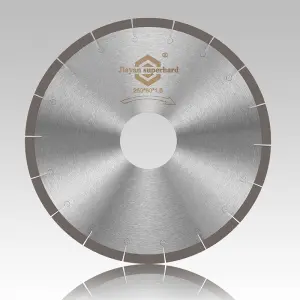
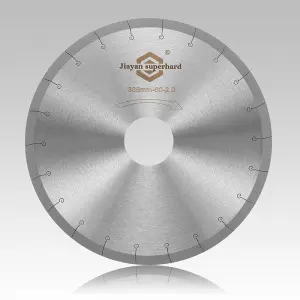
Explore our certified industrial diamond saw blades, ultra-thin resin cutting discs, and specialized stone edge profiling systems engineered for extreme accuracy and maximum operator safety.
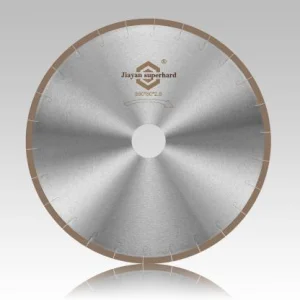
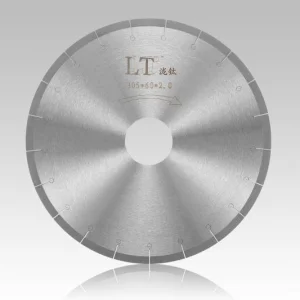
In modern industrial manufacturing, modern material processing demands exceptional cutting speeds, vibration dampening, dynamic dimensional stability, and stringent operational safety standards. The global market for resin grinding wheels and superhard resinoid bond abrasive products has experienced a profound technology shift. Driven by automated CNC machining, high-tensile steel fabrication, aerospace alloy finishing, and complex architectural stone processing, procurement managers no longer view grinding consumables as commodity items. Instead, they are recognized as pivotal vectors for operational efficiency, unit-cost reduction, and workplace safety compliance.
Industrial buyers across the European Union, North America, the Middle East, and Latin America face complex supply chain dynamics. Purchasing non-certified or sub-standard resin wheels introduces severe risks: catastrophic wheel breakage at high RPM, accelerated binder thermal degradation, hazardous micro-particulate emissions, and costly downtime. As a result, partnering with verified CE certification resin grinding wheel suppliers & companies has evolved from a regulatory formality into a core strategic mandate for risk mitigation.
Superhard tool manufacturers, such as JIAYAN Superhard Materials Co., Ltd. (member of the China Superhard Material Association), lead this transition by engineering custom phenolic resin formulations combined with synthetic diamond, Cubic Boron Nitride (CBN), and specialized aluminum oxide aggregates. By harmonizing European compliance standards with state-of-the-art Chinese manufacturing, industrial users gain access to high-performance abrasives that optimize material removal rates (MRR) while ensuring total operator security.
The performance of a resinoid bonded grinding wheel or superhard saw blade is determined by the interatomic synergy between the abrasive grit, the polymer matrix, secondary reinforcing fillers, and physical structural webbing (such as multi-layer fiberglass mesh reinforcement). Understanding this molecular and structural layout allows technical procurement teams to tailor consumables to exact substrate characteristics.
Traditional phenolic resins are increasingly modified with polyimide compounds and thermosetting liquid resins. This hybrid matrix withstands localized contact zone temperatures exceeding 350°C without undergoing micro-charring or premature grain shedding. Consequently, the abrasive grit is retained until optimal micro-fracturing occurs, providing self-sharpening mechanics.
By incorporating engineered chemical fillers—such as cryolite, iron pyrite, and hollow ceramic microspheres—modern resin grinding wheels effectively dissipate heat and clear micro-chips. This prevents wheel loading, reduces thermal thermal stress on sensitive workpieces (e.g., sintered stone, ceramic slabs, hard alloy steels), and stabilizes the cut profile.
Using computerized cold-pressing followed by multi-stage, microprocessor-controlled hot-curing ovens, structural density gradients are completely eliminated. Every wheel undergoes automated dynamic balancing, restricting radial runout to tight tolerances. This reduces spindle wear on end-user machinery and eliminates high-frequency chatter marks.
| Bond Matrix Type | Impact Resistance | Thermal Tolerance | Self-Sharpening Rate | Primary Industrial Use-Case |
|---|---|---|---|---|
| Phenolic Resinoid (Standard) | Very High | Medium (up to 250°C) | High (Soft-to-Medium Bond) | Ferrous metal cutting, hand-held angle grinding, rapid stock removal. |
| Polyimide-Modified Resinoid | High | Extreme (up to 400°C) | Controlled / Variable | Precision CNC tool grinding, aerospace superalloys, hard carbide profiling. |
| Hybrid Superhard Resin-Diamond | High | High (Liquid Cooled) | Ultra-Precise Micro-Fracture | Sintered stone, engineered ceramic slabs, marble edge chamfering & J-slot slicing. |
| Vitrified Ceramic Bond | Low (Brittle) | Extreme (>1000°C) | Low (Requires Dressing) | High-volume automotive crankshafts, heavy industrial gear grinding. |
The roadmap for resinoid abrasives points towards "Smart Wheel" technologies. Leading global suppliers are currently testing embedded RFID micro-chips and micro-sensor layers within large-diameter resin wheels. These sensors stream real-time data regarding wheel wear rate, contact zone temperature, vibration frequency, and rotational velocity directly to CNC machine control units. This enables predictive maintenance, prevents structural wheel failure, and automates feed rate adjustments to maximize yield.
Resin-bonded grinding tools and superhard diamond cutting blades are used across diverse industrial sectors. Different regional manufacturing hubs require distinct abrasive formulations tailored to their specific raw materials, machinery specs, and environmental regulations.
Primary Hubs: Italy (Sassuolo, Carrara), Spain (Castellón), USA (Texas, Florida), Brazil, UAE.
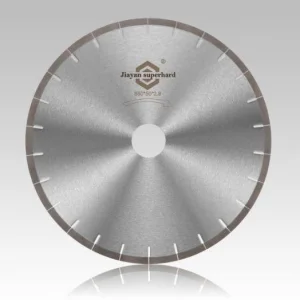
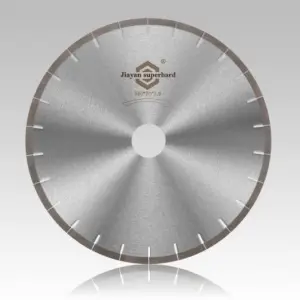
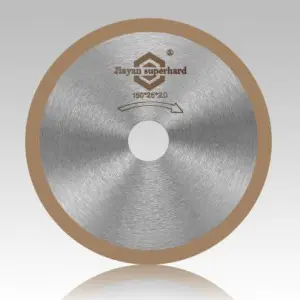
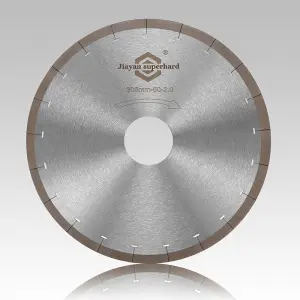
Operational Scenario: Precision edge polishing, J-slot relief cutting, and clean beveling of large-format sintered porcelain slabs and dense granite. Using rigid, brittle diamond wheels often causes edge micro-chipping. Specialized continuous-rim resin-diamond wheels and J-slot blades absorb micro-vibrations, yielding chip-free edges that eliminate manual hand-refining.
Primary Hubs: Germany (Stuttgart, Bavaria), Japan (Aichi), Mexico (Monterrey), China (Jiangsu/Zhejiang).
Operational Scenario: High-speed surface grinding of cast-iron engine blocks, transmission gears, and camshafts. Double-disc resinoid grinders running at 80 m/s remove flash and achieve flat surfaces within micron tolerances. Shock-absorbent resinoid matrices prevent micro-cracking on hardened metal surfaces.
Primary Hubs: South Korea (Ulsan), Vietnam, Poland, Turkey, USA (Gulf Coast).
Operational Scenario: Weld seam removal, heavy beveling, and structural steel cutting using 180mm–230mm angle grinders. Reinforced resin cut-off wheels with multi-layered fiberglass mesh prevent wheel burst under extreme side-loads, ensuring compliance with strict shipyard occupational safety policies.
Global procurement teams continuously re-evaluate their supply chains to balance cost-efficiency, technical agility, and delivery reliability. China’s superhard material sector—headquartered across strategic manufacturing hubs like Henan and Anhui (Wuhu)—represents the world's most vertically integrated abrasive supply chain.
From high-pressure high-temperature (HPHT) synthetic diamond synthesis to precise grit size classification, metal powder atomization, and resin chemical formulation, Chinese manufacturers maintain direct oversight over every input stage. This ensures batch-to-batch consistency that regional re-packers cannot match.
Leading facilities, such as JIAYAN Superhard Tools, leverage multi-cavity automated hot-press hydraulic systems, laser-guided inspection cameras, and robotic handling. Automated production eliminates human variance during cold compaction, resulting in uniform density distribution across every single grinding wheel.
Whether a global distributor requires custom arbor dimensions, private label branding, specific resin hardness grades (Q to Z), or engineered segment geometries (like J-Slot or Turbo rim), Chinese manufacturing clusters offer short tooling lead-times and rapid sample evaluation cycles.
Securing authentic CE certification for resinoid grinding wheels involves rigorous compliance under European Directive requirements and international safety benchmarks. Distributors and enterprise end-users must verify that supplier certifications reflect stringent laboratory physical testing rather than self-declared paperwork.
Top-tier suppliers bridge the distance between factory production lines and overseas work sites by offering comprehensive technical support. This includes customized wheel selection matrices, spindle vibration troubleshooting, regional consignment inventory, and local engineering visits to optimize feed speeds and coolant delivery systems.
Navigating international customs requires robust documentation. Certified suppliers provide full Material Safety Data Sheets (MSDS), Certificates of Analysis (CoA), Declaration of Conformity (DoC), and specialized export packaging that protects moisture-sensitive resin matrix tools during maritime transport.
Got questions regarding technical specifications, regulatory compliance, or factory procurement? Find answers to the most common queries below.
Browse our core industrial line up. Click any product below to access full dimensional tables, diamond grit options, recommended operating RPMs, and bulk procurement quotes.
Founded in Wuhu, China, JIAYAN Superhard is an established enterprise manufacturer specializing in superhard cutting tools, resin grinding wheels, continuous rim blades, and laser-welded diamond tools for stone, metal, ceramic, and industrial construction sectors. As an active member of the China Superhard Material Association, JIAYAN integrates chemical R&D, cold/hot sintering technology, and strict quality control workflows compliant with international CE and ISO safety standards.
Verified Global Channels & Social Media: