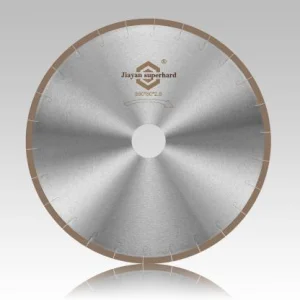
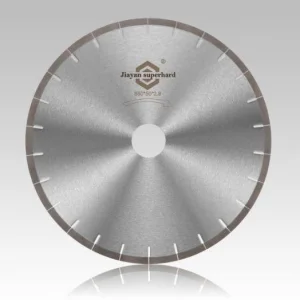
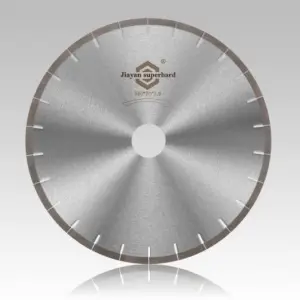
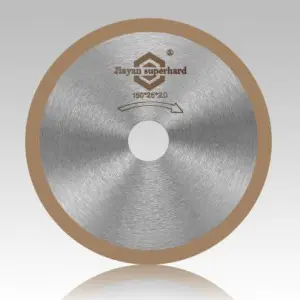
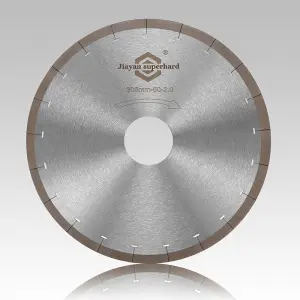
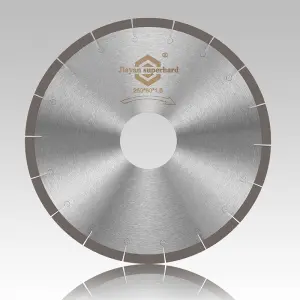
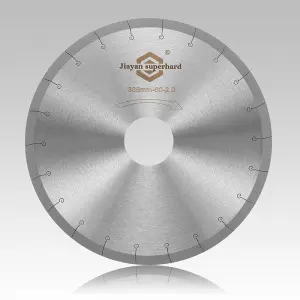
Explore our elite tier of tungsten carbide-tipped (TCT) saw blades and diamond cutting discs engineered for maximum tool life, operational safety, and high feed rates.
Understanding the transition toward mandatory CE EN 847-1 safety certification, high-speed automated milling, and zero-defect quality control across global supply chains.
The worldwide market for circular industrial tooling and tungsten carbide tipped (TCT) saw blades is projected to surpass $14.8 Billion USD by 2030, driven by automation in primary wood processing, high-speed non-ferrous alloy cutting, and sustainable architectural construction. Industrial users require tools with extreme thermal stability, lower wear rates, and verified safety certifications.
Within the European Single Market and global tier-1 industrial facilities, adherence to the EN 847-1 standard is non-negotiable. CE marking guarantees that saw blades possess safe tooth projection designs (anti-kickback limiters), defined maximum rotational speeds ($n_{max}$), robust body fatigue resistance, and micro-crack-free brazing joints certified under ultrasonic shear loading.
Modern B2B procurement managers require more than off-the-shelf tooling. They demand direct manufacturer partnership capable of delivering customized tooth profiles (ATB, TCG, FTG), precise expansion slot geometries, sub-micron tungsten carbide metallurgy, and reliable bulk exporter logistics from verified Chinese superhard tool facilities.
An in-depth structural analysis of nano-grained tungsten carbide (WC-Co) formulations, PVD thin-film coatings, expansion slot thermodynamics, and 5-axis VOLLMER CNC grinding technology.
The performance of a Tungsten Carbide Tipped (TCT) saw blade hinges on the grain size of the sintered tungsten carbide ($WC$) and cobalt ($Co$) binder phase. Standard industrial blades utilize medium grain sizes ($1.5\mu m - 2.5\mu m$). Our CE-certified export-grade blades utilize ultra-fine sub-micron grain sizes ($0.4\mu m - 0.8\mu m$) with Chromium Carbide ($Cr_3C_2$) and Vanadium Carbide ($VC$) grain growth inhibitors.
This metallurgical micro-refinement yields an exceptional hardness profile rating between HV1750 and HV1900 (HRA 92.5-93.8) while maintaining transverse rupture strength (TRS) exceeding $2,800 N/mm^2$. The result is an ultra-sharp cutting edge that resists micro-chipping, micro-abrasion, and binder leaching during heavy thermal stress cycles.
High-speed industrial circular sawing generates tremendous friction, creating localized thermal expansion vectors that induce blade warping, runout, and flutter. Our CE-compliant steel cores are manufactured from high-tensile 75Cr1 (1.2003) or 65Mn spring steel, laser-cut to exact planarity.
We engineer laser-cut expansion slots terminated with copper plug rivets or polymer-filled dampening lines. These slots absorb circumferential thermal expansion while dampening harmonic resonances (vibration modes), reducing operational noise emissions by up to $8 dB(A)$ and preventing catastrophic thermal fatigue failure.
Comparing physical characteristics of tool substrates to guide optimal procurement decisions for high-volume factories.
| Material Parameter | Standard HSS Steel | Sub-Micron TCT Alloy (Our Standard) | PCD (Polycrystalline Diamond) |
|---|---|---|---|
| Micro Hardness (HV) | HV 800 - 900 | HV 1,750 - 1,900 | HV 8,000 - 10,000 |
| Flexural Strength (TRS) | 3,500 MPa | 2,800 - 3,200 MPa | 1,500 - 1,800 MPa |
| Thermal Resistance | Up to 550°C | Up to 900°C (Uncoated) / 1,100°C (PVD) | Up to 650°C (Oxidizes above 700°C) |
| Impact Resistance | Very High | High / Balanced | Moderate / Brittle |
| Primary Application Target | Low-speed structural steel | Solid hardwoods, MDF, Aluminum, Composites | Ultra-abrasive raw particleboard, Cement board |
| Cost-Per-Cut Metric | Moderate (High sharpening frequency) | Lowest (Optimal balance of life & cost) | High Initial Capital investment |
Teeth are bevelled alternately to the left and right. Ideal for cross-cutting natural solid woods, veneered panels, and soft plywoods. Provides clean, tear-out free surface finishes.
Alternates a flat raker tooth with a higher trapezoidal chamfered tooth. Designed specifically for cutting non-ferrous metals (aluminum, brass), dense laminates, plastics, and solid surfaces.
Straight flat-topped teeth that shear along the grain. Used primarily for fast ripping operations on heavy timber where maximum feed speed and rapid chip evacuation are required.
Real-world operational setups across diverse industrial sectors, detailing cutting speeds, feed rates, and recommended blade geometries for maximum productivity.
In high-capacity furniture factories and Cross-Laminated Timber (CLT) plants in Northern Europe and North America, continuous duty cycles demand blades that resist pitch build-up and side-friction wear. Our TCT blades feature fluorocarbon non-stick coatings and positive rake angles ($+15^\circ$ to $+20^\circ$) to effortlessly slice through resinous pines, dense white oak, melamine, and high-density fiberboard (HDF).
Non-Ferrous Architectural Aluminum Milling
Automobile component producers and architectural window frame manufacturers require mirror-finish edge cuts without burrs or thermal deformation. Utilizing a negative rake angle ($-5^\circ$) TCG tooth configuration coupled with micro-drip lubrication systems, our CE-approved aluminum cutting blades operate at peripheral speeds up to $70 m/s$ without tooth chipping.
Integrating tungsten carbide technology with superhard diamond segment matrixes, our specialized stone and tile blades cater to stone fabricators in the Middle East and South America. High-density diamond grit bound in cobalt-nickel matrix alloys allows seamless cutting of ultra-compact porcelain slabs and natural granites.
Precision electronics manufacturers working with fiberglass-reinforced plastics (FR4 PCB) and carbon-fiber composite panels (CFRP) require ultra-thin kerf blades ($1.0mm - 1.2mm$). Sub-micron carbide tips precision-ground with 5-axis CNC diamond wheels ensure delamination-free, splinter-free micro cuts.
Recycling yards and demolition contractors require maximum impact toughness. Special impact-resistant carbide tips bonded via high-silver content trimetal brazing foil ($Ag-Cu-Ag$) absorb extreme shocks when encountering hidden steel nails, rebar, or embedded concrete fragments.
Operating on specialized cold saw machinery, cermet-tipped and heavy-duty TCT blades execute low-RPM, high-feed rate cutting of solid steel stock, reducing cycle times and eliminating post-cut deburring steps in automotive chassis manufacturing.
Leveraging upstream tungsten raw material reserves, automated HIP sintering clusters, and efficient international logistics to provide global buyers with unmatched price-to-performance metrics.
China holds over 80% of the world’s tungsten reserves (centered in Hunan and Jiangxi provinces). By establishing direct supply contracts with primary ammonium paratungstate (APT) refineries, Chinese exporters eliminate intermediate markups, buffer against global commodity price spikes, and guarantee consistent chemical purity for tungsten powder synthesis.
Modern factories in industrial hubs like Wuhu utilize Hot Isostatic Pressing (HIP) sintering furnaces that apply simultaneous heat ($1450^\circ C$) and high gas pressure to eliminate micro-porosity within carbide tips. Automated VOLLMER 5-axis CNC grinding centers execute face, top, and flank grinding with sub-micron repeatable precision.
With monthly outputs exceeding 500,000 blades across standardized and custom SKUs, production lines run with high efficiency. Custom OEM orders—including specialized bore diameters, keyways, pinhole configurations, and laser-etched branding—can transition from CAD design to final shipment within 14 to 21 business days.
Situated near major maritime ports (Shanghai, Ningbo, Guangzhou), exporters seamlessly coordinate sea freight, air express, and intermodal rail transport. Comprehensive export documentation—including Certificates of Origin (Form E, Form A), CE compliance declarations, and MSDS safety sheets—ensures rapid customs clearance across EU, North American, and Asian ports.
How our multi-stage inspection framework guarantees every tungsten carbide saw blade meets strict European EN 847-1 safety criteria and dynamic balancing metrics.
Every carbide tip bonded to the steel plate undergoes non-destructive ultrasonic testing and mechanical shear load testing. Micro-brazing joints must withstand minimum shear stress limits exceeding $220 MPa$ to prevent tip detachment under violent shock loads.
High-speed rotating tools require near-zero unbalance. Computerized dynamic balancing machines detect rotational eccentricities, removing micro-gram weight variances to achieve balance quality Grade G2.5, ensuring smooth machine spindle operation and zero wobbling.
Using non-contact optical laser measuring projectors, 100% of finished saw blades are inspected for radial runout (tolerance $< 0.03mm$) and axial runout (tolerance $< 0.02mm$). Tooth angles, clearance angles, and chamfer symmetry are verified automatically.
Founded in Wuhu, China, JIAYAN Superhard is a recognized leader in superhard material cutting tools, diamond blades, and tungsten carbide solutions for global buyers.
JIAYAN Superhard Materials Co., Ltd. combines advanced metallurgical sintering technology with strict ISO quality control systems. As an official member of the China Superhard Material Association, JIAYAN has accumulated over a decade of direct export experience supplying industrial distributors, machinery original equipment manufacturers (OEMs), and stone processing hubs across Europe, North America, Southeast Asia, and the Middle East.
Our manufacturing footprint features state-of-the-art automated sintering presses, high-precision laser welding lines, and 5-axis CNC tooth grinding centers designed to meet rigorous international procurement criteria.
Key testing procedures for laser-welded blade joints — detailing appearance inspection, microstructural analysis, and shear strength evaluation.
Showcasing next-generation ceramic cutting discs and continuous rim superhard blades at Canton Fair Complex, Guangzhou.
Presenting ultra-thin porcelain cutting blades and specialized tungsten carbide tooling to European industrial procurement delegates.
Browse our complete series of industrial saw blades, diamond cutting discs, and custom TCT tool solutions for stone, ceramic, tile, and timber processing.
Detailed answers to critical engineering, safety certification, and procurement questions commonly raised by industrial buyers and tool distributors.