Analyzing the global evolution of hardwood panel sizing, end-grain cutting mechanics, and China's role as a leading manufacturer of high-precision circular saw blade technology.
Cutting butcher blocks—specifically end-grain maple, walnut, teak, and acacia—presents unique tribological wear patterns compared to standard linear rip cuts. Circular saw blades operating in China export factories are now engineered with micro-grain carbide and diamond matrix formulations to handle cross-axial fiber impact without tooth shear or heat-induced charring.
Modern butcher block manufacturing frequently relies on multi-layer polyurethane, PVA glue lines, and high-silica timber sources (such as bamboo or imported tropical hardwoods). Advanced circular saw blade exporters utilize physical vapor deposition (PVD) coatings to prevent resin pitch buildup, reducing heat buildup by over 38% during continuous industrial profiling.
Global cabinetmakers and commercial kitchen equipment suppliers are shifting toward automated panel sizing saws and multi-blade rip machines. China manufacturers have aligned production lines to forge dynamic-balanced circular blades capable of 6,000+ RPM continuous operation with dynamic radial runout tolerances held within strict ±0.015 mm limits.
Understanding the mechanical engineering metrics, tooth pitch geometries, and alloy matrix specifications required for tear-out-free butcher block edge trimming.
When cutting end-grain heavy butcher blocks, standard flat top grind (FTG) blades cause substantial wood fiber splintering and edge blowouts. China OEM manufacturers customize circular saw blades with precise 15°–20° ATB geometries for clean cross-cutting or TCG configurations for resin-laminated butcher blocks. This split-chip dynamic lowers lateral cutting pressure, preserving sharp edges across long production runs.
For high-volume export processing, standard grade carbide tips quickly dull under the abrasive friction of glued solid wood joints. Leading Chinese tool makers utilize sub-micron grain tungsten carbide (K10-K20 hardness ratings) or Polycrystalline Diamond (PCD) tips. PCD tipped circular saws increase tool longevity by up to 3000% when trimming dense butcher block counter tops on heavy panel saws.
| Butcher Block Wood Species | Recommended Saw Blade Dia. | Tooth Count & Profile | Optimal RPM Range | Feed Speed (m/min) | Carbide / Tip Grade |
|---|---|---|---|---|---|
| Hard Maple / Birch (Edge-Grain) | 300mm – 350mm | 60T – 72T ATB | 3,600 – 4,800 RPM | 12 – 18 m/min | Sub-Micron C4 Carbide |
| End-Grain Walnut & Teak | 350mm – 400mm | 80T – 100T Hi-ATB | 3,000 – 4,200 RPM | 8 – 14 m/min | Nano-TiAlN Coated TCT |
| Bamboo & Composite Panels | 250mm – 300mm | 80T TCG (Triple Chip) | 4,500 – 5,500 RPM | 10 – 15 m/min | PCD Electro-Welded Matrix |
| Reclaimed Oak / Epoxy Butcher Block | 350mm – 450mm | 72T – 84T Alternate Grind | 2,800 – 3,800 RPM | 6 – 10 m/min | Ceramic Coated Carbide |
Overcoming total cost of ownership (TCO) bottlenecks, tool degradation issues, and custom sizing challenges via OEM direct supplier partnerships in China.
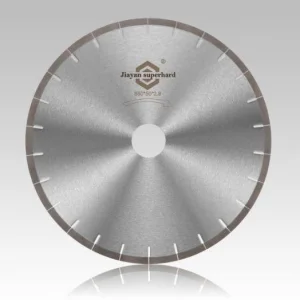
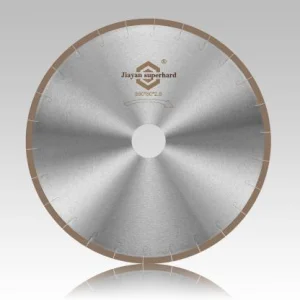
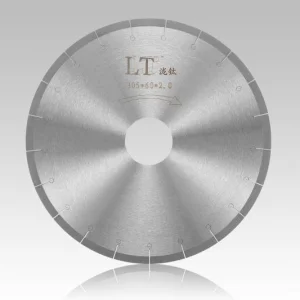
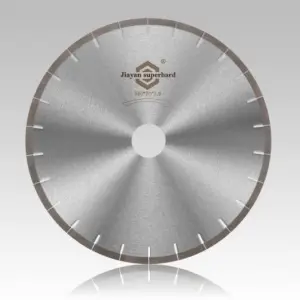
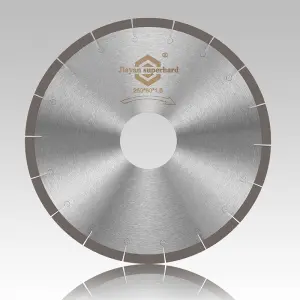
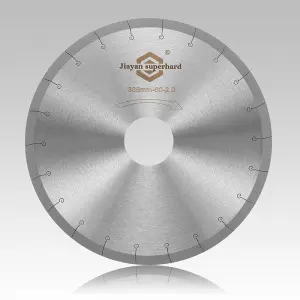
From specific arbor hole sizes (30mm, 50mm, 5/8" with custom pinholes) to specialized Expansion Slot laser cutting filled with copper plugs for noise mitigation, Chinese manufacturers tailor circular blades to exact sliding table saw and CNC equipment specs.
To eliminate blade chatter marks on high-finish butcher block counter edges, factory export lines execute computer-controlled 3D laser scan testing and dynamic balance compensation, ensuring silky-smooth cuts that require minimal downstream sanding.
By leveraging mature raw material supply chains in superhard metals, Chinese factories guarantee scalable batch production with short lead times. Bulk shipments are packaged with anti-corrosion oil wraps and heavy-duty wooden crate packaging for safe ocean freight delivery.
Rigorous testing standards and certification frameworks safeguarding industrial circular saw blade performance for global distributors.
Every commercial circular saw blade designed for cutting heavy timber and butcher block materials undergoes rigid stress testing adhering to the European Safety Standard EN 847-1. Ultrasonic fault detection is utilized to verify the structural integrity of the steel core (typically 75Cr1 or SKS51 high-carbon steel) prior to tip brazing.
Blade tips are joined to the main steel plate via fully automated high-frequency induction induction machines utilizing silver-copper-silver sandwich brazing foil. This multi-layer technique absorbs localized impact stress when cutting heavy end-grain knots or composite glue seams, virtually eliminating tip loss during high-speed operation.
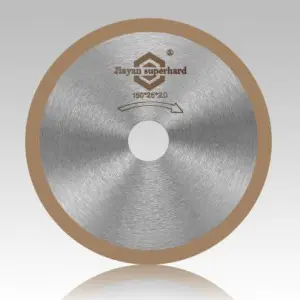
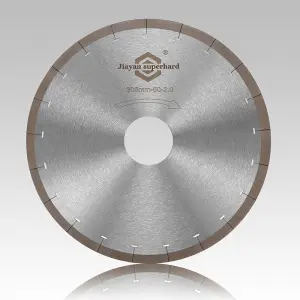
Headquartered in Wuhu, China, JIAYAN Superhard is an active member of the China Superhard Material Association. Combining more than a decade of international export expertise with proprietary vacuum sintering and precision grinding tech, JIAYAN produces high-performance diamond saw blades, circular saw blades, and cutting discs engineered for extreme industrial wood, tile, stone, and ceramic applications across 50+ countries worldwide.
Pioneering smart manufacturing, eco-friendly physical coatings, and micro-damping technologies for the next decade of timber cutting tool development.
Next-generation Titanium Silicon Nitride coating technologies will double surface micro-hardness (up to HV 3500), enabling extended operation under ambient dry-cutting conditions without thermal degradation.
Integration of computerized laser dampening channels filled with viscoelastic polymers to neutralize harmonic resonance frequencies, creating near-silent cutting environments in commercial workshops.
Development of integrated micro-RFID and thermal sensor cores to supply real-time operational feedback to CNC panel sizing software regarding tooth wear, heat threshold, and blade deformation.
Transition toward green hydrogen-powered sintering furnaces and closed-loop coolant filtration, significantly lowering the carbon footprint per manufactured saw blade unit.
Answers to critical technical, operational, and supply chain questions faced by global buyers when ordering circular saw tooling for butcher block manufacturing.