Industrial Superhard Tooling Authority

China Diamond Blade for Tile Manufacturers & Companies

The definitive B2B technical guide & global procurement benchmark for industrial-grade ceramic, porcelain, and ultra-thin sintered stone diamond cutting discs engineered by JIAYAN Superhard.

Featured Precision Diamond Cutting Discs

Explore our top-performing diamond saw blades designed for ceramic factories, stone processing plants, and architectural tile contractors worldwide.

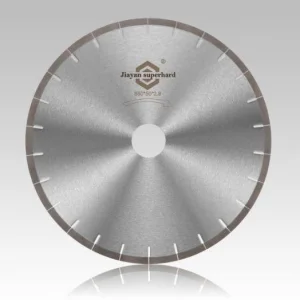
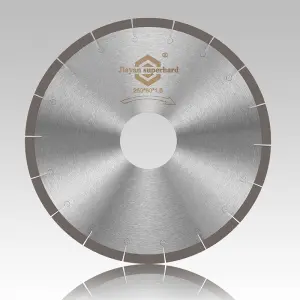
OEM Diamond Saw Blade 350mm Circular Saw Blade

OEM Diamond Saw Blade Cutting Disc 350mm Circular Blade for Granite & Tile

Request Spec Quote
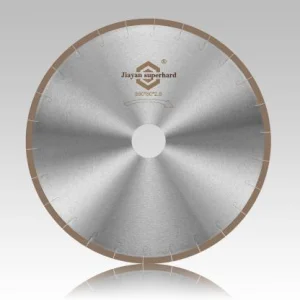
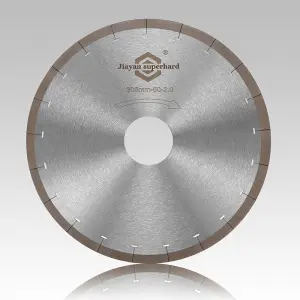
Super Fast Cutting Rim J Slot Diamond Saw Blade

Custom Super Fast Cutting Segment Rim J-Slot Blade for Ceramic & Marble

Request Spec Quote
14 Inch Diamond Saw Blade for Sintered Stone

Best 14 Inch Diamond Saw Blades Specialized for SINTERED STONE (260-350mm)

Request Spec Quote
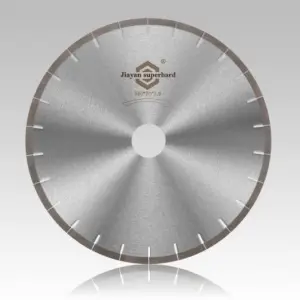
350mm Diamond Saw Blade Granite Stone Series

350mm Heavy-Duty Diamond Circular Saw Blade for Granite & Hard Tiles

Request Spec Quote
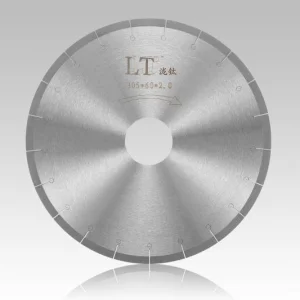
Small Size Diamond Cutting Disc

Diamond Cutting Disc — Small Size Series (105mm–180mm Tile Cutters)

Request Spec Quote
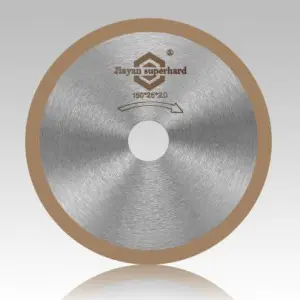
14 Continuous Hot Pressed Diamond Blade

14" Hot-Pressed Continuous Diamond Blade for Chip-Free Ceramic Tile

Request Spec Quote
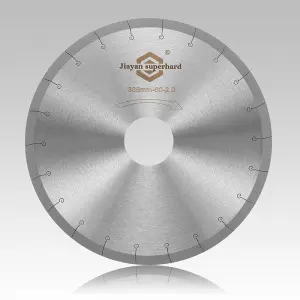
14 Inch Laser Welding Segment Blade

14" Laser Welding Segment Diamond Saw Blade for High-Speed Tile Cutting

Request Spec Quote
1.0mm Ultra Thin Diamond Cutting Disc

1.0/1.2mm Ultra-Thin Diamond Cutting Disc for Fine Porcelain & Ceramics

Request Spec Quote

Executive Summary: The Modern Landscape of Global Tile Cutting Tooling

In the rapidly evolving ceramic and architectural surface industries, the shift toward large-format porcelain slabs, ultra-compact sintered stones (such as Dekton, Neolith, and Lapitec), and high-density vitrified tiles has fundamentally changed micro-abrasive cutting requirements. B2B procurement leaders, industrial distributors, and factory operational directors require precision diamond tooling engineered not merely for raw wear resistance, but for chip-free edge fidelity, thermal stability under high-speed feed rates, and extended blade longevity.

China has established itself as the global nexus for superhard material synthesis and diamond tool manufacturing, producing over 85% of the world's synthetic industrial diamond output. However, navigating the vendor matrix requires strict technical discernment. A high-performance China Diamond Blade for Tile is an intricate metallurgical system comprising single-crystal synthetic diamond grit, micro-alloyed cobalt-copper-iron powder matrices, stress-relieved high-carbon steel cores, and optimized cooling slot geometry.

85%+
Global Synthetic Diamond Share
0.05mm
Max Flange Runout Tolerance
60–80 m/s
Optimal Peripheral Speed
100% ISO
Quality & Dynamic Balance Test

As a leading entity in the China Superhard Material Association, JIAYAN Superhard Tools bridges the gap between raw metallurgical science and industrial site performance. This engineering paper evaluates the critical selection criteria, tribological mechanics, manufacturing protocols, and operational parameters necessary to maximize output yield while minimizing tooling expenditures for enterprise buyers globally.

Tribological Mechanics & Metallurgical Science of Tile Cutting

To understand why ceramic and porcelain tiles chip during cutting, one must examine the micro-mechanics of brittle fracture propagation. Unlike metals, which undergo plastic deformation when sheared, vitrified ceramic materials fail via brittle micro-fracturing under intense compressive and shear stresses induced by the moving diamond abrasive grains.

1. Synthetic Diamond Mesh & Concentration

The selection of synthetic diamond grit (typically high-purity MBD-series synthetic crystals) is governed by two parameters: mesh size and volume concentration. For dense porcelain and glass-phase ceramics, fine mesh sizes (60/70 to 100/120 mesh) are required to create micro-shallow kerfs. Concentration varies between 20% and 35% of segment volume, balancing impact distribution against matrix wear rates.

2. Metallurgical Bond Matrix Wear Matching

The bond (a sintered mixture of Cobalt, Copper, Iron, Nickel, and Tungsten Carbide) acts as a sacrificial retention mechanism. When cutting highly abrasive non-vitrified tiles, a hard, erosion-resistant bond is required. Conversely, for dense, non-abrasive glazed porcelain, a softer, self-sharpening bond is imperative to expose fresh sharp diamond points as old grains dull.

3. Stress Wave Mitigation & Core Tensioning

High-speed rotation generates thermal expansion gradients and centrifugal forces. JIAYAN utilizes premium 65Mn or 75Cr1 alloy steel cores, cold-rolled and vacuum heat-treated to 42–45 HRC. Laser-etched J-slots, keyhole slots, and internal copper-sandwiched silent cores dampen acoustic resonance and absorb lateral micro-vibrations that cause glaze fracturing.

Segmentation Geometry & Edge Morphology

The structural design of the blade's perimeter governs coolant flow, swarf ejection, and cutting smoothness. The three primary geometric archetypes utilized in tile manufacturing include:

  • Continuous Rim (Sintered / Hot-Pressed): Offers the smoothest edge geometry, absolutely eliminating chip marks on delicate tile glazes. Essential for high-end residential porcelain and glass mosaic trim work.
  • J-Slot & Narrow Keyhole Rim: Combines the chip-free precision of continuous rims with enhanced thermal expansion channels. Designed for continuous wet-bridge saw cutting on thick porcelain slabs.
  • Mesh Turbo Rim: Features corrugated diagonal diamond ribs that rapidly clear slurry while providing multi-point contact, reducing drag and thermal buildup during dry hand-saw operation.

B2B Engineering Specifications & Selection Matrix

Use the standardized technical matrix below to cross-reference operational parameters, equipment types, and substrate compatibility when placing factory volume orders.

Blade Outer Dia. (mm/in) Blade Bore / Arbor (mm) Segment Height / Thickness Target Substrate Max RPM / Rec. RPM Cutting Mode
105mm – 125mm (4"–5") 20.0 / 22.23 mm 10.0mm H / 1.0mm–1.2mm T Vitrified Tile, Thin Porcelain 14,500 / 11,000 RPM Dry / Wet Handheld
180mm – 230mm (7"–9") 22.23 / 25.4 mm 10.0mm H / 1.6mm–1.8mm T Glazed Ceramic, Marble Tiles 8,500 / 6,000 RPM Wet Tile Table Saw
300mm – 350mm (12"–14") 50.0 / 60.0 mm 10.0–15.0mm H / 2.2mm–2.4mm T Sintered Stone, Large Slabs 4,300 / 2,100 RPM Automated Bridge Saw
400mm – 450mm (16"–18") 50.0 / 60.0 mm 15.0mm H / 2.8mm–3.2mm T Heavy Granite Tiles, Thick Pavers 3,500 / 1,700 RPM Industrial Gantry CNC

Macro Industry Solutions & Factory Line Integration

Modern ceramic manufacturing is moving away from manual batch production toward fully automated continuous production lines. Industrial tile manufacturers face two severe operational bottlenecks: unexpected blade downtime and kerf loss (material wastage due to excessive blade thickness). Our tailored macro solutions target these challenges directly:

1. High-Speed Bridge Saw Optimization

For stone fabricators cutting 12mm to 20mm sintered porcelain slabs, JIAYAN’s sound-dampened 350mm blades maintain feed rates up to 3.5 meters per minute without deflection, reducing total labor cost per square meter by 28%.

2. Automated Industrial Squaring & Chamfering

Integrated continuous-rim peripheral blades deployed on line-squaring equipment achieve zero micro-fracturing on tile edges prior to firing, maximizing first-grade yields in tile production plants.

3. Coolant Hydrodynamics & Thermal Management

Optimized water-flushing blade channels prevent thermal shock cracking. Controlled fluid distribution extending through laser-welded ports reduces thermal core warping by over 40% under continuous 24/7 duty cycles.

Quality Assurance & Manufacturing Excellence (E-E-A-T)

As a standing corporate member of the China Superhard Material Association, JIAYAN Superhard Materials Co., Ltd. operates under strict international manufacturing standards. Our export framework is built upon verified metallurgical expertise and rigorous quality control protocols:

Laser Welded Segment Integrity

Every segment batch undergoes automated shear strength testing exceeding European EN13236 safety regulations, ensuring zero segment detraction during heavy duty operations.

Dynamic Balancing & Runout Testing

100% of finished circular blades are inspected on digital dynamic balancing equipment. Total axial runout is maintained strictly below 0.05mm to guarantee vibration-free cutting.

Custom OEM / ODM Metallurgical Formulation

Our in-house R&D team adjusts bond hardness, diamond grit concentration, and segment geometries based on regional stone/tile hardness metrics (Mohs scale 5 to 9).

Technology Roadmap & Future Outlook (2025–2030)

The next decade of diamond tool manufacturing will be defined by material science breakthroughs and AI-driven precision manufacturing. JIAYAN is pioneering three core developments in cutting technology:

  • Nano-Crystalline Diamond (NCD) Reinforced Matrices: Integrating nano-diamonds into the metallic bond to increase mechanical holding power on synthetic diamond crystals by 35%, drastically lowering diamond pull-out rates.
  • AI-Assisted Topology Optimization for Silent Cores: Utilizing finite element analysis (FEA) to design variable-pitch slot geometry that eliminates high-frequency noise spikes (reducing operation sound by up to 12 dB).
  • Eco-Friendly Vacuum-Braze Hybrid Bonding: Transitioning from traditional high-carbon sintering processes to low-energy vacuum-brazing techniques that eliminate heavy metal particulate emissions while extending blade service life.

Global Commercial Footprint & Import Compliance

JIAYAN exports to over 50 countries, supporting global distributors and OEMs with flexible trade solutions. We provide full compliance documentation for major international import standards:

EN 13236
European Safety Standard Certified
ISO 9001
Quality Management System
ANSI B7.1
North American Safety Compliance
OEM / ODM
Custom Branding & Packaging

Complete Tile Cutting Product Portfolio

Select from our range of high-efficiency diamond circular saw blades available for bulk OEM manufacturing and enterprise procurement.

OEM Diamond Saw Blade 350mm Circular Saw Blade

OEM Diamond Saw Blade Cutting Disc 350mm Circular Blade for Granite & Tile

View Product Details
Super Fast Cutting Rim J Slot Diamond Saw Blade

Custom Super Fast Cutting Segment Rim J-Slot Blade for Ceramic & Marble

View Product Details
14 Inch Diamond Saw Blade for Sintered Stone

Best 14 Inch Diamond Saw Blades Specialized for SINTERED STONE (260-350mm)

View Product Details
350mm Diamond Saw Blade Granite Stone Series

350mm Heavy-Duty Diamond Circular Saw Blade for Granite & Hard Tiles

View Product Details
Small Size Diamond Cutting Disc

Diamond Cutting Disc — Small Size Series (105mm–180mm Tile Cutters)

View Product Details
14 Continuous Hot Pressed Diamond Blade

14" Hot-Pressed Continuous Diamond Blade for Chip-Free Ceramic Tile

View Product Details
14 Inch Laser Welding Segment Blade

14" Laser Welding Segment Diamond Saw Blade for High-Speed Tile Cutting

View Product Details
1.0mm Ultra Thin Diamond Cutting Disc

1.0/1.2mm Ultra-Thin Diamond Cutting Disc for Fine Porcelain & Ceramics

View Product Details

B2B Technical FAQ & Troubleshooting Guide

Direct engineering solutions to common challenges encountered by industrial tile cutting plants and distributors.

Q1: How do I prevent micro-chipping on delicate porcelain glazes during high-speed cutting?
Micro-chipping occurs when the diamond matrix is too hard, causing dull diamonds to press against the brittle glaze rather than cutting cleanly. To solve this, select a continuous rim blade with fine grit (80/100 mesh) and a softer cobalt-based bond matrix. Additionally, ensure water coolant pressure is directed precisely at both entry and exit points of the cut.
Q2: What is the primary difference between hot-pressed sintered and laser-welded diamond blades for tile?
Hot-pressed sintering molds the segment and core together simultaneously under heat and high pressure, ideal for continuous rim thin tiles (1.0mm-2.0mm thickness). Laser welding uses a high-energy laser beam to fuse the segment directly to the steel core, creating maximum joint strength required for heavy-duty, large-diameter bridge saw blades (300mm–450mm) cutting dense sintered stone slabs.
Q3: What causes a tile diamond saw blade to flutter or wander off the cut line?
Blade flutter is caused by loss of core tension, improper spindle RPM, or worn arbor flanges. Verify that your machine operates at the recommended linear cutting speed (25 to 40 m/s for wet porcelain). Inspect flanges for debris or deformation; flanges must support at least 1/3 of the blade diameter for large-format slab blades.
Q4: How can enterprise buyers dress (re-sharpen) a glazed diamond segment in a factory production line?
When cutting non-abrasive glazed tiles, metal matrices can smooth over ("glaze"). Dress the blade by performing 3 to 5 shallow cuts through a highly abrasive Dressing Stone (aluminum oxide block) or soft asphalt block. This erodes the excess metal matrix and exposes fresh sharp diamond points.
Q5: What are the OEM lead times and custom packaging options for global importers?
JIAYAN offers complete OEM customization including laser-etched logos, color-coded blade body coatings, custom blister packs, and engineered segment formulas. Typical sample lead time is 5–7 days, while full container production orders are fulfilled within 20–25 days.

Partner with China's Premier Superhard Tool Manufacturer

Direct factory engineering support, OEM branding solutions, and competitive volume pricing for global distributors and tile production facilities.