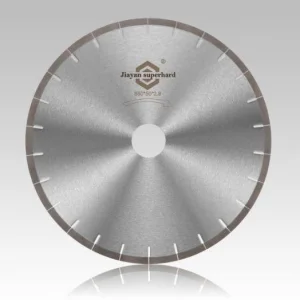
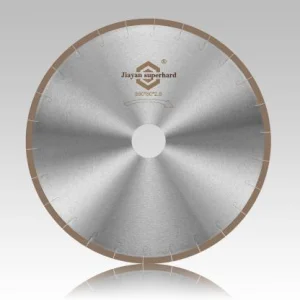
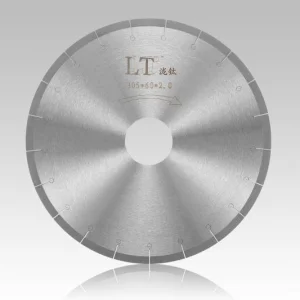
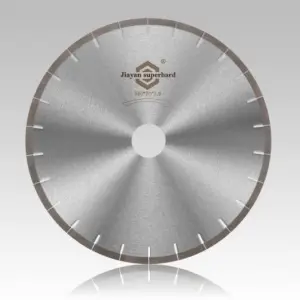
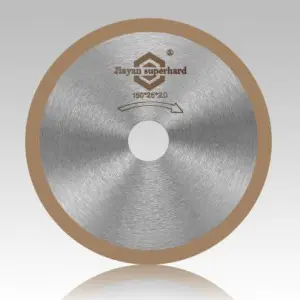
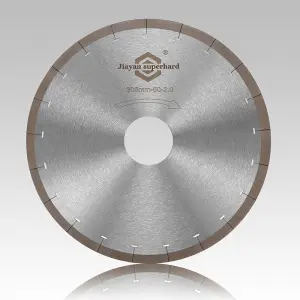
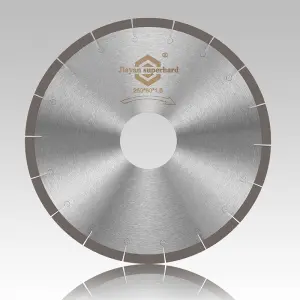
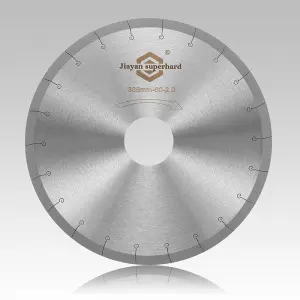
Engineered for chip-free tile cutting, sintered stone fabrication, and heavy-duty masonry processing.
An in-depth industrial analysis of superhard diamond cutting tools in modern architectural construction.
The global surface covering market has experienced a massive paradigm shift. The widespread adoption of ultra-dense materials—such as vitrified porcelain tiles, sintered stone slabs (Lapitec, Neolith, Dekton), and dense quartzites—has rendered traditional abrasive and low-tier diamond blades obsolete. Today, industrial contractors, stone fabricators, and ceramic manufacturers require specialized diamond tooling engineered to withstand immense thermal friction while maintaining pristine, zero-chipping cut lines.
As the world's leading hub for superhard materials, China accounts for over two-thirds of the world's synthetic diamond synthesis and precision saw blade manufacturing. Modern Chinese production lines have evolved far beyond mass manufacturing; they represent the vanguard of metallurgical powder synthesis, automated hot-press sintering, and automated laser-welding technologies. OEM importers, global brand owners, and industrial distributors rely on Chinese exporters not merely for cost efficiency, but for advanced custom matrix engineering tailored to precise stone Mohs hardness values.
Modern porcelain tiles feature a Mohs hardness of 7 to 8 with water absorption rates below 0.5%. Cutting these unglazed, vitrified surfaces generates extreme frictional heat. Without advanced diamond matrix erosion rates, conventional blades suffer rapid micro-glazing and structural warping.
High-speed bridge saws and CNC cutting tables operate at 2,000 to 6,000 RPM. A variance in core dynamic balance of just 0.02mm can trigger catastrophic chipping on high-value sintered stone slabs. Premium Chinese steel cores utilize stress-relieved 75Cr1 alloy steel to guarantee zero wobble.
The core innovation lies in bond-tailoring. By bonding synthetic monocrystalline diamonds (MBD grade) with specific proportions of cobalt, nickel, bronze, and tungsten carbide powders, the metal matrix wears down at the exact rate required to expose fresh, sharp diamond grit continually.
Unpacking the engineering behind Hot-Pressed Sintering, J-Slot Laser Geometry, and Diamond Concentration.
In entry-level tooling, segments are cold-pressed and subsequently baked, leading to microscopic porosity and premature diamond pull-out under high shear stress. Professional-grade China Diamond Saw Blade Tile Cut Manufacturers employ Automated Vacuum Hot-Pressed Sintering.
Under simultaneous high pressure (up to 35 MPa) and elevated temperatures (850°C - 1050°C), the metal powder matrix transitions into a fully dense liquid phase, encapsulating the synthetic diamond crystals. This prevents oxidation and elevates diamond retention strength by up to 45%, enabling continuous wet or dry cutting through hard glassified ceramic tiles.
What is Concentration 100?
In industry standards, a concentration of 100 means 4.4 carats of high-purity synthetic diamond per cubic centimeter of segment volume (approx. 25% by volume). Higher concentration is not always better for hard tiles!
Engineering Rule: Extremely hard porcelain requires a medium-high concentration (75-90) with a softer, cobalt-rich bond matrix that erodes predictably. Using a rigid matrix causes the diamond to dull without fracturing, leading to friction burn and tile cracking.
| Target Material | Recommended Rim Type | Diamond Mesh Size | Bond Matrix Type | Optimal Linear Speed |
|---|---|---|---|---|
| Sintered Stone Slabs (Neolith, Dekton) | J-Slot / Silent Core Continuous | 60/70 Mesh (High Purity) | Soft Bronze-Cobalt Alloy | 28 - 35 m/s (Wet Only) |
| Vitrified Porcelain Tiles | Super-Thin Mesh Turbo (1.2mm) | 70/80 Mesh Fine Diamond | Medium-Soft Metal Matrix | 35 - 45 m/s (Dry / Wet) |
| Granite & Hard Natural Stone | Keyhole Segmented / Laser Welded | 40/50 Mesh Coarse Diamond | Hard Cobalt-Iron Matrix | 30 - 40 m/s (Wet Preferred) |
| Glazed Wall Tiles & Ceramic | Standard Continuous Rim | 80/100 Micro-Fine Grit | Soft Copper-Based Bond | 25 - 35 m/s (Wet Cut) |
Scale efficiency, complete vertical integration, and rigorous metallurgical quality control.
China manufactures over 85% of global synthetic diamond crystals and metal powders. Chinese exporters enjoy direct access to top-grade monocrystalline diamond grits (HPHT synthesis), eliminating multi-tier import tariffs and supply delays for overseas buyers.
Leading Chinese factories feature fully automated cold-pressing, vacuum sintering, and automatic segment grinding. Automated laser-welding systems use high-energy fiber laser heads to ensure segment shear strength exceeds European EN13236 safety standards.
Whether your brand requires custom arbor bore sizes (22.23mm, 25.4mm, 50mm, 60mm), specific segment heights (8mm - 15mm), or private-label laser-etched branding and color packaging, Chinese exporters offer highly flexible Minimum Order Quantities (MOQs).
To safeguard international importers against product failure, leading Chinese diamond tool exporters enforce strict quality gate-keeping procedures:
Optimizing tool life and cutting performance in diverse field operational environments.
Operates on heavy-duty bridge saws and 5-axis CNC machinery. Requires 300mm to 500mm silent-core diamond blades. The silent core sandwich construction (steel-copper-steel) dampens acoustic noise levels by up to 15 dB while protecting slab edges from micro-fractures during 45-degree miter cuts.
Utilizes small handheld angle grinders and portable wet tile saws. Requires ultra-thin 115mm to 125mm continuous or turbo blades. High speed, low drag, and minimal dust creation are crucial for installing large-format porcelain wall and floor tiles in tight residential spaces.
Involves cutting thick outdoor granite pavers, thick porcelain pavers (20mm+), and concrete curbstones. Demands heavy-duty laser-welded keyhole segmented blades engineered with hard bond matrix compositions to resist abrasive slurry abrasion under high feed rates.
Symptom: Tile Edge Chipping
Root Cause: Dynamic shaft wobble, excessive feed speed, or using a blade with too hard a metal matrix.
Solution: Reduce forward RPM, increase water flow directly to the cut kerf, or switch to a finer grit mesh blade (70/80 grit).
Symptom: Blade Glazing (Stops Cutting & Sparks)
Root Cause: The metal matrix is too hard for the tile material, preventing dull diamonds from stripping away.
Solution: Dress the blade by performing 3-5 cuts into an abrasive sandstone brick or aluminum oxide sharpening stone to expose fresh diamonds.
How artificial intelligence, nano-coatings, and ultra-thin kerfs are reshaping the diamond tool industry.
Titanium coating creates a chemical barrier around the diamond crystal during high-temperature hot-pressing. This dramatically reduces thermal degradation and enhances diamond retention within the metal matrix, extending total cutting lifespans by 30% to 50%.
Leading Chinese manufacturers are integrating AI-driven furnace sensors that adjust hot-press pressure, current density, and heating ramp cycles in real-time. This eliminates batch-to-batch density variances and guarantees 100% consistent product performance.
As green energy standards tighten, minimizing kerf thickness down to 1.0mm reduces dust emissions, material loss, and electrical power consumption on job sites. Next-generation steel core tensioning makes ultra-thin blades highly stable even under aggressive cutting loads.
Comprehensive technical answers to guide overseas procurement managers, wholesalers, and importers.
Connect with JIAYAN Superhard Tools for technical specifications, quotes, and catalog requests.
Member of China Superhard Material Association | Specialist in Stone & Ceramic Cutting Solutions
Wuhu, Anhui Province, China
Explore our export series of diamond cutting discs, bridge saw blades, and ceramic tools.