Engineered for maximum linear speed, zero edge-chipping, and exceptional blade matrix life across stone, sintered ceramic, and granite processing.
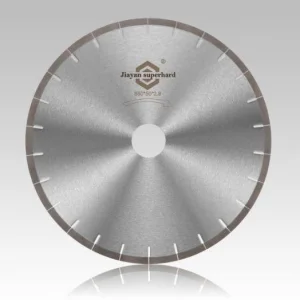
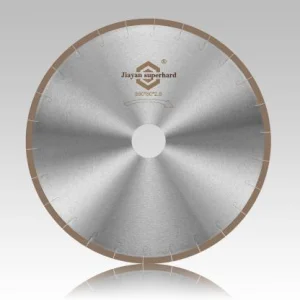
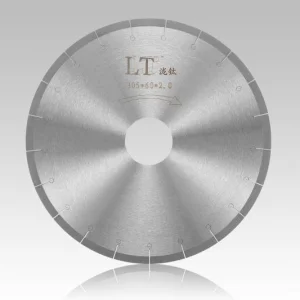
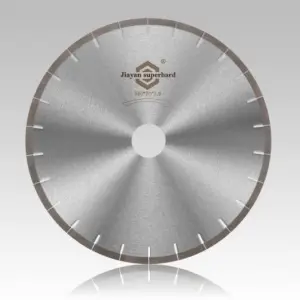
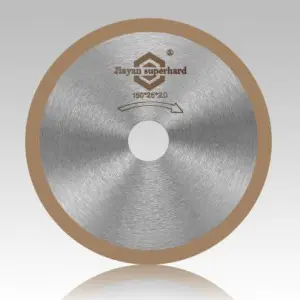
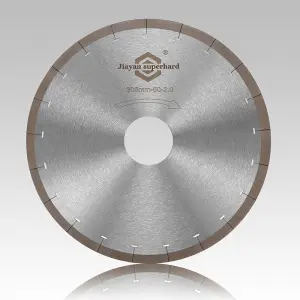
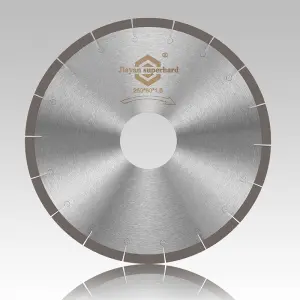
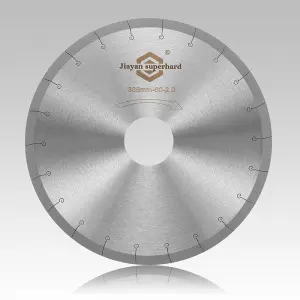
In the contemporary superhard material ecosystem, China stands as the undisputed global hub for industrial synthetic diamond manufacturing, accounting for over 90% of the world's synthetic diamond grit production. As international construction, stone fabrication, and infrastructure projects demand unprecedented precision and tool durability, modern procurement professionals heavily rely on a specialized China diamond tools exporter capable of combining material science innovation with industrial economies of scale.
From high-speed civil road sawing in North America to delicate sintered porcelain slab fabrication in Southern Europe, global buyers navigate complex trade dynamics, strict safety mandates (EN13236), and shifting material hardness scales (Mohs 5 to 9). Choosing the correct supply partner requires evaluating not merely unit price, but raw material synthesis purity, matrix sintering technology, automated laser segment micro-welding capabilities, and dynamic core balancing tolerances.

Understanding how industrial clustering, advanced powder metallurgy, and vertical integration empower Chinese superhard tool exporters to deliver unmatched value worldwide.
By establishing direct supply corridors with synthetic diamond crystal synthesis bases in Henan and Anhui provinces, manufacturers ensure direct access to high-grade single-crystal monocrystalline micro-powders with controlled particle toughness (Ti/Tti index) and thermal stability up to 1100°C.
State-of-the-art computer-controlled hot-pressing furnace lines automatically modulate sintering pressure (up to 350 bar) and temperature profiles, eliminating human variability and guaranteeing micro-structural density across multi-cavity segment molds.
Flexible production lines accommodate custom arbor dimensions, specialized segment slot patterns (Key-slot, J-slot, Narrow-turbo), custom matrix bond hardness, and private labeling with minimum lead times for global distributor brands.

Multi-stage furnace atmospheric control for oxidation-free metal matrix bonding.
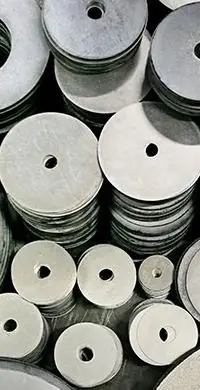
Ultrasonic joint flaw detection and shear strength mechanical destruction testing.

Monthly throughput exceeding 500,000 diamond cutting discs for global buyers.

Seamless containerized export logistics and regulatory compliance documentation.
Exploring next-generation abrasive technologies that drive linear cutting efficiency, eliminate thermal stress distortion, and reduce operating expenditure per meter cut.
Traditional segments utilize randomly dispersed diamond grits. Next-generation 3D patterned array placement positions every diamond grain in precise geometric rows and layers. This ensures equal workload per particle, preventing premature diamond drop-off, increasing cutting speeds by 30-50%, and extending segment lifespan up to 100% in hard stone milling.
Replacing traditional silver brazing, high-energy CNC laser welding creates a direct atomic bond between the steel core and the diamond segment. The laser-welded joint achieves shear strength values exceeding 700 MPa, eliminating segment detachment risks during high-rpm dry cutting and severe thermal expansion conditions.
Addressing global raw material volatility and environmental compliance, research focuses on nanocrystalline Fe-Ni-Cu-Sn alloy matrix matrices. These advanced powders deliver matrix self-sharpening properties equal to high-cobalt bonds while adhering to strict European eco-safety manufacturing directives.
Reference guide for global procurement engineers matching tool parameters with target material hardness and machine specs.
| Target Material | Mohs Hardness | Recommended Peripheral Speed (m/s) | Diamond Mesh Size (US Mesh) | Matrix Bond Composition | Cooling Protocol |
|---|---|---|---|---|---|
| Hard Granite (Class 1) | Mohs 7 - 8 | 25 - 32 m/s | 40 / 50 Mesh | Soft Bronze-Copper-Nickel Bond | Wet Cutting Only |
| Sintered Porcelain Slab | Mohs 7 - 8.5 | 28 - 35 m/s | 60 / 80 Micro Mesh | Ultra-Soft Self-Sharpening Alloy | Abundant Water Cooling |
| Medium Marble / Limestone | Mohs 3 - 5 | 35 - 45 m/s | 30 / 40 Coarse Mesh | Hard Cobalt-Iron Wear-Resistant | Wet or Dry Cutting |
| Cured Reinforced Concrete | Mohs 6 - 7 | 30 - 40 m/s | 35 / 45 High-Toughness Mesh | Medium-Hard Laser-Welded Matrix | Wet or Dry Cutting |
How specialized diamond tools perform under demanding localized industrial environments across global job sites.
Challenge: Ultra-dense sintered porcelain slabs (Dekton, Neolith, Lapitec) suffer high internal mechanical tension. Improper blade selection results in micro-chipping along edge profiles and catastrophic slab cracking.
Solution: JIAYAN specialized 14-inch J-Slot and narrow-turbo segment saw blades. Formulated with ultra-fine diamond mesh (60/80) and a soft self-sharpening matrix bond that cuts with minimal mechanical stress, leaving factory-smooth edges ready for polished edge joining.
Challenge: Massive granite quarrying operations require continuous heavy cutting under extreme mud slurries and high thermal loads, where soft blade cores quickly warp or lose tension.
Solution: Large diameter circular blades (350mm to 3500mm) engineered with pre-stressed high-tensile 75Cr1 steel cores and Sandwich-structured diamond segments. The alternating grit concentration maintains cutting speed while minimizing side friction against quarry stone walls.
Challenge: Cutting heavily reinforced green or cured concrete embedded with steel rebar requires high impact resistance to prevent segment detachment.
Solution: Laser-welded segmented blades featuring Key-slot kerf designs. The laser weld joint withstands severe torsional stress, and the matrix incorporates high-temperature titanium-coated synthetic diamond crystals that chew through steel rebar without glaze-over.
Safety and quality consistency are paramount in industrial cutting operations. As an authoritative China diamond tools exporter, JIAYAN enforces stringent multi-stage inspection protocols matching international European standards.
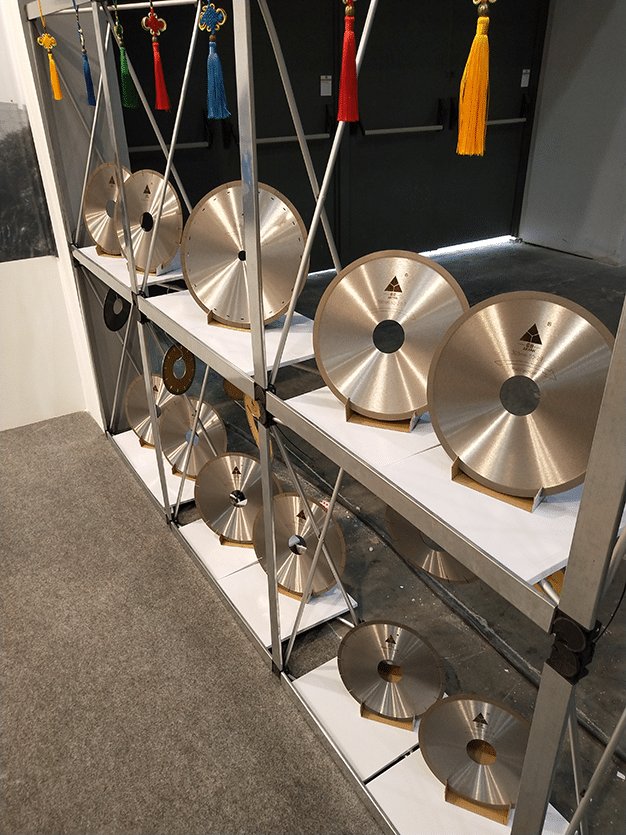
Member of the China Superhard Material Association — Combining advanced metallurgical engineering with decade-long international export leadership.
Founded in Wuhu, Anhui Province, China, JIAYAN Superhard Materials Co., Ltd. has grown into a globally recognized manufacturer of diamond saw blades, continuous rim discs, and segment tools. Operating advanced hot-pressing sintering lines, laser welding stations, and precision core tensioning units, JIAYAN services demanding industrial stone fabricators and construction contractors across Europe, the Middle East, Southeast Asia, and the Americas.
Our engineering research team regularly presents micro-structural joint inspection methodologies and diamond tool wear optimization papers at prestigious international trade forums, including TECNARGILLA Rimini in Italy and the China International Exhibition for Ceramic Technology & Equipment in Guangzhou.
Expert insights addressing key procurement, operational engineering, and tool selection inquiries.
Answer: The fundamental law of diamond tool physics dictates inverse matching: Soft stone (like marble or soft limestone) requires a Hard metal bond matrix to resist abrasive friction. Hard stone (like dense granite or quartz) requires a Soft metal bond matrix so the bond wears away cleanly, continuously exposing fresh sharp diamond crystals.
Answer: Hot-pressed blades are sintered under heat and pressure, ideal for small dry/wet ceramic blades. High-frequency brazed blades use silver solder to attach segments to cores for wet cutting. Laser-welded blades fuse segment to core at an atomic level, offering maximum heat resistance for heavy-duty dry masonry and concrete cutting under EN13236 standards.
Answer: At 1400 to 2800 RPM, any microscopic imbalance in the blade steel core produces high-frequency spindle vibrations. This causes uneven segment wear, edge chipping on delicate slabs, premature machine bearing failure, and accelerated kerf widening.
Answer: Coarse diamond grit (30/40 mesh) cuts rapidly through material but leaves a rough edge. Fine diamond mesh (60/80 mesh or smaller) cuts slower but delivers clean, mirror-smooth cuts without chipping delicate glazes on porcelain tiles or sintered stone slabs.
Answer: Glazing occurs when the metal bond is too hard for the rock, causing diamond grit to flatten into rounded stumps without releasing fresh sharp diamonds. Resolve it by cutting into a highly abrasive dressing stone (like soft sandstone or asphalt) for a few meters to strip back matrix metal and expose new diamond grit.
Answer: Yes. For extreme ambient temperatures or wet cutting in cold climates, steel core tempering parameters are modified to prevent cold brittleness, and anti-corrosive electroplated or powder coatings are applied to defend against salt spray and oxidation during long ocean freight transport.
Direct factory supply with OEM private labeling, custom arbor bores, and optimized diamond matrix formulations.
Inquire about containerized wholesale pricing, custom dynamic core parameters, or request product catalog technical sheets.