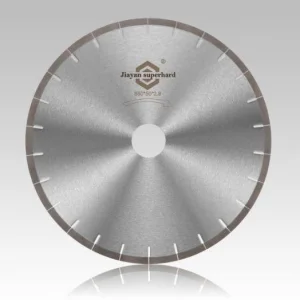
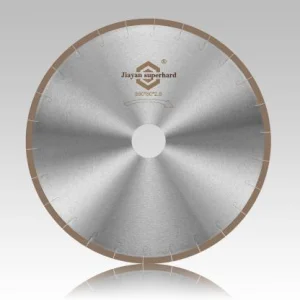
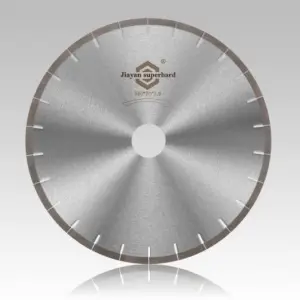
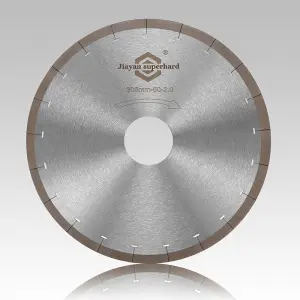
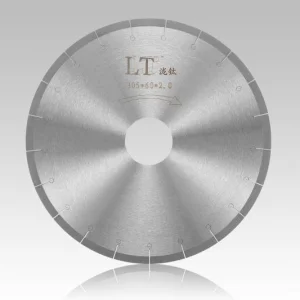
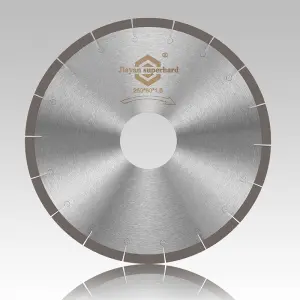
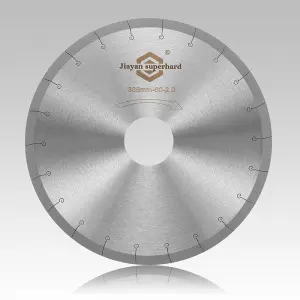
Engineered superhard diamond cutting blades and circular saws optimized for ultra-compact sintered stone, dense porcelain slabs, and hard granite.
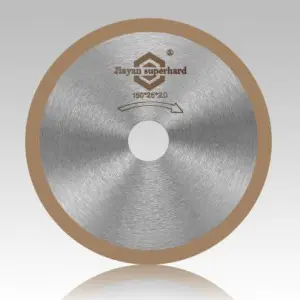
Strategic sourcing insights, total cost of ownership models, and yield management strategies for industrial stone fabricators and tile distributors.
The global architectural surfacing landscape has undergone a tectonic shift over the past decade. The rapid rise of large-format porcelain slabs and ultra-compact sintered stone materials (such as Dekton, Neolith, and Lapitec) has fundamentally redefined material processing requirements. For commercial buyers, industrial purchasing managers, and high-volume stone fabrication factories, evaluating China Porcelain Cutting Suppliers & Exporters is no longer merely a pricing decision—it is a critical exercise in risk mitigation, Total Cost of Ownership (TCO) optimization, and production yield engineering.
As leading Chinese manufacturers such as JIAYAN Superhard Tools continue to advance high-vacuum hot-press sintering and laser welding technologies, international sourcing directors are capitalizing on substantial cost-to-performance advantages. Key drivers driving global procurement shifts toward certified Chinese suppliers include:
Understanding the physics of cutting vitrified surfaces, friction thermodynamics, and material interaction between diamond crystals and porcelain substrates.
Characterized by ultra-low water absorption (< 0.1%), Mohs hardness of 7–8, and dense glass-ceramic matrices. Requires high-frequency friable synthetic diamond grit to maintain low cutting force and prevent thermal shock cracking.
Manufactured under extreme pressure (> 400 bar) and temperatures above 1200°C. Possesses immense internal tension. Needs precise J-slot vibration damping and soft cobalt-bronze matrix bonds to release tension during linear cuts.
Glazed ceramic tiles present delicate surface veneers that chip easily. Demands ultra-thin rim profiles (1.0mm – 1.2mm) with fine diamond mesh (#100/120 to #140/170) to yield glass-smooth, chip-free cut profiles.
To assist procurement technical teams in selecting the correct saw blade series, the table below provides a comparative overview of physical properties across common stone and ceramic materials alongside the optimal diamond tool configuration engineered by JIAYAN Superhard Tools.
| Material Category | Mohs Hardness | Density (g/cm³) | Flexural Strength | Recommended Diamond Mesh | Bond Matrix Hardness |
|---|---|---|---|---|---|
| Sintered Stone (12–30mm) | 7.0 – 8.0 | > 2.45 | > 50 MPa | #60/70 - #80/100 (High Friability) | HRB 85 – 95 (Soft Bronze-Co Matrix) |
| Porcelain Tile (6–10mm) | 7.0 | 2.30 – 2.40 | > 40 MPa | #100/120 - #140/170 (Fine Mesh) | HRB 90 – 100 (Medium-Soft Bond) |
| Hard Granite (Class IV/V) | 6.5 – 7.5 | 2.60 – 2.80 | 15 – 25 MPa | #40/50 - #50/60 (Coarse Grit) | HRB 60 – 75 (Hard Iron-Co Matrix) |
| Calacatta Marble | 3.0 – 4.0 | 2.50 – 2.70 | 10 – 18 MPa | #50/60 - #70/80 (Medium Grit) | HRB 105 – 115 (Very Hard Matrix) |
Metallurgical engineering, hot-press sintering parameters, core tensioning methods, and segment geometry design.
Sintering executed at temperatures between 850°C and 1050°C under 35 MPa hydraulic force. Ensures dense metal packing around diamond crystals, preventing premature diamond micro-grain pop-out during high-feed cutting.
High-precision laser cutting produces specialized J-slots, laser keys, and narrow gullets. Steel cores undergo multi-pass roll-tensioning to achieve dynamic run-out values within ≤ 0.02mm under high operational RPM.
Custom-formulated powders blending Cobalt (Co), Bronze (Cu-Sn), Iron (Fe), and Nickel (Ni). Engineered to wear synchronously with synthetic diamond abrasion, exposing new sharp facets at controlled rates.
In porcelain slab cutting, dynamic wear equilibrium is paramount. If the metal matrix bond is excessively hard, worn diamond crystals polish over without fracturing, leading to blade glazing, extreme heat buildup, and subsequent slab destruction. Conversely, if the bond matrix is overly soft, diamonds tear away prematurely, drastically shortening tool lifespan.
JIAYAN Superhard Tooling utilizes proprietary Ti-Coated (Titanium Clad) Synthetic Diamond Grains. The titanium coating creates a chemical chemical bond (carbide interface) between the metallic matrix and the diamond crystal during vacuum sintering. This increases diamond retention strength by over 30%, ensuring maximum work utilization of each diamond crystal prior to controlled micro-fracturing.
Recommended peripheral speeds, water flow dynamics, feed rates, and structured failure analysis for CNC bridge saws and table saws.
Achieving zero-chip, high-speed cutting on large-format porcelain slabs requires precise synchronizations between machine kinematics and diamond tool specifications. Operational recommendations engineered by JIAYAN field technicians include:
| Blade Diameter (mm) | RPM Range (Porcelain) | Peripheral Speed (m/s) | Linear Feed Speed (m/min) | Coolant Water Flow (L/min) |
|---|---|---|---|---|
| 115mm – 125mm (Angle Grinder) | 10,000 – 12,000 | 60 – 75 m/s | 0.5 – 1.2 m/min | Dry / Light Mist |
| 250mm – 300mm (Bridge / Tile Saw) | 2,200 – 2,800 | 30 – 40 m/s | 1.0 – 2.0 m/min | 15 – 20 L/min |
| 350mm (Industrial CNC Bridge Saw) | 1,800 – 2,300 | 32 – 42 m/s | 1.2 – 2.5 m/min | 20 – 30 L/min |
| 400mm (Heavy Machinery Sintered Slab) | 1,500 – 1,900 | 30 – 38 m/s | 1.0 – 2.2 m/min | 25 – 35 L/min |
When operating high-speed bridge saws on dense porcelain slabs, minor mechanical deviations cause instant cutting flaws. Below is a structured diagnostic guide for plant operators and maintenance engineers:
Root Cause: Peripheral speed is too low; RPM insufficient; diamond grit too coarse; matrix bond too hard (glazed blade).
Solution: Increase spindle RPM; decrease feed velocity; dress blade with an abrasive refractory brick to expose fresh diamond grit.
Root Cause: Steel core lost tension due to overheating; excessive feed rate; spindle arbor play/flange misalignment.
Solution: Verify water coolant jets hit directly at the cutting point; check flange runout (<0.01mm); reduce forward feed rate.
Root Cause: Matrix bond too soft for the material; insufficient water flow flushing slurry; arbor slippage.
Solution: Upgrade to a harder metallic bond formulation (higher Cobalt/Iron concentration); increase coolant flow rate.
Rigorous testing standards, global certifications, and OEM/ODM supply chain integration for overseas buyers.
All circular diamond saw blades manufactured by JIAYAN Superhard strictly adhere to European standard EN13236. Blades undergo extreme centrifugal burst testing up to 1.5x maximum operational RPM.
From raw material diamond powder inspection to automated tension testing and 100% optical dimension scanning, every manufacturing batch is traceable under standardized ISO quality control procedures.
Complete customized engineering support: tailor bore sizes (50mm, 60mm with copper reduction rings), specific segment colors, custom laser engraving, and retail packaging solutions for international brands.
Expert solutions to standard engineering, procurement, and field application inquiries regarding China porcelain cutting diamond blades.
Explore our full range of superhard cutting solutions for stone fabricators, ceramic distributors, and industrial tooling importers.