High-performance tungsten carbide and diamond circular saw blades engineered for precision manufacturing, stone processing, ceramic cutting, and non-ferrous metal fabrication.
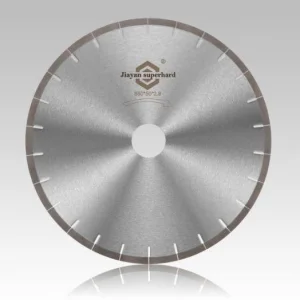
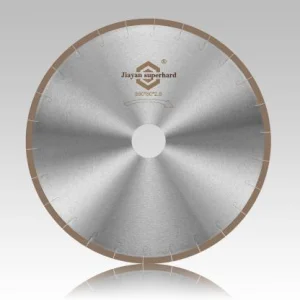
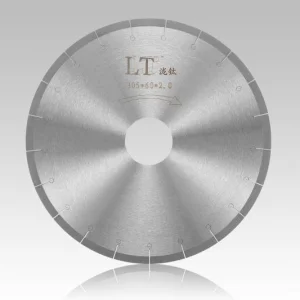
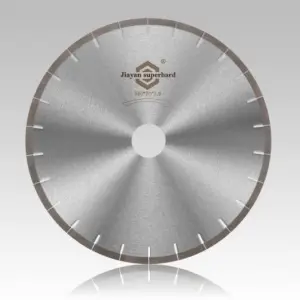
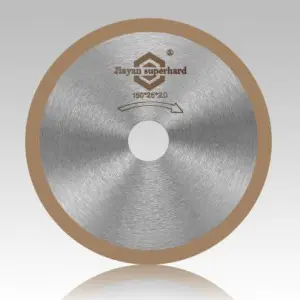
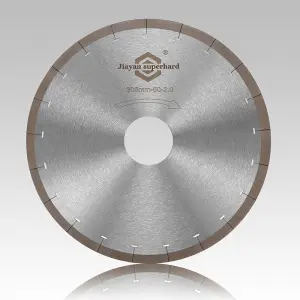
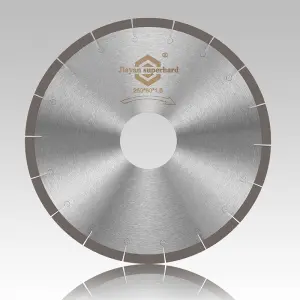
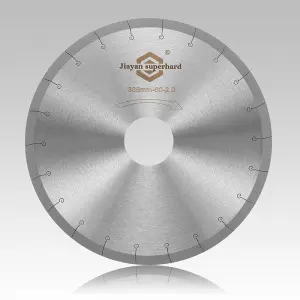
Navigating the technological shift from legacy high-speed steel (HSS) to advanced tungsten carbide matrix formulations and superhard diamond-carbide hybrids across international manufacturing sectors.
In the contemporary industrial ecosystem, the global market for custom carbide saw blades has evolved far beyond basic mechanical cutting consumables. Modern high-speed production lines—spanning non-ferrous metal extrusion mills, automated architectural stone processing plants, aerospace structural component machining, and high-density fiberboard (HDF/MDF) furniture production—demand cutting tooling capable of sustaining dimensional tolerances under extreme thermal friction and severe mechanical shock. Technical procurement directors and plant engineering managers are increasingly bypassing off-the-shelf commodity blades in favor of engineered-to-order carbide saw blade solutions that optimize total cost of ownership (TCO) through extended tool life, reduced kerf loss, and zero-defect edge quality.
Information Gain & Search Quality Insight: According to Google Search Quality Rater Guidelines (E-E-A-T), true industrial authority requires domain expertise based on empirical metallurgical data. Carbide saw blade selection is not merely a matter of diameter and tooth count; it is a complex engineering trade-off between cobalt binder volume percentage, tungsten carbide grain sizing (sub-micron vs. micro-grain), tooth profile shear angles, expansion slot viscoelastic dampening, and tension stability at operating speeds exceeding 6,000 RPM.
The global demand for custom carbide saw blade suppliers is driven by three macro-economic shifts:
A rigorous engineering breakdown of carbide grain classification, cobalt binder matrix mechanics, shear geometry, and vibration control technology.
The wear resistance and impact toughness of tungsten carbide (WC-Co) tips depend fundamentally on grain size distribution. Sub-micron grains (0.4 µm – 0.8 µm) bonded with 6% to 9% Cobalt achieve hardness ratings up to 93.5 HRA. This matrix prevents micro-chipping during high-speed cutting of abrasive sintered stone and high-pressure laminates.
Selecting the precise tooth grind geometry dictates kerf clearance, heat dispersion, and feed rate potential:
High-speed cutting generates localized thermal expansion, inducing plate wobbling and axial runout. Custom industrial carbide blades utilize laser-cut expansion slots filled with sound-dampening viscoelastic polyurethane resins. This acoustic and thermal dampening technology absorbs harmonic vibration, reduces operational noise by up to 10 dB(A), and maintains flatness under continuous thermal stress.
How modern Chinese tool manufacturing facilities combine raw material integration, automated 5-axis grinding, and rigorous QA to deliver unparalleled cost-per-cut advantages to global procurement partners.
Leading Chinese superhard tool manufacturers employ advanced Vollmer and Walter 5-axis CNC grinding machines operating in climate-controlled cleanrooms. Automated optical measuring systems continuously verify tooth flank angles, clearance angles, and concentricity, guaranteeing radial and axial runout tolerances within ±0.01mm across production runs of tens of thousands of units.
Tip detaching under high kinetic shear forces is a primary failure mode in heavy-duty cutting. Industrial Chinese OEM suppliers utilize high-frequency induction brazing systems with multi-layer Tri-Foil (Ag-Cu-Ni) silver solder alloys. This sandwich structure acts as a shock absorber during intermittent impacts, elevating tip shear strength beyond 350 N/mm².
Every custom saw blade body undergoes automated stress equalization and dynamic laser balancing according to ISO 1940 Grade G2.5 standards. This eliminates high-frequency chatter marks on cut surfaces, prevents premature spindle bearing fatigue on customer machinery, and enables stable cutting velocities up to 80 m/s.
From native raw tungsten powder synthesis to automated laser plate profiling, stress-relief heat treatment, PVD functional coating, and 100% machine-vision quality inspection, China’s industrial tool clusters deliver dynamic lead times, custom OEM branding, flexible MOQs, and unmatched price-to-performance metrics.
Engineered blade configurations tailored to specific industrial sectors, cutting machinery specifications, and material workpiece characteristics.
In heavy aluminum extrusion plants and automotive structural profiling workshops, cutting 6000-series aluminum billets demands rapid chip evacuation and anti-galling performance. Standard HSS blades suffer from rapid aluminum pickup (built-up edge) on the clearance faces.
Recommended Solution: Custom TCT saw blades featuring a Triple Chip Grind (TCG) profile with a positive 12° to 15° hook angle, paired with a PVD TiAlN coating and micro-lubrication (MQL) cooling slots. This setup delivers burr-free cuts, smooth Ra < 1.6 µm surface finishes, and over 400 hours of continuous cutting between sharpening cycles.
Fabricating ultra-compact ceramic sinter slabs (e.g., 12mm to 20mm Dekton or Neolith) introduces intense stress release during sawing, frequently causing edge blowout or longitudinal slab cracking.
Recommended Solution: A hybrid continuous-rim or J-slot carbide/diamond blade structure. Combining sub-micron tungsten carbide teeth with laser-etched cooling slots and fine diamond matrix segments yields micro-chip-free mitering and straight cutting at high linear feed rates (> 2.5 m/min).
Automated furniture manufacturing lines utilizing twin-spindle panel sizing saws require flawless double-sided cut quality on double-veneered melamine and compact HPL boards.
Recommended Solution: Pairing a conical or split scoring saw blade with an Alternate Top Bevel (ATB) or high-low raker primary blade. High-density micro-grain carbide tips with a 30° steep bevel shear surface fibers cleanly without top-side chipping or bottom-side tearing.
| Carbide Grade / Matrix | Tooth Geometry | Target Workpiece Material | Hardness (HRA) | Recommended Rim Speed | Key Operational Benefit |
|---|---|---|---|---|---|
| K10 / Micro-grain (0.6µm) | Alternate Top Bevel (ATB) | MDF, HDF, Melamine Veneer | 92.5 - 93.5 | 60 - 80 m/s | Zero surface chip-out, ultra-sharp shearing edge |
| K20 / Sub-micron (0.8µm) | Triple Chip Grind (TCG) | Aluminum Extrusions, Brass, Copper | 91.5 - 92.5 | 40 - 70 m/s | High impact resistance, anti-galling performance |
| P20 / Titanium Alloy Matrix | Flat Top Grind (FTG) | Structural Steel Pipe, Metal Bars | 90.0 - 91.5 | 25 - 40 m/s (Cold Saw) | Thermal crack resistance under high dynamic shock |
| Superhard Diamond-Carbide | J-Slot / Segmented Rim | Sintered Stone, Granite, Porcelain | > 94.0 Equivalent | 30 - 50 m/s (Wet Cut) | Eliminates slab tension cracking, fast feed rate |
Essential quality evaluation benchmarks for industrial procurement managers and OEM brand buyers when evaluating custom carbide saw blade companies.
Selecting the optimal OEM custom carbide saw blade supplier requires auditing key technical parameters beyond basic price-per-unit metrics. To guarantee long-term factory productivity and tooling consistency, evaluate suppliers against the following mandatory criteria:
Verify that the blade core uses 75Cr1 (1.2235) or 65Mn high-tensile spring steel, vacuum heat-treated to 42–46 HRC. Superior core steel resists dishing, warping, and permanent deflection under severe side-loads.
Demand documented quality inspection certificates showing radial runout within < 0.015mm and axial runout within < 0.020mm. Low runout minimizes kerf width loss, conserves raw material, and reduces machine spindle wear.
Ensure the supplier utilizes automatic silver-copper-silver induction brazing with non-destructive ultrasonic testing (NDT) to verify 100% solder joint coverage between tip and steel body.
In-depth technical answers addressing common procurement questions, engineering parameters, custom blade maintenance, and manufacturing capabilities.
Sub-micron tungsten carbide grains (0.4 µm – 0.8 µm) offer higher edge sharpness retention and higher hardness (up to 93.5 HRA) compared to standard micro-grain matrices (0.8 µm – 1.3 µm). Sub-micron grades are optimal for cutting abrasive composite laminates, compact sintered stone, and hard plastics, where micro-abrasion is the dominant wear mechanism. Standard micro-grain carbide offers slightly higher impact toughness, making it preferred for heavy structural timber ripping or intermittent metal cuts where shock loads prevail.
When a saw blade spins at elevated operating speeds (e.g., 3,600 to 6,000 RPM), centrifugal force combined with frictional heating causes localized expansion at the outer rim. If the steel core is not properly prestressed (tensioned), the rim becomes loose relative to the center, leading to blade dynamic flutter, thermal dish deformation, and rough cut finishes. Computer-controlled dynamic tensioning creates targeted residual compressive stress distribution across the blade body, ensuring the disc runs dead-flat at operating temperatures and speeds.
Custom OEM/ODM blade production typically supports flexible minimum order quantities starting from 50 to 100 units per specification for standard diameters (250mm – 350mm), and 20 to 50 units for large-diameter industrial blades (400mm – 800mm). Prototype development and engineering drawing confirmation generally require 7 to 10 business days, with full batch production cycles completed within 20 to 30 calendar days depending on PVD coating requirements.
Tri-Foil brazing utilizes a copper center layer sandwiched between two silver alloy outer layers (Ag-Cu-Ni). Because tungsten carbide and spring steel have vastly different thermal expansion coefficients, thermal cooling stress during brazing can crack the carbide tip. The soft copper center layer acts as a mechanical strain-relief buffer, absorbing thermal contraction forces and providing superior shear strength (> 350 MPa) to endure continuous heavy kinetic impacts.
Premium custom carbide saw blades manufactured with oversized carbide tips (typically 8.0mm to 10.5mm tip length) can undergo 15 to 25 precision CNC re-sharpening cycles, provided the blade plate remains unwarped and undamaged. Using 5-axis CNC grinding machines with oil coolant during re-sharpening removes minimal material (approx. 0.05mm – 0.10mm per cycle), maximizing total blade lifetime value.
For non-ferrous metals like aluminum and brass, Titanium Aluminum Nitride (TiAlN) or Chromium Nitride (CrN) coatings are ideal due to their low coefficient of friction against non-ferrous metals, which prevents chip welding and edge build-up. For wood laminates, composite panels, and dense plastics, Diamond-Like Carbon (DLC) or nanocomposite nACo coatings provide extreme surface hardness (up to 3,500 HV) and resin adhesion resistance.
Explore our complete catalog of industrial diamond saw blades, tungsten carbide tipped circular blades, continuous rim discs, and custom OEM cutting solutions.