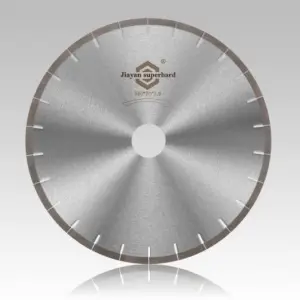
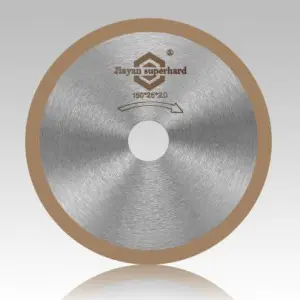
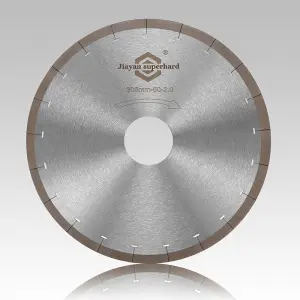
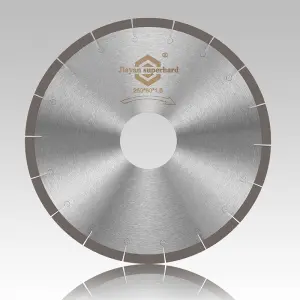
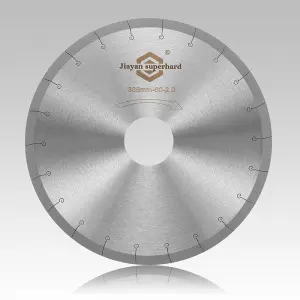
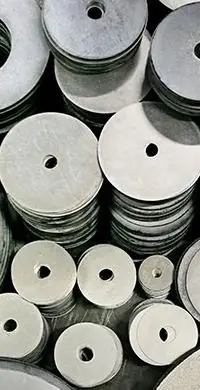
Explore our high-precision circular cutting discs manufactured for engineered stone, natural granite, sintered porcelain slabs, and heavy construction ceramics.
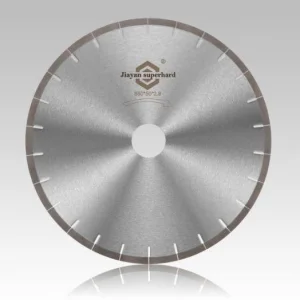
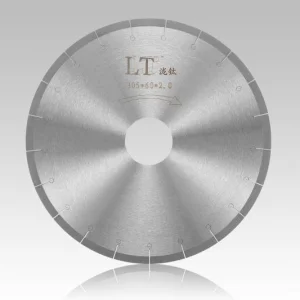
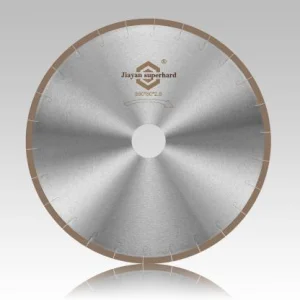
Navigating modern abrasive technology, synthetic diamond grit synthesis, and high-performance blade manufacturing for demanding industrial applications.
In modern manufacturing, infrastructure construction, and stone processing, the demand for precision abrasive tools has shifted toward ultra-hard material machining. Custom circular cutting disc factories and manufacturing companies sit at the core of this industrial supply chain, providing specialized diamond and cubic boron nitride (CBN) tools capable of slicing through ultra-dense substrates with micrometer-level tolerance.
The transition from traditional silicon carbide (SiC) and aluminum oxide ($Al_2O_3$) abrasives to synthetic diamond superabrasives has fundamentally altered cutting thermodynamics. Superhard circular saw blades combine synthetic monocrystalline or polycrystalline diamond grits embedded within a sintered metal matrix, attached to high-tensile alloy steel cores (such as 65Mn or 75Cr1). This engineered synergy eliminates blade flexing, reduces material loss (kerf thickness), and maximizes material removal rate (MRR).
Global procurement directors and industrial equipment distributors face a changing market landscape. Raw material volatility in synthetic diamond crystals, cobalt powder, and specialized steel alloys requires direct alignment with tier-1 circular saw blade manufacturers.
Partnering with vertically integrated OEM/ODM factories provides strategic advantages: customized bond formulations engineered for regional stone hardness, dynamic balance verification preventing arbor shaft damage, and optimized segment geometry (such as J-Slot, Keyhole Slot, or Continuous Turbo Rims) tailored to specific CNC, bridge saw, or hand-held tile cutter machinery.
Understanding the micro-structure, diamond grit concentration, bond retention, and thermal management mechanisms of circular cutting discs.
The cutting efficiency of a circular saw blade depends heavily on diamond grit selection. Manufacturers utilize high-strength synthetic diamond crystals (such as SDA100+ series) rated for high impact resistance and micro-chipping behavior.
Grit size selection directly influences cut finish: coarser mesh sizes (30/40, 40/50 mesh) yield fast cutting in soft to medium hard granite, while fine mesh sizes (60/70, 100/120 mesh) are critical for chip-free cutting in sintered stone and delicate ceramic glazes.
The metal powder matrix—composed of varying ratios of Cobalt (Co), Nickel (Ni), Copper (Cu), Iron (Fe), and Tungsten Carbide (WC)—acts as the retention mechanism for diamond grains. The key rule of matrix matching is exact synchronization of wear rate:
Thermal management is paramount during continuous high-speed rotation (typically 35 to 50 m/s peripheral velocity). Specialized slot geometries engineered by circular cutting disc factories perform vital functions:

Founded in Wuhu, China, JIAYAN Superhard Materials Co., Ltd. is a professional manufacturer of diamond saw blades, cutting discs, and superhard tools for stone, ceramic, and granite industries. As a proud member of the China Superhard Material Association, JIAYAN combines advanced sintering technology with rigorous quality control to deliver high-precision tools that meet the stringent demands of global buyers. With over a decade of export experience, JIAYAN serves clients across Europe, the Middle East, Southeast Asia, and the Americas with full OEM/ODM capabilities.
From metallurgical powder weighing to automated laser welding and dynamic stress balancing—how modern factories ensure zero-defect blade production.
High-purity elemental metal powders are blended with precisely graded synthetic diamond crystals. Automated granulating machines produce homogeneous granules to ensure consistent diamond distribution throughout every segment batch.
Granulated powders are loaded into graphite molds and subjected to combined high temperature ($750^\circ\text{C} - 950^\circ\text{C}$) and hydraulic pressure. Hot Isostatic Pressing (HIP) maximizes segment density, achieving near-zero internal porosity for maximum diamond retention strength.
Segments are attached to heat-treated alloy steel cores. For heavy-duty dry cutting, fully automated laser welding systems create an indestructible metallurgical bond between the segment and core, yielding joint shear strengths exceeding 450 MPa.
Every circular steel core undergoes precise manual or computerized tensioning. Master technicians hammer or roll tension rings onto the core body, ensuring that under operational RPM, radial runout remains under 0.02mm for wobble-free cuts.
How specialized circular cutting discs are deployed across diverse regional markets, climate conditions, and substrate physical properties.
In fabricator hubs across Italy, Spain, and the UK, extra-large sintered stone slabs (e.g., Neolith, Dekton, Lapitec) present unique cutting challenges due to internal material tension. Custom circular cutting disc factories produce specialized 300mm–400mm J-slot continuous rim blades operating at high peripheral speeds ($V_c = 25 - 35\text{ m/s}$) with constant water flow. The soft bronze-cobalt alloy bond ensures chip-free mitering ($45^\circ$ cut) for luxury countertop fabrication.
Processing natural granites (Class IV and Class V hardness, such as Imperial Red or Black Galaxy) in Brazil and India demands ultra-durable 350mm to 800mm bridge saw blades. Factories engineer multi-layer sandwich segments equipped with drop-segments to protect the steel core body from side wear caused by quartz slurry abrasion, maximizing total blade life over thousands of square meters.
On construction sites in the UAE, Saudi Arabia, and Qatar, masonry crews cut heavy clay bricks, cured reinforced concrete, and calcareous limestone under extreme ambient temperatures exceeding $45^\circ\text{C}$. Factories supply heavy-duty laser-welded segment cutting discs with specialized steel cores capable of dry cutting without segment loss or thermal distortion.
Highway contractors and municipal road repair teams across North America utilize heavy-duty walk-behind saws with 350mm to 600mm diamond blades. Factory customization focuses on anti-rebar segment formulations incorporating aggressive wedge segments to slice through steel mesh while maintaining high linear cutting speeds.
Ensuring absolute workplace safety through global certified standards while providing complete OEM flexibility for distributor private labels.
Circular cutting discs operate at extreme centrifugal forces (rotational speeds up to 12,000 RPM for small angle grinder discs). Reputable manufacturers comply strictly with the European standard EN13236 (Safety Requirements for Superabrasive Products) and oSa (Organization for the Safety of Abrasives) regulations.
Testing protocols include destructive burst speed tests (operating at $1.5\times$ maximum RPM), bending moment tests on segment welds, and strict lateral runout tolerance audits.
To fit diverse machinery across regional markets, circular cutting disc factories supply custom bore sizes and mounting hole patterns:
In modern indoor stone fabrication shops, decibel levels are strictly regulated. Factories manufacture silent blades utilizing a multi-layer copper/steel composite body (Steel-Copper-Steel core).
This sandwich structure absorbs resonance frequency vibrations generated during high-speed diamond grinding, reducing operating noise by 10 to 15 dB(A) while maintaining high structural rigidity.
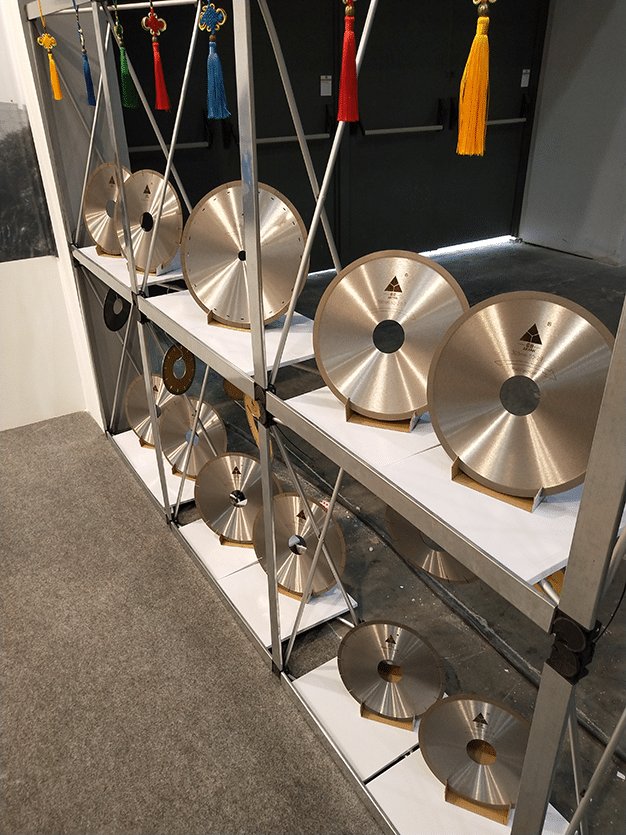
JIAYAN regularly showcases cutting-edge superhard tools at world-renowned trade fairs, including TECNARGILLA Rimini (Italy) and the China International Exhibition for Ceramic Technology & Equipment (Guangzhou). Our engineering papers detail critical inspection methods for laser-welded saw blades—covering joint microstructure analysis, torque shear testing, and dynamic blade balancing.
The next decade of superhard material cutting: AI-driven matrix modeling, titanium-coated diamond grains, and eco-friendly cobalt-free alloys.
Chemical vapor deposition (CVD) titanium coating on synthetic diamond crystals creates a metallurgical barrier. This prevents thermal oxidation of diamonds during hot-pressing sintering while dramatically increasing mechanical retention (pull-out force) within the metal matrix.
Modern factories are deploying machine learning algorithms to calculate real-time sintering pressure profiles. By analyzing raw metal powder batch variations, AI sintering furnaces dynamically adjust temperature ramp times down to $\pm 1^\circ\text{C}$, yielding consistent density across production runs.
Due to ethical mining concerns and health risks associated with cobalt dust exposure, industrial R&D is focused on Iron-Nickel-Bronze alloy matrices. Next-generation eco-friendly bonds deliver equal diamond hold strength while reducing raw material costs and carbon footprint.
Expert guidance on selecting, operating, and troubleshooting custom circular cutting discs for maximum life and cut quality.
Dry cutting discs feature laser-welded segments or specialized slot geometry engineered to dissipate heat into ambient air. Wet cutting blades utilize high-frequency brazed segments and require constant water coolant to flush out slurry and cool the core. Never use a wet-only blade without water, as segment detachment will occur due to thermal failure.
For natural granite, recommended peripheral speed ranges from 30 to 45 m/s. For dense sintered stone and porcelain ceramic tiles, optimal speed is slightly lower—between 25 and 35 m/s—to prevent edge chipping. Always calculate spindle RPM based on blade diameter: $\text{RPM} = \frac{V_c \times 60000}{\pi \times D\text{ (mm)}}$.
Blade "glazing" occurs when the metal bond is too hard for the substrate, causing diamond crystals to flatten without releasing fresh sharp diamond edges. To dress (re-sharpen) a glazed blade, perform several cuts into a highly abrasive material, such as soft firebrick or asphalt, to wear away the excess metal bond matrix.
Professional factories offer full custom capabilities: tailored metal bond matrices matching regional stone samples, custom diamond grit concentrations, private label laser etching on core bodies, branded color coating, custom arbor bore sizes, and bespoke segment geometry (Turbo, J-slot, Keyhole, Continuous rim).
While higher segments (e.g., 12mm or 15mm) offer more wear volume, overall blade performance depends on diamond distribution uniformness. Premium hot-pressed 10mm segments with optimal diamond matrix bonding often outlast poorly sintered 15mm segments while maintaining faster feed rates.
Operators must inspect blades for core cracks or arbor distortion prior to mounting. Always verify that equipment RPM does not exceed the maximum safe RPM printed on the blade. Personal Protective Equipment (PPE)—including eye protection, respiratory dust masks, sound-dampening ear guards, and protective safety boots—is mandatory.
Connect directly with JIAYAN Superhard manufacturing specialists for OEM inquiries, bulk production quotes, and custom matrix development.