Engineered for maximum chip-free feed rates, zero blade deflection, and optimized cost-per-linear-meter across all stone hardness levels.
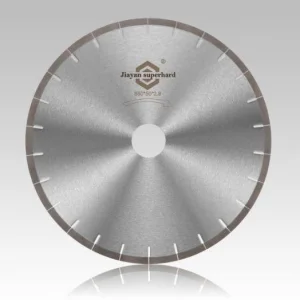
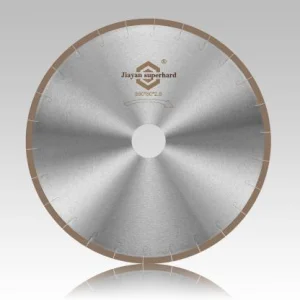
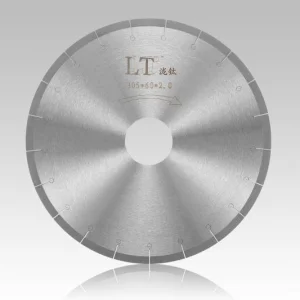
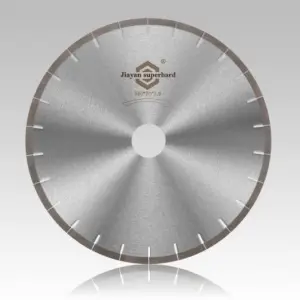
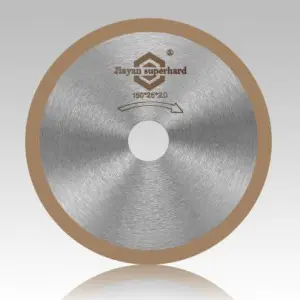
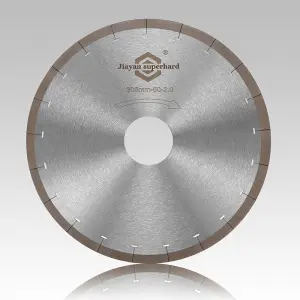
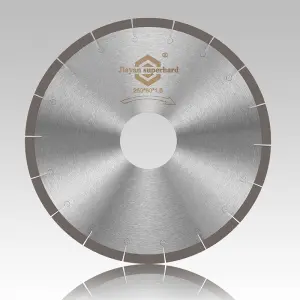
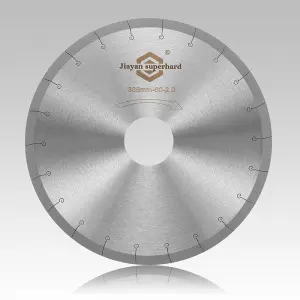
The global dimension stone, architectural tile, and engineered surfacing market is undergoing a seismic industrial transition. Driven by the rapid adoption of ultracompact sintered stone materials (such as Dekton®, Lapitec®, and Neolith®) and extremely abrasive Class 5 granites, industrial cutting processors no longer rely on standardized, off-the-shelf diamond saw blades. Procurement directors, quarry owners, and B2B distributors are actively seeking specialized partnerships with custom stone cutting saw blade exporters & companies capable of tailoring tool geometry, matrix bond formulations, and diamond grit synthesis to specific operational metrics.
Modern CNC bridge saws, 5-axis waterjet-saw combos, and heavy-duty gantry block cutters operate under aggressive feed rates ($V_f$) reaching up to 12 meters per minute. Standard cutting tools subjected to these hyper-dynamic mechanical stresses frequently suffer from premature segment loss, thermal fatigue micro-cracking, kerf deflection, and high decibel acoustic emissions. To solve these friction points, superhard tooling engineering must focus on Information Gain metrics: precise alignment between matrix erosion rate and diamond crystal friability.
Optimized segment geometry designed to prevent blade vibration and dynamic runout at peripheral speeds exceeding 40 m/s across hard stone substrate classes.
Engineered continuous J-Slot and narrow-turbo rims ensuring micro-chipping margins below 0.2mm on delicate, high-value porcelain and ceramic surfaces.
Enhanced matrix density reduces power consumption per cut by 18% while extending active blade operational life by up to 35% under continuous wet cutting.
The efficiency of a diamond cutting tool is governed by the tribological interface between the synthetic diamond crystals, the metallic bonding matrix, and the stone slurry during cutting. Custom stone cutting saw blade exporters must control three vital variables:
We utilize high-grade single-crystal synthetic diamonds featuring high thermal stability (Ti-coated or Co-coated layers). Titanium coatings create a micro-chemical bond preventing premature crystal pull-out when cutting abrasive high-quartz granites.
The metallic binder consists of carefully alloyed Cobalt (Co), Nickel (Ni), Copper (Cu), Iron (Fe), and Tungsten Carbide (WC). For soft, abrasive sandstones, hard WC matrices resist erosion; for quartzites and sintered ceramics, cobalt-rich soft matrices wear gradually to continuously reveal sharp diamond points.
Utilizing advanced Hot Isostatic Pressing (HIP) and high-frequency laser welding, our segments achieve shear strength exceeding 600 MPa, completely eliminating segment detachment under lateral stresses.
| Material Class | Hardness (Mohs) | Recommended Bond Formula | Diamond Grit (US Mesh) | Peripheral Speed ($V_c$) |
|---|---|---|---|---|
| Hard Granite (Class 5) | 7.0 - 7.5 | Soft Bronze/Iron-Nickel Matrix | 40/50 - 50/60 Mesh | 25 - 32 m/s |
| Engineered Quartz | 6.5 - 7.0 | Medium-Soft Cobalt Bond | 50/60 - 60/70 Mesh | 30 - 35 m/s |
| Sintered Stone / Dekton® | 7.0 - 8.0 | Ultra-Soft Fine-Grain Co-Cu Bond | 60/70 - 70/80 Mesh | 28 - 34 m/s |
| Soft Marble / Limestone | 3.0 - 4.0 | Hard Tungsten-Carbide Bronze Matrix | 30/40 - 40/50 Mesh | 35 - 45 m/s |
Different regional markets present unique technical challenges based on architectural preferences, local stone geology, and machinery infrastructure. As leading exporters, custom tooling must be tailored for these regional environments:
Focus: Commercial Quartzite & Porcelain Countertops
High demand for 350mm–400mm silent core continuous rim blades that reduce noise levels below OSHA thresholds while preventing edge-blowouts on mitred 45-degree edge profiles in engineered stone fabrications.
Focus: Historic Masonry & Sintered Slabs
Strict compliance with EN 13236 safety standards. High preference for dynamic balance tolerance (<0.5g.mm) and ultra-thin kerf designs (1.0mm-1.6mm) to minimize precious raw material waste during cutting.
Focus: Massive Granite Quarrying & Facades
Extreme thermal environments demand high-frequency laser-welded multi-segment saw blades (up to 2000mm-3500mm) capable of dry and wet cutting ambient temperatures above 45°C without blade warping.
Focus: Ceramic & Vitrified Tile Processing
High-volume continuous production lines utilizing 110mm to 230mm Turbo and J-slot disc configurations optimized for hyper-fast linear feed rates and low unit production cost.
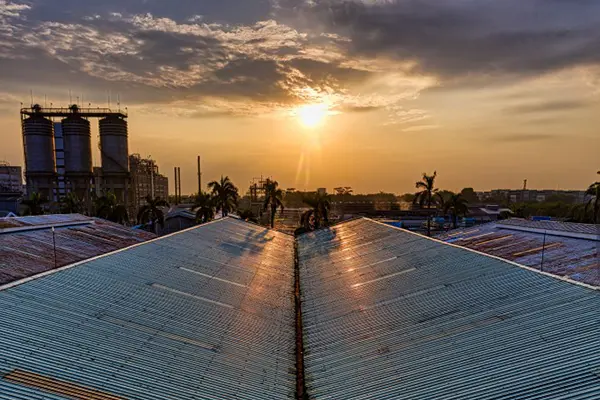
China accounts for over 70% of the world’s superhard material output. Within this ecosystem, JIAYAN Superhard Materials Co., Ltd. leverages complete vertical integration—from synthetic diamond synthesis to automated vacuum sintering and computerized dynamic balancing.
Direct supply agreements with Henan superhard industrial clusters guarantee access to pure synthetic monocrystals and high-purity cobalt powders, insulating global buyers from price volatility.
Every dynamic blade core undergoes ultrasonic flaw detection and automatic laser runout inspection to ensure axial runout remains within ≤ 0.05mm tolerances.
Full customization of arbor sizes, silent core sandwich layers, segment formulas, logo laser etching, and customized B2B retail packaging options.
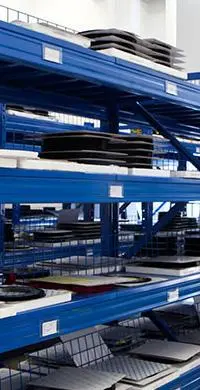
The diamond tool industry is shifting toward smart, sustainable, and eco-friendly manufacturing. Our R&D engineering roadmap focuses on four key pillars over the next decade:
Utilizing machine learning algorithms to simulate atomic diffusion between metallic binders and diamond crystals, reducing product development cycles for custom stones from months to days.
Eliminating hazardous raw cobalt through advanced Iron-Copper-Nickel-Tungsten alloys, providing environmentally compliant tooling that matches traditional cobalt cutting performance.
Integrating micro-damped composite sandwich cores that reduce operational cutting noise down to 82 dB(A) while suppressing harmonic vibrations during high-speed CNC cutting.
Precision 3D robotic positioning of diamond grit within segments, ensuring every diamond crystal takes an equal workload, increasing cutting speeds by 50% and tool life by 100%.
Quality assurance is the foundation of E-E-A-T (Experience, Expertise, Authoritativeness, Trustworthiness). Every custom saw blade dispatched from our facility undergoes rigorous multi-stage physical and mechanical testing.
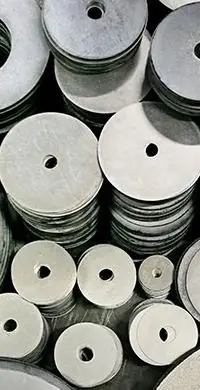
Every steel core is hydraulically tensioned and dynamically balanced to eliminate high-speed chatter and ensure straight kerf lines.
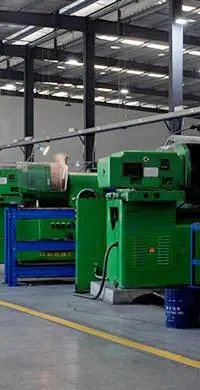
Segments are subjected to destructive torque testing to verify that laser weld seams exceed international safety tolerances.
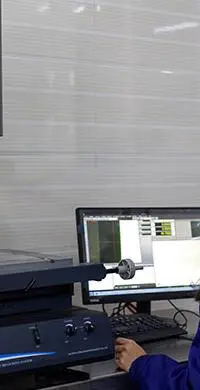
Standardized export packaging with moisture protection barriers and drop-tested protective edge rings for safe international delivery.
Explore our export-ready, direct-factory product solutions for distributors, stone fabricators, and equipment manufacturers.
Technical answers for machinery operators, tooling engineers, and B2B procurement managers.
Silent core saw blades feature a sandwich construction consisting of two outer hardened steel plates with a thin copper or viscoelastic dampening foil laminated in between. This structure absorbs harmonic acoustic resonances during cutting, reducing operational noise levels by 10 to 15 dB(A) compared to solid steel cores. Silent cores also reduce vibration transmission back into the spindle bearings, extending machinery lifespan.
Sintered stones are extremely dense and possess high internal tension. Standard blades cause edge micro-flaking because the bond is too hard, causing diamond dulling and high impact force. Custom blades for sintered stone utilize ultra-soft metallic bonds (rich in fine cobalt and copper) with high-concentration fine-mesh diamond grits (60/70 to 70/80 Mesh). This allows continuous self-sharpening (erosion) under minimal mechanical pressure, yielding chip-free edges.
Laser welding utilizes a high-energy laser beam to melt the metallic segment foot directly with the steel core, forming a homogeneous metallurgical fusion joint. Laser welds withstand temperatures exceeding 800°C without segment detachment, making them ideal for heavy dry cutting or high-stress wet cutting. Silver brazing uses a lower-melting-point filler alloy, which may fail under extreme thermal overload.
To engineer an optimal custom saw blade, our technical team requires: (1) Target material type and Mohs hardness, (2) Machine type and motor power rating (kW/HP), (3) Blade diameter, arbor hole size, and pin-hole configuration, (4) Desired cutting speed (RPM and linear feed rate), and (5) Operational preference for wet or dry cutting environment.
Blade deflection or loss of tension occurs due to: (1) Overheating from inadequate water coolant flow, (2) Operating above the recommended maximum RPM, causing centrifugal blade distortion, (3) Mismatched matrix bond causing extreme lateral drag, or (4) Worn spindle flanges on the cutting machine. Proper coolant placement targeting the cutting zone directly prevents thermal expansion of the steel core center.
We implement strict ISO-compliant digital batch tracking. Raw metal powders are weighed via automated micro-dosing systems, synthetic diamonds are screened for friability and magnetic susceptibility before mixing, and vacuum sintering presses are monitored via real-time thermomechanical sensors to guarantee uniform segment density across every production lot.
Elevate your cutting operations, lower unit production costs, and secure custom-engineered tooling tailored for your precise stone substrates. Contact JIAYAN Superhard Materials today.