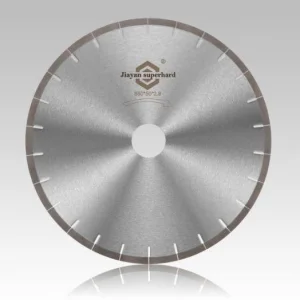
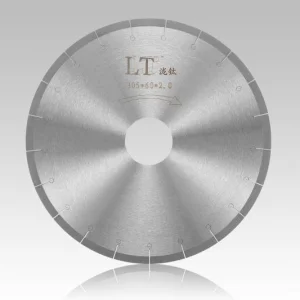
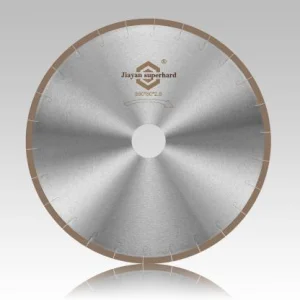
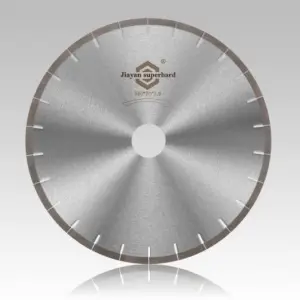
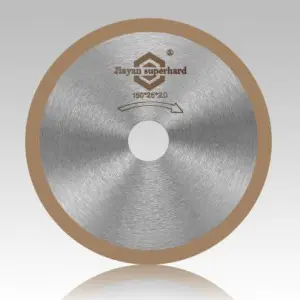
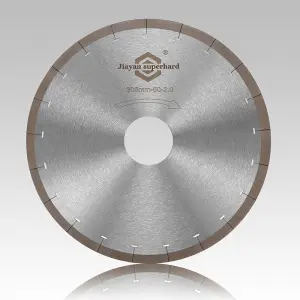
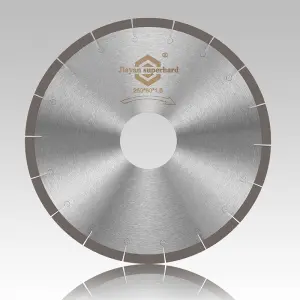
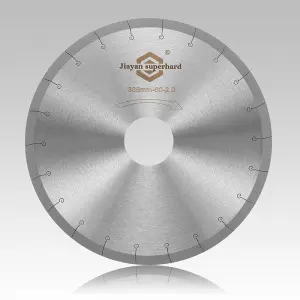
Premium Diamond Saw Blades and Superhard Tools Engineerd for Granite, Sintered Stone, and High-Density Ceramics
Analyzing Market Drivers, Material Evolution, and Regional Manufacturing Competence in Global Supply Chains
The global market for industrial circular saw blades—specifically superhard diamond-segmented and continuous-rim cutting discs—is experiencing a structural transformation driven by the rapid evolution of modern architecture, infrastructure development, and advanced material science. Modern construction and stone processing industries no longer operate on traditional parameters; the widespread adoption of ultra-compact sintered stone slabs, high-silica engineered quartz, reinforced ultra-high-performance concrete (UHPC), and dense natural granites has pushed conventional cutting tools beyond their operational limits.
Industrial procurement directors and stone fabrication enterprises face a double imperative: maximizing linear cutting speed while simultaneously extending tool service life to lower total cost of ownership (TCO). In this landscape, evaluating famous circular saw blade factories & exporters requires a deep engineering understanding of metallurgical bonding, synthetic diamond grit synthesis, and core stress-relief balancing.
The surge in porcelain slabs (sizes up to 3200x1600mm) requires blades with zero edge chipping, flexible bronze-copper matrices, and controlled thermal expansion to prevent slab explosion during cut stress release.
Compliance with European EN13236 safety standards and oSA accreditation has become a prerequisite for global tenders, necessitating automated laser welding over conventional high-frequency brazing for hazardous heavy-duty applications.
Global buyers are shifting metrics from initial unit purchase price to "Cost Per Square Meter Cut" ($/m²), incentivizing factories that utilize high-grade single-crystal synthetic diamonds with tailored matrix self-sharpening properties.
How Advanced Powder Metallurgy, Automated Laser Welding, and Cluster Integration Drive World-Class Quality
China produces over 70% of the world’s synthetic diamonds and superhard tooling solutions. However, the qualitative differentiation among Chinese manufacturers lies in advanced metallurgical engineering and automated quality assurance. Enterprise buyers evaluating circular saw blade exporters must recognize the technological ecosystem that powers top-tier factories like JIAYAN Superhard Tools.
Top exporters utilize high-toughness, single-crystal MBD series synthetic diamonds. Through precise sieve mesh selection (e.g., 30/40, 40/50, 50/70 mesh) and thermal stability treatment (Ti coating), grit integrity is maintained even under extreme frictional temperatures exceeding 800°C.
Utilizing fully automated Hot-Press Sintering machines, factories precise control the balance of Cobalt (Co), Nickel (Ni), Copper (Cu), and Iron (Fe) powders. Hardness (HRB/HRC) is dynamically tuned to match material abrasiveness, preventing premature diamond drop-out or matrix glazing.
A blade core's dynamic behavior dictates cutting precision. Premium factories utilize German CNC tensioning machines and dynamic balancing systems to ensure radial and axial runout remains strictly under 0.02mm, eliminating vibration, wavy cuts, and core fatigue failure.
As an active member of the China Superhard Material Association, manufacturers like JIAYAN combine decade-long export expertise with direct R&D partnerships. The result is an agile manufacturing workflow capable of executing complex OEM/ODM specifications—custom bore sizes, specialized keyways, sound-dampening sandwich silent cores, and proprietary segment geometry—within turnaround times unmatchable by Western counterparts.
Matching Diamond Grit, Bond Softness, and Blade Geometry to Specific Industrial Cutting Environments
Selecting the optimal circular saw blade is not a universal process; it requires rigorous alignment between substrate mechanical properties and tool metallurgy. Mismatched tooling leads to catastrophic failures such as edge chipping, segment detachment, rapid bond wear, or thermal warping. Below is an authoritative technical breakdown across core industrial scenarios:
Granite contains high quartz fractions (Mohs hardness 7+), making it extremely abrasive and dense. Blades designed for granite cut require Segmented Rims with medium-to-hard metal bonds (high cobalt/iron ratio) to hold diamond grains firmly against extreme impact forces. High surface linear speeds (30–40 m/s) and heavy water coolant flow are required. Key technology includes keyhole slot design for heat expansion relief and optional laser welding to prevent segment shear under severe lateral torque.
Sintered stone (e.g., Neolith, Dekton, Lapitec) is manufactured under extreme pressure and heat, creating intense internal stress within slabs. Traditional granite blades cause immediate slab cracking or severe bottom edge chipping. Industrial solutions demand J-Slot or Mesh Continuous Rim Blades utilizing fine diamond grits (120/140 mesh) embedded in a micro-soft bronze-copper matrix. The flexible bond absorbs vibration, while ultra-thin steel cores (e.g., 2.2mm thickness for 350mm blades) minimize cut resistance and kerf waste.
For dry or wet tile installations, cutting speed and edge smoothness are paramount. Exporters manufacture 1.0mm to 1.2mm Ultra-Thin Turbo or Continuous Rim Blades using hot-press sintering. The thin cutting edge requires minimal feed force, protecting fragile glaze coatings from micro-flaking while drastically reducing airborne silica dust generation.
Unlike granite, natural marble is soft (Mohs hardness 3-4) but highly prone to loading/glazing if the matrix does not erode properly. Blades require a harder copper-tin matrix or electroplated diamond layer. Continuous rim narrow-turbo configurations ensure clean, glass-like edge finishes without requiring secondary edge grinding or polishing operations.
Engineering Guidelines for Procurement Directors, Quality Assurance Engineers, and Plant Managers
| Target Substrate | Blade Diameter Range | Recommended Bond Type | Diamond Concentration | Linear Speed (m/s) | Cooling Mode | Key Performance Indicator |
|---|---|---|---|---|---|---|
| Hard Granite / Quartzite | 300mm – 800mm | Cobalt-Iron (Hard) | 35% – 45% (High) | 30 – 38 m/s | Wet Cutting Only | High linear yield (m² cut / blade) |
| Sintered Stone Slabs | 260mm – 350mm | Bronze-Copper (Soft-Medium) | 25% – 35% (Medium) | 28 – 35 m/s | Wet Cutting Only | Zero rim chipping, smooth kerf |
| Ceramic & Porcelain Tiles | 105mm – 250mm | Hot-Pressed Bronze | 20% – 30% (Medium) | 40 – 60 m/s | Dry / Wet Dual | Cutting speed & fast feed rate |
| Natural Marble | 250mm – 450mm | Copper-Tin / Electroplated | 25% – 30% (Medium) | 35 – 45 m/s | Wet Cutting Preferred | Clean edge, no color staining |
| Reinforced Concrete | 350mm – 1200mm | Laser-Welded Steel-Ni Core | 40% – 50% (Ultra High) | 35 – 50 m/s | Dry / Heavy Wet | Safety weld shear strength > 90Nm |
Technological Breakthroughs Reshaping Circular Saw Blade Manufacturing and Performance Standards
Traditional segments distribute diamond grains randomly. Next-gen technology utilizes 3D computer-controlled array arrangement, guaranteeing that each diamond monocrystal experiences identical workload, increasing blade life by 40% and cutting speeds by 30%.
Occupational noise regulations in Europe and North America strictly limit factory decibels. Silent cores feature double steel laminates filled with a micro-thin copper sheet or visco-elastic polymer dampening layer, reducing cutting noise by up to 15 dB(A).
Due to Cobalt cost volatility and health concerns during dry grinding, top factories are innovating iron-nickel-titanium alloy matrices that offer matching micro-toughness without relying on raw cobalt reserves.
A Structured Framework for Sourcing Executives and Factory Distributors
When selecting a qualified circular saw blade exporter and manufacturer, global procurement teams must audit suppliers across five core capabilities beyond initial pricing quote matching:
Inquire whether the exporter executes torque shear testing on laser-welded segments (minimum shear threshold > 80–100 Nm) and performs 100% radial runout inspection prior to packaging.
Leading manufacturers like JIAYAN support specialized customer requirements including custom arbor bores (e.g., 50mm, 60mm with drive pin holes), laser logo etching, private label packaging, and custom segment height configurations (10mm, 12mm, 15mm, 20mm).
Ensure the factory logs heat numbers for steel cores (e.g., 75Cr1, 50Mn2) and batch powder formulations, guaranteeing that re-orders perform with identical cutting speeds and lifespan.
Verified exporters provide full export documentation (Form E, Certificate of Origin), rust-proof anti-vibration packaging, and streamlined DDP/FOB logistics services globally.
Technical Answers to Common B2B Procurement and Engineering Queries
Explore Direct Manufacturer OEM Options for Wholesale and Industrial Procurement