Engineered for granite quarrying, marble gang sawing, concrete calibration, and ultra-dense sintered stone fabrication.
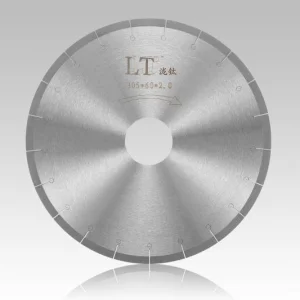
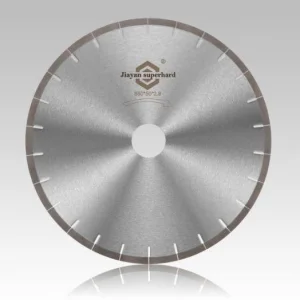
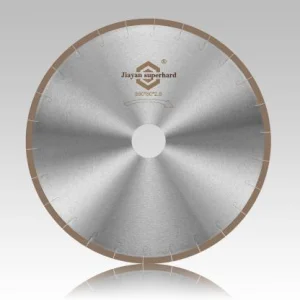
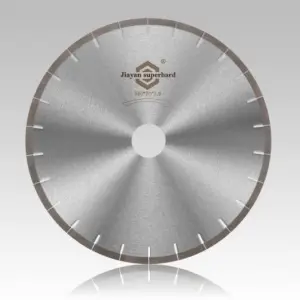
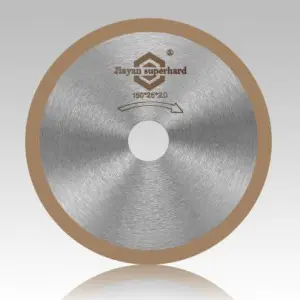
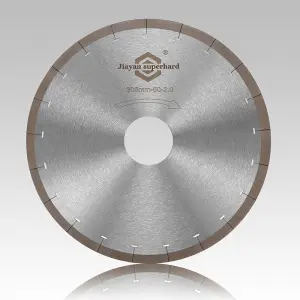
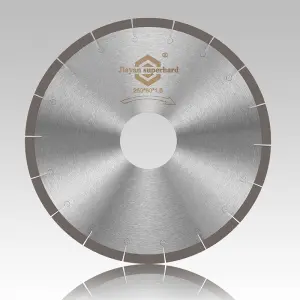
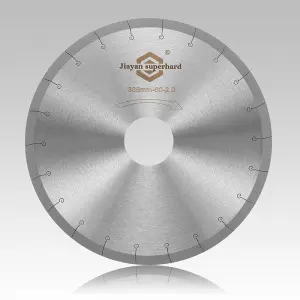
Unpacking the powder metallurgy, crystal grit chemistry, and matrix retention kinetics that define top-tier diamond segment performance.
In modern industrial stone processing and heavy-duty civil construction, the efficiency of circular saw blades, gang saws, and floor calibration machines relies on a critical micro-component: the Diamond Grinding Segment. As premier diamond grinding segments suppliers and global exporters, JIAYAN Superhard Materials engineers these segments through precise powder metallurgy, combining high-purity synthetic diamond grits with custom transition metal alloy matrices.
A diamond grinding segment is not a simple block of abrasive; it is a carefully calibrated composite structure where synthetic diamond crystals (typically HPHT cubooctahedral crystals with high thermal stability) are encapsulated within a sintered metal matrix containing Cobalt (Co), Copper (Cu), Iron (Fe), Nickel (Ni), and Tungsten Carbide (WC). The fundamental goal of metallurgical engineering is matching the wear rate of the metal bond to the abrasion resistance of the workpiece material.
We utilize high-grade synthetic diamond grains ranging from coarse grit sizes (#30/40, #40/50 for aggressive stock removal) to fine grits (#80/100, #120/150 for smooth edging). Toughness, thermal stability, and crystal friability are matched strictly to material hardness on the Mohs scale.
Diamond concentration is defined relative to 4.4 carats/cm³ (100% concentration = 25% diamond volume). Our segments utilize concentrations from 20% to 45%, providing optimal diamond density per square millimeter to prevent premature glazing or matrix washouts.
Different materials demand custom metal bonds. Hard non-abrasive granites require soft, fast-wearing cobalt-bronze bonds that continuously expose fresh sharp diamond points. Highly abrasive materials like sandstone or green concrete require hard, tungsten-reinforced matrix compositions.
Why Tier-1 global stone processors and OEM tool brands source high-volume diamond grinding segments from leading Chinese producers.
China's superhard tool ecosystem leads the world in vacuum hot-press sintering technology. Computer-controlled sintering presses apply up to 350 bar of pressure at precise temperatures (up to 1050°C), eliminating micro-porosity and maximizing physical bond density. This ensures consistent wear ratios across the entire segment volume.
As an active member of the China Superhard Material Association, JIAYAN benefits from an integrated supply chain—from raw synthetic diamond synthesis in Henan to ultra-fine spherical metal powder production and automated silver-brazing assembly in Wuhu. This proximity yields unprecedented cost-performance efficiency.
Historically, European tool manufacturers dominated the high-end diamond segment sector. Over the past two decades, Chinese manufacturers have closed the technical gap through heavy R&D investments in cold compaction, automated multi-layer segment pressing, and 3D laser-welding automation. Today, exported Chinese diamond segments match European performance standards in speed and longevity while reducing capital costs for global stone fabricators by 30% to 50%.
From controlled diamond pattern arraying to eco-friendly cobalt-free bonds, explore the technical revolutions driving modern segment manufacturing.
Traditional segments contain randomly dispersed diamond particles. Next-generation controlled array technology positions individual synthetic diamond grains in precise 3D grid layouts. This ensures uniform wear, eliminates premature diamond pulling, increases cutting speed by 30-50%, and extends tool life.
With global regulatory emphasis on workplace environmental health and cobalt supply chain volatility, top exporters are transitioning to ultra-fine pre-alloyed Iron-Copper-Nickel (Fe-Cu-Ni) and Titanium-doped powders, delivering superior impact resistance without toxicity.
Laser welding creates a direct metallurgical bond between the segment base and the steel core (shear strength exceeding 350 MPa). This eliminates safety hazards associated with segment detachment during high-speed dry cutting operations in civil infrastructure.
Urban acoustic restrictions have mandated low-noise tooling. Multi-layered segments featuring alternating metal matrices combined with copper-sandwiched steel cores reduce operating noise levels by up to 8 to 12 dB during continuous heavy block cutting.
Comprehensive engineering matrix matching target substrate hardness, grit size, bond softness, and peripheral linear speed (m/s).
| Workpiece Substrate | Mohs Hardness | Recommended Diamond Grit | Matrix Bond Characteristics | Optimal Linear Speed (m/s) | Recommended Segment Shape |
|---|---|---|---|---|---|
| Class IV Hard Granite (e.g., Black Galaxy, Carmen Red) | Mohs 6.5 - 7.5 | #40/50, #50/60 (Coarse) | Soft Bronze/Cobalt Matrix | 25 - 32 m/s | M-Shape / Arrow Segment |
| Soft Marble & Travertine | Mohs 3.0 - 4.5 | #60/70, #80/100 (Medium/Fine) | Hard Copper-Tungsten Matrix | 35 - 45 m/s | Flat Rectangular / Continuous |
| Ultra-Dense Sintered Stone (e.g., Dekton, Neolith) | Mohs 7.0 - 8.0 | #100/120, #140/170 (Ultra-Fine) | Free-Cutting Flexible Bond | 20 - 28 m/s | J-Slot Turbo Rim Segment |
| Reinforced Concrete & Decks | Mohs 5.0 - 6.5 | #30/40, #40/50 (Aggressive) | Abrasion-Resistant Fe-WC Matrix | 30 - 40 m/s | Roof / Turbo Segment |
| Abrasive Sandstone & Green Concrete | Mohs 4.0 - 5.5 | #25/35, #35/45 (Very Coarse) | Extra-Hard Bond with Anti-Undercut | 40 - 50 m/s | W-Shape / Deep Tooth Segment |
How JIAYAN Superhard ensures ISO9001 and EN13236 compliance for multinational OEM/ODM partners.
Every powder batch undergoes X-Ray Fluorescence (XRF) elemental verification to guarantee exact Cobalt-Iron-Copper ratios. Sintered density is measured via Archimedes method to ensure porosity remains under 0.05%.
Laser and high-frequency silver-welded joints are subjected to destructive torque shear testing. We enforce a strict failure threshold minimum of 250 N/mm², preventing field detachment during high-RPM operations.
When welded onto core blades, dynamic radial runout must stay within <0.03mm and axial runout within <0.02mm. This eliminates spindle wear on bridge saws and ensures chip-free precision cutting.
Explore our export-grade segment series tailored for international stone processing plants and tool distributors.
Direct answers from our senior powder metallurgists and field application engineers addressing common procurement and operational challenges.