Premium OEM/ODM Cutting Tools Engineered for Hard Granite, Sintered Stone, and High-Density Ceramics
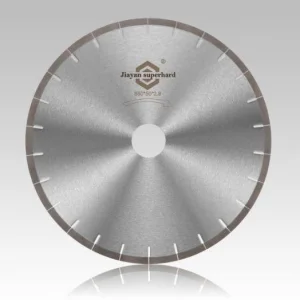
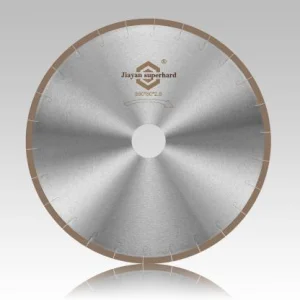
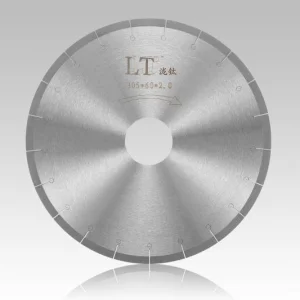
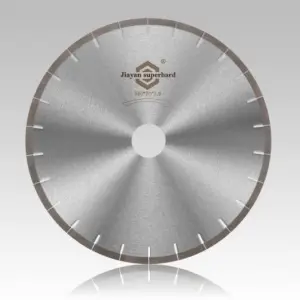
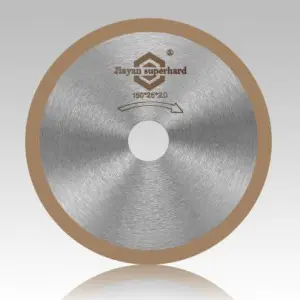
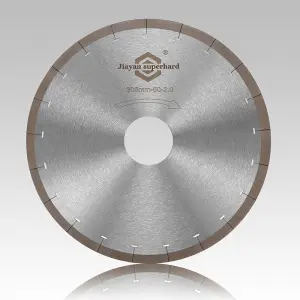
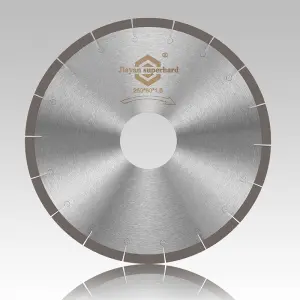
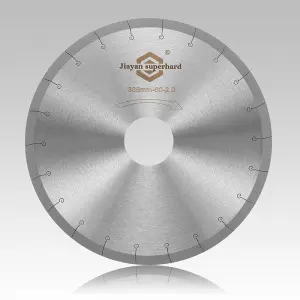
The global stone processing industry is currently experiencing a profound technological transformation driven by automated CNC bridge saws, high-speed edge trimming equipment, and the rapid adoption of ultra-compact sintered surfaces (such as Neolith, Dekton, and high-density porcelain slabs). Within this macro environment, selecting a famous granite tile cutting disc supplier & factory is no longer merely a purchasing decision—it is a core engineering strategy that directly influences production yield, kerf loss mitigation, edge-chipping ratios, and per-square-meter operational expenditures.
Granite, characterized by high free-silica content (quartz levels ranging from 20% to over 60%) and Mohs hardness values between 6 and 7.5, presents extreme abrasive resistance and thermal shock challenges during machining operations. Cutting tools must balance diamond grit exposure with bond matrix erosion rates to ensure continuous self-sharpening without premature tool glazing or segment detachment.
Modern industrial diamond saw blade performance relies on precise metallurgical matching between matrix erosion chemistry (cobalt, bronze, iron, tungsten carbide) and the petrographic characteristics of the targeted granite class (Class I Soft Granite to Class V Extra-Hard Quartzite).
Leading manufacturing clusters in China, notably around Wuhu, Anhui Province, and Shuitou, Fujian, have synthesized advanced powder metallurgy, automated hot-pressing sintering, and high-energy beam laser welding. As a key representative of China's superhard tool manufacturing sector and an active member of the China Superhard Material Association, factories like JIAYAN Superhard deliver technical solutions engineered to rival European benchmarks while maintaining high cost-efficiency for global wholesale importers and OEM distributors.
Deep Technical Analysis of Synthetic Diamond Crystals, Matrix Densification, and Core Steel Mechanics
Industrial granite discs utilize single-crystal synthetic diamond (typically high-purity TiD or MBD grade). For abrasive natural granites, coarse mesh sizes (30/40 to 40/50 US Mesh) are selected to provide maximum grain protrusion height and chip removal space. For delicate granite tiles and porcelain, finer grit sizes (50/60 to 70/80 Mesh) are bound within softer matrices to minimize edge micro-fracturing.
The segment matrix holds the diamond grains until they become dulled. Bronze-cobalt (Cu-Co) and Iron-copper-tungsten (Fe-Cu-W) powder matrices are hot-pressed at temperatures ranging from 780°C to 950°C. Harder bonds are specified for soft, abrasive stones to resist wear, whereas free-cutting soft bonds are used for ultra-hard Class V granites to allow timely diamond renewal.
The saw body (core) is fabricated from high-tensile alloy spring steel (e.g., 75Cr1 or 65Mn). Cores undergo precision roller tensioning and dynamic balancing to eliminate lateral wobble at operating speeds of 35 to 60 m/s. For noise-sensitive environments, silent cores featuring a copper-clad sandwich construction are employed to dampen high-frequency harmonic resonance by up to 15 dB(A).
To assist factory procurement officers and tooling engineers in selecting the optimal blade configuration, the table below outlines core operating parameters across standard granite and ceramic tile cutting disc specifications:
| Blade Diameter | Target Substrate | Segment Height / Type | Recommended RPM | Linear Speed (m/s) | Cooling Mode | Expected Life (m²) |
|---|---|---|---|---|---|---|
| 110mm - 125mm | Granite Tiles & Porcelain | 10mm / Continuous Turbo | 11,000 - 13,200 | 60 - 80 m/s | Dry / Wet | 45 - 75 m² |
| 230mm (9 Inch) | Granite Slabs & Masonry | 12mm / Keyhole Segmented | 6,600 - 8,000 | 50 - 70 m/s | Dry / Wet | 120 - 180 m² |
| 350mm (14 Inch) | Heavy Granite & Sintered Stone | 15mm - 20mm / J-Slot / Silent | 1,450 - 2,100 | 30 - 45 m/s | Strictly Wet | 350 - 600 m² |
| 400mm - 500mm | Monumental & Quarry Blocks | 20mm / Sandwich Segment | 950 - 1,400 | 25 - 40 m/s | High-Flow Wet | 800 - 1,400 m² |
Operational Guidelines for High-Speed Bridge Saws, Angle Grinders, and CNC Fabrication Machinery
In automated granite slab processing plants, bridge saws operate continuously at high feed rates (4 to 12 meters/minute). Disc stability is paramount. Utilizing 350mm or 400mm laser-welded blades with U-slot segments ensures continuous sludge evacuation, preventing hydraulic backpressure in the cut and eliminating kerf deviation during 45° miter beveling.
Field installers cutting 20mm heavy granite outdoor pavers or 6mm porcelain tiles with handheld angle grinders demand fast cutting without edge blowout. Ultra-thin 1.0mm to 1.2mm continuous rim J-slot diamond discs reduce motor resistance, minimize dust generation during dry cutting, and deliver pristine factory-edge finishes ready for seamless grouting.
Processing hard pink or grey granite blocks (>50mm thickness) requires heavy-duty segmented blades featuring patterned diamond arrangement (ARIX technology). By aligning diamond grains in uniform geometric rows, each diamond crystal carries an equal mechanical workload, yielding up to 30% faster cutting speed and extending blade longevity by 40%.
Factory owners face complex operational trade-offs between cutting speed, tool life, electrical power consumption, and stone yield. Implementing structured cutting protocols significantly enhances profitability:
Next-Generation Superhard Materials, Eco-Bonds, and AI-Optimized Diamond Distribution
Chemical Vapor Deposition (CVD) diamond coatings applied directly to segment micro-features present ultra-low friction coefficients. This innovation reduces cutting force requirements by up to 25% while offering superior thermal conductivity, enabling dry-cutting operations on extra-thick granite without segment thermal softening.
Driven by international REACH compliance and supply chain sustainability goals, top factories are replacing pure cobalt matrices with pre-alloyed iron-copper-nickel (Fe-Cu-Ni) and titanium carbide nanocomposites. These eco-matrices match cobalt's diamond retention strength while substantially lowering raw material costs and environmental footprint.
Emerging industry 4.0 integration includes RFID micro-chips and vibration/temperature sensors integrated directly into the steel core. Real-time telemetry feeds operational data to CNC bridge saw controllers, automatically adjusting feed speed and RPM when abnormal vibration or thermal spikes are detected, thereby preventing catastrophic blade failure.
For global buyers, OEM brand owners, and industrial importers evaluating prospective granite tile cutting disc suppliers and factories in China, establishing strict Quality Assurance (QA) audit protocols is essential. JIAYAN Superhard recommends auditing manufacturers against the following technical criteria:
Laser welding is mandatory for dry-cutting diamond blades to prevent segment loss under high friction heat. Standard compliance requires destructive bending torque and shear strength tests where the weld seam must withstand shear stress exceeding 350 MPa. Silver-brazed segments intended for wet cutting must show uniform capillary alloy penetration across at least 95% of the joint surface.
High-end bridge saw blades must maintain stringent axial and radial run-out tolerances:
Excessive run-out creates uneven segment wear, loud operational screeching, and micro-chipping along the tile edge.
Reliable manufacturers enforce batch-level spectrographic analysis of metal powders (Fe, Cu, Co, Sn, W) and diamond grit thermal stability index (TSI) testing. Every batch of saw blades should be stamped with a unique production code tracking sintering press parameters, temperature logs, and steel plate heat-treatment certs.
Expert Guidance on Blade Selection, Operation Troubleshooting, and OEM Orders
Hot-pressed discs undergo simultaneous pressure and temperature sintering, ideal for small diameter discs (105mm–230mm) used in general tile installation. Laser-welded discs utilize high-energy laser beams to fuse the diamond segment to the steel core, creating an unbreakable metallurgical bond capable of withstanding extreme thermal loads during heavy industrial dry or wet cutting.
Blade glazing occurs when the metal bond matrix is too hard for the substrate being cut. The matrix does not erode fast enough to release worn, dull diamond crystals, causing the blade to slip and generate excessive heat. To resolve this, sharpen (dress) the blade by making several cuts into an abrasive material like firebrick or asphalt, or switch to a disc with a softer bond formulation.
For hard granite containing high quartz content, choose a blade with a softer matrix bond, segmented rim (for cooling and chip evacuation), and medium diamond grit (40/50 mesh). For ceramic and porcelain tiles, select a soft-to-medium bond continuous rim or J-slot disc with fine diamond grit (60/80 mesh) to achieve chip-free edge aesthetics.
Wobbling (blade flutter) is typically caused by incorrect spindle RPM, excessive feed speed, lack of tension in the steel core, or worn machine flanges. Operating above or below the target peripheral speed (typically 30–40 m/s for granite) destabilizes the core's tension ring, resulting in side run-out and uneven cuts.
No. Silver-brazed wet discs must never be used dry because the heat generated will melt the braze alloy joint, causing the diamond segment to detach dangerously. Only laser-welded or specifically engineered hot-pressed continuous rim blades marked "DRY CUTTING" are safe for dry operation.
Professional factories like JIAYAN Superhard offer extensive OEM customization including: custom segment formulations, silent vs. standard steel cores, custom arbor holes/keyways, laser-etched branding and safety markings, specialized color coatings, and tailored retail packaging.
Explore Our Full Range of Certified Diamond Discs Ready for Global Wholesale Dispatch