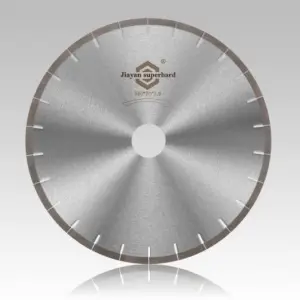
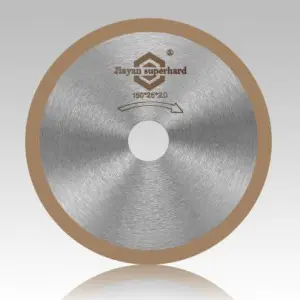
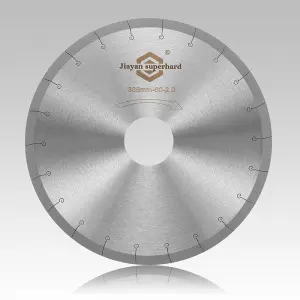
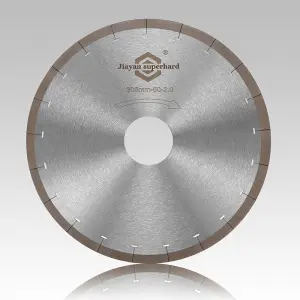
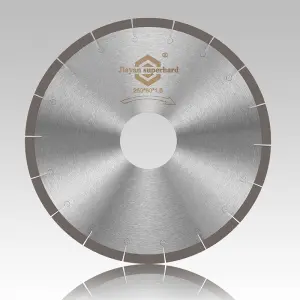
Engineered for extreme wear resistance, high-speed linear cutting, and chip-free edge finishing across ultra-dense substrates.
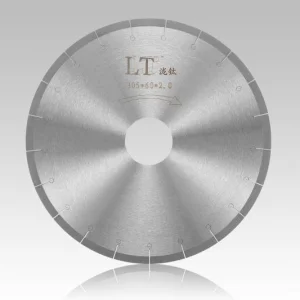
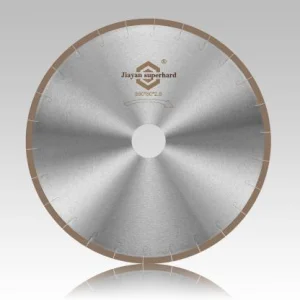
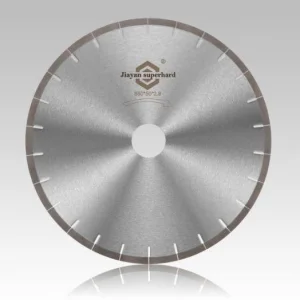
An authoritative analysis on synthetic diamond metallurgy, dynamic bond formulation, and production economics for tier-1 procurement managers.
In contemporary industrial manufacturing, selecting a premier famous grinding wheels factory & factories partner is no longer merely a commercial procurement choice—it is a critical engineering decision that dictates operational yield, cutting precision, tool longevity, and total cost of ownership (TCO). As global construction, stone processing, technical ceramic fabrication, and aerospace manufacturing adopt increasingly tough, ultra-dense materials such as sintered stone, hard quartzite, and high-nickel alloys, traditional vitrified or resinoid silicon carbide abrasives encounter severe physical limitations.
Modern superhard tool production requires advanced material science: synthetic diamond crystals synthesized under High-Pressure High-Temperature (HPHT) or Chemical Vapor Deposition (CVD) environments, encapsulated within custom-formulated cobalt-bronze-iron metal matrix bonds or high-density vitrified structures. A top-tier factory must balance thermal dissipation, matrix retention force, self-sharpening exposure rates, and micro-fracture toughness to deliver consistent cutting speeds without edge chipping.
The total value of a diamond grinding wheel or saw blade is measured not by its upfront acquisition price, but by its Linear Meter Cutting Efficiency (LMCE) and yield preservation rate. High-tier famous factories utilize vacuum hot-pressing sintering to achieve micro-porosity control under 0.2%, extending tool operational life by up to 35% under continuous wet or dry cut regimes.
At JIAYAN Superhard Materials, our manufacturing methodology centers around precision thermal dynamics. The process begins with raw diamond particle grading, ensuring narrow mesh distribution (typically 40/50, 50/60, or 60/80 mesh depending on target material hardness). The matrix powder blend—containing optimized concentrations of Cobalt (Co), Nickel (Ni), Copper (Cu), and Tungsten Carbide (WC)—is subjected to multi-stage automated cold compaction, followed by computer-controlled hot-press sintering at temperatures exceeding 850°C and hydraulic pressures up to 35 MPa.
Exploring the technological transitions shaping high-performance grinding wheels and diamond cutting discs over the next decade.
Traditional grinding wheels feature random diamond particle distribution, leading to uneven wear and localized micro-fractures. Next-gen patterned array technology arranges diamond grains in 3D structured grids, optimizing exposure and reducing cut force by 25%.
To adhere to global environmental compliance and eliminate supply chain volatility, famous factories are pioneering sub-micron iron-copper-nickel alloy binders enriched with titanium carbide nanoparticles for extreme shear strength.
Transitioning from traditional silver brazing to robotic fiber laser welding. High-energy laser beam fusion welds segment matrices directly to the manganese steel blade core, pushing joint shear strength past 350 MPa and preventing segment detachment during dry cutting.
Custom engineering tailored for the physical demands of modern architectural, industrial, and stone-fabrication operations.
| Target Substrate | Predominant Wear Mechanism | Recommended Bond & Slot Geometry | Performance Benchmark |
|---|---|---|---|
| Sintered Stone & Neolith (Mohs Hardness 7+) | Edge micro-chipping, excessive heat buildup, internal tension stress crack | Continuous Rim / J-Slot, Soft Bronze-Nickel Bond Matrix, 100/120 Fine Mesh Diamond | Zero-chipping at speeds up to 3.5 m/min; extended blade life by 30% |
| Hard Granite & Quartzite (High Quartz Content) | High matrix abrasion, diamond crystal premature pull-out | Segmented Key-Slot, Hard Iron-Tungsten Bond, High-Concentration HPHT Diamond (30/40 Mesh) | Linear cut life > 450 m² per 350mm blade under wet cooling |
| Ceramic & Porcelain Tiles | Glaze cracking, thermal shock stress fractures | Ultra-Thin Continuous Rim (1.0-1.2mm kerf), Micro-porous sintered matrix | Clean cut kerf with minimal material displacement and noise reduction |
| Reinforced Concrete & Masonry | Steel rebar impact impact, abrasive slurry wear | Laser-Welded Deep Segment, Heavy-Duty Cobalt Matrix with protective side segments | Dry-cut safety compliance under heavy load angle grinder operation |
How JIAYAN Superhard leverages automated production ecosystems in Anhui/Henan clusters to deliver cost-to-performance dominance.
The global competitiveness of a famous grinding wheels factory & factories cluster relies heavily on supply chain integration, raw material availability, and advanced industrial automation. China accounts for over 80% of the world's synthetic diamond production capacity. Situated within this thriving manufacturing hub, JIAYAN Superhard Tools integrates direct access to raw diamond synthesis facilities with state-of-the-art Industry 4.0 automated production lines.
Every circular saw blade dynamic run-out, core flatness, and segment tension is measured using non-contact laser optical displacement sensors. Steel cores undergo heat treatment stress relief to ensure operational stability at peripheral speeds up to 80 m/s. This automated quality control pipeline drastically reduces scrap rates and guarantees batch-to-batch consistency for large-scale enterprise buyers.
Adhering to strict international safety standards (EN13236, oSa, ISO9001) while supporting global distributors with localized dynamic tuning.
Safety is paramount in high-speed rotary cutting tools. All JIAYAN products undergo rigorous destructive burst strength testing, impact shear evaluation, and axial dynamic balance checks to comply with European safety standard EN13236.
Granite hardness varies significantly across geography—from Brazilian hard quartzites to Italian Carrara marble. Our dynamic technical engineering team formulates custom metal bond hardness levels tailored to localized stone aggregate hardness profile matrices.
From selecting machine RPM and feed speeds to diagnosing coolant flow dynamics or tooth wear anomalies, our dedicated global engineering support staff provides remote and on-site technical guidance for industrial clients.
Strategic decision frameworks for procurement officers, OEM brand managers, and commercial tool distributors.
When sourcing from a famous grinding wheels factory & factories network, enterprise buyers must look beyond unit purchase price. Modern tool procurement evaluates Total Cost of Ownership (TCO), calculated through the following formula:
High-quality diamond saw blades with optimized metal bonds reduce machine motor load, decrease power consumption by up to 15%, and eliminate frequent blade changes, delivering a drastically lower total cost per meter over the tool's lifecycle.
Addressing common engineering inquiries regarding bond formulations, cutting speeds, safety, and manufacturer selection.
Select your target engineering specification or contact our sales director for bulk OEM procurement packages.