Superhard Tool Manufacturing Whitepaper & B2B Procurement Guide

High-Quality 230mm Diamond Saw Blade Suppliers & Factories

Next-Generation Engineering, AI-Driven Alloy Metallurgy, and OEM/ODM Production Solutions for Global Industrial Cutting Infrastructure.

Explore Product Portfolio Request Factory Direct Quote
Product Catalog Showcase

Featured 230mm & Heavy-Duty Diamond Saw Blades

Engineered for extreme performance across granite, reinforced concrete, sintered stone, and porcelain tile applications.
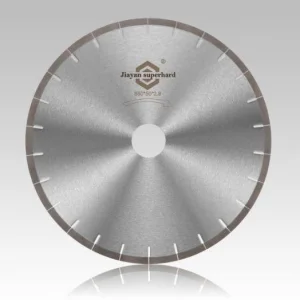
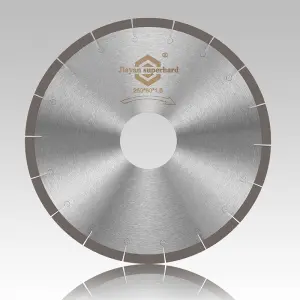
350mm & 230mm Diamond Saw Blade for Granite Stone Cutting

350mm / 230mm Diamond Circular Saw Blade for Granite Stone

  • Bond Type: Cobalt-Bronze Alloy Matrix
  • Core Steel: 65Mn Heat-Treated Core
  • Application: Hard Granite & Quartzite
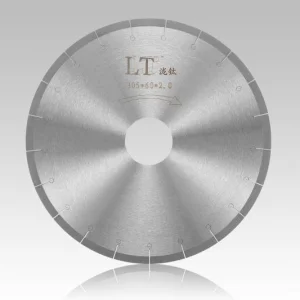
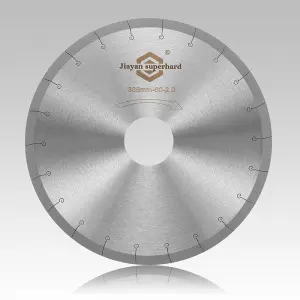
Custom Super Fast Cutting Segment Rim J Slot Diamond Saw Blade

Custom Super Fast Cutting Segment Rim J-Slot Blade for Tile & Marble

  • Slot Design: Thermal Stress J-Slots
  • Edge Quality: Chip-Free Fine Finishing
  • Application: Porcelain, Ceramic & Marble
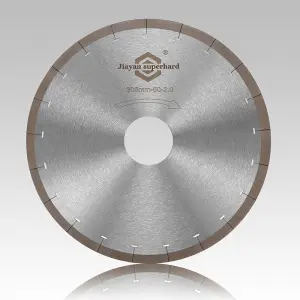
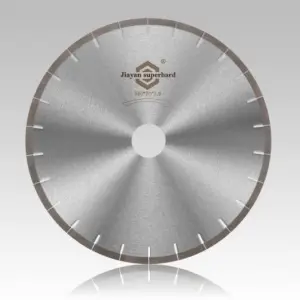
OEM Diamond Saw Blade Cutting Disc 350mm Granite

OEM Diamond Saw Blade Cutting Disc 350mm/230mm for Granite Stone

  • Welding Tech: High-Frequency Silver Brazed
  • Segment Height: 12mm - 15mm Premium
  • Application: Heavy Architectural Masonry
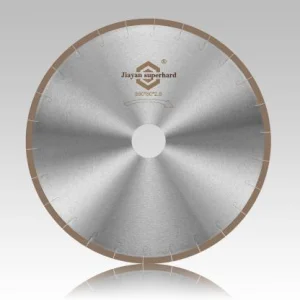
Best 14 Inch Diamond Saw Blades Specialized for Sintered Stone

Best 14 Inch & 230mm Diamond Saw Blades Specialized for Sintered Stone

  • Target Material: Dekton & Neolith Slabs
  • Diamond Grit: Micro-Mesh Premium Synthetic
  • RPM Limit: High-Velocity Stability
Small Size Diamond Cutting Disc for Tile and Stone

Diamond Cutting Disc — Precision Small & 230mm Series

  • Manufacturing: Hot-Pressed Sintering
  • Arbor Size: 22.23mm / 25.4mm Universal
  • Usage Mode: Wet & Dry Cutting
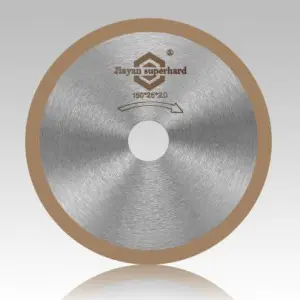
14 Inch Hot Pressed Diamond Circular Saw Blade for Ceramic Tile

Continuous Rim Hot-Pressed Diamond Blade for Ceramic & Tile

  • Rim Type: Smooth Continuous Cutting Rim
  • Finish Quality: Zero Chipping Edge Precision
  • Application: Floor & Wall Tile Splicing
14 Inch Welding Segment Diamond Cutting Blade for Ceramic

Laser-Welded Segmented Diamond Saw Blade for Heavy Masonry

  • Joint Strength: High Shear Stress Laser Weld
  • Cooling System: Keyhole Gullet Design
  • Application: Concrete, Brick & Block
1.0mm Ultra-Thin Diamond Segment Cutting Disc for Ceramic

1.2mm Ultra-Thin Turbo Diamond Cutting Disc for Ceramic & Porcelain

  • Kerf Thickness: 1.2mm Ultra-Fine Kerf
  • Speed Rating: Ultra-Fast Feed Velocity
  • Application: Delicate Vitrified Tiles
Industrial Engineering Whitepaper

Engineering Principles of High-Performance 230mm Diamond Blades

An authoritative analysis of diamond crystal concentration, bond matrix wear kinetics, and high-frequency core tensioning.

In global construction, civil infrastructure engineering, and industrial stone fabrication, the 230mm (9-inch) diamond saw blade represents the global benchmark standard for heavy-duty hand-held angle grinders, masonry table saws, and petrol power cutters. Selecting qualified 230mm diamond saw blade suppliers and factories requires a deep understanding of metallurgy, crystal morphology, and bond matrix dynamics. A high-performance cutting disc is not merely a steel plate with abrasive edges; it is a precisely calibrated superhard composite tool designed to withstand dynamic shear stress, extreme thermal gradients (exceeding 800°C at the contact zone), and high peripheral velocities (up to 80 m/s).

1. Micro-Structural Composition of Diamond Segments

The functional apex of a 230mm diamond saw blade lies within its segment formulation. The segment consists of two main elements: synthetic diamond crystals and the sintered metal bond matrix.

  • Synthetic Diamond Grit Selection: High-tier manufacturers utilize single-crystal synthetic diamonds characterized by complete cubooctahedral morphology, high thermal stability (Ti/TTi values above 85%), and specific grit sizes ranging from 30/40 mesh for heavy concrete demolition to 60/80 mesh for delicate ceramic and sintered stone finishing.
  • Metal Bond Matrix Chemistry: The metallic matrix—typically composed of varying ratios of Cobalt (Co), Nickel (Ni), Bronze (Cu-Sn), Iron (Fe), and Tungsten Carbide (WC)—serves to hold the diamond crystals firmly until they become dull, releasing them at an optimal wear rate to expose fresh, sharp diamond edges.

2. Steel Core Tensioning & Thermal Balancing

The underlying steel core (usually fabricated from high-grade alloy steel such as 65Mn, 50CrV4, or 75Cr1) dictates the rotational stability and straight-line cutting accuracy of a 230mm saw blade. During high-RPM dry cutting operations, centrifugal forces combined with thermal expansion can cause un-tensioned blades to wobble, flutter, or lead off-line.

Top-tier Chinese manufacturing facilities implement automated roller tensioning and digital dynamic balance testing. By applying controlled mechanical strain to the inner zone of the core, engineers induce compressive stress that counteracts the thermal tension generated during high-speed cutting. This ensures the blade maintains radial runout under 0.03mm and axial runout under 0.05mm throughout its operational lifespan.

Manufacturing Competitiveness

Strategic Advantages of Chinese Factories in 230mm Blade Production

Why leading international distributors and OEM buyers source high-precision superhard tools from China's advanced industrial hubs.

Complete Synthetic Diamond Supply Chain Integration

China accounts for over 80% of global synthetic diamond production. Direct proximity to raw material producers in Henan and Anhui provinces grants factories immediate access to premium synthetic diamond powders and specialized metal matrix micro-powders at unparalleled cost structures.

Automated High-Frequency & Laser Sintering Systems

Advanced Chinese factories have transitioned to fully automated cold-pressing, hot-pressing sintering presses, and robotic laser welding cells. Automated vision inspection systems verify segment alignment and weld integrity in real-time, eliminating human error.

Strict Compliance with EN13236 Safety Standards

Reputable manufacturers strictly adhere to European standard EN13236. Every batch undergoes rigorous safety testing including segment shear strength tests (exceeding 8.5 MPa), dynamic torque endurance, and high-RPM destructive safety margin checks.

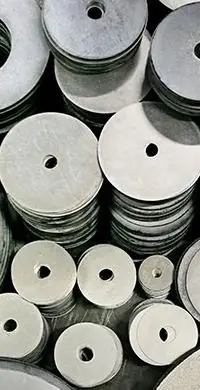
Advanced Diamond Tool Sintering Technology

Advanced Sintering Metallurgy

Strict Quality Control Process for Diamond Blades

Automated Vision QC Testing

High Production Capacity Facility

Massive Scale Capacity

Global Export and OEM Service

Global OEM & Export Fulfillment

Industry Trends & Technological Roadmap

Future Trends Shaping the 230mm Diamond Cutting Disc Sector

How architectural material shifts and environmental regulations are driving next-generation blade designs.

1. Sintered Stone & Dekton Thin-Kerf Evolution

The global rise of ultracompact sintered stone slabs (such as Dekton, Neolith, and large-format porcelain) has rendered traditional thick diamond blades obsolete. Sintered stone is prone to micro-cracking due to high internal residual tension. Modern 230mm blades utilize ultra-thin kerfs (1.2mm to 1.6mm) combined with continuous J-slot geometry to relieve cutting stress, achieving zero-chip edges at elevated feed speeds.

2. Acoustic Vibration Suppression & Silent Cores

Occupational noise regulations in Europe and North America have forced standard solid-core blades out of urban job sites. Progressive manufacturers now offer 230mm "Sandwich Silent Cores," consisting of two hardened steel plates laminated with a thin copper or viscoelastic polymer core layer. This structure damps acoustic resonance, reducing operational noise by up to 15 dB while absorbing micro-vibrations.

3. AI-Assisted Matrix Sintering & Eco Dry-Cutting

Machine learning algorithms are now utilized to model bond matrix wear dynamics based on target stone Mohs hardness. Furthermore, tight environmental restrictions on wet slurry disposal have fueled demand for laser-welded dry-cutting 230mm blades capable of operating up to 6600 RPM without thermal degradation or segment loss.

Application Engineering

Localized Application Scenarios & Sector Solutions

Matching specific blade configurations to harsh industrial operating environments.

A. Civil Infrastructure & Demolition

Target Material: Heavy Reinforced Concrete, Rebar, Asphalt.
Recommended Disc: 230mm Laser-Welded Segmented Blade with protective drop-segments.
Key Mechanism: High-concentration coarse synthetic diamond (30/40 mesh) bound in a tough, hard matrix that resists abrasive wear from steel rebars and aggregate.

B. Natural Stone Processing Shops

Target Material: Hard Granite (Class IV/V), Quartzite Slabs.
Recommended Disc: 230mm Turbo-Segmented / Keyhole Gullet Disc.
Key Mechanism: Turbo segments facilitate fast chip evacuation and continuous water flow, preventing matrix loading and ensuring rapid linear cutting progress.

C. Architectural Tile & Facade Fitting

Target Material: Vitrified Tiles, Porcelain, Glazed Ceramic.
Recommended Disc: 230mm Super-Thin J-Slot Continuous Rim Disc.
Key Mechanism: Fine diamond mesh (60/80 grit) paired with a soft bronze bond prevents chipping on delicate glazed surfaces, yielding factory-clean joint edges.

D. MEP & Utility Trenching

Target Material: Brickwork, Cinder Blocks, Concrete Walls.
Recommended Disc: 230mm Dry-Cutting Wave-Segment Blade.
Key Mechanism: Wave core technology reduces side friction while deep gullets maximize airflow for rapid thermal cooling during dry wall-chasing tasks.

Data & Technical Benchmark

230mm Blade Segment Matrix Comparison

Quantitative comparison of segment geometries and operational performance profiles.

Blade Segment Type Bond Hardness Optimal Materials Cutting Velocity Lifespan Index Recommended RPM
Standard Segmented Hard (Iron-Cobalt) Abrasive Concrete, Brick, Sandstone Fast (35 m/s) ★★★★☆ (High) 5,500 – 6,600 RPM
Turbo Continuous Rim Medium (Cobalt-Bronze) Hard Granite, Marble, Masonry Very Fast (42 m/s) ★★★☆☆ (Medium-High) 6,000 – 6,600 RPM
J-Slot Ultra-Thin Rim Soft-Medium (Bronze-Nickel) Porcelain Tile, Sintered Stone, Glass Slabs Moderate (28 m/s) ★★★☆☆ (Medium) 4,500 – 5,800 RPM
Laser-Welded Heavy Segment Extra Hard (Tungsten-Cobalt) Reinforced Concrete, Steel Rebar Fast (38 m/s) ★★★★★ (Maximum) 6,000 – 6,600 RPM
10+
Years Global Export
50+
Countries Supplied
2.5M+
Blades Produced / Yr
ISO9001
Certified Factory
Procurement Guide

Global Enterprise Buyer Technical Checklist

Key engineering parameters B2B buyers must specify when placing factory OEM orders.

When procuring 230mm diamond saw blades in bulk from Chinese factories, enterprise buyers and brand owners must ensure precise alignment between jobsite conditions and manufacturing specifications. Below is the technical matrix recommended by senior application engineers:

1. Material Mohs Hardness

Specify target substrate hardness (e.g., Quartzite Mohs 7 vs. Limestone Mohs 3). Hard materials require soft matrix bonds to constantly expose new diamond grit; abrasive soft materials demand hard matrix bonds to prevent premature wear.

2. Arbor & Pin Hole Geometry

Standard 230mm core arbor bore is 22.23mm (7/8 inch) for angle grinders, or 25.4mm (1 inch) with heavy-duty drive pin holes for table cut-off saws. Ensure precise bushing specs to eliminate eccentric shaft wobble.

3. Segment Attachment Technology

Select Laser Welding for intense dry cutting where segment breakaway poses safety risks. Opt for Hot-Pressed Sintering for high-volume cost efficiency in standard tile and ceramic applications.

Factory Updates & Knowledge Base

Industry News & Technical Insights

Stay updated with the latest technological developments from JIAYAN Superhard Tools.
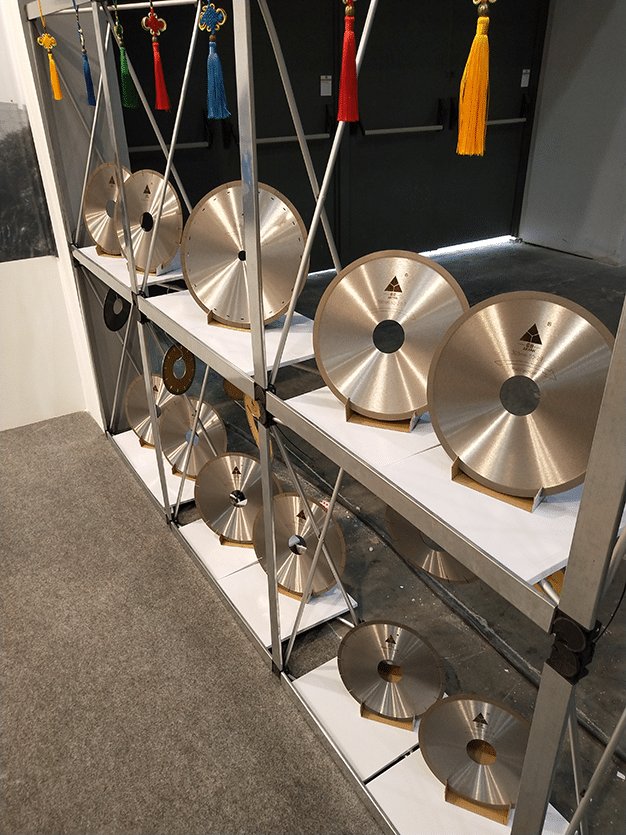
JIAYAN Diamond Tool Exhibition and News
Jan 05, 2022

How to Detect the Welding Strength of Laser Welding Diamond Saw Blades

Comprehensive guide on key testing standards for laser-welded diamond saw joints—covering torque shear testing, microstructure analysis, and non-destructive ultrasonic evaluation.

Jun 18, 2019

JIAYAN at China Int'l Exhibition for Ceramic Technology & Equipment

JIAYAN showcased next-generation ultra-thin diamond cutting discs and J-slot blades at Canton Fair Complex in Guangzhou.

Sep 24, 2018

JIAYAN at TECNARGILLA Rimini Italy International Ceramic Exhibition

Demonstrating advanced high-speed continuous rim diamond tools engineered specifically for European porcelain and ceramic processing lines.

Product Catalog Selection

Explore Complete Cutting Disc Solutions

Factory-direct supply of premium 230mm, 350mm, and specialized superhard cutting tools.

Best 14 Inch Diamond Saw Blades Specialized for Sintered Stone

Best 14 Inch & 230mm Sintered Stone Diamond Saw Blade

  • Category: Sintered Stone / Dekton
  • Kerf Width: Ultra-Fine Precision
  • Factory OEM: Customized Branding
Custom Super Fast Cutting Segment Rim J Slot Diamond Saw Blade

Segment Rim J-Slot Fast Cutting Diamond Blade for Marble

  • Slot Geometry: Noise Reduction J-Slot
  • Cutting Speed: Extra Fast Feed
  • Application: Tile, Ceramic, Marble
OEM Diamond Saw Blade Cutting Disc 350mm Granite

350mm / 230mm OEM Circular Saw Disc for Granite Cutting

  • Structure: Segmented Rim
  • Diamond Mesh: Premium Synthetic Grit
  • Supply Mode: Bulk Factory Export
350mm Diamond Saw Blade for Granite Stone Cutting

Heavy-Duty Diamond Circular Saw Blade for Hard Granite

  • Core Grade: Hardened 65Mn Steel
  • Max RPM: 6,600 RPM Rated
  • Market: Global B2B Supply
Small Size Diamond Cutting Disc for Tile and Stone

Small Size & 230mm Diamond Cutting Disc Series

  • Rim Style: Continuous / Turbo
  • Cooling: Dry & Wet Compatible
  • Precision: High Balance Control
14 Inch Hot Pressed Diamond Circular Saw Blade for Ceramic Tile

14" & 230mm Hot-Pressed Diamond Blade for Ceramic

  • Process: Hot-Press Sintering
  • Edge: Smooth Chip-Free Edge
  • Certifications: ISO9001 / EN13236
14 Inch Welding Segment Diamond Cutting Blade for Ceramic

Welded Segment Diamond Saw Blade for Heavy Masonry

  • Technology: Laser Joint Welding
  • Safety: EN13236 Compliant
  • Durability: Extended Life Cycle
1.0mm Ultra-Thin Diamond Segment Cutting Disc for Ceramic

1.0mm / 1.2mm Ultra-Thin Diamond Cutting Disc

  • Kerf: Micro-Thin Material Savings
  • Application: Delicate Vitrified Slabs
  • Performance: High RPM Edge Speed
Technical Q&A Knowledge Base

Frequently Asked Questions (FAQ)

Expert technical answers regarding 230mm diamond saw blade procurement, engineering, and operation.

1. Why is 230mm (9-inch) considered the global standard dimension for heavy-duty angle grinders and cut-off saws?

The 230mm diameter provides an optimal balance between maximum cutting depth (approximately 65mm to 75mm in a single pass) and mechanical leverage. It fits standard high-torque hand-held angle grinders (typically rated between 2,000W and 2,600W) without imposing excessive rotational inertia that could stall the motor or compromise operator control.

2. What is the fundamental difference between Hot-Pressed Sintered and Laser-Welded 230mm blades?

Hot-Pressed Sintered blades are manufactured by compressing diamond grit and metal powder in a dynamic mold under simultaneous heat and pressure. The segment and core bond together in a single step. This process is highly cost-effective and ideal for tile, marble, and general masonry.

Laser-Welded blades utilize high-energy laser beams to fuse pre-sintered diamond segments directly to the steel core, melting the metallic interface into a solid homogeneous structural weld. Laser welding provides extreme shear strength, preventing segment detachment under intense heat, making it mandatory for heavy dry cutting and reinforced concrete demolition under European EN13236 safety standards.

3. How do I match segment matrix hardness with substrate Mohs hardness?

The inverse rule of diamond tool engineering applies:
  • Hard Substrates (Granite, Quartzite, Porcelain - Mohs 6 to 8): Require a Soft Metal Bond Matrix (containing Bronze and Copper). As diamonds fracture and dull, the soft matrix wears away quickly enough to expose new, sharp diamond layers.
  • Soft/Abrasive Substrates (Asphalt, Green Concrete, Sandstone - Mohs 3 to 5): Require a Hard Metal Bond Matrix (containing Iron, Tungsten Carbide, and Nickel) to resist the abrasive slurry and prevent premature erosion of the bond.

4. What operational parameters prevent dynamic warping and thermal dishing of the blade?

To prevent thermal stress dishing:
  1. Never exceed the maximum rated linear speed (typically 80 m/s or 6,600 RPM for 230mm blades).
  2. When dry cutting, employ a step-cutting technique: execute shallow 15-20mm deep passes rather than forcing a full-depth cut in a single stroke.
  3. Allow the blade to idle free in air for 10-15 seconds every 30 seconds of cutting to allow air-cooling via the core gullets.

5. What customization options do Chinese OEM factories offer for brand distributors?

Leading manufacturers like JIAYAN Superhard offer full-spectrum OEM/ODM services:
  • Custom Segment Geometries: Keyhole, Wave, Turbo-Segment, Continuous Rim, or J-Slot.
  • Laser Etching & Surface Finishing: Custom laser-etched brand logos, specifications, safety icons, and color-coded electro-coated or painted disc surfaces.
  • Packaging Solutions: Private-label double-blister packs, color boxes, industrial bulk cardboard sleeves, and customized inner arbor adapter rings (e.g., 22.23mm to 20mm or 16mm bushings).

6. How does core tensioning impact the straightness of deep cuts in stone slabs?

During high-speed rotation, centrifugal forces expand the outer rim of the core. If the steel core is not pre-tensioned during factory balancing, centrifugal expansion causes the blade edge to flutter laterally. Factory roller tensioning introduces internal pre-stress vectors that expand outward at operating RPM, ensuring the blade rim remains perfectly flat and rigid.

7. What is the role of diamond concentration in blade lifespan vs. cut speed?

Diamond concentration refers to the volume of diamond crystals contained within the segment matrix (where 100 concentration equals 4.4 carats per cubic centimeter). Higher diamond concentration (75% to 100%) increases blade operational lifespan when cutting abrasive materials, whereas a moderate concentration (50% to 75%) allows faster penetration speeds in extremely dense materials by lowering contact surface resistance.

8. What key compliance verification steps should be taken before submitting a container purchase order?

Enterprise procurement teams should request: 1. EN13236 Safety Certification and shear stress laboratory test reports. 2. Steel core tensioning and dynamic runout test logs (< 0.04mm). 3. Sample trial testing for linear meters cut per blade on local jobsite stone samples. 4. ISO9001 quality management audit documentation.
JIAYAN Superhard Tools

China's Premier Superhard Tool Manufacturer

Founded in Wuhu, China, JIAYAN Superhard Materials Co., Ltd. is a recognized leader in the R&D and production of diamond saw blades, circular cutting discs, and superhard tooling solutions. As an active member of the China Superhard Material Association, we deliver ISO9001 certified OEM/ODM manufacturing services to global importers, tool distributors, and commercial stone processing enterprises across over 50 countries.

JIAYAN Manufacturing Facility

Certified OEM/ODM Plant

Wuhu Industrial Zone, Anhui Province, China