Engineered for maximum linear speed, heat resistance, and extended service life across heavy construction, masonry, ceramic tile, and natural stone operations.
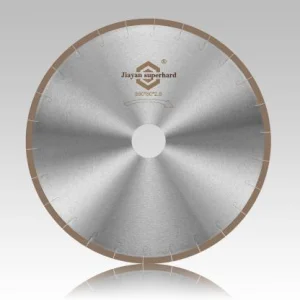
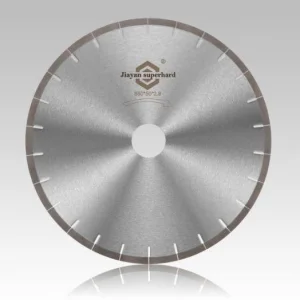
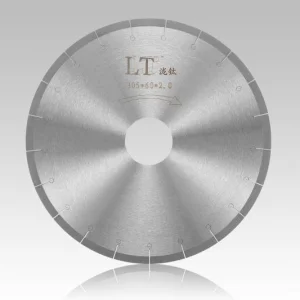
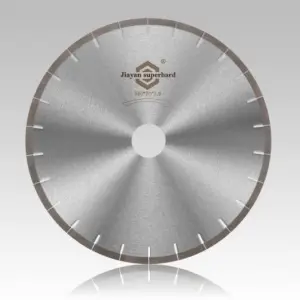
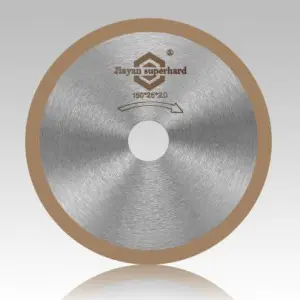
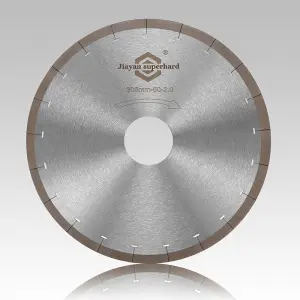
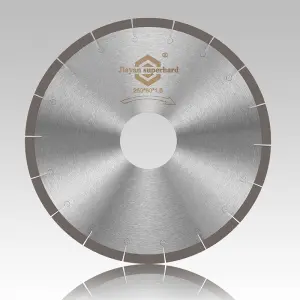
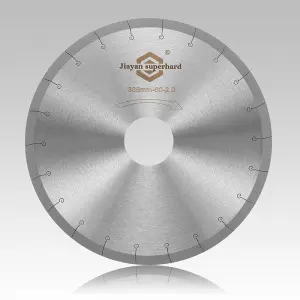
An in-depth analysis of global procurement trends, metallurgical advancements, and performance benchmarks driving the modern diamond tool supply chain.
The global demand for high-performance demo saw blades (demolition circular blades) and industrial superhard diamond tools has experienced a fundamental transformation over the past decade. Rapid urbanization, heavy infrastructure renewal across Europe and North America, and the widespread adoption of ultra-hard architectural materials—such as 20mm+ sintered stone, dense porcelain slabs, and high-psi reinforced concrete with rebar—have forced tooling manufacturers to innovate well beyond traditional sintered grit technology.
For industrial procurement teams, civil contractors, and OEM distributors, sourcing high-quality demolition saw blades is no longer merely a purchase order based on unit price. It is an evaluation of Total Cost of Ownership (TCO), cutting speed (cm²/min), segment retention integrity under high heat, and operational safety standards compliant with EN 13236 and oSa specifications.
Based on global trade metrics and superhard material association research, several key vectors define the current market landscape for industrial diamond blades:
Transition from random diamond grit distribution to 3D matrix array technology, ensuring every synthetic diamond crystal experiences uniform load distribution and continuous self-sharpening micro-fracturing.
Shift from traditional silver brazing to fully automated fiber laser beam welding. Laser-welded bonds provide a fusion zone between the steel core and diamond segment with tensile strength exceeding 1,800 MPa.
Implementation of specialized expansion slots (J-Slots, Keyhole Slots, and Laser-cut Radial Vents) designed to neutralize core distortion and thermal wobble under continuous dry-cutting conditions.
Choosing the correct diamond saw blade standard for specific aggregate hardness, abrasive levels, and machine horsepower.
The primary physics principle underlying diamond blade longevity is matching the metal bond hardness inversely to the material abrasiveness. Soft metal bonds (composed of high bronze/tin ratios) are designed for ultra-hard non-abrasive materials like quartz, porcelain, and hard granite to allow continuous diamond exposure. Conversely, hard metal bonds (high tungsten carbide, cobalt, and iron content) resist the severe abrasion of green concrete, asphalt, and soft sandstone.
| Blade Series & Class | Bond Matrix Type | Diamond Concentration | Recommended Substrate | Optimal RPM (350mm) | Welding Tech |
|---|---|---|---|---|---|
| Heavy Demolition (Demo) Series | Cobalt-Iron (Co-Fe) Alloy | 45% - 50% High Grade (MBD-8) | Reinforced Concrete, Steel Rebar, Brick | 3,800 - 4,400 RPM | Automated Laser Weld |
| Granite & Hard Stone Series | Cobalt-Nickel-Copper Matrix | 40% - 45% Premium Synthetic | Class I/II Granite, Quartzite, Basalt | 2,800 - 3,600 RPM | High-Freq Silver Braze |
| Sintered Stone & Slab Series | Bronze-Iron Fine Sinter | 35% - 40% Micro-Crystalline | Dekton, Neolith, Sintered Porcelain | 2,200 - 3,000 RPM | Hot-Pressed Continuous |
| Ultra-Thin Ceramic Tile Series | Tin-Bronze Super-Bond | 30% - 35% Fine Micron Grit | Vitrified Ceramic, Glass Tile, Marble | 4,000 - 6,000 RPM | Hot-Pressed J-Slot Rim |
Empowering international distributors, tool brand owners, and construction conglomerates with certified, tailored superhard tool manufacturing.
As an active corporate member of the China Superhard Material Association, JIAYAN Superhard Materials Co., Ltd. (headquartered in Wuhu, China) operates at the forefront of diamond synthesis and powder metallurgy sintering. We provide turnkey OEM and ODM solutions for international tool brands seeking precise specifications.
Our engineering team works directly with global procurement directors to customize every variable of the saw blade architecture:
Analysis of target cutting substrate (Mohs hardness, tensile strength, dry vs wet specs).
Customizing diamond concentration ratios (20% - 50%) and metal matrix powder blending.
Precision 75Cr1 high-carbon steel core levelling, tensioning, and laser weld segment attachment.
Torque shear testing, dynamic balance verification, and speed burst chamber testing.
Ensuring operational safety compliance across regulated markets while spearheading next-generation diamond grit innovations.
All JIAYAN demolition and stone saw blades undergo strict destructive bending and shear strength testing to guarantee compliance with European EN 13236 safety standards for superhard abrasives.
With an established export network spanning Europe, the Middle East, Southeast Asia, and the Americas, we guarantee reliable shipping timelines, flexible MOQs, and local currency billing options.
Pioneering environment-conscious powder metallurgy by replacing hazardous cobalt content with advanced iron-copper-nickel nano-alloy matrices without compromising segment life or cutting velocity.
Full suite of diamond tools tailored for angle grinders, bridge saws, handheld demo saws, and table tile saws.
Technical guidance for tool engineers, procurement managers, and civil contractors evaluating diamond saw blades.
Demolition (demo) saw blades are specifically engineered for heavy construction sites and emergency response where the saw encounters varied, unpredictable materials—such as reinforced concrete with embedded rebar, brick, steel pipe, and ductile iron. Demo blades utilize high-strength laser-welded segments with tough cobalt-iron matrices to prevent segment stripping. Stone saw blades (for granite or marble) typically prioritize clean, chip-free surface finishes and may use continuous rim or specialized silver-brazed segments optimized for specific stone hardness scales.
Laser welding uses a high-energy laser beam to melt and fuse the metal bond of the diamond segment directly to the 75Cr1 alloy steel core, creating a homogenous weld joint without lower-melting-point solder alloys. This results in a shear joint strength exceeding 1,800 MPa, allowing the blade to operate safely under high thermal conditions during dry cutting without the risk of segment detachment.
Diamond concentration refers to the volume proportion of diamond crystals within the segment matrix (where 100 concentration equals 4.4 carats per cubic centimeter). Higher concentration (40%-50%) extends blade life when cutting highly abrasive or medium-hard materials with adequate machine power. Lower concentration (25%-35%) allows faster cutting speeds on extremely hard, non-abrasive substrates by reducing the contact resistance of individual diamond points.
Glazing occurs when the metal bond matrix is too hard for the substrate, preventing the worn outer diamonds from sloughing off to reveal fresh sharp diamond edges. To dress or un-glaze a blade, make several shallow cuts into an abrasive material like soft sandstone, green concrete, or a specialized dressing stone. This strips away the excess metal matrix and exposes new, sharp synthetic diamond points.
Every production batch undergoes comprehensive inspection protocols: 1) Steel core flatness and runout tolerance check within 0.05mm; 2) Dynamic rotational balance testing; 3) Automated shear testing on 100% of laser-welded segments; 4) Rockwell/Vickers hardness validation of sintered segment matrix; and 5) Operational speed burst safety chamber testing.