Factory-direct precision diamond tooling engineered for sintered stone, granite, marble, porcelain tiles, and heavy civil construction applications.
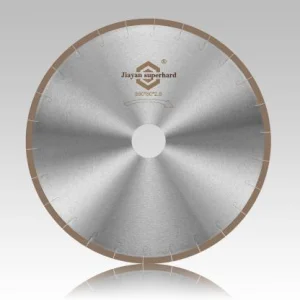
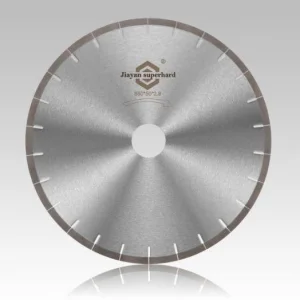
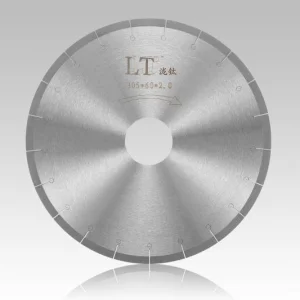
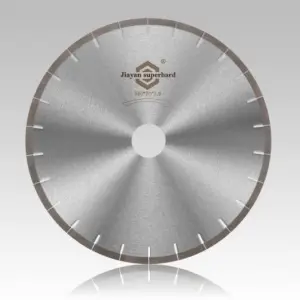
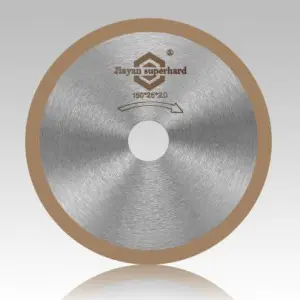
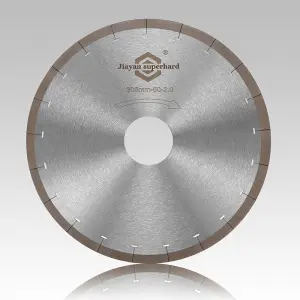
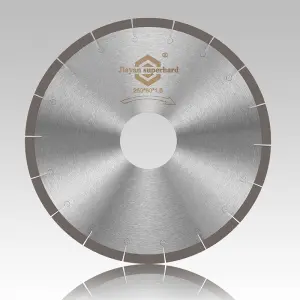
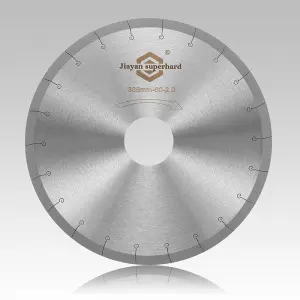
An authoritative analysis of abrasive material mechanics, synthetic diamond matrix chemistry, heat dispersion, and manufacturing metallurgy for B2B procurement heads and industrial tool engineers.
In modern abrasive processing and ultra-hard material machining, the performance of a Diamond Edge Cutting Wheel is governed by complex microscopic tribological interactions between synthetic diamond grit crystals and metallic alloy bond matrixes. As global industrial demand escalates for hard substrates—such as ultra-compact sintered porcelain slabs, quartzites, reinforced concrete, and advanced structural ceramics—traditional cutting discs fail to satisfy stringent tolerances regarding cut speed, kerf loss, thermal degradation, and edge-chipping immunity.
Core Engineering Objective: Maximizing Information Gain in industrial superhard tooling requires balancing diamond grit friability, bond wear rate, and core steel tensioning. High-tier industrial diamond edge cutting wheels must deliver a continuous micro-fracturing mechanism of diamond particles while preventing premature grain pull-out or matrix glazing.
Whether utilized in continuous automated bridge-sawing production lines or high-RPM manual angle grinders, a top-tier diamond cutting wheel relies on microscopic diamond crystal cleavage patterns. Synthetic diamonds synthesized via High-Pressure High-Temperature (HPHT) or Chemical Vapor Deposition (CVD) processes must be precisely screened for crystal morphology, thermal stability, and impact toughness (TI/TTI values) to match specific mineral hardness indices (Mohs 6 to 9).
Detailed examination of vacuum sintering, laser beam welding, electroplating, and matrix powder formulation.
Utilizes ultra-fine Cobalt (Co), Nickel (Ni), Bronze (Cu-Sn), and Tungsten Carbide (WC) alloy powders. Under high-pressure thermal compaction, the metal matrix sinters around diamond grains, locking them mechanically and chemically with titanium-coated bond agents to prevent premature diamond loss under extreme shearing loads.
For high-hazard dry-cutting and heavy civil engineering applications, laser welding uses focused high-energy beams to fuse the sintered diamond segment directly to the 65Mn spring-steel core. This creates a deep metallurgical weld zone capable of enduring shear forces exceeding 800 Nm without segment separation.
Incorporates proprietary J-slots, Keyhole expansion slots, Turbo-fluted rims, and continuous ultra-thin rims. Specialized slot geometries facilitate hydro-dynamic coolant flow, rapid slurry evacuation, radial thermal expansion relief, and vibration dampening, preventing blade warping and edge chipping.
A critical engineering failure in diamond tool purchasing is selecting improper mesh sizes. Coarse diamond grit (20/30, 30/40 mesh) delivers aggressive material removal rates in soft, abrasive materials like green concrete or asphalt. Conversely, fine mesh diamond grit (60/80, 100/120 mesh) combined with a soft bronze-based matrix is required for hard, vitreous materials like sintered porcelain, dekton, and high-silica quartzites.

From architectural stone fabrication workshops in Western Europe to major civil infrastructure projects across North America and Southeast Asia.
Modern architectural trends demand ultra-large format sintered stone slabs (3200x1600mm) for luxury countertops and exterior cladding. Cutting these stressed, ultra-compact surfaces without edge cracking requires specialized J-slot diamond wheels engineered with micro-vibration dampening steel cores and soft-matrix continuous segments.
In highway expansion, bridge deck repair, and airport runway joint cutting, floor saws demand laser-welded diamond blades capable of handling heavily reinforced concrete with steel rebar. Hardened matrix bonds with tungsten carbide additives resist harsh abrasive friction without core undercut.
Granite fabricators operating CNC bridge saws and multi-blade machines require 350mm to 800mm circular saw blades that deliver smooth, straight cuts at high linear feeds (3-8 meters per minute) while retaining segment height over thousands of linear meters.
Precision micro-dicing wheels utilizing electroplated nickel bonds and micron-graded diamond powders cut silicon wafers, alumina substrates, fused silica, and quartz with zero sub-surface micro-cracking and cut tolerances under 5 micrometers.
Technical parameters for optimal tool selection and field operational troubleshooting.
| Target Substrate | Recommended Bond Type | Diamond Grit (Mesh) | Optimal RPM (350mm Blade) | Cooling Mode | Key Performance Metric |
|---|---|---|---|---|---|
| Sintered Stone / Dekton | Soft Bronze-Cobalt Alloy | 80 / 100 Fine Grit | 1,800 – 2,200 RPM | Wet Cut (Water Flow > 15L/min) | Zero Edge Chipping |
| Class 5 Hard Granite | Medium Cobalt-Iron Bond | 40 / 50 Standard Grit | 1,450 – 1,750 RPM | Wet / High Pressure Coolant | High Linear Speed |
| Reinforced Concrete & Steel | Hard Tungsten-Carbide Bond | 30 / 40 Coarse Grit | 2,000 – 2,800 RPM | Wet or Dry (Laser Welded) | Shear Stress Resistance |
| Vitreous Ceramic & Porcelain | Hot-Pressed Continuous Rim | 60 / 80 Medium Fine | 3,000 – 4,500 RPM | Wet or Dry Cut | Clean Chip-Free Edge |
| Abrasive Sandstone / Asphalt | Ultra-Hard Matrix Bond | 20 / 30 Aggressive Grit | 1,600 – 2,100 RPM | Wet Cooling Recommended | Anti-Undercut Protection |
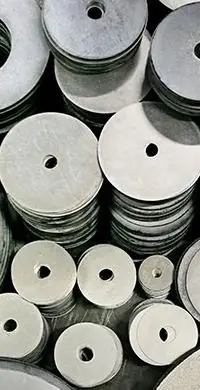
When operating diamond cutting tools, two primary failure modes occur in field environments:
Why leading global tool distributors, OEM brands, and stone processing conglomerates source diamond cutting wheels directly from specialized Chinese superhard industrial clusters.
China accounts for over 90% of the world's synthetic industrial diamond output, centralized in Henan and surrounding superhard material hubs. Direct access to raw HPHT single-crystal diamond grit eliminates intermediary markups and guarantees consistent batch-to-batch diamond crystal purity.
Modern Chinese diamond factories utilize automated cold-pressing, multi-station hot-sintering presses, and robotic laser welding systems. Automated production reduces human error, guarantees uniform segment density, and maintains dimensional core runout tolerances under 0.03mm.
From custom segment shape design, laser-etched branding, and color-coded core coatings to international export compliance (CE, ISO, oSa), Chinese manufacturers offer flexible minimum order quantities (MOQs) with short production cycles (15–20 days).
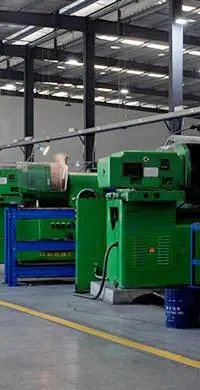
By integrating metal powder atomization, high-precision steel core manufacturing (65Mn spring steel), and continuous automated sintering, Chinese superhard tool factories achieve high production efficiency. Global buyers benefit from premium industrial tool performance at competitive factory-direct pricing, maximizing profit margins for distributors and reducing tool consumption costs for stone processing plants.
Emerging developments in superhard tool manufacturing, diamond grain orientation, and environmentally conscious bonding matrices.
Traditional segment sintering distributes diamond particles randomly. Modern 3D ARIX technology places each diamond crystal in precise 3D grid patterns with calculated spacing. This ensures equal workload per crystal, increases cutting speeds by up to 50%, and extends total tool lifespan by 100%.
Applying titanium or chromium coatings to synthetic diamond crystals via chemical vapor deposition creates a protective barrier that reduces thermal oxidation during high-temperature sintering, improving diamond retention forces within the metal matrix.
In response to global EU REACH chemical regulations and occupational health standards regarding cobalt dust exposure, manufacturers are engineering eco-friendly iron-copper-nickel (Fe-Cu-Ni) high-density sinter matrices that match cobalt performance without toxic environmental footprints.
Integrating machine vision and automated optical inspection (AOI) into production lines allows instant detection of micro-voids, segment displacement, or dynamic balancing eccentricities prior to final distribution.
Ensuring international workplace safety compliance, dynamic balancing precision, and dedicated global technical support.
Rotating superhard tools operating at peripheral speeds exceeding 80 m/s present severe operational hazards if segment failure occurs. Leading manufacturers adhere strictly to EN 13236 safety requirements for superhard diamond abrasive tools.

Explore our full line of professional diamond saw blades, ultra-thin cutting discs, and custom segment configurations.
Answers to critical technical queries for OEM purchasers, tool importers, and plant managers.
Laser welding uses a high-energy laser beam to fuse the diamond segment directly to the steel core, creating a bond strength that withstands dry cutting heat and high shear force. It is essential for safety in dry cutting applications or heavy-duty concrete cutting. Hot-pressed sintering uses heat and pressure to bond segments, ideal for continuous rim wet cutting blades used on ceramics, porcelain, and marble where high edge precision is required.
Sintered stone slabs contain significant internal mechanical tension. The specialized J-slot laser cutout geometry acts as a thermal expansion joint, absorbing side vibrations and dissipating cutting heat rapidly. This prevents micro-fracturing along the cut edge, yielding a smooth finish without material breakout.
Our OEM capabilities cover custom bond matrix formulas adjusted for specific stone hardness, diamond concentration levels (50% to 125%), segment height (10mm, 12mm, 15mm), laser-etched logos, color-coded blade body coatings, bore hole adapters, and custom packaging for retail distribution.
When a cutting wheel encounters material that is softer or harder than its engineered bond rating, the metal matrix may fail to wear away, causing diamond grains to become rounded or glazed over. To resharpen the blade, make several dress cuts into an abrasive material like soft sandstone, abrasive refractory brick, or a dedicated silicon carbide dressing block to strip back the worn metal matrix and expose sharp new diamond crystals.
As a 350mm to 800mm blade rotates at high speed, centrifugal force and thermal expansion cause the steel core to stretch. Proper core tensioning (achieved through precise mechanical hammering and thermal stress relief) ensures the blade maintains axial alignment under load, preventing wobble, uneven cut kerfs, and dangerous core fatigue failures.