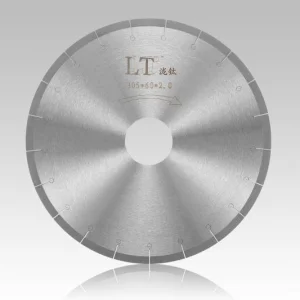
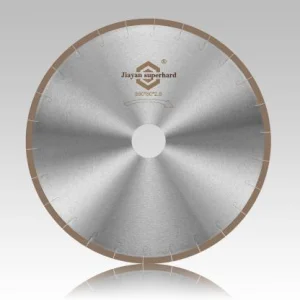
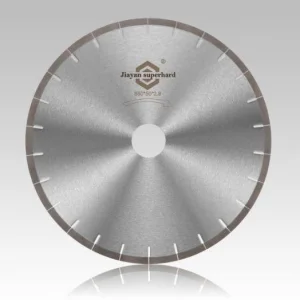
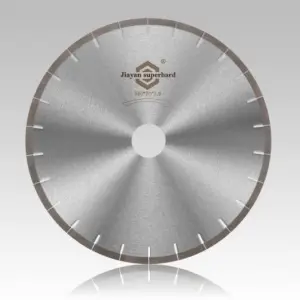
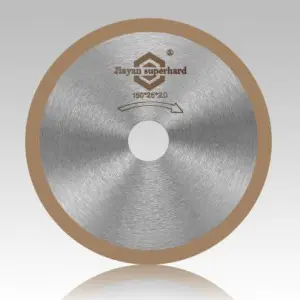
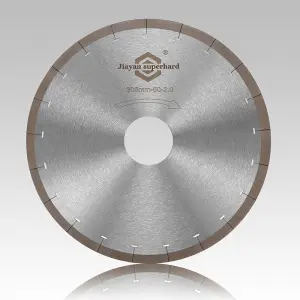
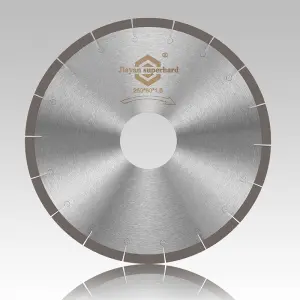
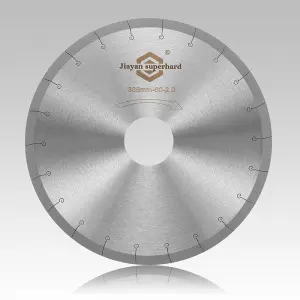
Explore our premium-grade diamond cutting tools engineered specifically for ultra-hard sintered stone, vitrified porcelain tiles, and heavy-duty granite cutting.
Why modern architectural materials demand a quantum leap in ODM diamond cutting tool engineering.
The global surface material landscape has undergone a tectonic shift over the past decade. The rapid rise of large-format porcelain slabs, sintered stone materials (such as Dekton, Neolith, and Lapitec), and high-density technical ceramics has transformed architectural cladding, countertop manufacturing, and commercial flooring. Unlike traditional ceramic tiles, modern sintered stone is manufactured under extreme hydrostatic pressure (>400 bar) and fired at temperatures exceeding 1,200°C. This process yields a non-porous material with a Mohs hardness rating of 7 to 8, combined with immense internal mechanical tension.
For international buyers, stone fabricators, and tool distributors, sourcing standard off-the-shelf saw blades frequently results in high edge-chipping rates, rapid blade glaze, and unacceptable tool degradation. This has created a massive global demand for specialized Original Design Manufacturer (ODM) ceramic cutting saw blade suppliers capable of engineering custom bond matrices, tailored rim geometries (such as specialized J-Slots, Mesh Turbo patterns, and ultra-thin continuous rims), and tension-balanced steel cores tailored to specific regional machine specifications (CNC bridge saws, manual wet cutting machines, and high-speed angle grinders).
Information Gain Analysis: Decoupling the micro-mechanics behind chip-free, ultra-fast ceramic slicing.
We utilize premium-grade high-purity single-crystal synthetic diamonds (SDA series). For ceramic and porcelain cutting, grain size is critical: fine mesh sizes (80/100 to 120/140 mesh) are integrated into continuous rims to ensure ultra-smooth micro-cutting without edge cracking, while coarser grits (60/70 mesh) are engineered into heavy-duty bridge saw blades for rapid bulk stock removal.
The bonding matrix must wear synchronously with the embedded diamond crystals. Our ODM formulation engineers soft-to-medium bronze-cobalt alloys for vitreous ceramics to constantly expose fresh, sharp diamond edges (controlled self-sharpening), preventing heat buildup and blade glazing during long production runs.
A diamond blade is only as good as its steel core. We utilize premium 75Cr1 steel plates, laser-cut to exact tolerances, followed by heat treatment and manual tensioning. This ensures dynamic stability at speeds up to 4,500 RPM, eliminating lateral wobble and reducing cutting noise significantly.
| Blade Type / Application | Diameter Range | Rim / Segment Style | Recommended RPM | Target Substrate Material | Cooling Mode |
|---|---|---|---|---|---|
| Ultra-Thin Continuous Rim Disc | 105mm – 125mm | 1.0mm - 1.2mm Continuous | 10,000 – 13,300 RPM | Porcelain Tile, Glass Mosaic, Wall Tile | Dry / Wet |
| J-Slot Fast-Cutting Blade | 115mm – 250mm | J-Slot Segmented Rim | 6,000 – 11,000 RPM | Hard Ceramic, Glazed Tile, Marble | Wet Preferred |
| Sintered Stone Bridge Saw Blade | 300mm – 400mm | Silent Core J-Slot / Mesh Segment | 1,800 – 2,800 RPM | Neolith, Dekton, Porcelain Slabs (12-30mm) | Strictly Wet Cutting |
| Hot-Pressed Turbo Slicing Blade | 115mm – 230mm | Wave Turbo Rim | 6,500 – 12,200 RPM | Granite, Hard Ceramic, Masonry | Dry / Wet |
How JIAYAN Superhard leverages localized industrial clusters, advanced sintering automation, and strict ISO quality controls.
China produces over 85% of the world's synthetic diamond and superhard abrasive tools. As an established member of the China Superhard Material Association based in Wuhu, China, JIAYAN Superhard occupies a strategic node within this industrial ecosystem. Our ODM/OEM manufacturing advantages stem directly from localized vertical integration—from raw diamond synthesis and metal alloy powder blending to high-precision automatic sintering press operations and automated laser welding lines.
Tailored diamond blade solutions tailored for diverse jobsites, fabrication shops, and industrial production plants worldwide.
In automated countertop processing factories, 350mm to 400mm silent-core J-Slot blades cut large porcelain slabs at 45-degree miter angles. Our specialized diamond formula prevents micro-flaking along the top glaze line, ensuring perfect seamless miter joints for kitchen islands and vanity tops.
Contractors working on residential or commercial interior fit-outs rely on our 115mm to 125mm ultra-thin 1.0mm continuous rim discs mounted on handheld angle grinders or small tile cutters. The minimal friction width reduces dust generation, cuts effortlessly through hard porcelain, and extends battery life on cordless power tools.
For outdoor landscaping and public infrastructure projects requiring thick granite pavers or hard stone blocks, our laser-welded keyhole and segmented circular saw blades deliver rapid cutting speeds with exceptional wear resistance in wet and harsh environments.
A comprehensive checklist for tool importers, brand owners, and procurement managers evaluating factory suppliers.
When selecting an ODM ceramic saw blade manufacturer, professional buyers must look beyond basic unit pricing. Total cost-per-meter cut, edge quality preservation, and production consistency are the key indicators of true supplier reliability. Below is our recommended technical audit framework for evaluating supplier capabilities:
Verify that the factory utilizes tension-testing equipment to guarantee lateral runout tolerances stay under 0.02mm. Excessive runout causes severe edge chipping and premature blade fatigue.
Ensure the supplier employs micro-structural analysis and automatic sintering control. Non-uniform diamond dispersion leads to localized glazed spots and uneven blade wear.
Assess the manufacturer's capacity for customized shrink wrapping, color-printed blister packs, barcode integration, and laser-engraving compliance with international safety codes (EN13236, OSA).
How next-generation material science and sustainable manufacturing are shaping the ceramic cutting industry.
Occupational noise regulations in Europe and North America have accelerated the adoption of sound-dampening silent cores. By sandwiching a thin copper foil layer between two steel plates, operational cutting noise is reduced by up to 12-15 dB(A), protecting workshop operators.
Chemical vapor deposition (CVD) titanium coatings on synthetic diamond crystals significantly improve matrix retention strength. The Ti-coat acts as a thermal barrier and metallurgical bridge, preventing premature diamond drop-out during high-temperature dry cutting.
In response to international environmental and occupational health standards, advanced ODM labs are transitioning toward eco-friendly iron-copper-nickel matrix systems, offering comparable wear rates without heavy reliance on cobalt reserves.
Expert answers to common engineering, ordering, and application questions for B2B buyers.
Select from our complete range of certified superhard diamond cutting tools ready for OEM/ODM global dispatch.