Engineered with superhard diamond matrix technology for reinforced concrete, asphalt, sintered stone, and abrasive masonry applications.
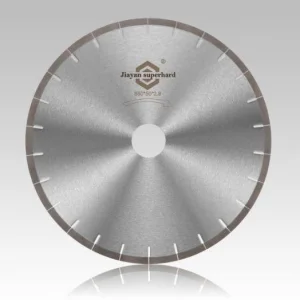
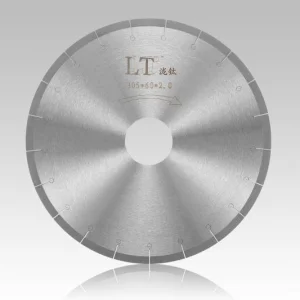
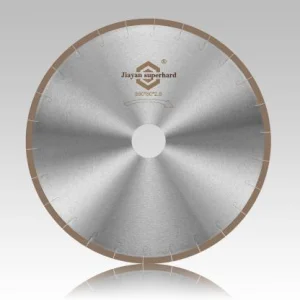
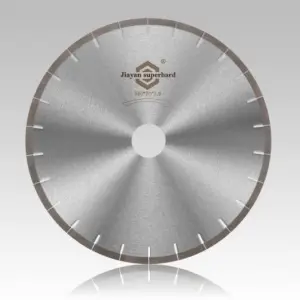
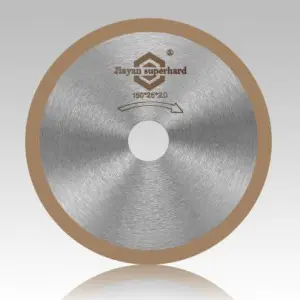
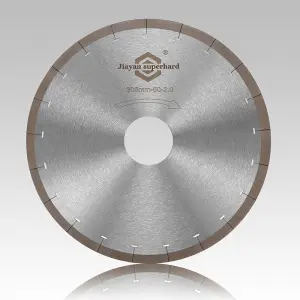
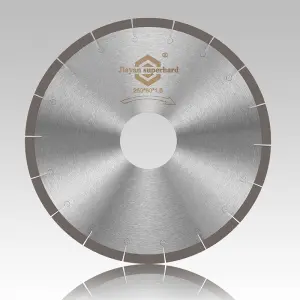
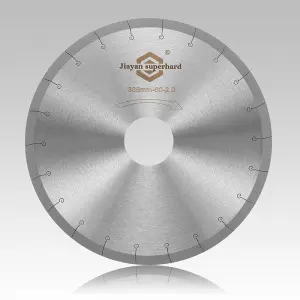
Strategic shift towards high-efficiency, automated demolition, and infrastructure renewal demanding custom-tailored diamond tooling.
The global construction and civil engineering sector is undergoing a massive transformation driven by urban modernization, highway expansion, deep foundation engineering, and structural renovation. According to recent infrastructure development indices, heavy civil projects increasingly encounter heavily reinforced concrete matrices containing dense steel rebar networks (up to 32mm diameter) embedded in high-compressive-strength aggregates (exceeding 60 MPa).
Traditional abrasive wheels fail rapidly under high-tensile thermal shear, leading to excessive downtime, wheel glazing, unsafe structural fragmentation, and elevated operational expenditure (OpEx). Enterprise procurement teams require Original Design Manufacturer (ODM) partners who can formulate specialized diamond cutting wheels customized to specific regional aggregate hardness profiles, ambient thermal conditions, and machinery power metrics.
In large-scale commercial procurement—ranging from highway joint sawing to underwater bridge pier demolition—evaluating a cutting wheel based solely on unit price is structurally flawed. Industrial buyers prioritize Total Cost per Square Meter Cut (TCO/m²).
An optimized ODM concrete cutting wheel leverages synthetic diamond grit with tailored friability, combined with advanced cobalt-bronze matrix sintering. This increases blade life by 40% to 65% while maintaining line speeds above 2.5 m/min. The economic gain realized by mitigating machinery wear, reducing operator fatigue, and eliminating unplanned blade changes drastically outweighs upfront unit differentials.
Custom matrix bond matching tailored to specific concrete age, aggregate Mohs hardness, and reinforcement density.
| Substrate Material | Material Characterization | Optimal Matrix Bond Type | Diamond Grit / Mesh Size | Target Segment Geometry |
|---|---|---|---|---|
| Heavily Reinforced Concrete | High compressive strength (>50 MPa), high steel ratio (#4 to #10 rebar). | Soft Bronze/Cobalt Matrix (Fast erosion exposes new diamond edges) | 30/40 Mesh, High-Strength Synthetic Diamond | Keyhole / Turbo-Segmented with Laser Cut Slots |
| Green Concrete (1-8 hrs poured) | Abrasive sand, low bond strength, high aggregate dislodgement risk. | Ultra-Hard Tungsten Carbide/Iron Bond Matrix | 40/50 Coarse Mesh, Medium Friability | U-Gullet / Deep Undercut Protection Segments |
| Cured Industrial Masonry | Medium hardness, low metal content, variable quartz aggregate. | Medium-Hard Nickel-Cobalt Alloy Bond | 40/60 Mesh, Balanced Friability | Continuous Rim J-Slot / Segmented Standard |
| Asphalt over Concrete | Dual-layer: highly abrasive bitumen top layer + hard concrete base. | Multi-Stage Hardened Alloy Matrix with Slant Segments | 30/50 Mesh Titanium Coated Synthetic Diamond | Drop-Segment / Anti-Wear Protective Slants |
| Pre-stressed Concrete Beams | Extremely hard aggregates (>65 MPa) with tensioned steel cables. | Custom Cobalt-Tungsten High-Density Matrix | 25/35 Mesh Premium Grade Diamond (Single Crystal) | Narrow-Kerf Laser Welded Segmented Rim |
Reinforced concrete demands rapid chip evacuation and continuous exposure of sharp diamond particles. Our ODM manufacturing utilizes specialized cobalt-free or high-cobalt matrix recipes that dynamically wear back at the exact velocity required to expose pristine diamond points when striking steel rebar, preventing blade binding and core distortion.
Early-entry green concrete cutting requires preventing spalling along slab joints. Our engineered blades incorporate patented undercut protection segments welded directly onto the high-tensile steel core, preventing abrasive slurry from wearing away the steel substrate at the weld junction.
Bitumen acts as an extreme abrasive paste during dry or wet sawing. ODM solutions feature alternating hammer-style or slant segments that continuously clear debris out of the gullet while safeguarding the core integrity against premature undercut failures.
Pioneering multi-layer sintering, automated laser welding, and tension-balanced steel cores for industrial safety.
Utilizing computer-controlled atmosphere sintering presses operating up to 35 MPa pressure and 950°C. This eliminates micro-porosity within the segment, locking diamond grains tightly in the metallic binder matrix for maximum retention.
Fully automated fiber-laser welding systems create a seamless, deep-penetration metallurgical bond between the diamond segment foot and the steel core core. Exceeds EN13236 safety torque strength thresholds by over 300%.
Every steel core (75Cr1 / 50Mn2 alloy) undergoes computer-controlled roll-tensioning and dynamic leveling. Ensures operational wobble < 0.15mm even at high peripheral linear speeds up to 80 m/s.
Integrated copper/viscoelastic dampening foils laminated between dual steel sheets reduce operational resonance noise levels by up to 12 dB(A), complying with strict urban municipal noise regulations.
Understanding regional technical standards, aggregate variations, and machinery requirements across key international territories.
Key Drivers: Highway expansion (DOT contracts), airport runway joint re-sealing, residential wall sawing.
Technical Demands: High power walk-behind saws (35 hp to 75 hp diesel). Demands thick steel cores (up to 4.5mm), pin-hole configurations, and laser-welded segments engineered for river gravel and hard chert aggregates prevalent in the Midwest.
Key Drivers: Strict urban renovation, historic masonry restoration, stringent operator safety directives.
Technical Demands: Mandatory compliance with oSa (Organization for the Safety of Abrasives) and EN13236 standards. Demand for silent sandwich cores, ultra-clean dry-cutting hand saws, and dust suppression compatibility.
Key Drivers: High-speed rail viaduct cutting, subsea tunnel segment fitting, massive commercial urbanization.
Technical Demands: Rapid cutting speed priorities. Large diameter blades (800mm to 1600mm) operating on high-frequency electric wall saws. Focus on low power consumption per square meter cut.
Ensuring end-to-end product traceability, international certification alignment, and localized private label branding.
Navigating cross-border tool procurement requires strict adherence to international safety regimes. As an established member of the China Superhard Material Association and audited exporter to over 50 countries, JIAYAN Superhard applies rigorous QA protocols at every production node:
We empower international distributors, tool brand owners, and heavy rental fleets with complete custom engineering capabilities:
Expert insights addressing common engineering challenges, blade maintenance, and ODM order workflows.
OEM (Original Equipment Manufacturer) involves manufacturing blades strictly to customer-provided drawings and specifications. ODM (Original Design Manufacturer) goes further: our engineers design the underlying segment metallurgy, diamond concentration, matrix hardness, and segment geometry tailored specifically to your target market's aggregate geology, machinery power, and cost-performance objectives.
The golden rule of diamond tooling is inverse matching: for hard, non-abrasive aggregates (such as quartz or granite aggregate concrete), select a soft metal matrix bond (cobalt/bronze) that wears away quickly to expose sharp diamonds. For soft, highly abrasive substrates (such as green concrete or asphalt), choose a hard, erosion-resistant metal bond matrix (tungsten carbide/iron alloy).
Glazing occurs when the metal matrix bond is too hard for the material being cut, preventing worn diamond crystals from shedding to release new sharp ones. The segment face becomes polished. To dress a glazed blade, make several deep cuts into a soft, highly abrasive material like sandstone or firebrick to erode the bond matrix and expose fresh diamond edges.
In accordance with EN13236 standards, laser-welded segments undergo destructive torque-shear testing where the weld joint must exceed specified breaking torque forces without cracking at the weld interface. Additionally, rotational spin testing is conducted at 1.5 times the maximum recommended operating speed to verify structural integrity under extreme centrifugal stress.
Yes. Laser-welded blades engineered for dry cutting can safely be used with water coolant; in fact, using water typically extends blade life and controls airborne silica dust. However, silver-brazed (high-frequency welded) blades designed strictly for wet cutting must NEVER be used dry, as heat buildup will melt the brazing alloy, resulting in catastrophic segment detachment.
For custom ODM standard blade sizes (230mm to 350mm), our baseline trial MOQ starts at 50 to 100 units per spec. Sampling and technical prototype development take approximately 7 to 10 business days, with full container-load production delivered within 25 to 30 days post sample approval.
Browse our core diamond tooling portfolio designed for distributors, OEM partners, and industrial concrete cutting contractors.
Looking for a custom segment formula, specialized arbor geometry, or high-volume OEM/ODM production for concrete cutting wheels? Contact our technical metallurgy team directly for engineering consultations and comprehensive quote catalogs.