High-precision diamond saw blades, continuous rim cutters, and specialized ODM grinding discs engineered for maximum wear resistance and zero-edge chipping.
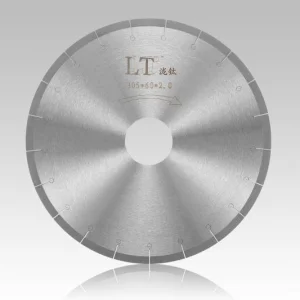
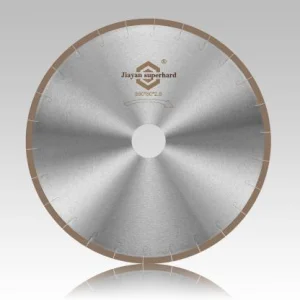
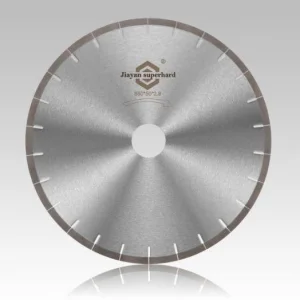
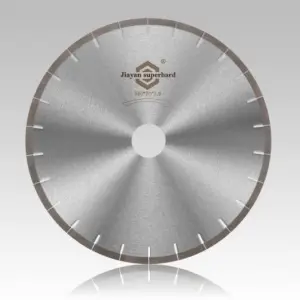
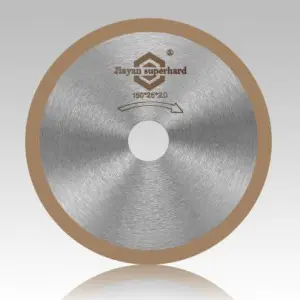
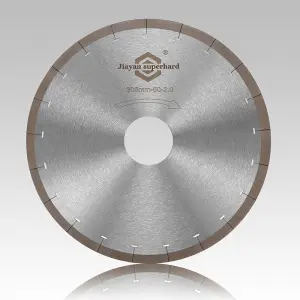
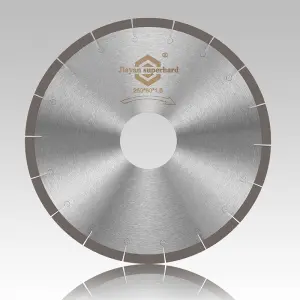
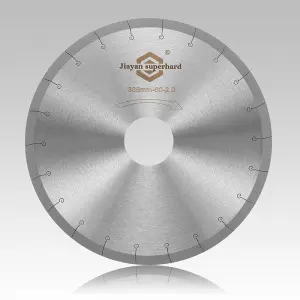
Why off-the-shelf grinding discs are being replaced by customized ODM (Original Design Manufacturing) diamond tool formulations in high-throughput industrial operations.
Modern architectural surfaces have undergone a seismic shift. The rapid adoption of ultra-compact sintered stones (such as Dekton, Lapitec, and Neolith), high-density porcelain slabs, and reinforced high-psi concrete has rendered standardized diamond grinding tools obsolete. Generic abrasive discs suffer from severe glazing, rapid segment wear, and catastrophic thermal fatigue when applied to non-porous vitreous materials.
Global procurement teams in North America, Europe, and the Middle East are shifting from commodity buying to direct Original Design Manufacturer (ODM) collaboration. Partnering with specialized ODM factories allows distributors and equipment OEMs to engineer customized segment geometry, matrix porosity, and diamond grit concentrations tailored to specific machine RPMs and material hardness scales (Mohs 7+).
| Region / Market Segment | Primary Industrial Material | Predominant Tool Failure Mode (Standard Discs) | ODM Matrix Engineering Solution | Efficiency Gain (%) |
|---|---|---|---|---|
| North America (Commercial Flooring) | Heavy Concrete / Epoxy Coatings | Matrix Overheating & Rapid Abrasive Wear | Cobalt-Rich Hard Alloy Bond + Coarse Mesh (30/40) Diamond | +38% Life Expectancy |
| Western Europe (Slab Processing) | Large Format Sintered Stone (12-20mm) | Edge Chipping & Micro-Fracturing | Soft Bronze Bond + High Friability Synthetic Diamond (120/140) | 99.2% Chip-Free Edges |
| Middle East (Civil Infrastructure) | High-Density Granite & Basalt | Segment Glazing & Tool Load Drop | Self-Sharpening Iron-Nickel Bond + J-Slot Silent Core | +42% Cutting Speed |
| East Asia & Australia (Ceramic Tile) | Vitreous Porcelain / Quartzite | Thermal Warpage of Steel Core Plate | 75Mn Spring Steel Core + Vacuum Laser Welded Segments | +50% Thermal Stability |
A rigorous engineering breakdown of matrix powder formulation, crystal mesh selection, sintering dynamics, and tension balancing.
The operational lifespan and cutting speed of a diamond grinding disc depend directly on the erosion rate of the metallic bond relative to the blunting rate of the synthetic diamond grains.
The synthetic diamond crystals suspended within the metallic matrix are selected based on strict thermal stability (TI/TTI index) and mesh sizing standards.
The structural integrity of the diamond segment bond relies on precision temperature-pressure control cycles inside automated sintering presses.
Industrial diamond blades and disk grinders operating above 60 m/s peripheral velocity generate significant acoustic resonance and harmonic vibration. Premium ODM manufacturing incorporates Sandwich Silent Cores (layered copper/steel damping alloys) and computerized hydraulic tensioning. This ensures the blade runs true within 0.02mm lateral runout tolerance, suppressing noise emissions by up to 15 dB while preventing dishing under extreme thermal load.
Why leading global tool brands, stone fabricators, and construction suppliers source custom diamond grinding solutions from specialized Chinese manufacturing clusters.
China produces over 85% of the world's synthetic industrial diamond micron powders and metal matrix powders (cobalt, nickel, copper, tin). Sourcing directly from Chinese superhard material manufacturing hubs—such as Henan and Anhui (Wuhu)—eliminates intermediate material markups and guarantees instant access to high-grade crystalline diamonds with superior thermal toughness (TTI).
Modern ODM facilities utilize fully automated multi-stage hot presses, robotic laser welding cells, and automated 3D optical inspection systems. This high degree of automation ensures batch-to-batch consistency, allowing large-scale production runs with zero tolerance drift in segment dimensions or matrix density.
From custom CAD design to trial matrix powder sintering and bench testing, Chinese ODM suppliers offer turnaround times as fast as 7 to 10 working days for prototype testing.
Leading manufacturers adhere strictly to ISO9001 quality standards and European EN13236 safety regulations, ensuring every disc passes rigorous dynamic balancing and shear testing.
Achieve up to 40% reduction in procurement cost per cut meter without compromising on blade life, allowing global distributors to maximize commercial profit margins.
Selecting the optimal diamond grinding wheel and cutting disc configuration based on material properties and jobsite conditions.
| Application Scenario | Target Substrate | Recommended Segment Type | Cooling Mode | Key Operational Parameter |
|---|---|---|---|---|
| Industrial Concrete Floor Polishing | C30-C60 Cured Concrete & Epoxies | Double-Button / Arrow Segment Cup Wheel | Dry / Wet Grinding | 1800 - 3000 RPM / High Pressure |
| Sintered Stone Slab Fabrication | Dekton, Lapitec, Porcelain Slabs | J-Slot Continuous Rim / Mesh Segment | Wet Cutting (Continuous Flow) | Linear speed 25-35 m/s, slow feed rate |
| Granite Quarrying & Edge Squaring | Class IV / V Hard Granite & Gneiss | Laser-Welded Keyhole Segment Blade | Wet Cutting | High circumferential speed (40-50 m/s) |
| Architectural Ceramic Tile Trimming | Glazed Ceramic & Vitrified Tiles | 1.0mm Super-Thin Continuous Rim Disc | Dry / Wet Light Cutting | Hand-held angle grinder / 11,000 RPM |
| Masonry & Wall Slotting | Reinforced Concrete & Brickwork | Turbo-Segment Rim Blade | Dry Dust-Extracted Cutting | Tough steel core, high impact strength |
Wet Grinding: Water acts as a lubricant and coolant, washing away micro-abrasive swarf and extending segment life by up to 60%. Essential for vitreous porcelain and sintered stone to prevent micro-fracturing along the cut line.
Dry Grinding: Requires high thermal resistance bond metallurgy (such as laser welding or special high-temperature vacuum braze). Designed for jobsite flexibility where water recycling is unavailable. Must be paired with integrated HEPA dust collection shrouds.
Operating a diamond grinding disc outside its designed velocity envelope drastically reduces performance. Running too fast causes segment glazing (diamonds wear flat without breaking), while running too slow leads to rapid segment erosion and core cracking. ODM customization allows matching the exact segment bond hardness to your machine's fixed RPM rating.
A 5-point evaluation framework for industrial procurement directors, importers, and OEM brand managers.
Verify that the factory is certified under ISO9001 and complies strictly with EN13236 European safety requirements for superhard abrasive products. This ensures mandatory centrifugal burst testing and segment shear testing prior to shipment.
An authentic ODM vendor maintains dedicated powder metallurgy laboratories with precise spectrographic analysis equipment, electronic density balances, and automated Rockwell hardness testers to control raw metal batch purity.
Demand dynamic balancing reports (G2.5 rating) for blades larger than 230mm. High-speed imbalance causes premature spindle bearing failure on expensive CNC bridge saws and hand grinders.
Never evaluate diamond tools based solely on unit purchase cost. Calculate the total cost per square meter ($/m²) cut or ground. Premium ODM formulations yield higher linear meters, reducing overall labor downtime and tool swap costs.
A reliable ODM partner provides comprehensive white-label services, including laser etching of barcodes and dynamic safety specs directly on steel cores, custom blister packs, color boxes, and neutral master export cartons.
Audit the factory's raw synthetic diamond inventory buffers and core steel availability. Top-tier Chinese manufacturers offer guaranteed 15-20 day delivery schedules for mass ODM production orders.
Founded in Wuhu, China, JIAYAN Superhard is a premier high-tech enterprise specializing in the design, matrix powder formulation, sintering, and distribution of professional diamond saw blades, diamond disk grinders, continuous rim cutters, and superhard industrial tooling.
With over a decade of international export excellence across 50+ countries in Europe, North America, Southeast Asia, and the Middle East, JIAYAN combines advanced sintering technology with strict ISO-certified quality controls. Whether you require micro-thin blades for delicate sintered stone slabs or heavy-duty segment grinder disks for industrial concrete restoration, JIAYAN provides tailored OEM/ODM solutions to elevate your market competitiveness.




Expert technical answers addressing common procurement, formulation, and application queries from B2B buyers worldwide.
OEM (Original Equipment Manufacturing) involves manufacturing diamond tools according to pre-existing buyer specifications, dimensions, and visual branding. ODM (Original Design Manufacturing) goes a step further: our metallurgy engineers co-develop custom metallic matrix formulations, diamond grit concentration mixes, segment geometries, and core tensioning profiles specifically optimized for your target material (e.g., Ultra-Hard Sintered Stone or Reinforced Concrete) and machine specs.
The inverse rule of metallurgy applies: Hard materials require soft bonds; soft/abrasive materials require hard bonds. Sintered stone (Mohs 7-8+, non-porous) requires a soft bronze or tin-based metallic bond that erodes steadily, continually exposing fresh, sharp diamond edges to prevent glazing. Conversely, abrasive green concrete requires a hard cobalt-tungsten carbide alloy bond that resists slurry abrasion and retains the diamond grains as long as possible.
Industrial diamond tools should comply with EN13236 (European standard for safety requirements for superhard abrasive products) and ISO9001:2015 quality management protocols. EN13236 certification ensures the disc has undergone rigorous centrifugal overload burst testing, segment side-load shear testing, and dynamic balancing to guarantee safety at maximum rated operational RPMs.
We utilize high-precision automated laser welding technology where the laser beam fully penetrates the steel base of the diamond segment into the 75Mn spring steel core. This forms a homogenous metallurgical weld joint with shear strength exceeding European safety norms by up to 50%, virtually eliminating segment detachment even under heavy dry-cutting conditions.
For standard OEM private label orders, our MOQ starts at 50 to 100 units depending on disc diameter (e.g., 350mm blades vs. 115mm angle grinder discs). For specialized ODM custom matrix powder formulations, initial prototype test batches can be produced in quantities as low as 10 to 20 units. Standard production lead time is 15 to 20 business days after sample approval.
Coarse mesh diamonds (e.g., 20/30 or 30/40 grit) create deep mechanical scratches for heavy stock removal and coating stripping. Progressing through medium mesh (60/80, 120/140) reduces scratch depth ($Ra$ value), refining the surface profile. For semi-gloss and high-gloss architectural finishes, resin-bonded or fine metallic grit (400 to 3000 grit) is applied to polish the micro-surface down to optical smoothness.
Select your target tool specification below to request custom ODM matrix samples or bulk factory pricing.