Engineered specifically for raw Medium-Density Fiberboard (MDF), high-density laminate (HDF), and double-sided melamine panels. Manufactured with laser-tensioned German steel cores and premium PCD/micro-grain carbide teeth.
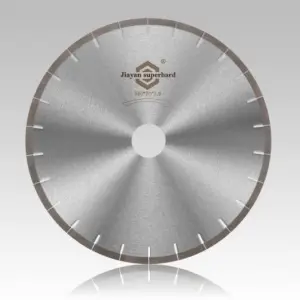
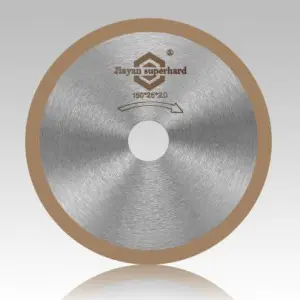
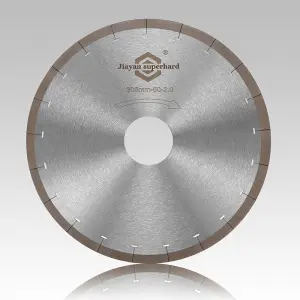
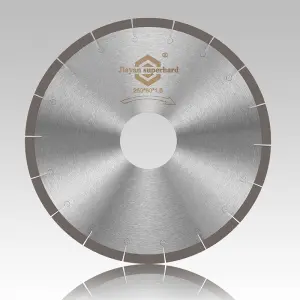
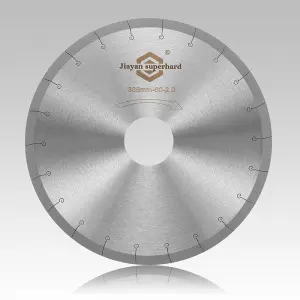
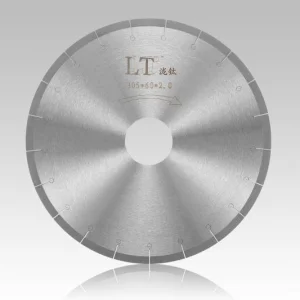
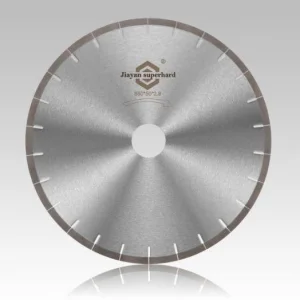
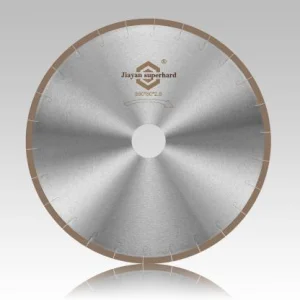
Medium-Density Fiberboard (MDF) has evolved into a cornerstone of global furniture manufacturing, architectural joinery, modular cabinetry, and laminate flooring. However, processing MDF at an industrial scale poses severe tribological and thermal challenges to rotary cutting tools. Unlike natural solid wood, MDF is a highly homogenous yet intensely abrasive composite engineered from wood fibers bound together with synthetic resin glues (primarily Urea-Formaldehyde or Melamine-Urea-Formaldehyde) under extreme heat and pressure.
When high-speed circular saw blades engage MDF at peripheral cutting speeds exceeding 80 meters per second, the micro-abrasive resin binders generate localized friction temperatures upwards of 600°C. Standard carbon tool steel and inferior grade carbide teeth rapidly experience severe micro-chipping, thermal oxidation, and edge dulling. For industrial furniture factories running automated panel sizing machines (such as Homag, Biesse, Selco, and SCM), tool wear directly translates to catastrophic edge tear-out on expensive laminated or veneer-faced panels, unscheduled machine downtime, and inflated total cost of operation (TCO).
Achieving a mirror-smooth, chip-free edge on double-sided melamine-faced MDF requires a precise balance between core steel tensioning, radial run-out precision (<0.015 mm), micro-grain polycrystalline diamond (PCD) or micro-grain sub-micron carbide grade Selection, and micro-geometry tooth grinding (Triple Chip Grind / TCG architecture).
Conventional wood-cutting saw blades rely on Alternate Top Bevel (ATB) tooth designs with aggressive positive rake angles optimized for ripping or cross-cutting fibrous natural grain. When subjected to dense MDF structures, these teeth suffer from rapid erosion of the carbide substrate. Furthermore, resin build-up (pitch accumulation) on the saw plate induces thermal stress, leading to blade distortion ("wobble") and premature blade failure. Professional OEM buyers must select circular saw blades purpose-engineered with anti-friction coatings, resin-filled sound dampening laser slots, and reinforced tooth shoulders.
The global market for industrial woodworking tools is undergoing a shift toward ultra-durable PCD (Polycrystalline Diamond) tooling, high-feed rate automation, and sustainable low-noise operational environments.
| Technical Property / Metric | Standard TCT Carbide Blade | Sub-Micron Micrograin Carbide | JIAYAN OEM PCD Diamond Blade |
|---|---|---|---|
| Tool Material Composition | K20-K30 Carbide Grade | Sub-micron Micrograin (0.5µm) | Polycrystalline Diamond (PCD) Sintered Matrix |
| Vickers Hardness (HV) | ~1,450 HV | ~1,850 HV | > 8,000 HV |
| Cutting Linear Longevity (MDF) | 800 – 1,500 linear meters | 3,000 – 6,000 linear meters | 50,000 – 120,000+ meters |
| Edge Integrity on Melamine | Moderate; prone to lower-lip chip | Good for medium production batches | Flawless Zero-Chipping Edge |
| Thermal Conductive Resistance | Medium thermal expansion risk | High friction tolerance | Ultra-fast heat dissipation |
| Re-sharpening Cycle Frequency | Every 1–2 shifts | Every 3–5 shifts | Up to 300 shifts continuous run |
As global timber processing hubs and OEM brand owners seek reliable, scalable, and cost-efficient tooling partners, China's advanced manufacturing ecosystem—exemplified by JIAYAN Superhard Tools—delivers unmatched competitive edges. Moving far beyond traditional low-cost assembly, China's modern superhard tool industry operates state-of-the-art Industry 4.0 automated production cells.
Utilizing high-end German VOLLMER EDM (Electrical Discharge Machining) and multi-axis CNC erosion machines to ensure sub-micron tooth profile consistency across thousands of OEM units.
Every blade core undergo individual dynamic balance testing and automated laser stress-relieving to prevent dish warping during high-speed, heavy-feed production cycles.
We source imported German 75Cr1 high-tensile alloy steel plates combined with ultra-pure Element Six PCD inserts and Ceratizit carbide tips for maximum shear resistance.
With an integrated industrial cluster in Wuhu, China, JIAYAN maintains complete control over raw material procurement, heat treatment, automated brazing, optical inspection, and custom packaging. This vertical integration buffers international buyers against global supply disruptions, enabling reliable 15-to-25-day lead times for custom OEM production runs while offering scalable Minimum Order Quantities (MOQs).
Optimizing a circular saw blade for MDF requires tailored micro-geometries suited to specific machine configurations (e.g., sliding table saws, vertical panel saws, double-end tenoners, and horizontal beam panel sizing centers).
For raw MDF and laminate cutting, the **Triple Chip Grind (TCG)** geometry is universally recognized as superior. The TCG design alternates between a flat "trapezoidal" lead tooth that cuts a groove narrower than the final kerf, and a lower flat "straight" tooth that cleans out the left and right shoulders. This balance distributes cutting forces evenly, reducing tooth chipping and extending tool life by up to 35% compared to ATB profiles.
Idling at 4,000 to 6,000 RPM, standard solid steel saw plates produce high-frequency aerodynamic whistling exceeding 95 dB(A). JIAYAN OEM saw blades feature engineered **laser-cut J-slots filled with vibration-absorbing polyurethane resin**. These slots disrupt harmonic resonance, dampening thermal vibration, improving cut straightness, and protecting plant operators' hearing health in compliance with EU/OSHA noise directives.
Industrial wood processing requirements vary considerably across geographic regional markets due to localized board density standards, ambient climate humidity, and regional machinery adoption.
Primary Application: High-end flat-pack modular cabinetry & acoustic ceiling panel manufacturing.
OEM Requirement: Strict EN 847-1 safety standards, zero edge-chipping on delicate 0.4mm melamine foils, integrated sound slots, and high-frequency scoring synchronization.
Primary Application: Heavy-duty architectural millwork, commercial display cases, and thick HDF door panel profiling.
OEM Requirement: Extended diameter blades (350mm – 450mm), 80-tooth to 100-tooth PCD configurations capable of continuous 3-shift operations under aggressive feed rates.
Primary Application: High-humidity moisture-resistant (MR) green core MDF & tropical timber composite cutting.
OEM Requirement: Anti-corrosive PTFE (Teflon) or Chrome-plated surface coatings to prevent pitch buildup and resin adhesion in high ambient temperature and humidity environments.
As an accredited member of the **China Superhard Material Association**, JIAYAN Superhard Tools offers end-to-end original equipment manufacturing (OEM) and customized development (ODM) for brand distributors, machine builders, and tool sharpening services worldwide.
Select from our benchmark industrial product inventory or request customized OEM manufacturing tailored to your factory machinery specs.
Expert answers to common engineering, ordering, and application inquiries from international furniture manufacturers, tool distributors, and plant operations managers.
Chipping on laminated MDF typically occurs when the blade’s tooth exit angle generates upward shearing force against brittle melamine resin skin. To achieve a chip-free finish on both sides, industrial panel sizing saws must combine a conical or split scoring saw blade (which scores the bottom 1-2mm layer) with a main saw blade featuring a Triple Chip Grind (TCG) profile and ultra-precise radial run-out (<0.015mm). JIAYAN’s PCD saw blades maintain razor-sharp micro-geometry significantly longer, eliminating micro-vibrations that cause edge tear-out.
While PCD circular saw blades carry a higher initial unit cost (typically 3.5x to 5x that of high-end carbide), PCD offers a 30x to 50x longer operational lifespan in abrasive materials like MDF. In automated 24/7 manufacturing plants, PCD reduces tool changeover downtime by up to 90%, slashes re-sharpening logistics costs, and maintains continuous edge perfection. Most high-volume factories achieve complete cost payback within 3 to 6 weeks of continuous operation.
As automated feed speeds increase (e.g., from 30 m/min up to 80+ m/min on heavy industrial panel saws), gullet capacity must expand to efficiently evacuate fine MDF dust and avoid heat friction. Higher feed rates require larger gullet spacing (typically 60 to 72 teeth on 300-350mm blades), along with slightly thicker kerfs (e.g., 4.4mm kerf on 3.2mm plate) to maintain beam stability under high lateral cutting forces.
JIAYAN provides complete private label OEM/ODM services. This includes custom laser etching of distributor logos, bespoke plate coatings (PTFE, Chrome, Teflon), customized arbor bore sizes (30mm, 50mm, 60mm, 80mm), precision drive pinhole patterns (e.g., 2/10/60, 2/9/46), customized tooth profiles, and retail-ready industrial packaging.
As an active member of the China Superhard Material Association, our manufacturing process adheres strictly to ISO 9001 quality management systems and European EN 847-1 safety standard requirements. All core materials undergo non-destructive ultrasonic crack testing and dynamic laser balancing prior to shipment.
Professional Manufacturer & Global Exporter of PCD & Diamond Saw Blades for Stone, Ceramic, Granite, and Industrial Fiberboard (MDF) Processing. Member of China Superhard Material Association.