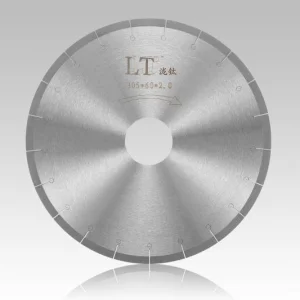
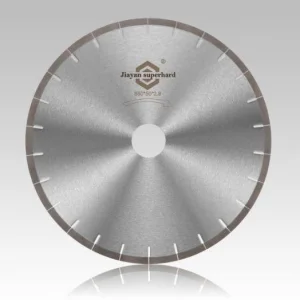
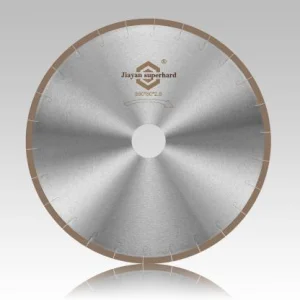
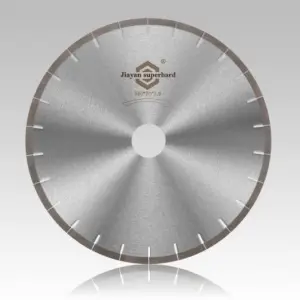
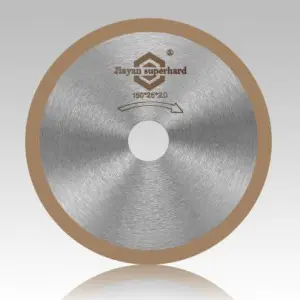
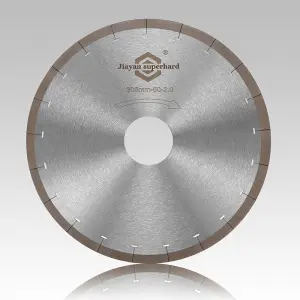
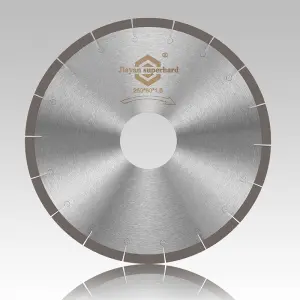
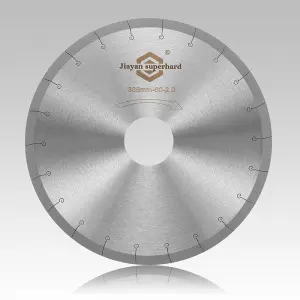
Explore our elite portfolio of precision diamond and carbide circular saw blades optimized for industrial plastics, stone, and composite materials.
Navigating the complexities of high-volume synthetic material processing across modern automated manufacturing ecosystems.
Unlike traditional wood or metal substrates, industrial engineering plastics such as Polycarbonate (PC), Polymethyl Methacrylate (PMMA/Acrylic), Polyethylene (PE), and Polyvinyl Chloride (PVC) possess low thermal conductivity and low melting points. Standard circular saw blades generate extreme frictional heat, leading to edge welding, burr formation, material smearing, and severe blade gumming. Premier global OEM exporters engineer specialized tooth geometries featuring micro-polished gullets and friction-reducing coatings (like PTFE or DLC) to ensure chip clearance before thermal buildup occurs.
Rigid, brittle thermoplastics like extruded acrylic and high-impact polystyrene are prone to micro-fracturing and internal stress crazing when subjected to violent mechanical impact. Achieving optical-grade, burn-free edge finishes demands ultra-sharp micro-grain tungsten carbide or polycrystalline diamond (PCD) tips with optimized negative hook angles (-5° to 0°). This neutralizes aggressive self-feeding, reduces impact shock during material entry, and ensures pristine structural integrity essential for medical device enclosures, optical displays, and architectural glazing.
Global B2B procurement managers require OEM blades capable of continuous, high-speed automated sizing operations on CNC panel saws and automated table setups. Dynamic blade stability, laser-cut anti-vibration slots, and expansion expansion joints filled with thermoplastic polyurethane resin are critical. These structural refinements suppress high-frequency harmonic resonance, minimize runout tolerance below 0.02mm, and significantly prolong tool lifespan across heavy multi-shift industrial production runs.
Deciphering the physics of cutting polymers through advanced blade teeth configurations and metallurgy.
The Triple Chip Grind (TCG) architecture is the undisputed benchmark for cutting dense, abrasive, and brittle synthetic polymers. In a TCG configuration, a trapezoidal flat-top leader tooth cuts a central groove into the plastic, followed by a slightly lower flat chamfered raker tooth that cleans the left and right margins of the cut. This double-action chip distribution balances cutting resistance, prevents side-wall chipping, and extends the operational life of carbide tips exponentially compared to basic alternate top bevel blades.
For ultra-thin sheet plastics, soft vinyls, and thin-walled PVC extrusions, a high alternate top bevel (Modified ATB with 15° to 22° bevel angle) is deployed. The acute shear angle cuts plastic fibers like a pair of precision scissors, yielding flawless, burr-free bottom cut surfaces. When combined with a zero or slightly negative hook angle, Modified ATB geometry minimizes grab tendencies on flexible sheeting and avoids material snagging on manual push feed table saws.
Hook angle dictates how aggressively saw blade teeth enter the work material. For rigid plastic processing, a hook angle ranging from -5° to +2° is crucial. Negative rake angles push the plastic slightly down against the machine table rather than lifting or snatching it, preventing violent material kickbacks. Concurrently, oversized, mirror-polished tooth gullets quickly evacuate plastic chips, stopping hot chips from re-welding to the kerf walls.
| Polymer Class | Material Examples | Optimal Tooth Grind | Hook Angle Range | Carbide / Tip Grade | Cooling & Feed Specs |
|---|---|---|---|---|---|
| Rigid Cast Acrylic | PMMA, Plexiglas, Lucite | TCG (Triple Chip Grind) | -5° to 0° Negative | C4 Micro-grain / PCD | Dry Air Blast / High Feed Rate |
| Extruded Thermoplastics | Polycarbonate, Lexan, PETG | TCG or Modified ATB | 0° to +5° Neutral | Sub-micron Tungsten | Moderate Speed / Sharp Pitch |
| Soft / Ductile Plastics | HDPE, UHMW-PE, Polypropylene | High ATB (Alternate Top) | +5° to +10° Positive | Polished C2 Carbide | Deep Gullet Evacuation |
| Rigid Foamed Synthetics | Expanded PVC, Sintra, Foamboard | ATB with Chamfer | +10° Positive Rake | Micro-grain Carbide | High Surface Speed (RPM) |
| Fiber Composite Plastics | FRP, GRP, Carbon-Filled Nylon | Flat Top / Diamond PCD | -5° Negative Rake | PCD (Polycrystalline) | Dust Extraction Required |
Underpinned by the credentials of JIAYAN Superhard Tools — Member of China Superhard Material Association.
Every saw blade steel core is precision-cut from German 75Cr1 high-yield structural steel using 6000W fiber laser systems. Laser technology eliminates the internal mechanical stresses inherent in traditional stamping methods. Expansion slots and sound-dampening channels are integrated into the core body to neutralize axial movement during continuous thermal expansion cycles.
Utilizing tri-foil silver-copper-silver brazing alloys, carbide and superhard diamond segments are bonded to the blade core at ultra-precise temperatures. This sandwich brazing process provides exceptional shear strength (exceeding 350 MPa), protecting operators from segment detachment during high-RPM industrial plastic cutting scenarios.
Tooth geometries are sculpted using multi-axis CNC grinders equipped with oil-cooled synthetic diamond wheels. Precision optical edge inspections ensure tooth angle tolerances within ±0.25 degrees and surface roughness below Ra 0.2 μm, resulting in mirror-like edge finishes on cut acrylics and polycarbonates without secondary flaming or polishing.
Rockwell C (HRC 43-46) verification ensures core rigidity and resistance to lateral deflection under load.
Computerized dynamic balancing to ISO 1940 standards guarantees zero high-speed wobble or vibration chatter.
Laser dial indicators gauge radial and axial runout across 100% of manufactured production units.
Batch testing on heavy acrylic block and PVC profiles to verify chip-free edge clarity and noise levels.
Delivering certified saw blade solutions compliant with international safety and performance standards across key industrial markets.
The European manufacturing market places extreme focus on noise reduction, operator safety, and strict DIN EN847-1 compliance. Exporters servicing regions such as Germany, Italy, and France must supply circular saw blades featuring micro-thin kerfs (to reduce material loss) and noise-dampening laser slots stuffed with sound-absorbing copper rivets or polyurethane resins. Applications center on high-speed signage production, architectural window frame fabrication (PVC profile cutting), and automotive interior composite trimming.
In North America, high-capacity panel sizing saws (Giben, Holz-Her, Schelling, Selco) dominate commercial plastics distribution facilities. High-volume buyers prioritize heavy-duty saw bodies with oversized carbide teeth that allow multiple re-sharpening cycles (up to 15-20 re-grinds). OEM exporters must offer bore sizes tailored to imperial standard arbors (5/8", 1", 1-3/4") alongside custom pin-hole patterns to fit leading industrial machinery platforms seamlessly.
The Asia-Pacific region, led by electronics and semiconductor packaging sectors, requires ultra-fine pitch circular saw blades designed for delicate plastic enclosures, micro-molded connectors, and printed circuit board (PCB) substrate separation. Exporters must maintain flexible OEM customization, competitive volume pricing structures, and quick-turnaround technical support to serve fast-evolving supply chains across Southeast Asia, China, and India.
End-to-end contract manufacturing engineered to match your exact brand and technical requirements.
We provide comprehensive private label branding services, including precision fiber laser etching of customer trademarks, part numbers, safety warnings, and QR codes directly onto blade bodies. Surface finishes can be customized with high-visibility powder coatings, electroplated nickel for anti-corrosion protection, or advanced Teflon/PTFE anti-friction layers tailored for sticky thermoplastic cutting environments.
Recognizing the diverse machinery fleets of global distributors, our engineering department produces blades matching any spindle diameter—from 15mm up to 100mm bores. We accurately machine custom drive pin-hole configurations (2/7/42, 2/9/46, 2/10/60, etc.) and keyways to ensure perfect mechanical locking, vibration-free power transmission, and zero slippage on automated sizing equipment.
As a verified global exporter, all shipments comply fully with international transport safety standards. Products are packaged in protective magnetic tooth guards, heavy-duty anti-corrosion VCI paper, and impact-resistant custom wooden cases or branded color retail boxes. Comprehensive documentation including Certificates of Origin (Form E, CO), RoHS, and ISO9001 quality certificates accompanies every export batch.
Expert technical insights answering key operational and procurement questions regarding plastic cutting circular saw blades.
Select from our premier lineup of OEM specialized circular saw blades and diamond tools for immediate global export.