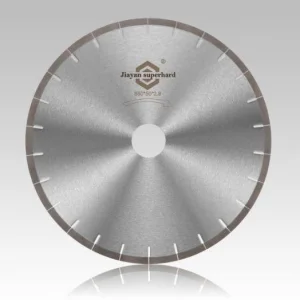
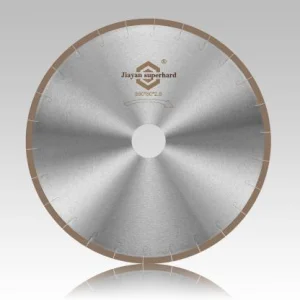
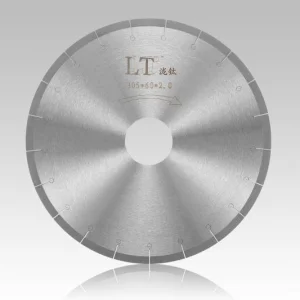
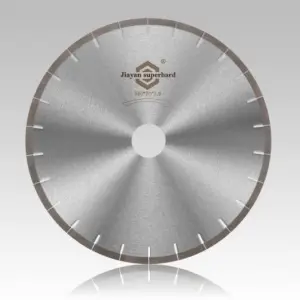
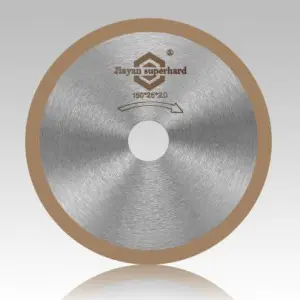
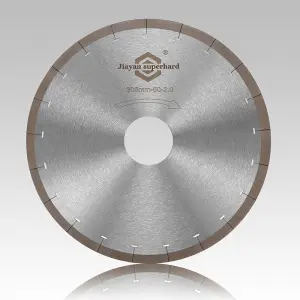
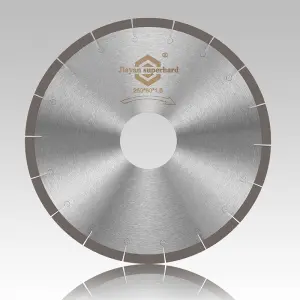
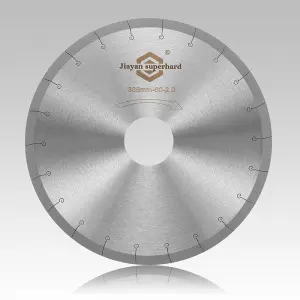
Select from our precision-engineered laser-welded and hot-pressed superhard diamond tools. Built to international EN13236 safety standards for global industrial distributors and OEM partners.
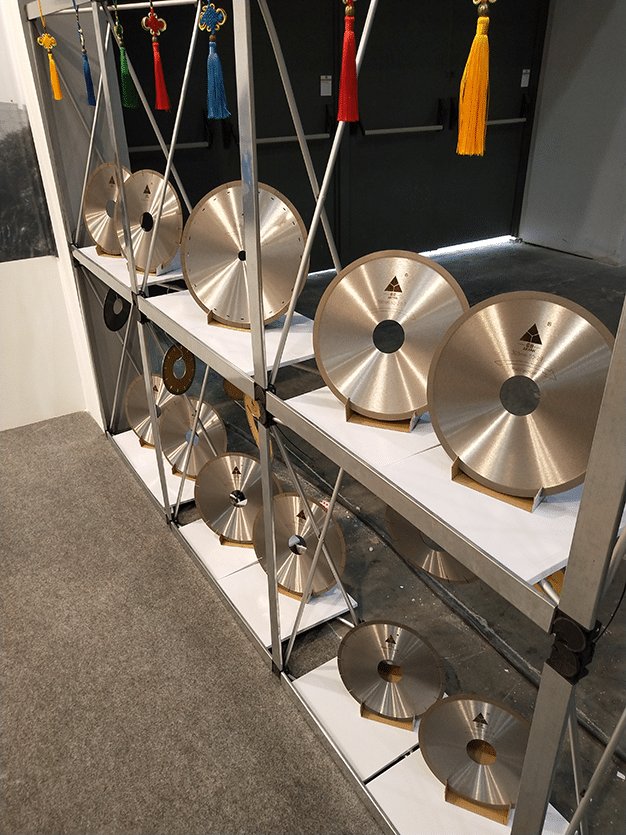
OEM Diamond saw blade cutting disc 350mm diamond circular saw blade for cut granite stone Company, Companies
Executive White Paper: Metallurgical Superiority & OEM Dynamics of Laser Welded Cutting Blades
An exhaustive technical study for global procurement executives, tool brand owners, and industrial plant managers regarding modern diamond blade sintering, micro-welding kinetics, and life-cycle cost reduction.
The global abrasive and cutting tool landscape has undergone a fundamental architectural shift. Industrial stone processing, civil infrastructure renovation, utility trenching, and commercial masonry no longer accept the structural vulnerabilities inherent in traditional silver-brazed diamond tooling. As modern machinery operates at higher peripheral velocities—often exceeding 80 m/s to 100 m/s—and demanding dry-cutting workflows become standard on job sites, the mechanical bond between the metal matrix segment and the steel core must withstand extreme thermal transients and intense shear stress forces.
Laser welding technology represents the pinnacle of metallurgical joining in diamond tool fabrication. Unlike high-frequency silver brazing, which relies on a low-melting-point filler alloy prone to catastrophic joint failure when friction temperatures breach 300°C to 450°C, automated high-density laser beam welding achieves direct atomic fusion between the transition layer of the diamond segment and the high-tensile steel core (typically 75Cr1 or 65Mn alloy steel). This white paper breaks down the critical physics, chemical formulations, structural dynamic calculations, and OEM manufacturing workflows executed at JIAYAN Superhard Materials to supply leading international markets.
100%
Dry Cutting Safety (EN13236)
>60 Nm
Min. Shear Torque Resistance
10+
Years Export Experience
50+
Global Markets Served
Deep Penetration Laser Metallurgical Fusion & Transition Layer Chemistry
Understanding the keyhole welding phenomenon, Heat-Affected Zone (HAZ) mitigation, and elemental diffusion during high-energy CO2/Fiber laser processing.
Keyhole Laser Fusion Mechanics
During the automated laser welding process, a focused laser beam with energy densities reaching 10^6 W/cm² strikes the interface between the segment’s non-diamond transition zone and the steel core perimeter. This energy instantly vaporizes a micro-column of metal, creating a "keyhole" surrounded by molten metal pool. As the beam moves, liquid steel and transition alloy mix smoothly, generating a deep-penetration weld bead with depth-to-width ratios exceeding 4:1.
Transition Zone Metallurgy
Synthetic diamond grit graphitizes and degrades rapidly at temperatures above 800°C in atmospheric conditions. To preserve diamond crystal integrity while permitting laser fusion, JIAYAN utilizes a specialized **diamond-free transition base layer** on each segment. Composed of ultra-fine Cobalt (Co), Nickel (Ni), Copper (Cu), and Iron (Fe) pre-alloyed powders, this layer accepts the laser beam's micro-melt without damaging active diamond grit situated in the working layer.
HAZ Optimization & Tempering
The high thermal gradient of laser welding can create localized martensitic hardening in the heat-affected zone (HAZ) of high-carbon steel cores, leading to potential micro-cracking under severe impact loads. JIAYAN's CNC laser lines feature real-time multi-stage optical pyrometers and post-weld localized induction tempering to stress-relieve the HAZ, ensuring optimal toughness, structural fatigue resistance, and absolute segment security.
Engineered Tool Matrices: Tailoring Diamond & Metal Powders to Workpiece Physics
Maximizing Information Gain: How JIAYAN engineers bond matrix self-sharpening rates to specific abrasive indices of modern building materials.
The efficiency of a diamond cutting blade relies on the precise equilibrium between diamond crystal wear and metal matrix erosion. If the matrix is too hard for an abrasive substrate, worn, dull diamonds remain trapped, causing blade glaze, overheating, core warping, and motor burnout. Conversely, if the bond matrix is too soft when cutting hard materials, the diamonds shed prematurely, resulting in excessive wear and high cost-per-cut ratios.
Sintered Stone & Porcelain Slabs
Substrate Profile: Extremely dense (Mohs 7–8), zero porosity, high internal stress profiles (e.g., Neolith, Dekton, Lapitec).
OEM Matrix Solution: Soft, cobalt-rich or fine bronze alloy bonds impregnated with premium Ti-coated synthetic diamond crystals (mesh sizes 50/60 to 70/80). Utilizes J-slot or continuous rim geometry to suppress vibration edge-chipping.
Reinforced Hard Concrete with Rebar
Substrate Profile: High compressive strength (50+ MPa), variable river gravel aggregates, steel rebar re-enforcement bars.
OEM Matrix Solution: Tough iron-tungsten carbide matrices with high impact resistance. Features keyhole slot cooling channels and slanted protection segments to prevent steel core undercut.
OEM Matrix Solution: Highly abrasion-resistant metal bond incorporating hard tungsten powders and high nickel content to resist severe matrix washing, pairing with deep drop-segments for core protection.
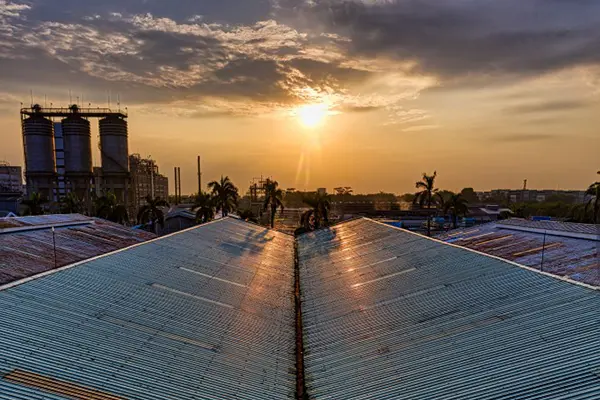
Founded in Wuhu, China, JIAYAN Superhard is a professional manufacturer of diamond saw blades, cutting discs, and superhard tools for stone, ceramic, and granite industries. As a member of the China Superhard Material Association, we combine advanced sintering technology with rigorous quality control to deliver tools that meet the demands of global procurement.
With over a decade of export experience, we serve buyers across Europe, the Middle East, Southeast Asia, and the Americas — offering OEM/ODM manufacturing, flexible MOQ, and reliable lead times.
Partnering with tier-1 international tool brands to engineer optimized blade geometries for professional floor saws, handheld cut-off saws, wall saws, and bridge saws.
Custom Segment Geometries
Turbo-Segment: High cutting speed with reduced friction channels.
T-Segment & Slanted Protection: Undercut prevention when cutting abrasive materials.
Keyhole & Wide Slots: Rapid chip evacuation and airflow cooling during dry cutting.
J-Slots & Narrow Gullets: Noise attenuation and smooth cutting on porcelain slabs.
Steel Core Engineering & Tensioning
Steel Alloy: 75Cr1 (1.2003) premium spring steel hardened to 42–46 HRC.
Precision Tensioning: Pre-stressed cores to maintain flatness at speeds up to 100 m/s.
Dynamic Balancing: Standardized run-out tolerance < 0.05 mm.
Private Label & Packaging Services
Laser Etching: High-resolution vector etching of custom logos, safety icons, and barcodes.
Color Powder Coating: Custom corporate pantone matching on steel cores.
Retail-Ready Packaging: Custom blister packs, double cardboard boxes, and color sleeves.
Full Regulatory Compliance: EN13236 safety markings and localized warning labels.
Recommended Field Operational RPM & Peripheral Velocity Chart
Blade Diameter (mm / inch)
Bore Diameter Standard
Recommended RPM (Granite/Concrete)
Max RPM (Safety Limit)
Peripheral Velocity (m/s)
115 mm / 4.5"
22.23 mm / 7/8"
10,000 – 12,000 RPM
13,300 RPM
60 – 80 m/s
230 mm / 9"
22.23 mm / 7/8"
5,500 – 6,600 RPM
6,650 RPM
65 – 80 m/s
350 mm / 14"
25.4 mm / 1" / 50mm
2,400 – 3,200 RPM
4,300 RPM
50 – 80 m/s
400 mm / 16"
25.4 mm / 50mm
2,000 – 2,800 RPM
3,800 RPM
50 – 75 m/s
600 mm / 24"
60 mm / 1" + Pin holes
1,200 – 1,600 RPM
2,500 RPM
40 – 65 m/s
Technology Roadmap 2025–2030: Next-Gen Advances in Laser Welded Diamond Tools
Pioneering innovations in synthetic diamond coating, green cobalt-free matrices, and smart manufacturing.
1. Nanoscale Ti/Cr Reactive Coating
By applying nano-thin Titanium or Chromium chemical vapor deposition (CVD) coatings onto synthetic diamond grit prior to sintering, JIAYAN prevents thermal graphitization during hot pressing. The coating forms a chemical carbide bond with the metal matrix, doubling crystal retention forces and extending blade service life by up to 35% under dry-cutting conditions.
2. Eco-Friendly Cobalt-Free Powder Metallurgy
In response to international REACH regulations and ethical supply chain standards, JIAYAN has engineered high-performance iron-copper-nickel (Fe-Cu-Ni) and pre-alloyed iron-matrix powders. These eco-friendly matrices match traditional cobalt-based bond performance in tensile strength and wear rate without environmental or regulatory liabilities.
3. Real-Time Laser Seam Tracking & AI Quality Control
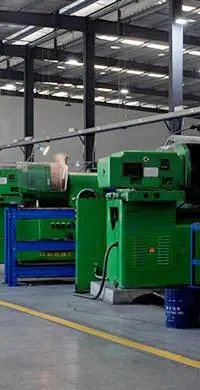
Our modern manufacturing lines incorporate multi-axis closed-loop laser vision sensors. The automated laser welding head tracks the segment-to-core seam in real-time with sub-micron precision, while AI optical recognition inspects weld geometry, eliminating human error and ensuring 100% weld joint integrity.
Industry News, Technical Blogs & Global Exhibition Updates
Stay informed with the latest developments in diamond tool technology, international trade fairs, and JIAYAN company milestones.
JIAYAN participated in the China International Exhibition for Ceramic Technology, Equipment & Product, held at Canton Fair Complex, Guangzhou, June 18–21, 2019, demonstrating ultra-thin porcelain cutting blades to international buyers.
After months of thorough preparation, JIAYAN successfully participated in TECNARGILLA Rimini 2018 (September 24–28), showcasing our latest continuous rim and laser-welded diamond cutting solutions to European ceramic processing leaders.
Frequently Asked Questions (FAQ) for Global B2B Buyers & Technical Engineers
Addressing real procurement concerns regarding laser weld strength, custom matrix formulations, thermal distortion, safety compliance, and OEM private label services.
What makes laser welded diamond saw blades superior to silver brazed blades for dry cutting?
Silver brazing relies on a filler solder alloy (melting point ~650°C–700°C). During dry cutting, localized friction temperatures can rapidly melt or weaken this solder layer, leading to sudden segment detachment and catastrophic safety hazards. Laser welding creates a direct atomic metallographic bond between the segment base and the steel core with tensile strengths exceeding 650–850 MPa, allowing safe continuous operation at elevated temperatures without water cooling.
How does JIAYAN test the welding strength of its laser welded saw blades?
We employ a multi-step quality assurance protocol compliant with European EN13236 standards. Every production lot undergoes automated hydraulic shear testing (destroying sample segments to verify weld torque > 60–80 Nm), 100% visual keyhole weld inspection, ultrasonic non-destructive testing for micro-voids, and dynamic balance dynamic run-out verification prior to packaging.
Can JIAYAN formulate custom metal matrices for local aggregate conditions?
Yes. Aggregate hardness varies significantly across regions (e.g., hard quartz in Scandinavia vs. soft limestone in North Africa). Our metallurgical lab formulates custom powder blends (combining Cobalt, Iron, Nickel, Copper, Tungsten Carbide, and Titanium-coated synthetic diamonds) tailored specifically to your target market's substrate Mohs hardness and equipment power specifications.
What is the Minimum Order Quantity (MOQ) and lead time for OEM private label orders?
For standard blade sizes (115mm to 350mm), our typical OEM private labeling MOQ starts at 50 to 100 units per spec. Custom engineered blade sizes or specialized laser segment profiles generally require 200 units. Standard production lead time is 15 to 25 calendar days upon art artwork approval for customized packaging and laser etching.
How do I prevent blade segment loss and core tension failure during heavy concrete cutting?
Ensure the operator does not exceed recommended feed speeds or force the machine into deep cuts in a single pass (step-cutting is recommended for depths over 50mm). Verify that water flow is adequate if wet cutting, and select a blade with slanted protection segments to prevent core undercut caused by abrasive slurry wash.
Which arbor sizes and drive pin hole configurations are available?
We support all international arbor dimensions including 22.23mm (7/8"), 25.4mm (1"), 50mm, 60mm, and 60mm with standard drive pin hole configurations (e.g., 2-pin or 4-pin patterns for Husqvarna, Stihl, Norton Clipper, and Hilti equipment).
Complete OEM Product Catalog — Order & Specification Center
Review our complete superhard product line for stone, ceramic, granite, and masonry applications. All items available for private label OEM/ODM global shipping.
OEM Diamond saw blade cutting disc 350mm diamond circular saw blade for cut granite stone Company, Companies