Engineered with high-tensile alloy steel cores and advanced superhard tip geometries for maximum cutting uptime and minimal kerf loss.
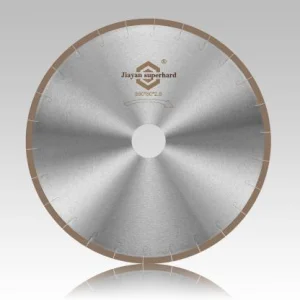

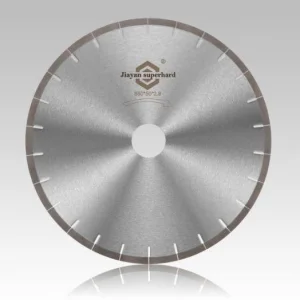
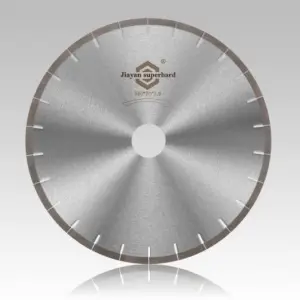
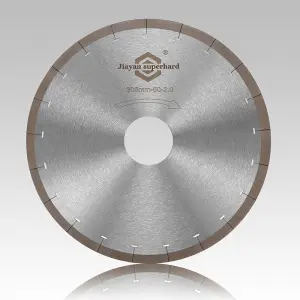
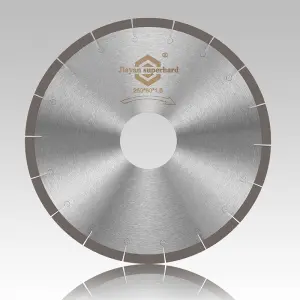
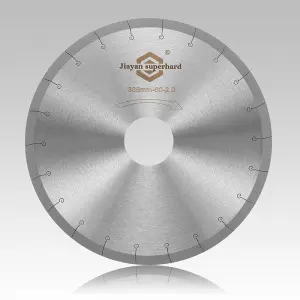
An authoritative analysis of primary breakdown sawmilling mechanics, volume yield economics, and timber processing scaling across global lumber markets.
In modern high-throughput forest products manufacturing, the 48-inch (1219 mm) circular sawmill blade represents a primary engineering backbone for heavy log breakdown, headrig processing, and industrial edging operations. Operating at the front end of timber processing facilities, 48-inch circular saw blades must withstand extreme torsional stress, intense thermal friction, and severe mechanical impact while processing large-diameter softwoods and ultra-dense hardwoods. As global lumber markets demand higher volumetric recovery rates and tighter dimensional tolerances, sawmill operators and machinery distributors require tooling suppliers that combine metallurgical mastery with advanced dynamic tensioning capabilities.
Key Operational Advantage: A precision-engineered 48-inch circular sawmill blade reduces standard kerf loss by up to 14% compared to legacy solid-tooth plates, yielding thousands of board-feet in additional usable timber per shift while cutting spindle strain and electrical power requirements.
Unlike band saws, which require frequent tensioning adjustments and are prone to blade deviation under fast carriage speeds, 48-inch circular saw blades offer exceptional structural rigidity. This structural integrity minimizes saw chatter, eliminates "snaking" in frozen or interlocked-grain logs, and maintains smooth surface finishes suitable for direct dimensioning. Across North America, Southeast Asia, South America, and Europe, commercial timber mills are increasingly upgrading their primary breakdown rigs with modern Tungsten Carbide Tipped (TCT) and Stellite-tipped 48-inch circular blades to maximize operational uptime and cut re-sharpening downtime.
Every 48-inch circular sawmill blade produced by JIAYAN is forged from high-grade alloy spring steel, subject to laser-guided thermal tensioning, and fitted with custom tooth geometries.
Heat-treated and tempered to 44–46 HRC, providing maximum fatigue resistance and flexural strength required to endure high-torque headrig cut cycles without plate deformation.
Micro-grain tungsten carbide (C3/C4 grade) or cobalt-based Stellite alloy tips silver-copper braze bonded to resist high-abrasion tropical woods and icy dense softwoods.
Precision laser-cut keyhole expansion slots with copper plugs absorb thermal expansion during continuous high-speed rotation, dampening acoustic vibration and chatter.
| Parameter / Feature | Standard Commercial Spec | Heavy-Duty Industrial Spec | Custom OEM Options |
|---|---|---|---|
| Outer Diameter (OD) | 48 Inch / 1219 mm | 48 Inch / 1219 mm | 40" – 80" (Custom Sizing Available) |
| Plate Body Thickness | 5.0 mm – 6.5 mm | 7.0 mm – 9.0 mm | Taper-ground or Parallel custom thickness |
| Kerf Width Range | 7.0 mm – 8.5 mm | 9.0 mm – 11.0 mm | Ultra-thin kerf variants engineered per mill |
| Tooth Count (Z) | 40T / 48T / 54T / 60T | 36T / 44T Heavy Rip / 72T Edger | Custom pitch & gullet volume capacity |
| Bore / Arbor Diameter | 75 mm / 90 mm / 100 mm | 120 mm / 150 mm / Custom Spline | Keyways, Drive Pin Holes, Counter-sunk holes |
| Operating Rim Speed | 9,000 – 12,000 SFPM | 12,000 – 16,000 SFPM | Tensioned for specific target RPM (600 - 1100 RPM) |
| Tipping Material | Ceratizit Micrograin Carbide | Deloro Stellite Alloys / PCD Inserts | Titanium Nitride / DLC Friction Coatings |
How JIAYAN Superhard Tools leverages advanced metallurgical industrial clusters, fully automated CNC production lines, and economies of scale to deliver unrivaled cost-performance advantages to global B2B buyers.
China has established itself as the world's primary manufacturing hub for industrial superhard tools and large-diameter saw blades. By combining complete raw material supply chains—from specialized high-alloy steel plate mills to advanced tungsten synthesis facilities—Chinese manufacturers deliver exceptional structural quality at highly competitive unit costs. As an active member of the China Superhard Material Association, JIAYAN Superhard Tools leads the industry in implementing automated CNC laser cutting, multi-axis robotic tipping, and computer-controlled tension testing.
Every carbide or Stellite tooth is induction-brazed using high-silver alloy solder on fully automated robotic arms, ensuring tooth shear strength ratings exceeding 350 MPa under heavy log impact.
Plate tension is calculated based on customer spindle speeds (RPM) and log density. Automated roll-tensioning equipment eliminates plate wobble and thermal dish deflection.
Every production batch undergoes ultrasonic flaw detection, dynamic balance verification, axial and radial runout inspection, and hardness uniformity checks before export packaging.
Through our streamlined export logistics from Wuhu and Shanghai ports, global timber buyers, industrial sawmills, and machinery OEMs gain direct factory pricing, flexible MOQs, customized branding (OEM/ODM), and guaranteed shipping schedules across North America, Europe, South America, and Africa.
Tailoring blade design to local wood density, mill carriage speeds, and ambient climate conditions guarantees optimal cutting productivity.
Target Species: Douglas Fir, Southern Yellow Pine, Western Red Cedar.
Operating Environment: High-speed automated carriage lines running at carriage feed speeds above 250 FPM.
Blade Solution: Thin-kerf 48-inch TCT blades equipped with high-capacity gullets for rapid sawdust clearance, anti-friction chrome plating, and low-hook tooth angles to prevent log grab during aggressive breakdown.
Target Species: Teak, Merbau, Rosewood, Iroko, Mahogany.
Operating Environment: Dense, silica-rich tropical hardwoods with interlocked grain structures causing severe abrasive tool wear.
Blade Solution: Heavy-plate 48-inch Stellite-tipped or ultra-micrograin C4 carbide blades featuring reinforced shoulders and wide clearance angles to resist lateral deflection and silica abrasion.
Target Species: Siberian Larch, Scots Pine, Frozen Spruce.
Operating Environment: Sub-zero winter logging conditions where timber fibers become extremely brittle and icy log cores cause high shock loading.
Blade Solution: High-nickel cold-fatigue alloy steel plates (80CrV2) with anti-icing gullet geometries, customized impact-grade tooth tips, and stress-relieved keyholes.
Pioneering smart manufacturing technologies, advanced PVD coatings, and eco-friendly thin-kerf solutions shaping the future of industrial timber conversion.
Physical Vapor Deposition (PVD) coating applies a nano-thin layer of Diamond-Like Carbon onto the saw blade body, reducing coefficient of friction by 60% and preventing pitch build-up from resinous woods.
Emerging primary sawmills are integrating micro-rfid sensors and thermal vibration monitoring nodes directly into blade gullets to measure live blade stress and predict maintenance cycles prior to tooth fracture.
Specialized laser-cut slots injected with viscoelastic synthetic resin dissipate acoustic resonance, lowering operational noise by up to 8 dB(A) and dramatically improving cut surface smoothness.
Strategic considerations for sawmill procurement directors, commercial importers, and industrial machinery distributors.
When procuring heavy industrial tooling such as 48-inch circular sawmill blades on a wholesale basis, calculating Total Cost of Ownership (TCO) requires evaluating far more than initial purchase price. Leading lumber producers calculate performance based on total log volume cut per sharpening cycle, plate re-tipping durability, and energy efficiency per board-foot.
| Procurement Metric | Standard Economy Blades | JIAYAN Industrial Grade Blades | Impact on Sawmill ROI |
|---|---|---|---|
| Plate Steel Source | Commercial Carbon Steel | High-Alloy German/Japanese 75Cr1 Steel | Prevents premature plate cracking and dish warping. |
| Sharpening Lifecycle | 3 – 5 Regrinds | 12 – 18 Regrinds per Tooth Set | Reduces tooling replacement frequency by up to 65%. |
| Cutting Efficiency | Standard Friction Drag | Precision Taper-Ground with Anti-Friction Finish | Lowers spindle motor amperage draw and electricity costs. |
| Export Packaging | Basic Wooden Crating | VCI Anti-Corrosion Wrap + Heavy Plywood Cases | Guarantees zero rust or transport damage during ocean transit. |
Expert technical guidance covering selection, maintenance, operational parameters, and OEM ordering for 48-inch circular sawmill blades.
The optimal operating speed for a 48-inch (1219 mm) circular sawmill blade typically ranges between 600 RPM and 900 RPM, depending on timber density and mill carriage design. This corresponds to a surface rim speed of approximately 9,000 to 14,000 Surface Feet Per Minute (SFPM). It is critical that the saw blade is tensioned at the factory specifically for your mill's target operational RPM to ensure stability under load.
Choose TCT (Tungsten Carbide Tipped) blades for softwoods, dry hardwoods, and general dimension lumber where ultra-high wear resistance is required. Choose Stellite-tipped blades when cutting dense, un-debarked tropical hardwoods or timber with high silica content, as Stellite provides exceptional resistance to chemical corrosion, pitch adhesion, and edge chipping under high heat.
Blade snaking occurs when a saw loses its tensioned dish shape during cutting. Common causes include improper operating RPM mismatch, overheating due to clogged gullets, dull teeth generating excess friction, incorrect collar alignment, or inadequate water/air cooling mist. JIAYAN's computer-controlled tensioning process ensures high resistance to lateral deflection under heavy feed rates.
Yes. As a comprehensive OEM/ODM manufacturer, JIAYAN produces 48-inch circular sawmill blades with fully customized center bore sizes (e.g., 75mm, 90mm, 100mm, 120mm), custom drive pin holes, countersunk bolt patterns, and specialized keyways tailored to any industrial saw machinery brand (such as Corley, Cleereman, Salem, McDonough, or customized Chinese machinery lines).
Thin-kerf blade design reduces the width of the cut path (kerf) taken by the saw teeth. By reducing kerf thickness from a traditional 9.5mm down to 7.0mm on a 48-inch blade, sawmills can increase log fiber recovery rates by 8% to 14%. This translates directly into more saleable board feet of lumber per log and significantly less sawdust waste.
Every 48-inch blade is coated with micro-thin anti-rust oil, sealed inside a Volatile Corrosion Inhibitor (VCI) moisture barrier bag, fitted with high-impact plastic tooth protectors along the entire circumference, and bolted securely inside heavy-duty, export-certified plywood crates designed for fork-lift handling.
For primary log breakdown on headrig saws, lower tooth counts (such as 36T to 48T) with deep, wide gullets are recommended. This geometry provides sufficient gullet volume to carry away large amounts of coarse sawdust created during fast carriage passes without jamming or overheating the steel plate. Higher tooth counts (60T to 72T) are preferred for secondary resawing and edging operations.
Our standard MOQ for wholesale 48-inch circular sawmill blades starts at 5 to 10 units depending on customization requirements. Standard production lead times are typically 15 to 25 business days from order confirmation. Expedited prototype or emergency replacement shipments can also be arranged via air freight or express sea routes.
Explore our full line of industrial cutting blades, stone segment saws, and custom OEM diamond tooling.