Explore high-performance circular saw blades, diamond tooling, and custom industrial cutting solutions engineered for extreme longevity and precision across MDF, composites, and hard substrates.
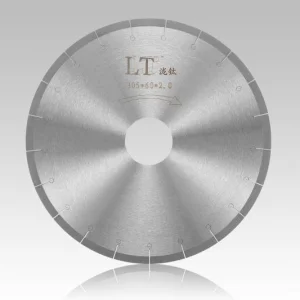
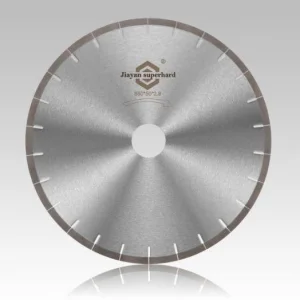
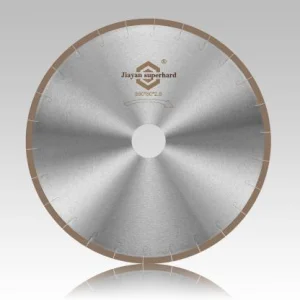
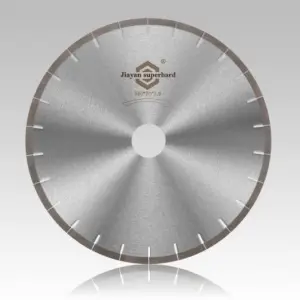
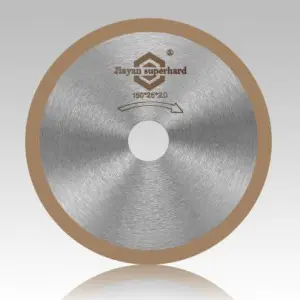
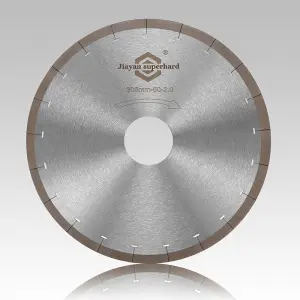
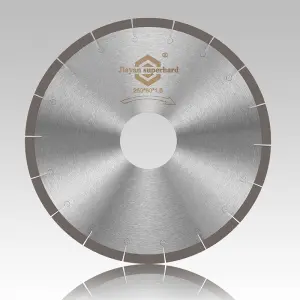
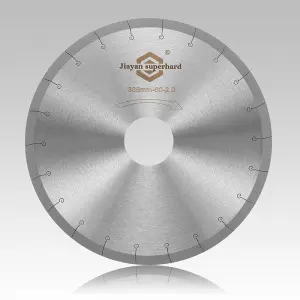
Medium-Density Fiberboard (MDF) and High-Density Fiberboard (HDF) have emerged as foundational materials in global furniture manufacturing, interior architectural millwork, cabinet production, and laminate flooring industries. Derived from wood fibers combined with synthetic resin binders under intense heat and pressure, MDF presents a highly uniform structure. However, its homogeneous nature is deceptive; the aggressive, highly abrasive thermosetting resins (such as urea-formaldehyde, melamine-urea-formaldehyde, or methylene diphenyl diisocyanate) alongside embedded silica particulates pose severe tribological challenges to standard cutting tools.
In modern high-speed industrial automated woodworking facilities, panel sizing saws, beam saws, and industrial circular saws operate at peripheral velocities exceeding 60 to 90 meters per second. Traditional high-speed steel (HSS) and low-grade carbide blades suffer from rapid micro-chipping, micro-abrasion, and extreme thermal degradation when machining MDF at scale. Consequently, the global B2B manufacturing market is undergoing a rapid transition toward advanced micro-grain Tungsten Carbide-Tipped (TCT) and Polycrystalline Diamond (PCD) circular saw blades manufactured by specialized global enterprises.
Unlike natural timber, which exhibits clear grain orientation and anisotropic shear strength, MDF is an isotropic medium requiring high shear energy during blade entry. Because resin binder acts as an abrasive matrix, conventional tooth geometries generate high frictional heat, causing matrix softening, micro-fracturing of blade tooth edges, and catastrophic edge wear. Achieving clean edge quality without melamine or veneer tear-out requires precise tooth geometry, controlled chip load per tooth (Fz), and optimal blade tensioning.
The global demand for wholesale circular saw blades specialized for MDF and composite materials is projected to expand significantly, driven by the growth of flat-pack furniture retail, modular cabinet manufacturing, and prefabricated construction panels. European and North American processing plants increasingly rely on high-volume automated scoring and main-blade configurations. To maintain margin competitiveness, global procurement directors are increasingly looking to verified OEM/ODM factories in China equipped with multi-axis CNC laser-cutting, automatic brazing, and sub-micron grinding infrastructure.
Optimizing circular saw blades for cutting raw, laminated, or veneered MDF requires balancing multiple mechanical and metallurgical parameters. Choosing the correct saw blade isn't merely about diameter and arbor size; it involves deep engineering calculations regarding tooth profile, clearance angles, expansion slot design, and metallurgy.
Triple Chip Grind (TCG) featuring alternating flat raker and trapezoidal teeth is the industry standard for raw MDF. For double-sided laminated MDF, Alternate Top Bevel (ATB) or specialized High-Low profiles prevent top-layer blowouts.
Positive rake angles (+5° to +15°) reduce cutting resistance for high feed speed panel saws, whereas neutral or negative rake angles (0° to -5°) are utilized in sliding table saws to eliminate veneer tear-out.
Thermal expansion during continuous operation causes blade deformation (dishing). Laser-cut expansion slots filled with sound-absorbing polyurethane resins dissipate harmonics and maintain blade tension.
To eliminate burning and prevent premature dulling of the cutting tips, industrial operators must calibrate the feed speed (Vf) in accordance with the blade rotational speed (n), tooth count (Z), and intended chip load per tooth (Fz). The primary governing equation is:
Where an optimal chip load (Fz) for MDF falls between 0.05 mm and 0.12 mm per tooth. Running a blade at excessively low chip loads causes the teeth to rub rather than cut, creating extreme thermal friction that breaks down the binder resin and dulls the carbide matrix prematurely.
| Tooling Material Grade | Micro-Hardness (HV) | Wear Resistance Index | Average Cutting Life (MDF Meters) | Cost-to-Performance Ratio |
|---|---|---|---|---|
| Standard Fine-Grain Carbide (K10) | 1,550 HV | Baseline (1.0x) | 1,500 – 3,000 m | Standard Entry Level |
| Ultra-Fine Micro-Grain Carbide (C4 / K01) | 1,850 HV | High (3.5x) | 5,000 – 12,000 m | Optimal for Standard Production |
| Polycrystalline Diamond (PCD) Tip | 5,000 - 8,000 HV | Extreme (50x - 100x) | 150,000 – 300,000 m | Maximum ROI for Automated Lines |
| Coated Carbide (TiAlN / DLC) | 2,400 HV | Enhanced (5.0x) | 10,000 – 20,000 m | High Efficiency Specialized |
When global enterprises procure wholesale circular saw blades for MDF cutting, China stands out as the ultimate global manufacturing hub. Modern Chinese saw blade manufacturers—such as JIAYAN Superhard Tools—have moved far beyond simple low-cost assembly to establish high-precision, state-of-the-art superhard tool ecosystems.
Direct proximity to world-class tungsten carbide, synthetic diamond grain, and high-tensile spring steel (75Cr1 / 65Mn) suppliers allows Chinese factories to control raw material costs and ensure alloy consistency.
Leading factories utilize German Vollmer CNC grinding machinery, Robotic Silver-Copper-Silver induction brazing, and automated optical measurement systems to keep radial and axial tolerances under 0.015mm.
Whether you require customized gullet designs, proprietary laser vibration slots, anti-friction Teflon coatings, or private-label B2B packaging, Chinese factories deliver custom production within short turnaround windows.
By leveraging advanced automated manufacturing processes, Chinese factories achieve economies of scale that provide international distributors, tooling brands, and large-scale furniture factories with a 30% to 50% cost advantage without compromising dynamic balance or blade lifespan.
Circular saw blades specialized for MDF cutting are deployed across diverse industrial environments globally, each requiring tailored operational configurations:
When enterprise procurement officers audit circular saw factories for bulk wholesale orders, evaluating the blade's technical specification sheet is critical. The following parameters should form the foundation of any OEM quality agreement:
The steel core (usually 75Cr1) must undergo precision roll-tensioning and thermal stress-relief to guarantee concentricity and structural stability under high centrifugal forces.
Induction brazing utilizing Silver-Copper-Silver (Ag-Cu-Ag) tri-foil solder must meet a minimum shear strength of >320 MPa to prevent tooth detachment during heavy impact cutting.
Blades must be dynamically balanced in accordance with ISO 1940 standards (G2.5 quality grade) to eliminate spindle vibration, bearing wear, and chatter marks on the cut substrate.
The cutting tool industry continues to evolve rapidly alongside advancements in digital manufacturing, material science, and automation. Key trends reshaping the circular saw market include:
Applying TiAlN, AlCrN, or Diamond-Like Carbon (DLC) thin films onto carbide tips lowers friction coefficients, prevents resin pitch accumulation, and reduces operational cutting temperatures by up to 150°C.
With rising raw material and timber costs, reducing kerf width from 3.2mm down to 2.2mm or 1.8mm saves thousands of square meters of board waste annually across industrial processing facilities.
Next-generation diamond blades feature micro-laser channels that optimize dust extraction airflow and dissipate static charges built up during high-speed HDF machining.
Expert solutions to common challenges encountered during wholesale procurement and industrial cutting of MDF with circular saws.
MDF contains up to 10-15% synthetic thermosetting resin binders and trace silica contaminants. As the saw tooth shears the board, the abrasive matrix micro-abrades the cutting edge faster than soft cellulose wood fibers would, requiring carbide or PCD grade tooling.
Ensure you are using a dual-blade system (Main Saw Blade + Scoring Blade) on panel sizing machines. If using a single blade on a sliding table saw, select a high-tooth count ATB blade (e.g., 300mm 96T) with a negative or low positive rake angle and ensure zero arbor runout.
Polycrystalline Diamond (PCD) provides 50 to 100 times the operational lifespan of tungsten carbide. While initial procurement cost is higher, the massive reduction in downtime for blade sharpening and tool changes dramatically lowers total cost per meter cut.
Standard lead times for custom OEM circular saw blade batches range between 15 to 30 days. Express manufacturing for catalog items can be dispatched within 7 to 10 working days, backed by sea or air freight logistics.
Expansion slots allow the outer steel rim of the saw blade to expand radially as friction generates heat. Without properly engineered laser expansion slots, thermal stresses cause the blade to warp or "dish", resulting in uneven cuts and binding.
Continuous rim or segmented diamond blades designed for stone/ceramic utilize a matrix bond that releases diamond grit under heavy abrasion. For wood composites like MDF, specific tooth geometry PCD circular saw blades are required to clear wood fiber chips effectively.
Direct factory supply of high-precision circular saw blades, diamond cutting discs, and custom industrial cutting tooling for global buyers and brand owners.