Industrial Technical Whitepaper & Engineering Solutions

Wholesale High Precision Sandwich Panel Suppliers & Exporters

Next-Generation Composite Architecture, Structural Insulated Core Panels, & High-Precision Processing Tooling Systems for Global Cleanroom, Cold Chain, and Architectural Infrastructure

Superhard Tooling & Cutting Solutions

Precision Diamond Saw Blades for Advanced Panel Processing

High-speed, zero-delamination cutting discs specifically engineered for trimming high precision sandwich panels with metallic, ceramic, and composite facings.
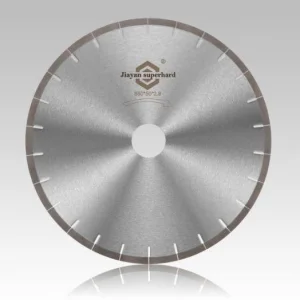
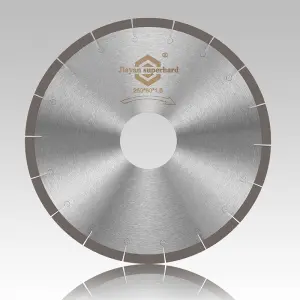
Custom Super Fast Cutting segment Rim J Slot Diamond Saw Blade

Custom Super Fast Cutting Segment Rim J-Slot Diamond Saw Blade

View Specifications
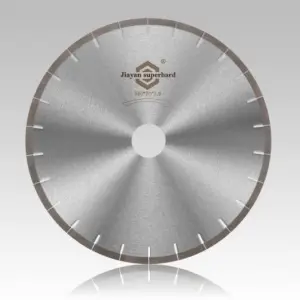
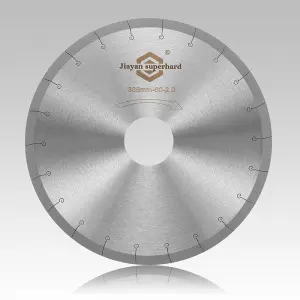
Best 14 Inch Diamond Saw Blades Specialized for Sintered Stone

Best 14 Inch Diamond Saw Blades Specialized for Sintered Stone

View Specifications
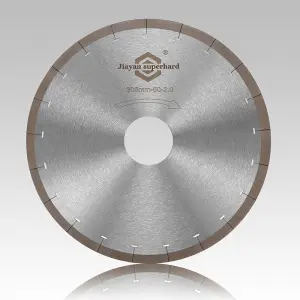
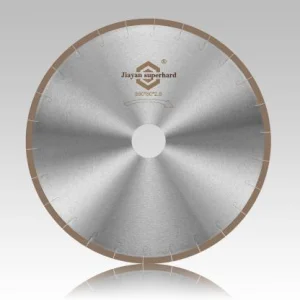
OEM Diamond Saw Blade Cutting Disc 350mm for Granite Stone

OEM Diamond Saw Blade Cutting Disc 350mm Circular Saw

View Specifications
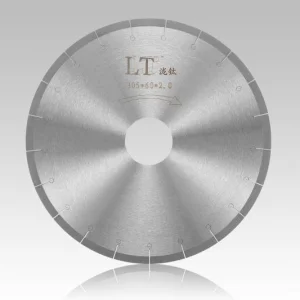
350mm Diamond Circular Saw Blade for Granite Stone

350mm Diamond Circular Saw Blade for Granite & High-Density Core

View Specifications
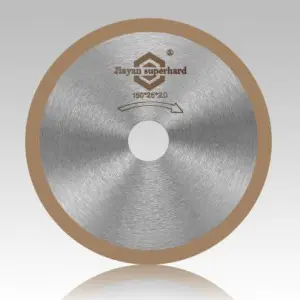
Diamond Cutting Disc Small Size Series

Diamond Cutting Disc — Small Size Precision Edge Series

View Specifications
14 Inch Hot-Pressed Continuous Diamond Blade

14" Hot-Pressed Continuous Rim Blade for Composite Facings

View Specifications
14 Inch Welding Segment Diamond Saw Blade

14" Laser-Welded Segmented Diamond Blade for Structural Skins

View Specifications
1.0mm Ultra-Thin Diamond Cutting Disc

1.0mm / 1.2mm Ultra-Thin Diamond Trimming Disc for Clean Cuts

View Specifications
$38.5B
Global Sandwich Panel Market Forecast by 2030
≤ 0.019 W/m·K
Ultra-Low PIR/PU Thermal Conductivity Rating
± 0.05 mm
High-Precision CNC Dimensional Tolerance
120 Min
EI120 Fire Resistance Insulation Standard

1. Global Market Paradigm & High Precision Sandwich Panel Engineering

The global construction and industrial infrastructure sectors are undergoing a massive transition toward high-efficiency, structural composite building envelopes. High precision sandwich panels—engineered composites featuring structural metal, stone, or sintered ceramic skins bonded around optimized thermal core insulation—have become the foundational cornerstone of sustainable architecture, industrial cold chain logistics, and high-tech cleanroom engineering.

Modern architectural requirements demand unprecedented structural integrity combined with minimal thermal bridging. When sourcing from certified wholesale high precision sandwich panel suppliers & exporters, industrial buyers evaluate not only basic thermal resistance (R-value) but also structural flexural rigidity, shear strain limits, micro-section core homogeneity, and dimensional micro-tolerances. High precision panels eliminate structural bowing, thermal expansion shear failure, and joint air infiltration through advanced tongue-and-groove joint profiles produced under strict ISO 9001 and CE EN 14509 quality standards.

Information Gain Insights: Micro-Layering Synergy in Modern Composites

Traditional sandwich panels relied heavily on simple expanded polystyrene (EPS) cores with low bond integrity. Next-generation high precision panels utilize continuous polyisocyanurate (PIR), high-density mineral wool (100–140 kg/m³), and aluminum honeycomb matrices, demanding diamond-cut edge precision during secondary machining to avoid core delamination.

1.1 Microscopic Physics of Thermal & Mechanical Performance

The structural efficacy of a precision sandwich panel operates on the Euler-Bernoulli beam theory applied to composite laminates. The outer facings absorb tension and compression forces generated by wind loads and thermal gradients, while the inner insulating core resists shear stresses and maintains precise separation between the structural skins:

  • Thermal Performance ($k$-Factor): Advanced Polyisocyanurate (PIR) cores achieve thermal conductivity values as low as 0.018 to 0.022 W/m·K, vastly outperforming legacy insulating materials and reducing long-term HVAC energy consumption in industrial cold stores.
  • Structural Flexural Rigidity ($D$): Calculated via the formula $D = \frac{E_f \cdot t_f \cdot d^2}{2(1 - \nu_f^2)}$, where $E_f$ represents facing elastic modulus, $t_f$ skin thickness, and $d$ distance between facing centroids. High precision manufacturing ensures zero variation in skin-to-core adhesive thickness ($d$), preventing structural deflection.
  • Acoustic Transmission Class (STC): Structural panels integrated with high-density rockwool cores deliver sound reduction indices up to $Rw = 35 - 42\text{ dB}$, ideal for heavy industrial acoustic enclosures and power station acoustic barriers.

2. Comprehensive Technical Specifications & Material Benchmarks

To assist global procurement directors and structural engineers in evaluating supply chain options, the following comparative engineering matrix outlines the technical thresholds across premier sandwich panel variants and their optimal precision machining requirements.

Panel Core Material Core Density (kg/m³) Thermal Conductivity (W/m·K) Fire Reaction Class (EN 13501-1) Compressive Strength (kPa) Recommended Saw Blade Machining Solution
Continuous PIR (Polyisocyanurate) 40 – 45 kg/m³ 0.019 – 0.022 W/m·K B-s1, d0 (Flame Retardant) ≥ 150 kPa JIAYAN 1.0mm Ultra-Thin Diamond Cutting Disc
High-Density Mineral Wool 100 – 140 kg/m³ 0.038 – 0.044 W/m·K A1 Non-Combustible ≥ 100 kPa JIAYAN Laser-Welded Segmented Diamond Blade
Aluminum Honeycomb Matrix 50 – 80 kg/m³ N/A (Structural Core) A2-s1, d0 ≥ 1500 kPa JIAYAN Continuous Rim J-Slot Diamond Blade
Polyurethane (PUR) Foam 38 – 42 kg/m³ 0.022 – 0.024 W/m·K B2 / B3 Class ≥ 120 kPa JIAYAN Small Size Precision Cutting Disc
Sintered Stone Composite Core 2200 – 2400 kg/m³ (Facing) 0.025 W/m·K (System) A1 Structural Facade ≥ 3000 kPa JIAYAN 14" Specialized Sintered Stone Blade

2.1 Critical Quality Indicators for Global Procurement

When selecting wholesale high precision sandwich panel suppliers, international buyers must enforce verification protocols across four crucial manufacturing metrics:

  1. Skin-to-Core Tensile Bond Strength: Must exceed 0.18 MPa under EN 1607 testing standards to prevent face separation under extreme thermal cycling (-30°C to +70°C).
  2. Joint Air Permeability Rate: High precision male-female joint milling must achieve air tightness of $< 0.10\text{ m}^3/(\text{h}\cdot\text{m}^2)$ at 50 Pa pressure differential.
  3. Dimensional Tolerance Stability: Panel length tolerance must not exceed $\pm 2.0\text{ mm}$, thickness $\pm 1.0\text{ mm}$, and squareness $\pm 1.0\text{ mm}/m$.
  4. Facing Corrosion Resistance: Steel facings require Z275 galvanization or AZ150 Aluzinc substrate coated with 25µm PVDF (Polyvinylidene Fluoride) or HDP (High-Durable Polyester) coatings.
Future Innovation & Engineering

Global Industry Trends & Technology Roadmap (2024–2030)

Exploring the shift toward zero-carbon manufacturing, smart factory automation, ultra-thin sintered stone skins, and advanced micro-precision cutting systems.

Zero-Carbon Blowing Agents

Transition from HFCs to ultra-low GWP (Global Warming Potential) blowing agents such as Solstice N13 (hydrofluoroolefin - HFO) and Pentane-isopentane blends, reducing the embedded carbon footprint of PIR cores by up to 35%.

Continuous Double-Belt Automation

Deployment of 40-meter-long continuous double-belt caterpillar laminators with automated chemical dosing and inline continuous laser thickness measuring sensors to maintain dimensional tolerances within ±0.05mm.

Sintered Stone Architectural Skins

Integrating 3mm ultra-thin sintered stone and porcelain ceramic slabs onto PIR or honeycomb sandwich backings for architectural rainscreen facades, requiring specialized JIAYAN superhard diamond blades for field trimming.

3.1 Technology Roadmap: 2024 to 2030 Evolution

  • Phase 1 (2024–2025): Smart Inline Quality Analytics: Integration of infrared thermography and ultrasonic core testing during continuous foaming to detect micro-voids prior to panel curing.
  • Phase 2 (2026–2027): Circular Bio-Foams & Mineral Cores: Adoption of bio-based polyols derived from agricultural waste and 100% recyclable stone wool matrices to achieve full LEED v4.1 certification compliance.
  • Phase 3 (2028–2030): Automated Robotic Field Machining: Widespread deployment of mobile CNC robotic cutters equipped with custom diamond saw blades capable of performing complex corner notch cuts on job sites without micro-fracturing panel skins.

4. Precision Machining & Cutting Tool Synergies (JIAYAN Superhard Expertise)

A persistent technical challenge faced by installers and fabricators of high precision sandwich panels is edge degradation during sizing and cutout operations. Standard abrasive or steel blades induce severe core melting in PIR/PUR, matrix tearing in rockwool, and chipping or catastrophic cracking on sintered stone or steel skin facings.

As a leading authority in superhard cutting tool design, JIAYAN Superhard manufactures specialized diamond saw blades specifically engineered to overcome multi-material interface resistance:

J-Slot & Expansion Geometry

J-Slot rim configurations absorb severe thermal expansion during rapid continuous cutting of sandwich panels with metal facings, eliminating blade warping and ensuring perfectly perpendicular cuts.

Hot-Pressed Matrix Bond

Formulated with premium synthetic diamond grit bonded inside cobalt-nickel alloy matrix powder, allowing effortless cutting through heterogeneous material layers without segment loss.

Zero-Chipping Sintered Stone Trimming

The 14-inch specialized sintered stone blade utilizes ultra-fine diamond concentration for clean, burr-free cuts on high-end architectural composite panels with stone skin overlays.

4.1 Recommended Cutting Parameters for Sandwich Panel Fabricators

To maximize blade longevity and maintain edge squareness, field operations should adhere to calibrated mechanical parameters:

  • Peripheral Speed ($V_c$): 35 – 45 m/s for metallic skin PIR panels; 25 – 35 m/s for stone skin composite panels.
  • Feed Rate ($V_f$): Maintain 1.5 – 3.0 meters/minute depending on total panel thickness (50mm to 200mm).
  • Coolant Flow: Wet cutting is strongly recommended for ceramic/stone facings; dry cutting with integrated dust extraction is required for mineral wool panel processing to prevent core moisture absorption.
Industrial Scenarios & Solutions

Macro-Industry Solutions & Localized Application Scenarios

From semiconductor cleanrooms to sub-zero distribution hubs, discover how high precision sandwich panels fulfill critical engineering criteria globally.

Semiconductor & Pharmaceutical Cleanrooms

Requires ISO Class 1 to 5 cleanroom enclosures with flush joint profiles, anti-static micro-smooth coatings, and silicone-free gasket seals. Panels must withstand constant positive air pressure without joint flexure.

Deep-Freeze Logistics Hubs (-40°C)

Demands thick 150mm–200mm PIR panels featuring quad-tongue-and-groove thermal break geometry. Precision engineered panel edges eliminate micro-gaps, preventing severe ice frost formation and thermal envelope leakage.

High-Rise Architectural Rainscreens

Architectural facades combining structural mineral wool panels with exterior stone/ceramic skins. Provides EN 13501-1 Class A1 non-combustible fire barrier protection alongside superior aesthetic design versatility.

Technical Clarifications

Frequently Asked Questions (FAQ)

Detailed technical answers to common queries regarding wholesale high precision sandwich panel sourcing, export standards, and tooling compatibility.

Q1: What defines a "High Precision" sandwich panel compared to standard industrial panels?
High precision sandwich panels are manufactured on continuous automated double-belt lines operating under strict CNC control. Unlike batch-molded panels, precision panels guarantee dimensional tolerances within ±0.05mm, seamless joint interlocking, uniform core foam density, zero thermal bridging, and superior face-to-core tensile bond strength (>0.18 MPa).
Q2: Why are specialized diamond saw blades required for cutting sandwich panels?
Sandwich panels consist of composite layers with vastly different mechanical properties (e.g., tough steel/ceramic facing vs. delicate foam or fibrous mineral wool core). Standard steel blades cause skin burring, core tearing, and severe delamination. JIAYAN superhard diamond blades utilize engineered segment matrices to slice through metal/stone skins and insulating cores simultaneously without thermal distortion.
Q3: What core insulation material is best for fire-rated industrial buildings?
For maximum fire rating compliance (EN 13501-1 Class A1 non-combustible), high-density Rockwool / Mineral Wool (100–140 kg/m³) is the gold standard, offering up to 120 to 240 minutes of structural fire integrity (EI120/EI240). Polyisocyanurate (PIR) cores offer excellent fire resistance (B-s1, d0) while delivering superior thermal efficiency.
Q4: What export certifications should wholesale sandwich panel suppliers provide?
Leading exporters must supply full technical dossier documentation including ISO 9001:2015 Quality System Certification, CE Marking under EN 14509, FM Global (Factory Mutual 4880/4881) approvals for fire/wind loading, ASTM E84 flame spread testing, and Environmental Product Declarations (EPD) for green building compliance.
Q5: Can JIAYAN supply OEM/ODM custom diamond saw blades for specialized panel machinery?
Yes. JIAYAN Superhard specializes in OEM and ODM manufacturing of diamond saw blades customized by outer diameter (110mm to 350mm+), bore size, segment thickness, diamond grit density, and cooling slot geometry to perfectly integrate with global continuous panel cutting production lines and portable site equipment.
Complete Superhard Product Catalog

Explore JIAYAN Superhard Cutting Tool Solutions

Premium quality diamond discs designed for granite, stone, ceramic tiles, and complex composite sandwich structures.

Custom Super Fast Cutting segment Rim J Slot Diamond Saw Blade

Custom Super Fast Cutting Segment Rim J-Slot Diamond Saw Blade

View Specifications
Best 14 Inch Diamond Saw Blades Specialized for Sintered Stone

Best 14 Inch Diamond Saw Blades Specialized for Sintered Stone

View Specifications
OEM Diamond Saw Blade Cutting Disc 350mm for Granite Stone

OEM Diamond Saw Blade Cutting Disc 350mm Circular Saw

View Specifications
350mm Diamond Circular Saw Blade for Granite Stone

350mm Diamond Circular Saw Blade for Granite & High-Density Core

View Specifications
Diamond Cutting Disc Small Size Series

Diamond Cutting Disc — Small Size Precision Edge Series

View Specifications
14 Inch Hot-Pressed Continuous Diamond Blade

14" Hot-Pressed Continuous Rim Blade for Composite Facings

View Specifications
14 Inch Welding Segment Diamond Saw Blade

14" Laser-Welded Segmented Diamond Blade for Structural Skins

View Specifications
1.0mm Ultra-Thin Diamond Cutting Disc

1.0mm / 1.2mm Ultra-Thin Diamond Trimming Disc for Clean Cuts

View Specifications