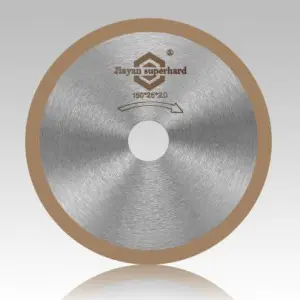
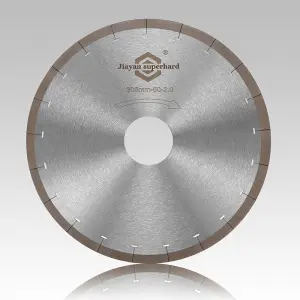
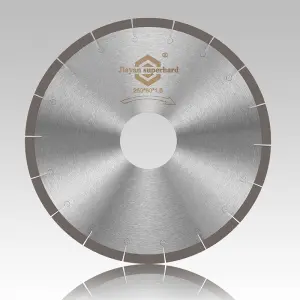
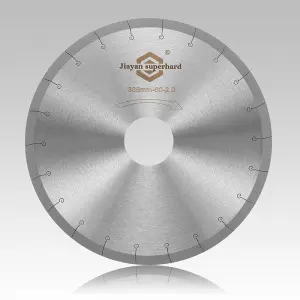
Architectural metallurgy, high-precision micro-grain tungsten carbide tip engineering, and macro global procurement solutions for heavy-duty timber, non-ferrous metal, and industrial composite cutting.
Explore our premium grade circular saw blades and superhard diamond cutting discs engineered for maximum kerf stability, extended tool wear life, and ultra-smooth operational finish.
An in-depth metallurgical and economic analysis of Tungsten Carbide Tipped (TCT) tooling in modern automated manufacturing environments.
The global demand for high-precision TCT circular saw blades is accelerating rapidly, driven by the expansion of automated furniture production lines, high-speed aluminum extrusion processing, and modern architectural cladding fabrication. Industrial procurement buyers are transitioning away from traditional High-Speed Steel (HSS) tools toward specialized micro-grain Tungsten Carbide Tipped formulations capable of withstanding extreme thermal friction during continuous multi-shift operations.
Standard carbon steel tools experience rapid thermal degradation above 400°C. In contrast, engineered TCT tooling incorporates a Cobalt (Co) binder matrix fused with Sub-Micron Tungsten Carbide (WC) grains. This crystalline structure maintains micro-hardness exceeding 92.5 HRA even at cutting interface temperatures approaching 900°C. This drastic technical advancement reduces tooling replacement downtime by up to 65% in industrial beam sawing.
To assist procurement directors in evaluating total tooling lifecycle expenditure, our research department has compiled a comparative technical performance metric across key alloy compositions. When evaluating wholesale suppliers, analyzing transverse rupture strength (TRS) and tip shear resistance provides a definitive competitive edge in cost-per-cut ratios.
| Tooling Material Grade | Hardness Range (HRA / HRC) | Max Operational Temp | Transverse Rupture Strength | Relative Tool Life Index | Primary Industrial Sector |
|---|---|---|---|---|---|
| Standard HSS (M2 Steel) | 63-65 HRC | 500 °C | 2200 N/mm² | 1.0x (Baseline) | Manual Woodworking / Light Softwood |
| Micro-Grain TCT (K10-K20) | 91.5-93.0 HRA | 850 °C | 2800 N/mm² | 4.5x - 6.0x | Hardwood Ripping, MDF, Melamine Panels |
| Sub-Micron Ultra-Hard TCT | 93.5-94.5 HRA | 950 °C | 3200 N/mm² | 8.0x - 10.0x | Non-Ferrous Metals, Aluminum, Composites |
| PCD (Polycrystalline Diamond) | 98-100 HRA equivalent | 700 °C (Thermal Limit) | 1500 N/mm² (Brittle) | 30x - 50x | Abrasive Fiber-Cement, Compact Laminates |
Strategic purchasing guidelines for global power tool brands, industrial distributors, and high-volume manufacturing facilities.
For high-volume timber processing mills and architectural aluminum fabricators, evaluating TCT circular saw blades purely on unit pricing generates hidden operational losses. Unstable saw bodies lead to kerf drift, material waste, edge chipping, and frequent line shutdowns. OEM-certified TCT blades featuring stress-relieved 75Cr1 German steel cores reduce kerf loss while delivering linear cut precision over millions of rotation cycles.
Industrial wholesale buyers require tailored tool specifications matching distinct regional machine arbors and material characteristics. Premier manufacturers offer full structural customization: customizable arbor bore dimensions (20mm to 80mm with pinhole configurations), micro-kerf body ratios (down to 1.0mm thickness for delicate ceramic or wood applications), sound-dampening slot geometry, and custom surface coatings such as PVD Titanium Nitride (TiN) or Teflon anti-friction layers.
Leading wholesale TCT circular saw blade companies enforce multi-tiered Quality Assurance (QA) protocols during production. Every production batch undergoes Automated Optical Inspection (AOI) for tooth geometry symmetry, dynamic balance spin testing up to 12,000 RPM, and non-destructive ultra-sonic testing of silver-copper-silver brazing joints to guarantee total operating safety in heavy commercial environments.
A comprehensive architectural breakdown of carbide tip composition, steel plate tensioning, shear angles, and acoustic resonance dampening.
The core plate acts as the structural spine of the TCT circular saw blade. Professional manufacturers utilize premium cold-rolled steel alloy sheets—primarily 75Cr1 (German Standard 1.2003) or SKS51 (Japanese Alloy Steel). Plates are laser-cut rather than stamped to prevent residual micro-stresses. Following heat treatment to a hardness of 43–46 HRC, plates undergo computerized roll-tensioning to ensure planarity under intense centrifugal forces.
Tungsten Carbide tips are produced through powder metallurgy combining pure WC particles with a Cobalt (Co) matrix. The grain size directly dictates performance:
Selecting the optimal tooth geometry prevents material binding and guarantees chip clearing:
High-speed friction causes thermal expansion in saw blade plates. Uncontrolled thermal expansion causes disc cupping and wobble. Advanced laser-cut expansion slots allow localized steel expansion without warping the core plate. Furthermore, filling these laser cuts with synthetic polyurethane resins or copper plugs dissipates acoustic resonance, reducing operational noise levels by up to 8 to 12 decibels (dBA) to comply with modern industrial workplace safety regulations.
Engineered blade configurations tailored for specific raw material cutting environments.
Designed for industrial CNC beam saws (Homag, Biesse, Selco) and panel sizing equipment. Incorporates positive hook angles (15° to 20°) with micro-grain carbide tips to execute chip-free cuts on double-sided melamine boards, MDF, and multi-layer plywood at high linear feed rates up to 80 m/min.
Engineered specifically for non-ferrous metal cutting, window frame assembly lines, and structural aluminum profiles. Features a Triple Chip Grind (TCG) profile with a slightly negative hook angle (-5° to 0°) to prevent machine self-feeding, minimizing tooth shearing while ensuring smooth burr-free cut faces.
Specialized heavy-duty blades built for cutting highly abrasive materials like fiber-cement board, calcium silicate panels, and gypsum. Utilizes ultra-hard carbide or diamond-tipped teeth with reinforced gullets designed to quickly evacuate abrasive dust particles and mitigate frictional heat buildup.
Ensuring full operational safety, compliance, and legal authorization for global export across North America, Europe, and Asia-Pacific markets.
All TCT circular saw blades intended for distribution in European Union jurisdictions must rigorously conform to the EN 847-1 safety standard. This standard specifies mandatory structural limitations, including maximum RPM ($n_{max}$) markings, laser-etched dimensional parameters, chip thickness restriction geometry (anti-kickback design for hand-fed equipment), and minimum tooth shear strength testing.
High-volume TCT saw blade production requires relentless batch-to-batch consistency. Certified manufacturing plants enforce ISO 9001 quality management procedures at every phase: incoming raw steel spectrographic analysis, induction brazing temperature control (maintained at 680°C–720°C to preserve steel hardness), and 5-axis CNC grinding precision (Vollmer machines) to guarantee flank and top bevel tolerances within ±0.005mm.
To reduce workplace hazards associated with industrial machine noise and hand-arm vibration syndrome (HAVS), tier-1 TCT circular saw blade manufacturers integrate laser sound-dampening slots filled with vibration-absorbing copper or polymer rivets. This compliance lowers workplace decibel outputs beneath strict OSHA limit action values.
Combining advanced tungsten carbide technology and superhard diamond tool innovation for over a decade.
Founded in Wuhu, China, JIAYAN Superhard is an industry-leading manufacturer of diamond saw blades, TCT circular saw blades, cutting discs, and superhard tooling solutions. As an official member of the China Superhard Material Association, JIAYAN combines advanced vacuum sintering, laser welding, and automated grinding technologies to supply premium tools to over 50 countries worldwide.
With over 10 years of global export expertise, JIAYAN offers OEM/ODM manufacturing, low flexible MOQs, custom branding, and rapid delivery for global distributors and industrial end-users.
Comprehensive guide covering non-destructive testing, microstructure analysis, and shear strength evaluation for laser-welded and induction-brazed joints.
JIAYAN showcased its latest ultra-thin cutting discs and superhard circular tools at the Canton Fair Complex in Guangzhou.
Successfully introduced engineered ceramic and stone cutting blades to European industrial procurement buyers in Rimini, Italy.
Expert metallurgical and procurement answers designed for technical intent resolution and industrial decision-making.
Select from our complete range of certified TCT circular saw blades and superhard cutting discs available for OEM global shipment.