Engineered by leading Chinese superhard material manufacturers for global distributors, stone fabricators, and ceramic tile processing plants.
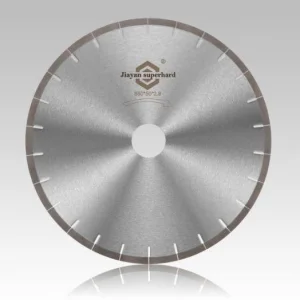
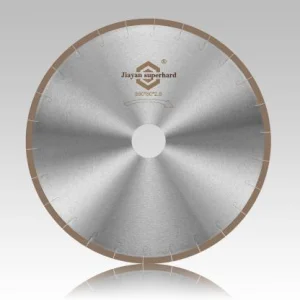
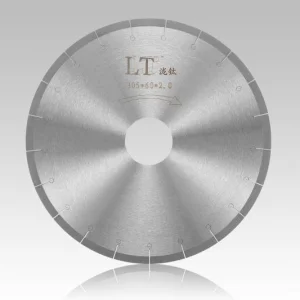
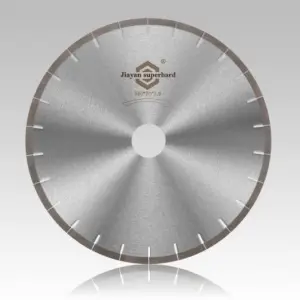
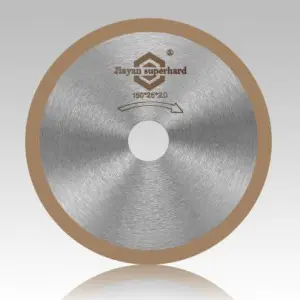
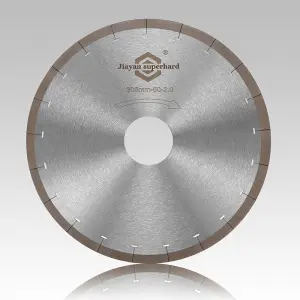
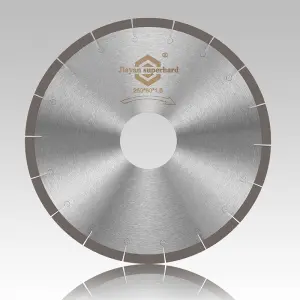
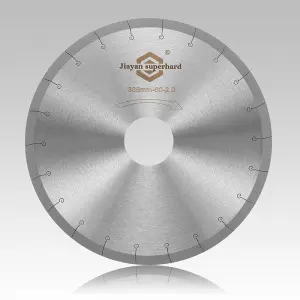
Understanding how modern metallurgical bond formulations, diamond grit synthesis, and core tensioning drive commercial profitability in stone fabrication and ceramic manufacturing.
In high-end porcelain slab processing and exotic granite fabrication, raw material yield is the primary determinant of profit margin. Traditional standard blades feature kerf widths ranging from 2.2mm to 3.5mm. When cutting expensive engineered quartz, porcelain tiles, or sintered stone (such as Dekton and Neolith), this wider kerf generates substantial dust and material slurry waste.
By transitioning to ultra-thin saw blades with 1.0mm to 1.4mm steel cores, manufacturers achieve up to a 45% reduction in kerf loss. This directly converts raw stone volume into sellable square footage while significantly lowering power consumption on bridge saws and handheld angle grinders.
The manufacturing process of industrial diamond blades relies on powder metallurgy. Leading OEM suppliers employ vacuum hot-pressing sintering technology, consolidating synthetic diamond grits (select high-purity single-crystal diamonds) within a tailored metallic matrix consisting of Cobalt (Co), Copper (Cu), Nickel (Ni), and Tungsten Carbide (WC).
This controlled sintering cycle prevents diamond thermal degradation (graphitization), ensuring uniform grit exposure and micro-fracturing characteristics. The result is continuous sharp cutting edges, zero chipping on delicate vitreous ceramic glazes, and exceptional structural lifespan.
Ultra-thin steel blades are susceptible to thermal expansion and lateral deflection (wobbling) when subjected to high RPM rotational forces and frictional heat. To eliminate runout and resonance noise, top manufacturers utilize high-tensile alloy steel cores (65Mn or 50CrV4).
Each core undergoes computerized laser tensioning and incorporates engineered stress-relief slots—such as J-slots, keyhole slots, and continuous laser-etched vents. These geometries dissipate heat instantly, equalize centrifugal stresses, and maintain a total indicated runout (TIR) within strictly controlled limits below 0.02mm.
Analyzing the macro-level shift toward automated fabrication, thin-slab ceramic architecture, and direct OEM supply chain integration.
China accounts for over 85% of the world’s synthetic diamond production and superhard tooling exports. Regions like Anhui, Henan, and Fujian have matured into ultra-specialized industrial clusters. OEM/ODM companies like JIAYAN Superhard Tools leverage centralized raw material supply chains, automated laser-welding robotics, and advanced cold-pressing infrastructure to deliver high-precision tooling at competitive wholesale pricing.
Global procurement directors increasingly rely on direct OEM manufacturer partnerships rather than local intermediaries to secure custom dynamic core specifications, private-label branding, and predictable bulk supply schedules.
Modern stone processing facilities have rapidly shifted from manual wet saws to 5-axis CNC bridge saws, automated waterjet combination systems, and high-RPM inline edge polishing machinery. These high-speed automated platforms demand diamond tooling with perfect balance and consistent matrix wear rates.
Ultra-thin continuous rim and J-slot saw blades engineered for CNC processing deliver clean edge quality, avoiding micro-fractures along cut margins. This enables direct installation of mitered 45-degree waterfall edges on porcelain countertops without expensive manual post-grinding.
Direct engineering data comparison across popular industrial diamond saw blade configurations for B2B procurement decision-making.
| Blade Type & Diameter | Core Thickness | Segment Height | Bond Matrix Type | Target Substrate | Max RPM | Cooling Mode |
|---|---|---|---|---|---|---|
| 1.0mm Ultra-Thin Disc (115-125mm) | 1.0 mm | 8.0 mm - 10.0 mm | Cobalt-Ni Soft/Medium Bond | Ceramic Tile, Porcelain Slabs, Vitrified Tiles | 13,300 RPM | Dry / Wet |
| Custom J-Slot Rim Blade (180-230mm) | 1.2 mm - 1.4 mm | 10.0 mm | Bronze-Cobalt Matrix | Marble, Delicate Ceramic, Fine Granite | 8,500 RPM | Wet Preferred |
| 14" Sintered Stone Blade (350mm) | 2.0 mm - 2.2 mm | 10.0 mm - 12.0 mm | Superhard Cobalt Alloy Bond | Sintered Stone, Dekton, Hard Quartzite | 4,300 RPM | Wet Cutting Only |
| 350mm Laser Welded Granite Blade | 3.0 mm - 3.2 mm | 12.0 mm - 15.0 mm | Tungsten-Cobalt Matrix | Hard Class 5 Granite, Natural Basalt | 3,800 RPM | Wet Cutting |
| 14" Continuous Rim Hot-Pressed Blade | 1.8 mm - 2.0 mm | 10.0 mm | Nickel-Iron Alloy Matrix | Glazed Porcelain, Ceramic Countertops | 4,300 RPM | Wet / Dry |
Customized operational setups optimized for regional compliance, machinery standards, and job site environments.
In the United States and Canada, stone processing shops operate under stringent OSHA silica dust regulations. Water-fed automated bridge saws and wet angle grinders dominate the workspace. Sourcing 350mm ultra-thin specialized blades for engineered quartz allows fabricators to cut at higher linear speeds (1.5–2.5 meters/min) while remaining 100% compliant with wet dust suppression mandates.
European architectural trends favor large-format ultra-thin porcelain slabs (3mm to 6mm thickness). European contractors strictly enforce acoustic emissions standards. Ultra-thin continuous rim blades with sound-dampened sandwich cores (Steel-Copper-Steel) reduce high-frequency noise levels below 85 dB while ensuring zero edge chipping on high-gloss glazed surfaces.
Mega commercial building developments in UAE, Saudi Arabia, and Australia require robust cutting tools capable of processing hard natural granite cladding under extreme ambient temperatures. High-frequency laser-welded segment blades provide structural bond integrity that resists segment loss under severe dry-cutting field conditions.
Full-spectrum industrial support ensuring every batch meets international safety standards and precise buyer specifications.
All superhard cutting tools manufactured by certified OEM facilities undergo rigorous quality testing. Each batch is subjected to radial/axial dynamic balance inspection, segment shear strength testing (>90 MPa threshold), and destructive high-speed spin testing to 150% of maximum rated RPM to ensure total operator safety standard compliance (EN13236).
B2B buyers can fully customize saw blade features to target specific local market demands: customized arbor sizes (20mm, 22.23mm, 25.4mm, 50mm, 60mm), laser-engraved brand logos, customized segment colors, specialized bond hardness tailored to regional stone types, and retail-ready color box packaging with barcodes.
How emerging materials science and AI-driven laser sintering are revolutionizing next-generation superhard tools.
Integrate chemical vapor deposition (CVD) nanocrystalline diamond coatings onto ultra-thin core rims to dramatically decrease coefficient of friction during high-speed cutting. This innovation minimizes heat build-up and increases blade operational life by up to 60% when cutting abrasive sandstone and quartzite.
Utilize machine-learning algorithms to control vacuum furnace temperature-pressure curves in real time. This ensures 100% atomic density in cobalt-alloy matrices, preventing internal micro-voids and standardizing cutting performance across multi-ton production batches.
Future industrial blades will feature laser-patterned micro-sensors directly etched onto the core. These smart slots interact with automated CNC saw head readers to provide continuous feed velocity recommendations and thermal warning alerts before blade distortion can occur.
Expert answers to common engineering, procurement, and operational questions from global buyers and distributors.
An ultra-thin saw blade typically features a core thickness between 1.0mm and 1.4mm, compared to conventional blades which measure 2.2mm to 3.5mm. The smaller kerf significantly reduces cutting resistance, generates less material waste, creates minimal dust slurry, and demands less motor torque—enabling fast, chip-free cuts on hard materials like porcelain slabs and glass-ceramic tiles.
J-slots and expansion keyholes act as stress-relief geometries. During continuous cutting, heat causes the metal rim to expand. Slots provide physical expansion gaps, preventing thermal buckling and blade deformation. Additionally, J-slots enhance water circulation and debris removal in wet cutting applications, keeping the cutting zone cool.
Wet cutting blades rely on continuous water coolant to flush out slurry and prevent diamond heat breakdown; they offer maximum blade life and cleanest edges on heavy materials. Dry blades utilize heat-resistant laser welds and continuous rim hot-pressed sintering designed to handle momentary dry cuts on hand tools. However, using water coolant whenever possible always extends blade life regardless of blade type.
Edge chipping is caused by: (1) bond matrix being too hard for the substrate, preventing timely diamond exposure; (2) blade runout or flange misalignment exceeding 0.03mm; (3) excessive RPM or feed speed; or (4) insufficient water coolant flow. Selecting a soft-to-medium cobalt matrix with continuous micro-rim diamond distribution eliminates chipping.
Yes. OEM superhard tool manufacturers provide complete customization. Standard arbor sizes include 20mm, 22.23mm (7/8"), 25.4mm (1"), 50mm, and 60mm with custom pin holes. Private label laser marking, dynamic balancing, and custom packaging are routinely supported for wholesale distributors.
Standard product orders from factory stock ship within 7–10 days. Customized OEM/ODM production batches (such as custom segment bonds or private label laser etching) typically take 15 to 25 business days depending on volume and sintering capacity schedules.
The general rule of metallurgy is "opposites attract": hard materials like granite and quartzite (Mohs 6–8) require soft bond matrices (cobalt/bronze) so worn diamonds wear away to expose new sharp grit. Soft materials like marble or limestone require hard bonds to prevent premature blade erosion.
Quality assurance includes high-power laser beam penetration inspection, computerized shear testing (ensuring joint bond shear strength exceeds EN13236 standards), automated ultrasonic flaw detection on core welds, and spin testing under extreme overload conditions.
Continuous rim blades feature a smooth, unbroken circular edge ideal for chip-free precision cuts on brittle materials like tile, ceramic, and glass. Segmented blades feature gullets between segments to maximize air/water cooling and debris evacuation, designed for aggressive high-speed cutting on thick granite and concrete.
OEM manufacturers provide complete EXW, FOB, CIF, or DDP shipping terms. Products are packed in rust-proof anti-moisture vacuum sealed wraps inside heavy-duty multi-layer corrugated export cartons, palletized according to international ISPM 15 heat-treatment standards for seamless customs entry worldwide.
Partner with a premier Chinese superhard tool manufacturer. Request customized catalogs, dynamic testing samples, and OEM price lists today.