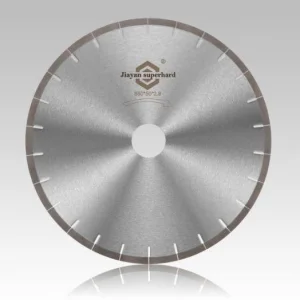
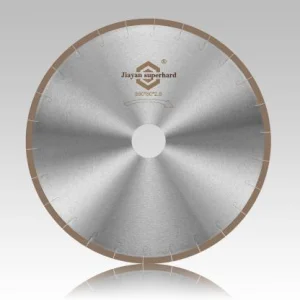
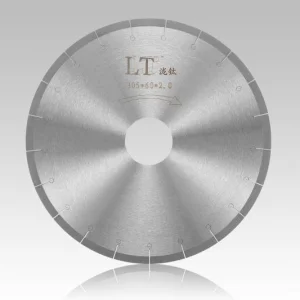
Engineered specifically for heavy granite, hard quartzite, engineered stone, and sintered porcelain slabs processed across Washington State production hubs.
Analyzing local fabrication demands, environmental mandates, material evolution, and regional supply chain dynamics driving superhard tool requirements.
The Greater Seattle Metropolitan Area—spanning Seattle, Bellevue, Redmond, and Tacoma—remains one of North America’s most dynamic commercial and tech real estate zones. With corporate expansions across tech campuses, high-rise residential towers in South Lake Union, and waterfront redevelopments, demand for architectural stone, dense granite cladding, and luxury quartz/sintered interior finishes has reached an all-time high.
Stone fabricators operating throughout King County require tooling capable of high linear cut speeds without edge blowouts. Blades used in Seattle bridge saws and CNC cutting centers must tolerate variable hardness ratings—from regional dense basalts to imported Brazilian quartzites—without requiring constant tool swaps.
Washington State operates under strict worker health and environmental compliance frameworks enforced by Washington Industrial Safety and Health Act (WISHA) and federal OSHA standards. In response to Respirable Crystalline Silica (RCS) dust regulations, dry cutting is heavily restricted in industrial stone yards across the Pacific Northwest.
Consequently, Seattle stone shops rely exclusively on continuous wet-cutting bridge saws, water-jet integrated systems, and flush-cut handheld tools. JIAYAN’s Diamond Saw Blade For Stone Series is specially optimized with internal slurry ventilation channels and quiet steel cores (sandwich silent cores) to dramatically reduce noise pollution in urban Seattle shops while maintaining clean water-cooling distribution across the segment-stone interface.
| Stone Material Class | Local Seattle Application | Predominant Cutting Challenge | JIAYAN Blade Matrix Solution |
|---|---|---|---|
| Pacific Northwest Basalt & Andesite | Exterior masonry, public plazas, municipal retaining walls | Highly abrasive composition leading to rapid bond erosion | Hard cobalt-iron alloy matrix with low diamond concentration grit decay resistance |
| Hard Brazilian Quartzite (e.g., Taj Mahal) | Luxury Bellevue residential countertops & feature walls | Extreme Mohs hardness (7+); high risk of blade glazing & deflection | Ultra-soft bronze-nickel bond with high-grade synthetic diamond (30/40 mesh) |
| Ultra-Thin Sintered Stone / Dekton | High-end tech HQ interiors, kitchen islands, commercial facades | Extreme internal tension; prone to micro-chipping and surface cracking | Continuous rim J-Slot laser-etched blade with fine-grained diamond distribution |
| Engineered Quartz Slabs | Commercial office breakrooms, apartment complexes | Resin melt-binding on segment faces during high-speed runs | Segmented keyhole slot design with high water-flow clearance for resin flushing |
The global superhard tools industry is undergoing a paradigm shift driven by smart automation, advanced metallurgical powder synthesis, and precision cutting requirements.
Architectural preferences globally—and within North America specifically—have shifted heavily toward compact sintered surfaces (e.g., Neolith, Dekton, Lapitec). These ultra-dense materials demand saw blades with zero radial runout, precise dynamic balance, and ultra-fine grit distribution to eliminate micro-fracturing along cut edges.
Urban acoustic ordinances in metropolitan manufacturing hubs like Seattle restrict industrial noise levels. Modern high-end diamond blades incorporate layered steel cores dampening acoustic vibration, lowering shop noise from >105 dB down to safe operating levels under 85 dB.
Traditional silver brazed segments risk thermal detachment during intense cutting sessions. The shift toward fully automated 3D laser welding ensures segment-to-core bond strengths that exceed international EN13236 safety standards, reducing catastrophic blade failure to virtually zero.
How JIAYAN Superhard Tools leverages advanced automated sintering, strict raw material selection, and direct supply chain efficiency to empower West Coast stone operations.
At JIAYAN's state-of-the-art production base in Wuhu, China, every diamond saw blade segment is produced using computer-controlled hot-press vacuum sintering furnace systems. We utilize premium synthetic monocrystalline diamonds engineered for high thermal stability (Ti coating available) suspended in ultra-dense cobalt-bronze matrix powders.
This process guarantees uniform diamond particle dispersion and prevents early diamond micro-fracturing or micro-dropouts, extending blade service life by up to 35% compared to conventional hot-pressed commodity blades.
For Seattle stone tool distributors, OEM brand owners, and large commercial fabrication yards, sourcing directly from JIAYAN eliminates intermediate distributor markups while securing reliable lead times. Our direct shipping pipelines connect seamless factory loading to direct ocean freight routing straight to the Port of Seattle and Port of Tacoma.
We offer custom OEM branding, custom color coatings, laser logo engraving, specialized segment formulas tailored to local Pacific Northwest stone types, and flexible MOQ options.
An authoritative operational guide for bridge saw operators, plant managers, and stone fabrication technicians in Seattle.
The golden rule of diamond tool selection dictates that hard materials require soft-bond matrixes, while soft, abrasive materials require hard-bond matrixes.
When cutting dense materials like Quartzite or Granite in a Seattle shop, the diamond particles wear down and flatten (glaze over). A soft matrix formulation wears away at a rate proportional to diamond breakdown, continuously exposing sharp, fresh diamond grit underneath. If the matrix is too hard, the blade glazes, overheats, deflects, and can fracture expensive stone slabs.
For standard 350mm (14-inch) diamond saw blades operating on bridge saws in Seattle, optimal linear cutting speed should range between 25 m/s to 35 m/s depending on the stone density:
Root Cause: Feed rate is too high, or matrix bond is too hard causing blade glazing. Tension loss in steel core due to overheating.
Solution: Dress the blade using an abrasive dressing stone (sandstone block); check water coolant flow; reduce forward feed rate.
Root Cause: Diamond grit is too coarse, blade arbor exhibits radial runout, or blade RPM is insufficient.
Solution: Switch to JIAYAN J-Slot Continuous Rim Sintered Stone Series blade with fine mesh grit (60/80 grit fine diamond distribution).
Root Cause: Matrix bond is too soft for the abrasive stone being processed, or inadequate water volume.
Solution: Request JIAYAN's hardened matrix formula engineered specifically for high-abrasion sandstone/basalt.
Real-world performance evaluations from Pacific Northwest stone fabrication centers using JIAYAN superhard saw blades.
Fabrication Yard Location: Industrial District, Seattle WA
Material Processed: 30mm Dense Pacific Black Granite Slabs
Challenge: Maintaining strict 0.5mm tolerances over 12,000 linear feet of heavy wet cutting while preventing downtime for blade changes.
Result: JIAYAN 350mm Silent-Core Granite Saw Blades delivered continuous performance across 3,200 linear feet per blade—a 28% increase in operational service life over local distributor stock blades, saving the project over $14,000 in tool replacement costs.
Fabrication Yard Location: Redmond / Kirkland Fabrication Hub
Material Processed: 12mm & 20mm Sintered Porcelain Slabs (Dekton & Neolith)
Challenge: Zero edge-chipping tolerance required on intricate mitred drop-apron edges.
Result: Utilizing the JIAYAN 14-Inch Sintered Stone Specialized J-Slot Blade at 2,000 RPM, the shop achieved smooth, polished cut edges requiring minimal hand-grinding finishing, speeding up countertop turnaround times by 40%.
Explore our full line of professional-grade cutting discs engineered for stone processing, bridge saws, tile saws, and handheld power equipment.
Answers to crucial operational, logistics, and technical selection questions for buyers in Seattle and the Pacific Northwest.
Lower your operational costs, upgrade your cut quality, and secure factory-direct pricing for your Seattle stone supply business or fabrication facility.