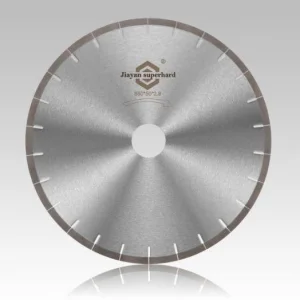
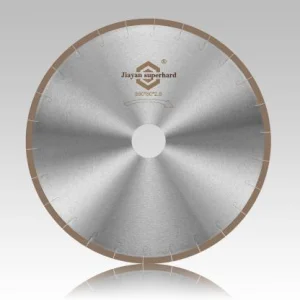
Engineered with optimized matrix bond strength, noise-dampening core tech, and zero-chipping performance tailor-made for Australian granite, quartz, and Dekton slabs.
The Australian stone fabrication, architectural masonry, and civil construction sectors are undergoing a historic paradigm shift. Driven by rigorous occupational health and safety regulations—specifically targeted at mitigating Respirable Crystalline Silica (RCS) exposure under Safe Work Australia guidelines—and the national ban on high-silica engineered stone, fabricators in Sydney, Melbourne, Brisbane, and Perth are aggressively transitioning toward porcelain, ultra-compact sintered stones (such as Dekton and Neolith), natural hard granites, and quartzites.
This operational transition introduces massive engineering challenges to cutting tool technology. Traditional diamond blades optimized for soft engineered quartz often fail when applied to ultra-dense porcelain slabs or hard, abrasive natural granite. Common failure modes include segment micro-cracking, core warping under extreme thermal load, blade glazing, edge chipping on expensive porcelain surfaces, and excessive dust propagation during dry cutting operations.
Under European Safety Standard EN 13236 (the safety benchmark underlying CE compliance for superhard abrasive products), diamond saw blades undergo stringent destructive testing, including segment laser-weld shear strength analysis exceeding 700 MPa and dynamic run-out tolerances under high peripheral speeds (up to 80 m/s). For Australian importers and stone factories, utilizing CE-marked JIAYAN diamond blades guarantees complete operational compliance, minimal risk of segment detachment, and maximum operator safety under Australian WHS Frameworks.
Australia’s commercial building index and residential luxury fit-out sectors demand impeccably clean edge finishes on large-format porcelain panels (up to 3200mm × 1600mm with thicknesses ranging from 6mm to 20mm). Sintered stone materials exhibit an extremely high modulus of rupture and density, making them prone to tension stress cracks during bridge saw cutting if the blade’s matrix hardness and diamond grit distribution are imbalanced.
Furthermore, local infrastructure projects—including civic stone cladding in Sydney CBD, infrastructure paving in Victoria, and mining core sampling in Western Australia—require heavy-duty continuous and segmented diamond blades capable of handling harsh, silica-laden quartzites and iron-rich granites without frequent blade change-outs.
JIAYAN’s R&D division has spent over a decade perfecting the metallurgy and diamond synthetic crystal distribution within the segment matrix to address hard-stone processing. The technical performance of our CE-Certified Diamond Saw Blade series relies on three core pillars:
| Technical Parameter | Standard Commercial Blade | JIAYAN CE-Certified Stone Blade | Australian Market Advantage |
|---|---|---|---|
| Segment Welding Tech | Conventional High-Frequency Brazing | Automated Dynamic Laser Beam Welding | Eliminates segment loss during extreme heat / water failure |
| Steel Core Specification | 75Cr1 High Carbon Steel | Imported 50Mn2V / Silent Sandwich Core | High tension stability, zero warping under lateral deflection |
| Diamond Crystal Grade | Medium Grade MBD Series | Premium Grade SMD High-Toughness Crystals | Exceptional feed rates in Australian Hard Granite & Quartzite |
| Edge Quality Output | Minor Micro-Chipping (Requires Grinding) | Zero-Chipping Clean Edge Finish | Saves up to 30 minutes of hand-polishing per slab cut |
| Safety Certification | Uncertified / Basic ISO | CE EN 13236 & ISO 9001:2015 Certified | Full liability coverage for WorkSafe Australia audits |
Engineered to adapt seamlessly across diverse industrial equipment used throughout the Australian continent—from heavy 5-axis CNC bridge saws to portable wet cutters.
Optimized for automatic CNC machinery (e.g., Donatoni, Breton, GMM) operating in Sydney and Melbourne stone workshops. Supports high-speed linear cutting and 45-degree miter cuts on 12mm–20mm sintered stone panels without edge blowing.
Designed for public works contractors handling natural basalt, bluestone (common in Victoria), granite pavers, and sandstone blocks. Features reinforced laser-welded segments built for demanding, continuous daily operation.
Specially formulated diamond segment bonds engineered for rapid wet cutting of dense geological mineral cores, hard iron ore samples, and abrasive quartz rock samples in Western Australia remote mining rigs.
Ultra-thin continuous rim blades with wet-cutting design, ensuring zero airborne silica dust compliance when combined with HEPA-filtered wet extraction units in fabrication shops across Brisbane and Adelaide.
Customized blade arbor sizes (50mm, 60mm, 25.4mm), custom laser logo engraving, specialized color coatings, and bespoke packaging for Australian industrial hardware distributors and tool brands.
Thin-kerf diamond segment design reduces machine drive motor drag by up to 25%, extending bridge saw motor lifespan and lowering power consumption costs in large manufacturing facilities.
How JIAYAN Superhard Materials leverages advanced manufacturing automation to deliver competitive cost structures and rapid sea-freight logistics to major Australian ports.
As a certified member of the China Superhard Material Association, JIAYAN operates fully automated hot-pressing sintering lines, high-precision automated segment brazing/laser welding cells, and dynamic core balancing testing rigs at our Wuhu production facility.
By integrating raw synthetic diamond synthesis sourcing directly with in-house powder metallurgy, we eliminate intermediate supply chain markups, allowing Australian importers, wholesale companies, and stone processors to access premium CE-certified blades at 30%–45% lower procurement costs than European alternatives.
Explore our complete range of specialized diamond tools designed for stone cutting companies, fabricators, and machinery suppliers across Australia.
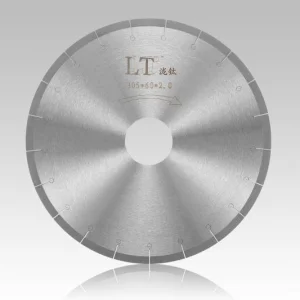
Expert answers regarding diamond tooling optimization, Safe Work Australia compliance, and operational best practices for stone fabricators.
While Australia operates under AS/NZS workplace standards, the European EN 13236 standard (mandatory for CE marking) is globally recognized as the most stringent safety benchmark for superhard diamond abrasives. It specifies structural safety requirements, dynamic balancing tolerances, and segment weld shear strength limits (minimum 700 MPa for laser welding). For Australian stone factories, using CE-certified blades ensures full compliance with WorkSafe risk assessment audits and protects operators against catastrophic blade fracture or segment throw accidents.
Sintered stone panels possess extreme surface tension and hardness. JIAYAN utilizes a specialized continuous rim or micro-J-slot design coupled with a soft cobalt-based bond matrix impregnated with ultra-fine, high-grade synthetic diamond powders (#120/140 mesh size). This allows smooth, continuous micro-abrading rather than violent chipping, delivering pristine 45-degree miter edges straight off 5-axis CNC bridge saws without requiring secondary grinding.
For standard Australian hard granite varieties (such as Grandee or Black Granite), the optimal peripheral line speed is between 30 m/s and 40 m/s. On a standard 350mm (14-inch) bridge saw blade, this translates to an operating speed of 1,600 RPM to 2,100 RPM. Operating below this range can cause premature diamond dislodgement, while exceeding it can glaze the segment surface. Water flow should be maintained at a minimum of 25–30 L/min.
We provide full OEM/ODM manufacturing services tailored to Australian brand owners. This includes custom arbor bore sizing (e.g., 50mm, 60mm, or 25.4mm with drive pin holes), laser engraving of distributor logos and safety warnings, custom segment geometry tuning based on regional stone types, and retail-ready packaging compliant with Australian consumer labeling regulations.
Segment glazing occurs when the metal bond matrix does not wear fast enough to expose new sharp diamonds, resulting in high friction and blade wandering. To dress and re-sharpen the blade, make 3 to 5 cuts through an abrasive dress stone, soft sandstone, or highly abrasive refractory brick. This strips back the worn metal matrix and re-exposes fresh diamond cutting edges.
Join hundreds of international distributors, CNC stone processing plants, and industrial equipment companies benefiting from JIAYAN’s CE-certified diamond cutting technology. Request a factory-direct wholesale quotation or custom OEM blueprint consultation now.