Engineered to comply with strict European CE safety benchmarks (EN 13236) while delivering maximum linear cutting speed across South Korea's demanding stone landscape.
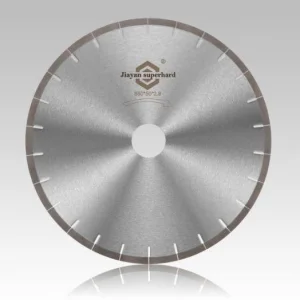
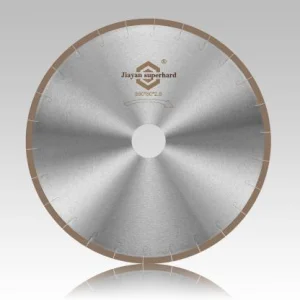
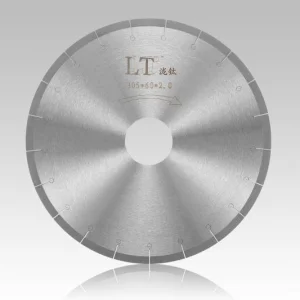
The Republic of Korea stands as one of East Asia’s most sophisticated stone fabrication and consumption hubs. Fueled by mega-scale urban redevelopment initiatives in the Seoul Metropolitan Area (Gyeonggi Province and Incheon), alongside massive commercial developments in Busan and Daegu, the demand for precision superhard diamond tooling has reached unprecedented engineering standards. Korean stone processing facilities specialize in cutting extremely dense, highly abrasive natural igneous rocks—such as local Geochang Gray Granite, Pocheon Light Gray, and Mungyeong Red—as well as imported hard materials like Indian Black Granite and Brazilian Quartzite.
Furthermore, South Korea has witnessed a transformative architectural shift toward ultra-compact sintered stone slabs (including Dekton, Neolith, and premium porcelain materials) for interior kitchen countertops, exterior ventilated facades, and high-traffic commercial flooring. Cutting these hard, vitreous materials without edge chipping or micro-fracturing requires saw blades built with specialized matrix bonds, tailored diamond grit concentration, and laser-welded segment integrity certified under international standards.
To remain competitive in foreign export markets (such as North America, Japan, and the EU), South Korean stone equipment trading companies must supply diamond tools that feature verifiable CE Certification. Standard off-the-shelf blades frequently suffer from segment detachment, blade wobble, and premature glaze dulling when subjected to high-rpm continuous automated bridge sawing. Implementing high-gain engineered blades ensures seamless operational uptime, zero blade-fracture risk, and flawless edge finishes.
In modern industrial stone cutting, machine operators run high-powered 15kW to 30kW CNC bridge saws, slab-cutting gantry machines, and automated multi-blade block cutters. At peripheral blade speeds exceeding 40 meters per second, dynamic stress forces exerted on the steel core and diamond segment joints are immense. The European standard EN 13236 (Safety requirements for superabrasive products) specifies stringent structural thresholds that must be met to earn CE certification.
Unlike conventional silver-soldered blades, CE-compliant laser-welded diamond blades undergo automated laser fusion, achieving joint shear strength values greater than 120 MPa. This eliminates segment loss even under extreme dry cutting or heavy hydraulic feed pressure.
CE standards require steel cores to maintain a dynamic balance grade of G2.5. Radial axial runout is strictly kept under ±0.03mm, preventing blade deflection, core fatigue cracks, and machine spindle wear during continuous cutting of heavy Korean granite blocks.
Korean urban zoning regulations mandate strict decibel controls for industrial workshops. CE-certified silent blades feature a copper-reinforced laminated sandwich steel core that absorbs vibration frequencies and lowers acoustic output by up to 12-15 dB.
South Korea’s stone tool market is highly competitive. Importers, tool distributors, and stone machine original equipment manufacturers (OEMs) demand blades that balance European cutting performance with optimized operational costs. China’s superhard material sector—centered around state-of-the-art manufacturing hubs—provides an unbeatable competitive supply partner for Korean enterprises.
By leveraging complete upstream integration—from high-pressure high-temperature (HPHT) synthetic diamond crystal synthesis to automated matrix alloy powder blending—Chinese tier-1 manufacturers achieve unmatched cost efficiencies, rigid quality repeatability, and rapid delivery scalability.
| Parameter Benchmark | European Tier-1 Tool Makers | JIAYAN China Manufacturing Advantage | Value Impact for Korean Buyers |
|---|---|---|---|
| Raw Diamond Grit Source | Third-party imported crystals | In-house HPHT synthesized premium diamonds | 100% crystal toughness & purity control |
| Matrix Sintering Technology | Standard hot-pressing | 3D Automated Vacuum Free-Sintering | Higher diamond retention & uniform wear rate |
| Blade Core Material | 75Cr1 / 50Mn2 Steel | Custom heat-treated high-tensile 75Cr1 steel | Zero core deformation under high lateral load |
| Manufacturing Lead Time | 8 - 12 Weeks | 2 - 3 Weeks (Incheon Port 48hr shipping) | Minimal warehouse capital expenditure |
| Total Cost of Ownership (TCO) | High Premium Base | 35% - 45% Lower Cost per Square Meter Cut | Higher gross profit margins for exporters |
Utilizing 350mm to 600mm laser-welded silent circular saw blades equipped with multi-layered sandwich diamond segments. Designed specifically to cleanly cut through hard granite without matrix loading or edge chipping.
Designed for specialized stone workshops in Gyeonggi-do. Featuring J-Slot rim geometries and ultra-fine diamond mesh (120/140 mesh) bound in a soft cobalt matrix to prevent glass-phase material micro-cracking.
Engineered small-diameter (105mm - 230mm) turbo rim and segment blades fitted with keyhole slots for heat dissipation during rapid dry cutting of concrete paving, structural brick, and facade stones.
The global superhard tool sector is undergoing rapid technological evolution. For Korean enterprises aiming to lead in global stone exports, staying ahead of diamond matrix innovation is paramount. Key technological trends currently driving the industry include:
Precise 3D spatial alignment of diamond grit ensures every diamond particle bears an equal cut load, boosting cutting speeds by 30% while extending blade life by up to 50% compared to random grit distribution.
Coating synthetic diamonds with a thin titanium shell protects crystals against thermal oxidation during high-temperature sintering, dramatically raising graphitization resistance thresholds up to 900°C.
Meeting global environmental directives (REACH & RoHS) by replacing hazardous cobalt powders with advanced iron-copper-nickel pre-alloyed matrices without compromising segment toughness.
| Blade Diameter (mm/inch) | Bore Hole Size (mm) | Segment Size (L x W x H mm) | Diamond Mesh / Concentration | Target Material | Recommended RPM |
|---|---|---|---|---|---|
| 105mm (4") | 20 / 22.23 | Continuous Rim / 1.2mm T | 100/120 Mesh / Conc. 75% | Ceramic Tile, Marble | 11,000 - 13,200 |
| 230mm (9") | 22.23 / 25.4 | J-Slot Rim / 2.2mm T | 80/100 Mesh / Conc. 80% | Porcelain, Sintered Stone | 5,500 - 6,600 |
| 350mm (14") | 50 / 60 | 40 x 3.2 x 15mm (Laser/Silent) | 40/50 Mesh / Conc. 100% | Korean Hard Granite | 1,800 - 2,300 |
| 400mm (16") | 50 / 60 | 40 x 3.6 x 15mm (Silent Core) | 40/50 Mesh / Conc. 110% | Hard Granite, Quartzite | 1,500 - 1,900 |
| 600mm (24") | 50 / 60 / 80 | 24 x 5.0 x 20mm (Block Blade) | 30/40 Mesh / Conc. 120% | Granite Quarry Blocks | 900 - 1,200 |
CE Certification under standard EN 13236 demands rigorous mechanical safety checks. The blade must undergo segment shear testing (ensuring joint integrity above 120 MPa for laser welds), unbalance testing to guarantee dynamic balance, burst speed testing (operating safely at 1.5x maximum RPM), and clear safety marking detailing maximum operating speeds (m/s) and directional arrows etched permanently onto the core.
Korean granite contains high quartz content, making it tough and abrasive. It requires coarse diamond grit (35/45 or 40/50 mesh) bound in a medium-hard cobalt-bronze alloy that withstands abrasion. Conversely, sintered stone is dense and brittle, requiring fine diamond grit (100/120 mesh) in a soft bond with specialized continuous or J-Slot rims to prevent chipping on slab edges.
Many South Korean stone fabrication facilities operate in dense industrial complexes (such as Gyeonggi or Incheon) close to residential zones. Silent core blades use a laminated copper/steel sandwich structure that dampens cutting resonance, reducing operating noise levels from over 98 dB to under 82-85 dB, ensuring compliance with Local Noise and Vibration Control Acts.
Glazing occurs when the metallic matrix binder is too hard for the rock being cut, preventing worn diamond crystals from shedding to reveal sharp new diamonds. Operators can dress (re-sharpen) the blade by performing several cuts through an abrasive material like soft sandstone or an abrasive concrete dressing brick.
Yes. Full OEM/ODM services are available, including custom laser engraving of brand logos, customized color coating on steel cores, bespoke segment height design (e.g., 12mm, 15mm, or 20mm), and retail-ready packaging adapted for the Korean and international export markets.
For a standard 350mm-400mm blade, a minimum water coolant pressure of 2.0 to 3.0 bar with a flow rate of 15-25 liters per minute is recommended. Adequate water flow washes away abrasive stone slurry and prevents thermal stress fractures across the segment boundary.
Explore our full line of superhard cutting discs, J-slot porcelain blades, and heavy granite circular saws certified for global export.
Request customized OEM quotations, CE certification technical dossiers, or factory direct sample testing for your South Korean stone supply distribution network.
Send Inquiry Now