Precision-engineered superhard cutting matrices for commercial architectural fabrication, granitic cladding, ultra-compact sintered stone, and industrial infrastructure.
Factory-calibrated circular diamond saw blades balanced for low-noise bridge saws, stationary CNC gantries, and continuous hand-held masonry machines across Georgetown yards.

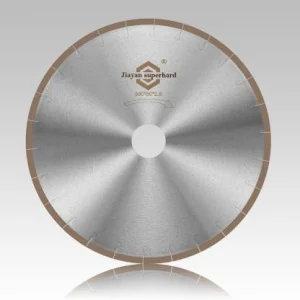
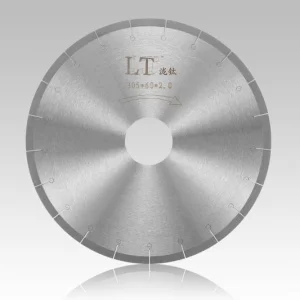
Strategic supply chain solutions adapted to shifting raw material mineralogies, modern abrasive profiles, and urban architectural demands.
The Georgetown corridor experiences robust commercial development, municipal infrastructure expansion, and luxury residential projects demanding massive volumes of granite curbs, marble slabs, and engineered quartz. Stone fabricators in this region encounter distinctive challenges: balancing rapid cutting feeds against tight kerf requirements to minimize material waste, alongside escalating labor costs that penalize premature tooling degradation.
Internationally, the stone fabrication landscape is transitioning from conventional hot-pressed brazed discs to precisely structured, vacuum-sintered and automated laser-welded diamond arrays. The rapid rise of ultra-dense sintered stones (such as Dekton, Neolith, and porcelain slabs) has exposed the limits of standard tooling, necessitating cobalt-nickel matrices capable of macro-cleaving without causing peripheral chipping or thermal fracture.
Contemporary fabrication demands multi-substrate versatility. Processors require tooling that cleanly transitions between Class IV granites with high silica content and non-porous sintered compacts. Modern synthetic monocrystalline diamond grits must feature tight crystal integrity, high friability control, and advanced sandwich segment patterns that continuously expose sharp cutting facets.
Georgetown stone processors face diverse environments ranging from massive bridge saw cutting yards to custom architectural countertop shops requiring edge-mitering without chipping.
For wet-cutting multi-axis automated CNC bridges, our 350mm to 400mm sandwich segmented blades deploy alternating high-concentration diamond layers that resist blade deflection, maintaining a perfectly square cut across thick dense quartzite and hard granites.
Ultra-compact surfaces store severe internal physical tension. Our continuous J-slot and ultra-thin segment rims release thermal stresses rapidly, eliminating micro-fissuring and edge break-outs on costly luxury kitchen installations.
| Blade Diameters | 260mm, 300mm, 350mm (14"), 400mm |
| Bore Diameter | 50mm / 60mm with standard reduction bushings |
| Core Alloy Material | 75Cr1 German High-Elasticity Manganese Steel |
| Bond Matrix | Cobalt-Bronze-Nickel Synthetic Alloy Base |
| Noise Attenuation | Optional Copper-Sandwich Silent Core Body |
Driving downstream manufacturing value through metallurgical integrity, environmental lifecycle control, and automated diamond positioning.
Traditional random diamond grit dispersion causes uneven blade wear and intermittent motor load spikes. Our transition to patterned diamond arrays arranges every synthetic diamond particle in an equidistant 3D matrix, ensuring constant tangential cutting pressure, up to 50% faster cutting rates, and extended blade life.
High-volume processing plants in urban and peri-urban Georgetown industrial zones face stringent acoustic noise restrictions. We incorporate precision-cut laser expansion slots filled with dampening copper rivets alongside multi-layered laminated steel cores, dropping cutting harmonic resonance by 8 to 14 decibels.
By refining low-temperature sintering protocols and using non-toxic sintering fluxes, our manufacturing pipelines reduce total carbon footprint per diamond segment while preserving core tensile stability. Spent steel cores can be retrofitted and re-tipped through our technical exchange programs.
Select from our certified industrial range: segment rims, J-slot tiles, granite bridge discs, and sintered stone diamond blades ready for container or LCL global shipping.
Authoritative operational answers for Georgetown procurement directors, plant engineers, and tooling specialists.
Matrix selection operates on an inverse abrasive scale: Hard stone materials (such as Class 5 silica granites and vitrified sintered stone slabs common in upscale Georgetown renovations) require soft cobalt-bronze bonds that continuously shed dull diamonds to expose fresh abrasive edges. Softer, highly abrasive materials (such as sandstone or porous limestone) require ultra-hard tungsten carbide bonds that resist premature wear and prevent diamond pop-out.
Sintered stone chipping is caused by spindle vibration, excessive peripheral speed, and incorrect rim design. Our J-slot diamond saw blades combine a low-tension German 75Cr1 steel core with segmented relief channels and a fine-mesh diamond distribution. This configuration dissipates harmonic shocks at entry and exit points, delivering glass-smooth, chip-free cuts across 12mm to 20mm panels.
Standard 350mm to 400mm circular saw blades require a continuous water delivery rate of 15 to 25 liters per minute, directed squarely into the kerf contact point. Insufficient or uneven coolant flow leads to localized heat concentration, segment glazing, steel core warping, and eventual loss of blade tension.
We provide full-spectrum OEM contract manufacturing for Georgetown distributors and fabricators, including custom core laser cut-outs, branded silk-screen etching, variable arbor bore drilling, and bond tuning according to regional stone profiles. Typical sample tooling dispatches in 7 business days, with full container production completed in 20 to 30 days.
Consult directly with our metallurgists to specify optimal diamond grit size, segment geometries, and matrix bonds tailored to your Georgetown operational requirements.
Send Inquiry Now