Direct factory supply of continuous rim, laser-welded, and J-slot diamond blades engineered for precision marble and granite processing.
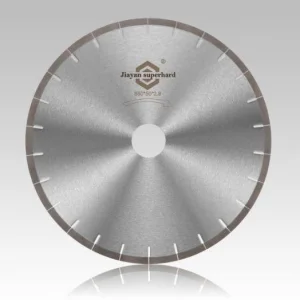
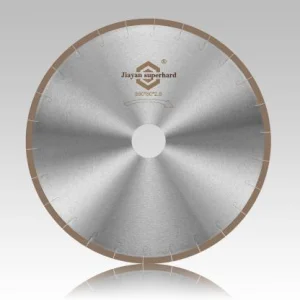
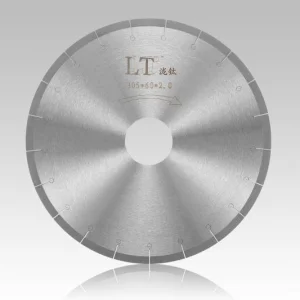
Understanding the geological demands, macro-economic realities, and technical parameters driving diamond saw blade imports in South America.
Argentina’s natural stone extraction and architectural processing sector represents one of the most dynamic mineral markets in Latin America. From the quartz-dense granites of the Sierra de Córdoba to the distinctive quartzite deposits (Piedra Laja) in San Luis and the high-grade limestone/porphyry quarries across Mendoza and Patagonia, local fabricators face severe mechanical friction when slabbing, block-cutting, and edge-profiling local geological formations.
In recent years, the rapid growth of urban infrastructure projects in Buenos Aires, Rosario, and Córdoba City has created unprecedented demand for ultra-hard surface processing tools. Furthermore, the global surge in engineered sintered stone (Neolith, Dekton, Lapitec) adoption across South American interior design studios has introduced significant challenges: traditional diamond blades frequently cause edge-chipping, micro-fractures, and rapid segment glazing when applied to dense porcelain slabs.
Navigating Argentina’s import frameworks (SIRA/SEDI procedures and currency regulations) requires sourcing superhard tools that offer an exceptionally extended operational lifespan. High-durability diamond blades lower the frequency of container shipments, reducing customs overhead per linear meter cut.
To maximize cost-efficiency under local operating conditions, stone processing plants across Argentina are increasingly bypassing intermediary trading companies to establish direct OEM/ODM partnerships with certified Chinese diamond tool manufacturers. As a recognized member of the China Superhard Material Association, JIAYAN Superhard Tools provides customized diamond saw blades engineered explicitly to withstand the abrasiveness of Argentine mineral compositions.
How JIAYAN Superhard achieves optimal cutting speeds and tool longevity through precision powder metallurgy.
We utilize premium industrial synthetic diamond monocrystals coated with Titanium (Ti). The titanium layer prevents graphitization during high-temperature sintering and enhances mechanical retention within the metallic matrix by over 35%.
Our metallurgists formulate custom matrix bonds ranging from soft Cobalt-rich bonds (for ultra-hard granites like Black San Antonio) to hard Cobalt-Copper-Iron alloys (for soft abrasive sandstones and marble), preventing premature segment erosion.
Using fully automated German laser-welding stations, segment joint shear strength exceeds 180 MPa, completely eliminating segment detachment risks. Optional sandwich silent steel cores reduce operating noise levels by 12–15 dB in indoor fabrication shops.
| Blade Diameter (mm/inch) | Segment Dimension (L x W x H) | Inner Hole / Bore (mm) | Target Application & Material | Recommended RPM Range |
|---|---|---|---|---|
| 350 mm / 14" | 40 x 3.2 x 15 / 20 mm | 50 mm / 60 mm / 25.4 mm | Córdoba Granite, Quartzite, Hard Slate | 1,800 – 2,400 RPM |
| 400 mm / 16" | 40 x 3.6 x 15 / 20 mm | 50 mm / 60 mm | Sintered Stone, Dekton, Large Porcelain Slabs | 1,500 – 2,100 RPM |
| 450 mm / 18" | 40 x 4.0 x 15 / 20 mm | 50 mm / 60 mm | San Luis Quartzite, Thick Architectural Stone | 1,300 – 1,800 RPM |
| 500 mm / 20" | 40 x 4.2 x 15 / 20 mm | 50 mm / 60 mm / 80 mm | Bridge Saw Primary Scribing & Quarry Edge Cutting | 1,100 – 1,500 RPM |
| 600–800 mm / 24"–32" | 24 x 5.0-6.0 x 20 mm | 60 mm / 80 mm / 100 mm | Heavy Duty Quarry Block Trimming & Civil Work | 800 – 1,200 RPM |
Combining industrial scale in Anhui/Henan superhard material clusters with rigorous export-oriented quality assurance.
Unlike generic trading distributors who sell off-the-shelf stock, JIAYAN’s R&D engineering team conducts complete physical stone profile analysis. When an Argentine client provides data regarding stone hardness (Mohs scale), abrasiveness index, and bridge saw motor wattage (e.g., Pedrini, Donatoni, Breton, or Chinese machinery), we formulate a dedicated diamond matrix matching those exact variables.
Every single diamond circular saw blade exiting our production line undergoes rigorous safety and precision inspection under EN13236 European safety standards. We guarantee zero radial runout and optimal dynamic balance.
Engineered to deliver exceptional performance across diverse regional geological extractions and fabrication hubs.
Challenge: Córdoba red and grey granites contain over 35% quartz content, causing rapid tool wear and high thermal friction.
JIAYAN Solution: 350mm–600mm laser-welded blades featuring high-cobalt matrix segments and Ti-coated synthetic diamond grit. Delivers up to 25% faster cutting speeds without segment loss.
Challenge: Natural layering in quartzite slabs causes frequent delamination and micro-fractures during high-speed cutting.
JIAYAN Solution: Ultra-thin continuous rim J-Slot diamond saw blades. The specialized J-slot design facilitates optimal water flushing and slurry clearance, protecting fragile edges.
Challenge: High-end residential projects in Buenos Aires utilize ultracompact porcelain slabs that chip under conventional stone blades.
JIAYAN Solution: 14-Inch specialized sintered stone saw blades with fine mesh diamond concentrations (50/60 mesh) ensuring clean, chip-free 45° miter cuts.
Why initial purchasing cost is only a fraction of total linear meter processing cost.
In high-capacity stone processing facilities, calculating the true operational cost of a diamond saw blade requires assessing lifetime square meter output against machine electricity draw and downtime for blade replacement.
Cost Per Meter ($/m²) = (P_blade + (T_downtime × R_labor) + E_power) ÷ Total Lifetime Cut Surface (m²)
JIAYAN Superhard blades utilize free-cutting matrix formulas that reduce spindle motor resistance by 18%. This lowers overall electricity consumption on heavy bridge saws while increasing total lifetime cut area by up to 30%, resulting in lower net cost per square meter processed in Argentine factories.
Detailed technical answers to assist procurement directors, importers, and plant managers.
The inverse rule of powder metallurgy applies: for ultra-hard, quartz-rich granites (such as those from Córdoba), you require a soft metal matrix bond (cobalt/bronze-rich) that wears away consistently to expose fresh diamond crystals. For soft, highly abrasive marbles or limestones, you require a hard, wear-resistant metal matrix (iron/tungsten-rich) to prevent premature segment loss.
Standard production lead time at our factory in Wuhu is 15–20 days upon specification approval. Maritime freight from Ningbo or Shanghai port to Port of Buenos Aires or Zarate typically takes 35–45 days. We provide comprehensive export documentation including Commercial Invoices, Packing Lists, Certificates of Origin (Form A/CO), and HS Code classifications (HS 6804.21) for customs clearance.
Yes. We offer dual-layer steel core silent blades featuring a copper center damping sheet. These silent blades significantly attenuate high-frequency resonance during cutting, keeping ambient noise levels under regulatory municipal thresholds in urban industrial zones across Greater Buenos Aires.
For 350mm (14-inch) blades cutting medium-hard granite, we recommend a spindle speed of 1,800 to 2,200 RPM with a linear cutting feed speed of 2.0 to 4.5 meters per minute, supported by continuous water coolant flow of at least 25 L/min.
Absolutely. We support wholesale distributors across South America with complete OEM branding packages. This includes custom silkscreen logo printing, laser marking on steel cores, custom-colored electrostatic powder coatings, and customized protective packaging.
While small diameter blades (115mm–230mm) can be used dry for quick job-site adjustments, all industrial bridge saw blades (300mm to 800mm+) must be operated wet. Adequate water delivery cools the diamond segments, flushes abrasive slurry out of the cut slot, and prevents thermal stress fractures on the steel core.
If a diamond blade becomes glazed (smooth metal covering the diamond grit due to extreme stone density), make several cuts into an abrasive soft sandstone block or silicon carbide dressing brick. This strips back the metal matrix bond and exposes fresh sharp diamond cutting edges.
Our standard MOQ for specialized custom segment formulations or non-standard arbor sizes is 50 pieces per specification. Standard catalog SKUs can be ordered in smaller evaluation batches for initial field testing.
Explore our fully certified diamond tool series engineered for granite, marble, tile, ceramic, and ultra-dense sintered stone materials.
Get factory-direct pricing, custom metallurgical segment matching, and dedicated technical support for your stone cutting operations in Argentina.
Send Inquiry Now