Direct Factory Supply for High-Density Granite, Ultra-Compact Sintered Stones, Porcelain Slabs, and Australian Bluestone
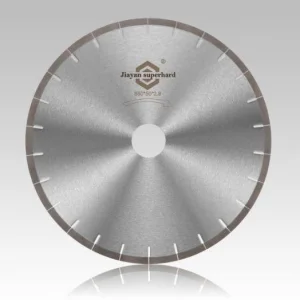
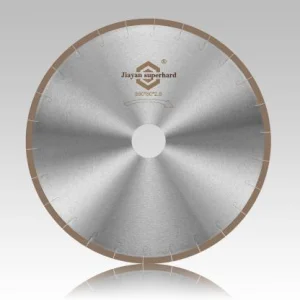
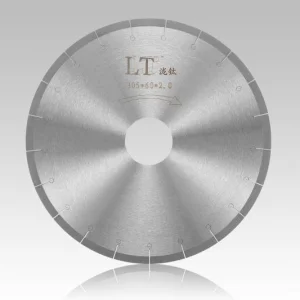
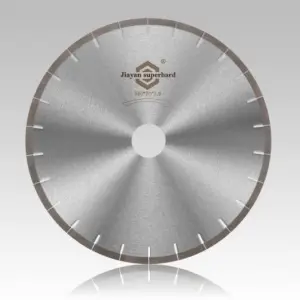
The Greater Melbourne metropolitan area and the wider state of Victoria represent one of the most dynamic, quality-stringent, and highly regulated construction and stonemasonry sectors in the Southern Hemisphere. Driven by major urban revitalization projects across the Melbourne CBD, Docklands, Southbank, and sprawling commercial/residential developments in suburbs such as Dandenong, Campbellfield, and Braeside, the technical demands placed on stone processing tools have undergone a monumental paradigm shift.
Historically dominated by traditional natural quartz and engineered composite quartz slabs, the Victorian stone fabrication market encountered a historic regulatory pivot following the statutory ban on high-silica engineered stone (effective mid-2024 by WorkSafe Victoria). This milestone legislative transition forced regional fabricators, architectural stone masons, and commercial tile contractors to shift immediately toward Zero-Silica Slabs, Ultra-Compact Sintered Stones (e.g., Dekton, Neolith, Lapitec), Ultra-Dense Porcelain Panels, and Hard Natural Rocks (such as Victorian Bluestone and imported High-Density Granite).
Technical Impact Note for Melbourne Fabricators: Cutting ultra-compact sintered stones requires diamond saw blades with significantly higher diamond concentration, finer grit matrix sizing (US Mesh 50/60 to 70/80), and specialized cobalt-nickel bonds designed to eliminate edge micro-chipping while ensuring compliance with wet-cutting dust control regulations.
Natural granite, basalt (bluestone), and porcelain ceramics exhibit vastly different Mohs hardness levels, fracture toughness values, and thermal absorption behaviors. Standard multi-purpose diamond blades frequently cause edge deflection, matrix burning, or rapid diamond shedding when subjected to high-speed CNC bridge saw operations typical of Melbourne's modern fabrication facilities.
| Material Category | Mohs Hardness | Flexural Strength (MPa) | Optimal Blade Peripheral Speed (m/s) | Recommended Segment Bond Formula |
|---|---|---|---|---|
| Victorian Bluestone / Basalt | 6.0 - 6.5 | 18 - 25 | 28 - 35 m/s | Medium-Hard Iron/Cobalt Matrix |
| Hard Granite (Class 4/5) | 6.5 - 7.5 | 20 - 32 | 25 - 30 m/s | Soft-Medium Copper/Cobalt Bond |
| Sintered Stone (Dekton/Neolith) | 7.0 - 8.0 | 45 - 60+ | 18 - 24 m/s | Ultra-Soft Bronze/Nickel Bond (Fine Grit) |
| Porcelain Slabs (12-20mm) | 7.0 - 7.5 | 40 - 55 | 20 - 26 m/s | J-Slot Continuous Rim / Fine Matrix |
Dissecting Synthetic Diamond Synthesis, Powder Metallurgy, and Silent Core Acoustic Dampening Technology
The performance of a diamond saw blade depends fundamentally on the quality of synthetic diamond crystals synthesized via High-Pressure High-Temperature (HPHT) cubic press processes. At JIAYAN Superhard, our engineering team selects single-crystal diamond grit characterized by perfect octahedral crystal morphology, exceptionally high thermal stability (Ti index > 92%), and controlled friability. For extremely hard materials processed in Melbourne workshops—such as dense quartzite or ultra-thin porcelain—we incorporate micro-coated titanium-plated diamond grains that form a chemical bond with the metallic matrix, preventing premature diamond pull-out under heavy hydraulic torque.
The diamond segment matrix is not merely a binder; it is a dynamic abrasive structure that must wear down at a rate perfectly synchronized with diamond grain dulling. If the matrix wears too fast, expensive diamonds are wasted; if it wears too slowly, the blade glazes over, leading to severe vibration, heat buildup, and slab cracking.
Our proprietary bond formulations incorporate pre-alloyed metallic powders containing Cobalt (Co), Nickel (Ni), Copper (Cu), Tungsten Carbide (WC), and Iron (Fe). By utilizing 3D free-flowing hot-press vacuum sintering, we achieve dense segment structures with microscopic porosity control. This ensures self-sharpening properties tailored specifically to cut Melbourne's modern sintered stone slabs (such as Dekton 12mm/20mm) cleanly at feed speeds exceeding 2.5 meters per minute without chip marks along the mitred edge.
For industrial bridge saw operations (350mm to 800mm blades), segment retention strength is paramount. High-Frequency Silver Brazing utilizes high-silver content brazing solder (Ag 30%-45%) to join the segment to the German-imported 75Cr1 steel core, providing exceptional fatigue resistance during wet cutting. For dry-cutting hand-saw applications or heavy civil infrastructure jobs cutting thick bluestone blocks, we implement fully automated High-Power Fiber Laser Welding. Laser welding fuses the metallic matrix directly with the steel body at temperatures exceeding 1,500°C, establishing a weld seam shear strength exceeding 600 MPa, vastly exceeding the international safety threshold of EN 13236.
Industrial health and safety standards in Victoria enforce strict noise pollution limits in urban fabricator districts. Traditional solid steel core blades resonate at frequencies exceeding 105 dB(A) during high-speed rotation. Our Silent Core Diamond Saw Blades utilize a multi-layer sandwich design comprising two laser-cut high-tensile steel plates bonded with a central copper foil micro-layer. This structure dissipates acoustic resonance, reducing operational sound levels by 12 to 18 dB(A) while suppressing lateral micro-vibrations, yielding an ultra-smooth mirror-finish cut on delicate porcelain and marble slabs.
How JIAYAN Superhard Delivers Unmatched Cost-to-Performance Ratios for Australian Importers
China produces over 85% of the world's synthetic diamonds and superhard cutting tools, benefiting from a fully integrated industrial ecosystem ranging from raw elemental carbon processing to state-of-the-art multi-axis CNC laser segment trimming. Located in China's core superhard tool industrial corridor, JIAYAN Superhard Materials Co., Ltd. leverages over a decade of direct export experience to bridge the gap between high-end manufacturing precision and economic competitiveness.
Proven Performance Solutions in Real-World Victorian Commercial and Residential Fabrication Works
A major stone fabrication factory in Campbellfield operating 5-axis Donatoni and GMM bridge saws experienced persistent micro-chipping along 45-degree mitered edges when processing 20mm ultra-compact porcelain slabs for high-end kitchen island benchtop projects in Toorak and Brighton. Traditional granite blades caused excessive edge blow-outs and required frequent manual polishing.
The JIAYAN Solution: We supplied the 350mm Sintered Stone Specialized Silent Blade (Model JSS-350-VIC) featuring a 10mm soft-bronze matrix segment loaded with fine-mesh (60/80) titanium-coated diamond grit. Operating at 2,100 RPM with a reduced entry feed rate of 1.2 m/min expanding to 2.4 m/min, the blade achieved zero-chipping miter cuts, saving the factory over 4.5 man-hours per day in edge rework and reducing blade wear cost by 32%.
Civil landscape contractors working on commercial streetscape renewals in Melbourne CBD and Docklands required heavy-duty cutting of 50mm to 100mm thick Victorian Bluestone (Basalt) flags and curb units. The challenge involved achieving high linear cutting speeds while preventing blade segment loss under high-torque diesel floor saws and heavy bridge saws.
The JIAYAN Solution: Implementation of our 400mm Laser-Welded Segmented Heavy-Duty Blade engineered with deep drop-segments to protect the steel core from abrasive slurry undercut. The laser-welded segments demonstrated an average service life of 420 square meters of deep-cut bluestone per blade while maintaining strict compliance with WorkSafe Victoria wet dust suppression systems.
Maximizing Cutting Yield (Square Meters Per Dollar) for Commercial Wholesalers & High-Volume Factories
For industrial procurement directors and tool distributors serving the Australian market, assessing the true value of a diamond saw blade extends far beyond initial purchase price. The total cost equation must factor in Cutting Speed (m/min), Total Blade Service Life (m²), Downtime for Blade Swaps, and Slab Material Scrap Rates.
| Performance Metric | Standard Economy Blade | JIAYAN Premium Stone Series | Impact on Melbourne Processing Costs |
|---|---|---|---|
| Cutting Speed (Porcelain/Sintered) | 1.0 - 1.4 m/min | 2.2 - 3.2 m/min | +110% Machine Output Efficiency |
| Edge Chipping Rate | 5% - 8% Edge Loss | < 0.5% Micro Edge Loss | Saves High-Value Sintered Slabs |
| Blade Service Life (20mm Slab) | 180 - 250 m² | 450 - 600 m² | Reduces Cost per Meter Cut by 40% |
| Noise Level Emission | 102 - 108 dB(A) | 88 - 92 dB(A) (Silent Core) | Full Compliance with Vic Noise Regulations |
Pioneering Smart Blades, Zero-Silica Formulations, and Ultra-Thin Micro-Kerf Saw Blades
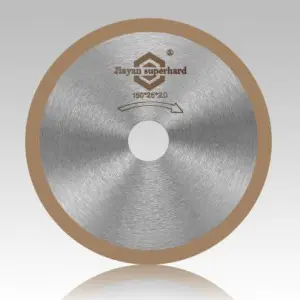
As ultra-thin 3mm and 6mm porcelain sheets dominate modern architectural cladding and furniture veneering across Melbourne, cutting tool geometry must minimize material kerf loss and reducing cutting resistance. Our engineering division is pioneering 1.0mm ultra-thin continuous rim diamond discs reinforced with laser-etched stress relief patterns to prevent heat warping under continuous operation.
In alignment with global ESG (Environmental, Social, and Governance) standards, JIAYAN is actively developing eco-friendly sintering matrices that reduce heavy cobalt reliance by substituting high-density nano-iron and nickel-copper pre-alloy powders. These next-gen formulas offer superior thermal toughness while minimizing environmental impact during tool manufacturing.
With Australian stone slab manufacturers introducing recycled glass, geopolitical bio-resins, and mineral geopolymers to replace traditional engineered quartz, our material testing laboratory continuously tests and formulates custom diamond bonds optimized for cutting novel zero-silica matrices efficiently.
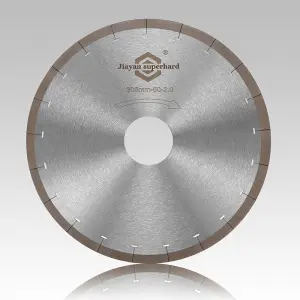
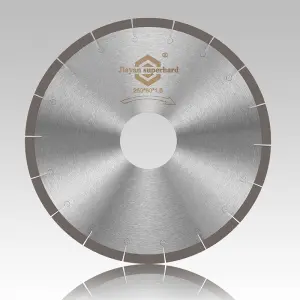
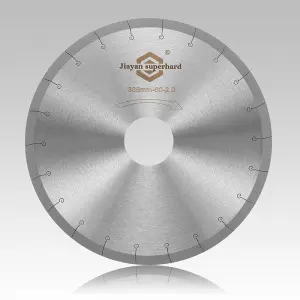
Explore Our Extended Catalogue of Continuous Rim, Segmented, J-Slot, Turbo, and Ultra-Thin Cutting Discs
Expert Answers to Common Challenges Faced by Melbourne Stonemasons and Tool Importers
For a standard 350mm (14") JIAYAN Sintered Stone blade, we recommend a spindle speed of 1,800 to 2,100 RPM. When entering and exiting the cut, reduce feed speed to 1.0–1.2 m/min. During full linear cuts, speed can be maintained at 2.0–2.8 m/min depending on machine motor power (kW) and wet cooling volume.
Our blades are specifically engineered for 100% continuous wet-cutting applications. Optimized segment water flutes ensure continuous water distribution at the blade-stone contact interface, thoroughly binding fine particulates into slurry and meeting strict WorkSafe Victoria airborne silica dust guidelines (<0.025 mg/m³).
Blade glazing occurs when the metallic segment matrix is too hard for the substrate, preventing old, dull diamonds from dropping away. To re-sharpen (dress) the blade, perform 3 to 5 passes through an abrasive dressing brick or soft sandstone block to expose fresh, sharp diamond crystals.
Standard production lead time for customized OEM saw blades (custom segment formulas, laser marking, and packaging) is 15 to 20 days. Fast sea freight from Ningbo/Shanghai to Port of Melbourne typically takes 14 to 18 days, ensuring delivery within 5 weeks from order confirmation.
We supply standard 50mm and 60mm arbors with pin-hole drive configurations matching major European and Asian CNC bridge saw brands (including Donatoni, GMM, Intermac, Breton, and Park Industries). Custom reduction rings (60mm to 50mm / 30mm / 25.4mm) are included upon request.
Yes. Industrial parks located near residential zones in Greater Melbourne (such as Mitcham, Cheltenham, or Moorabbin) strictly enforce noise emission caps. Our sandwich silent core blades reduce cutting noise by 12–18 dB(A), making them the preferred choice for urban fabricators.
Contact our senior superhard tool engineering team today for technical consultations, customized segment formulation requests, and competitive direct factory pricing.