Next-Generation Diamond Tooling & High-Precision Sintered Stone Cutting Technologies for Lombardy Industry
Engineered specifically to fulfill the stringent noise-level, kerf precision, and edge integrity standards of stone processing facilities across Milan, Monza, and the broader Lombardy industrial zone.
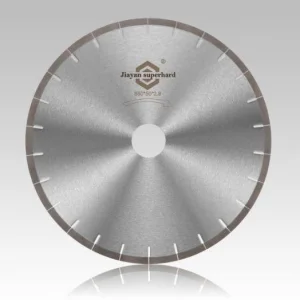
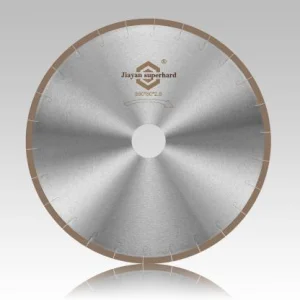
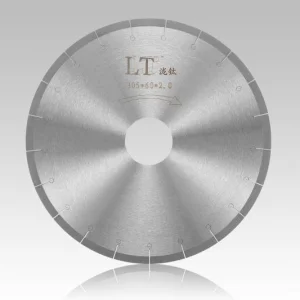
Analysis of the regional macroeconomic and technological requirements shaping superhard tool procurement across Northern Italy.
Milan, as the global capital of design, architecture, and luxury interior concepts, maintains an extraordinary demand for flawless natural stone processing. Lombardy’s industrial network—comprising heavy slab fabricators, CNC processing workshops, and architectural stone restorers—demands cutting tools capable of processing extremely dense materials such as Italian Carrara marble, Granito Sardo, and modern engineered ultra-compact sintered porcelain (such as Dekton, Lapitec, and Neolith).
Unlike standard industrial cutting markets, stone fabricators serving the Milan region operate under uncompromising aesthetic and engineering standards. Blade-induced micro-chipping, thermal stress cracking, segment delamination, and excessive acoustic pollution (exceeding EU workplace noise limits) are unacceptable. Fabricators require OEM-grade diamond saw blades engineered with high synthetic diamond grit density, advanced nickel-cobalt bond matrices, and acoustic-dampening sandwich steel cores.
As a leading superhard material manufacturer, our production engineering aligns with the precision CNC bridge saws, five-axis machining centers, and manual radial arm cutters deployed throughout Italian stone processing hubs.
Strategic intelligence on raw material economics, eco-friendly metal matrix compositions, and energy efficiency in stone machining.
The global shift toward high-purity single-crystal synthetic diamonds (produced via high-pressure high-temperature HPHT synthesis) has elevated the thermal stability threshold of diamond grit up to 1100°C. This prevents premature thermal graphite degradation during high-speed water-cooled cutting of dense quartz-rich stones.
Driven by EU REACH environmental policies and health standards in Italy, modern segment metallurgy has transitioned away from heavy cobalt reliance toward fine-grained copper-iron-nickel alloy bonds. This eco-friendly matrix delivers superior diamond retention while complying with green building certifications.
With electricity costs impacting European stone fabrication facilities, low-friction blade geometries (such as J-Slot, Turbo-Segmented, and Mesh-Rim designs) lower spindle drive torque requirements by 18% to 25%, drastically reducing per-meter energy consumption.
Technical breakdown of cold pressing, hot isostatic sintering, and high-frequency automated laser welding.
The mechanical performance of a diamond saw blade hinges upon matching the degradation rate of the metal bond matrix with the fracture rate of embedded synthetic diamond crystals. During operation on abrasive stones (e.g., sandstone or quartz-heavy granite), the matrix must erode at a controlled rate to reveal sharp diamond points.
Our factory utilizes multi-stage Hot Press Sintering under inert gas atmospheres. By controlling temperature profiles to within ±2°C and applying pressure up to 35 MPa, we achieve non-porous matrix densities that prevent premature diamond pull-out under heavy feed loads.
For industrial applications serving the Milan market, segment security is paramount. Laser welding utilizes high-energy carbon-dioxide or fiber lasers to melt the steel core and the transition layer of the segment into a solid fusion zone. This creates a joint shear strength exceeding 600 MPa—triple the strength of conventional silver-brazed joints—eliminating risk of segment detachment during dry or high-stress wet cutting.
Standard solid steel cores act as acoustic resonators under high-RPM cutting. Our quiet blades utilize a three-layer sandwich structure: two hardened steel plates separated by a micro-thin copper or viscoelastic polymer damping layer.
| Blade Diameter (mm) | Segment Thickness (mm) | Bond Hardness (HRB) | Optimal RPM Range | Recommended Application |
|---|---|---|---|---|
| 250mm - 300mm | 1.8 - 2.2 mm | 85 - 90 HRB | 2,200 - 2,800 RPM | Ultra-thin Ceramic & Porcelain Slabs (Dekton/Neolith) |
| 350mm (14 Inch) | 2.8 - 3.2 mm | 90 - 98 HRB | 1,400 - 2,100 RPM | Carrara Marble, Calacatta & Soft Natural Stones |
| 400mm - 500mm | 3.6 - 4.2 mm | 98 - 105 HRB | 1,100 - 1,600 RPM | Dense Italian Granites, Quartzite & Structural Masonry |
| 600mm - 800mm | 4.5 - 5.5 mm | 105 - 112 HRB | 800 - 1,200 RPM | Heavy Architectural Blocks & Civil Infrastructure |
Customized cutting solutions optimized for specific material compositions and machine setups found in Northern Italy.
Precision miter cutting (45-degree joins) of 6mm and 12mm sintered porcelain slabs for high-end kitchen islands and bathroom vanity tops in Milan luxury residential apartments. Demands zero chip allowance on polished surfaces.
Slabbing and trimming soft white marble (Carrara, Botticino) for historical facade restoration across central Milan. Requires smooth matrix wear to avoid metal staining or burning delicate calcite structures.
Continuous multi-blade gang saw cutting and bridge saw trimming of hard granite kerbstones, paving slabs, and exterior architectural columns across regional infrastructure projects.
Rigorous quality verification systems designed to provide Italian importers and distributors with complete peace of mind.
Every batch of raw metal powder and synthetic diamond diamond grit undergoes X-ray fluorescence (XRF) spectral analysis to ensure zero contamination. Prior to packaging, finished circular blades undergo dynamic balancing checks on digital balancing benches to guarantee zero radial runout (<0.05mm), protecting bridge saw spindles from vibration damage.
We provide full-spectrum OEM services for tool supply houses, diamond tool brands, and stone machinery distributors serving the Italian market. Services include laser marking, customized color coating, bespoke segment design, and custom packaging meeting EU barcoding requirements.
Pioneering tomorrow’s cutting technology through intelligent manufacturing and advanced materials science.
Precision robotic placement of individual diamond crystals in uniform 3D patterns throughout the segment matrix, maximizing cutting efficiency and extending tool lifespan by up to 40%.
Integration of nano-titanium carbide particles into the metal matrix bond to drastically improve impact toughness and mechanical keying strength around diamonds.
Development of embedded micro-sensors within blade steel bodies to stream real-time thermal and mechanical stress telemetry to CNC machine controls.
Transitioning factory sintering furnaces to 100% green hydrogen power arrays, lowering the embodied carbon footprint of every diamond blade exported to Europe.
Explore our full spectrum of specialized diamond cutting discs for granite, marble, porcelain, and engineered stone. All items available for direct bulk export and custom OEM specifications.
Technical and commercial clarity for purchasing managers, factory owners, and distributor networks.
Our specialized sintered stone blades utilize an ultra-fine mesh diamond grit (170/200 mesh) coupled with a soft bronze-nickel matrix bond. This ensures rapid self-sharpening without dynamic shock impact, producing clean, zero-chip edges suitable for 45-degree miter joins.
Laser welding physically fuses the diamond segment to the steel core via high-energy beam fusion, yielding a joint shear strength over 600 MPa. Silver brazing relies on a filler metal alloy melting at lower temperatures (~650°C), making it vulnerable to heat failure during dry cutting or water interruptions.
Yes. All our blades serving the Milan and European markets are manufactured with standard 60mm, 50mm, or 25.4mm bore sizes, equipped with pinhole drive configurations (e.g., 2-11-45 or 4-12-60) compatible with leading Italian CNC machinery brands including Pedrini, Breton, and Donatoni.
Standard manufacturing lead time for OEM order batches is 15 to 22 days. Ocean transit to Northern Italian ports (Genoa, La Spezia) takes approximately 24 to 28 days, allowing for total door-to-door delivery within 6 weeks.
Glazing occurs when hard material polishes the metal matrix without exposing fresh diamond grit. To dress the blade, perform 3 to 5 passes through a highly abrasive material such as an aluminum oxide dressing brick or dense firebrick to wear away the glazed matrix layer.
Yes, our manufacturing facility operates strictly under ISO 9001:2015 Quality Management Systems and ISO 14001 Environmental Standards. All superhard cutting products strictly comply with European Safety Standard EN 13236.
Absolutely. We supply both standard solid steel cores for heavy structural cutting and silent core (steel-copper-steel) bodies for urban fabrication shops in Milan where strict municipal noise regulations apply.
Simply contact our engineering team via the inquiry form below. Send us the Mohs hardness, mineral quartz content, and machine operating parameters (RPM & motor kW), and our metallurgists will formulate a custom bond blend.
Elevate your stone processing efficiency, eliminate chipping costs, and access direct factory OEM pricing with custom bond formulations engineered for Northern Italy's stone industry.
Direct Factory Engineering Support | Flexible MOQ | Fast Global Logistics