Engineered to deliver exceptional cutting speed, thermal stability, and clean edge finishing across natural and synthetic hard stones.
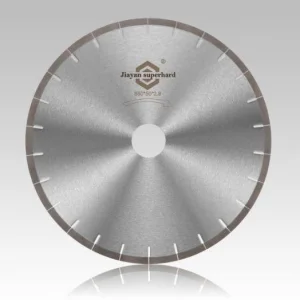
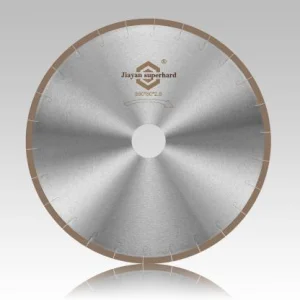
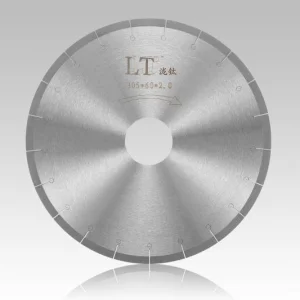
The Republic of Ireland and Northern Ireland represent one of Europe’s most technologically demanding regional markets for stone fabrication, architectural masonry, and civil infrastructure diamond tooling. Driven by intensive urban regeneration in Dublin, commercial logistics hubs in Cork, and residential master plans across Galway and Limerick, the demand for precision superhard cutting tools has transitioned from standard abrasive blades to hyper-specialized, metallurgical-optimized diamond saw blades.
Market Insight (Ireland Region): Irish stone processing requires tailored bond formulas to handle uniquely abrasive and hard local materials, such as Wicklow Quartz-Rich Granite, Irish Blue Limestone (Kilkenny), and dense Connemara Marble, alongside imported ultra-compact sintered porcelain panels (Dekton, Neolith).
Extracted extensively in Kilkenny and Carlow, Irish Blue Limestone features dense micro-crystalline structures. Standard blades suffer from rapid matrix glazing or severe edge-chipping. Our custom-formulated cobalt-bronze matrix blades deliver clean, chip-free arris cuts essential for architectural cladding.
With Irish interior design heavily incorporating large-format sintered porcelain, our J-Slot and narrow-mesh continuous rim saw blades are engineered to dissipate localized thermal stress, preventing slab cracking during high-speed CNC bridge saw operations.
Metropolitan construction sites in Dublin are governed by strict environmental noise mitigation rules (European Directive 2000/14/EC). Our sound-dampening sandwich silent cores (Steel-Copper-Steel) reduce decibel levels by up to 15dB(A) during wet cutting.
Quantitative benchmarks established through rigorous stress-testing on high-power CNC bridge saws, automated block cutters, and manual push saws.
The superhard tool industry is undergoing a paradigm shift driven by material science advancements and automated processing machinery. As stone processing factories migrate toward 5-axis CNC bridge saws and robotic cell cutting, diamond saw blades must evolve past traditional hot-pressing techniques.
Traditional segment manufacturing randomly distributes synthetic diamond crystals within a metallic powder matrix. This leads to uneven wear, premature diamond dropouts, and fluctuating power consumption on saw spindles. Our advanced OEM manufacturing processes utilize controlled 3D spatial diamond placement.
Safety compliance in the European Union (EN13236 standard) demands extreme bond strength between the steel core and the cutting segments. High-frequency silver brazing remains suitable for wet-cutting bridge saws, but dry-cutting site operations in civil restoration demand high-power automated laser welding.
| Bonding Method | Joint Shear Strength | Max Temp Resistance | Primary Application |
|---|---|---|---|
| Laser Welding | > 1,800 MPa | Up to 600°C | Dry/Wet Heavy Construction |
| High-Freq Brazing | > 900 MPa | Up to 320°C | Wet Bridge Saw Slab Cutting |
| Sintered Hot-Press | Integral Bond | Up to 400°C | Small Angle Grinder Discs |
To optimize cutting yield and minimize downtime, selecting the precise combination of blade diameter, bore size, segment geometry, and operating parameters is critical for Irish industrial users.
| Blade Diameter | Bore Sizes (mm) | Segment Specs (L x W x H) | Material Target | Recommended RPM | Peripheral Speed |
|---|---|---|---|---|---|
| 300mm / 12" | 50.0 / 60.0 / 25.4 | 40 x 3.2 x 10/12/15mm | Granite / Hard Quartzite | 2,100 - 2,500 RPM | 33 - 38 m/s |
| 350mm / 14" | 50.0 / 60.0 / 25.4 | 40 x 3.4 x 10/12/15/20mm | Irish Blue Limestone | 1,800 - 2,200 RPM | 33 - 40 m/s |
| 400mm / 16" | 50.0 / 60.0 | 40 x 3.8 x 12/15/20mm | Granite / Sintered Stone | 1,500 - 1,900 RPM | 32 - 40 m/s |
| 450mm / 18" | 50.0 / 60.0 | 40 x 4.2 x 15/20mm | Architectural Precast Concrete | 1,300 - 1,700 RPM | 35 - 42 m/s |
| 500mm / 20" | 50.0 / 60.0 / 80.0 | 40 x 4.5 x 15/20mm | Heavy Quarry Granite Blocks | 1,200 - 1,500 RPM | 35 - 45 m/s |
Precision 350mm quiet-core diamond blades engineered for shadow-gap grooving and mitering of external granite cladding panels. Ensures razor-sharp edges without edge blowouts on honed finishes.
Specialized narrow-kerf diamond blades for cutting historic limestone masonry and granite curb stones during city infrastructure upgrades, minimizing material waste on rare natural stone reserves.
Continuous-rim J-slot blades designed for processing 12mm and 20mm ultra-compact porcelain slabs (e.g., Dekton, Silestone) at linear cutting speeds exceeding 2.5 meters per minute without structural cracking.
As European Union REACH chemical regulations tighten regarding cobalt content in powder metallurgy, our manufacturing plant has pioneered eco-friendly iron-copper-nickel (Fe-Cu-Ni) alloy bond matrixes that match or exceed conventional cobalt bond hardness.
Operational inefficiency in commercial stone processing plants typically stems from misaligned blade specifications relative to stone hardness (Mohs scale) and machine horsepower. Our engineering consultation protocol helps Irish stone distributors and factories systematically diagnose cutting anomalies.
Symptom: The saw motor experiences excessive current draw (amps), cutting speed drops dramatically, and the blade begins to wander off line.
Root Cause: The metal bond is too hard for the target material. Synthetic diamonds wear flat without exposing new sharp grit.
OEM Solution: Transition to a softer copper/tin-rich bond matrix with higher friability synthetic diamonds, or execute dressing cuts on abrasive silica sandstone blocks.
Symptom: Micro-fractures appear at the base of the weld joint, or entire segments detach during high-speed cutting.
Root Cause: Insufficient coolant flow, incorrect peripheral RPM, or dynamic resonance caused by worn flange collars.
OEM Solution: Implement laser-welded joint geometry with reinforced deep-segment protection and inspect machine spindle runout (<0.02mm limit).
Explore our complete catalog of industrial diamond saw blades, continuous rim discs, and J-slot fast-cutting tools with customizable OEM branding options.
Because Irish Blue Limestone is fine-grained, hard, and non-abrasive, standard hard-bond blades will glaze over rapidly. We recommend a medium-soft cobalt-bronze matrix bond paired with high-grade friable synthetic diamonds. This combination ensures continuous self-sharpening micro-fracturing, providing clean edge cutting without arris chipping.
Our typical manufacturing turn-around time for custom OEM orders (including customized laser engraving, core painting, and private label box packaging) is 15 to 20 business days. Transit time via ocean freight from our factory to major Irish ports (Dublin Port, Port of Cork) takes approximately 28–35 days.
Silent-core blades are constructed using a sandwich core geometry where a copper foil layer is laminated between two hardened steel plates. This layered composite absorbs high-frequency acoustic vibrations generated by segment friction against hard stone, reducing cutting noise by up to 15 dB(A) to comply with EU workplace noise standards.
Yes. Our specialized 14-inch (350mm) Sintered Stone blades feature continuous J-slot or ultra-narrow keyhole segment designs with high diamond concentration (grade mesh 60/70 or 70/80). When operated at recommended RPMs with ample water cooling, they eliminate structural micro-tension, preventing costly slab blowouts.
Absolutely. We provide evaluation sample shipments to qualified regional distributors, tool supply shops, and high-volume stone fabrication factories across Ireland. Express air shipping (DHL/FedEx) is available for urgent site trials.
Custom Segment Metallurgies, Private Label Branding, ISO9001 Certified Quality Control, and Direct Factory Pricing for Irish Distributors & Fabricators.
Send Inquiry Now