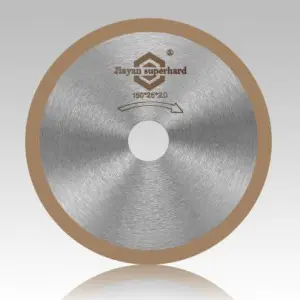
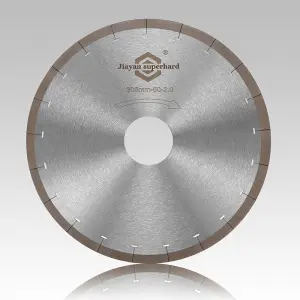
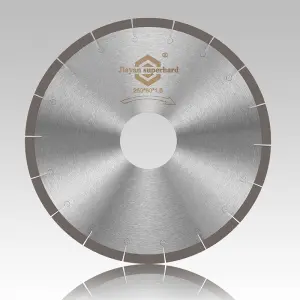
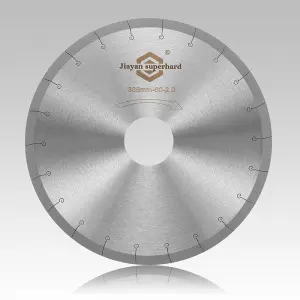
Engineered to deliver exceptional cutting speed, thermal stability, and edge integrity across natural granite, engineered quartz, and high-density sintered slabs.
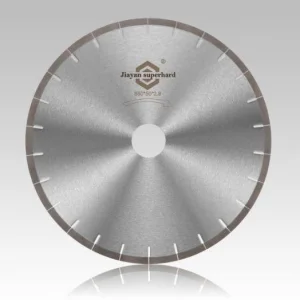
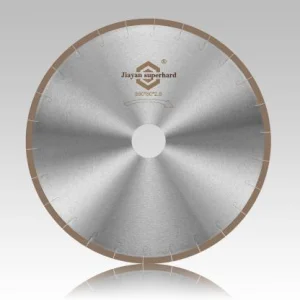
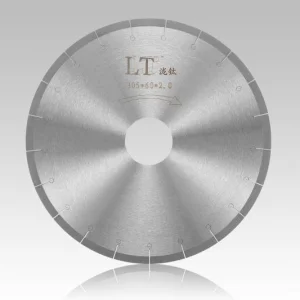
Singapore’s built environment represents one of the most technologically advanced and densely regulated urban markets globally. With the Building and Construction Authority (BCA) pushing for higher productivity through **PPVC (Prefabricated Prefinished Volumetric Construction)** and stringent **BCA Green Mark certifications**, the demand for high-performance superhard diamond tools has shifted from traditional stone processing to ultra-precise, low-vibration, and long-life blade configurations.
Major infrastructure projects—including the expansion of **Changi Airport Terminal 5**, the **Tuas Port Development**, high-density **HDB Build-To-Order (BTO) residential complexes**, and luxury commercial skyscrapers in Marina Bay—require massive processing of imported natural granite, quartzite, dense marble, engineered quartz, and ultra-compact sintered stone (such as Dekton, Neolith, and Lapitec). Stone processing workshops located in Singapore's key industrial nodes, including the **Sungei Kadut Eco-District**, **Defu Industrial Estate**, and **Kallang Basin**, face rigorous environmental operational standards:
To eliminate micro-fracturing when cutting 12mm–20mm sintered stone slabs under high tension, OEMs must utilize specialized J-slot keyhole designs combined with ultra-fine synthetic diamond grit (FEPA Mesh D46–D54) bonded in a soft cobalt-bronze alloy matrix. This setup maintains constant exposure of fresh cutting edges while efficiently clearing slurry.
How JIAYAN Superhard leverages advanced powder metallurgy, automated hot-pressing, and laser welding to deliver unmatched blade life and structural safety.
The operational longevity of a diamond saw blade hinges on the thermal stability and crystal morphology of the synthetic diamond grit. JIAYAN utilizes industrial-grade high-purity synthetic diamond (MBD-8 series monocrystals) with cubic-octahedral structure. The diamonds undergo **Titanium Coating (Ti-Coating)** via chemical vapor deposition (CVD). Titanium encapsulation creates a metallurgical bridge between the diamond crystal and the metal matrix, preventing premature diamond pull-out under intense shear stress during wet granite slicing.
Traditional cold-press continuous sintering often leaves micro-voids in the segment metal matrix. JIAYAN’s smart production lines utilize **Diadinamic Sintering Presses (DSP)** under inert argon gas atmosphere. By simultaneously applying extreme hydraulic pressure (30–45 MPa) and rapid localized heating (up to 950°C), the cobalt-copper-nickel-tin matrix achieves near 100% theoretical density. This process yields uniform segment wear, eliminating segment detachment risks even under dry-cutting misuses on site.
To assist Singapore stone factories in complying with strict NEA acoustic limits, JIAYAN produces silent-core diamond blades utilizing a 3-ply core structure: two outer hardened 75Cr1 tool steel plates sandwiching a 0.2mm copper dampening foil. High-frequency acoustic vibrations generated by segment-to-stone friction are converted into microscopic shear energy within the copper layer, absorbing high-pitched noise by up to 15 dB(A) compared to solid steel cores.
Recommended operating parameters tailored for bridge saws, CNC workstations, and manual table saws deployed across Singapore workshops.
| Blade Diameter (mm / Inch) | Target Substrate Material | Segment Height / Width (mm) | Optimal RPM Range | Feed Rate (m/min) | Cooling Type |
|---|---|---|---|---|---|
| 350mm (14") | Hard Granite / Quartzite | 15mm / 3.2mm | 1,800 – 2,200 RPM | 1.8 – 3.5 m/min | Wet (Water Flow ≥ 25 L/min) |
| 350mm (14") | Sintered Stone / Dekton | 10mm / 2.4mm (J-Slot) | 2,100 – 2,500 RPM | 1.2 – 2.2 m/min | Wet High-Pressure Internal |
| 260mm (10") | Marble / Engineered Quartz | 10mm / 2.0mm | 2,800 – 3,400 RPM | 2.0 – 4.0 m/min | Wet / Semi-Dry |
| 115mm - 125mm (4.5"-5") | Porcelain Tiles / Ceramic | 7.5mm / 1.2mm (Mesh Rim) | 11,000 – 13,200 RPM | Manual / Handheld | Dry / Wet Compatible |
For procurement directors at Singapore building contracting firms and stone trading entities, comparing blade prices alone leads to sub-optimal purchasing decisions. TCO analysis evaluates blade purchase cost, linear meters cut, speed per meter, and post-cut edge finishing labor.
Optimized segment matrix formulation increases feed rate by up to 35%, dramatically reducing labor and machine hours per finished stone countertop or cladding panel.
Minimal edge chipping eliminates secondary hand-polishing and edge beveling cycles, directly reducing workshop labor costs in Singapore’s high-wage market.
Private labeling, custom arbor bushings (50mm, 60mm, 25.4mm), specific segment shapes, and branding tailor-made for Singapore, Malaysia, and regional Southeast Asian distributors.
High-speed repetitive trimming of high-density homogeneous porcelain tiles used in modular bathroom units (PBU). Requires ultra-thin kerf 1.0mm-1.2mm blades to prevent top-layer glaze cracking.
Heavy-duty deep cutting of 30mm thick black granite and quartzite architectural facades. 350mm–400mm silent blades mounted on automatic bridge saws ensure consistent straight cuts across thousands of square meters.
Precision mitering (45-degree angle cutting) on sensitive sintered stone slabs for luxury residential condominiums in Sentosa Cove and Orchard Road. Demands J-slot continuous rim specs.
Practical solutions for stone fabricators, equipment operators, and procurement supervisors.
To eliminate chipping on ultra-compact surfaces, ensure your bridge saw flange is clean and running true with TIR < 0.02mm. Reduce feed speed when entering and exiting the cut by 50%. Use a continuous rim or J-slot blade specially designed with a soft bond matrix and high-pressure coolant directed straight at the contact point.
Standard sea freight from Ningbo/Shanghai ports to Jurong Port or Pasir Panjang Terminal in Singapore typically takes 5 to 7 days. For custom OEM orders involving private label laser etching and specialized packaging, total lead time from production start to arrival at Singapore facilities is usually 15 to 20 business days.
Glazing occurs when cutting soft or extremely dense, non-abrasive materials that fail to wear down the metal matrix, preventing new diamond crystals from being exposed. To dress a glazed blade, perform 3 to 5 passes through a highly abrasive dressing block or soft firebrick to strip back the metal matrix and expose fresh sharp diamond grit.
Yes. Due to close proximity to residential zones and Singapore's National Environment Agency (NEA) workplace safety guidelines, silent-core sandwich blades are highly recommended. They reduce operational acoustic energy by up to 15 dB, protecting workers' hearing health and complying with environmental site audits.
Browse our complete catalog of certified cutting discs, segment rims, and specialty blades manufactured for Singapore and international industrial markets.